
Buying a Sauna Direct from a Manufacturer: Questions to Ask
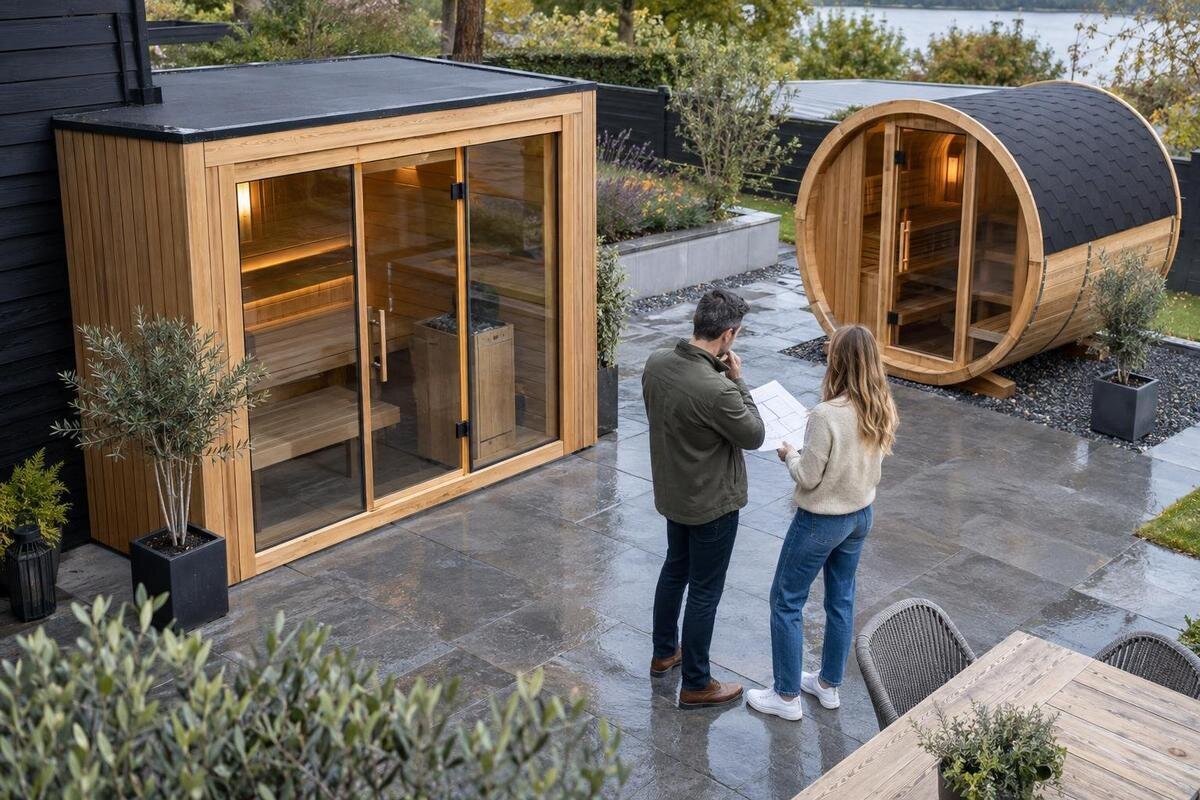
Sauna buying guide
Buying a sauna direct from a manufacturer may put product questions closer to the people responsible for design or production. It does not, by itself, tell you who makes every component, what a quotation includes or who will support you after delivery. Before committing, establish the exact configuration and responsibility for the specification, transport, installation and after-sales service. The questions below help you judge the supplier’s answers and compare like-for-like offers in South Africa.
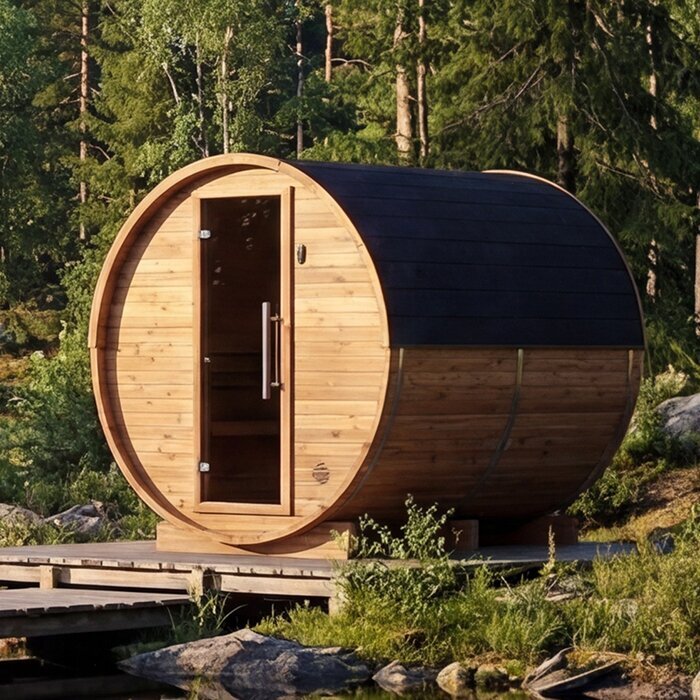
Buyer checklist 1
Confirm who makes the sauna and who sells it
“Direct from a manufacturer” can describe the sales route, but it does not tell you which business actually builds the sauna or takes responsibility for each part. Ask whether the supplier manufactures the complete unit, assembles components made elsewhere, or sells a product produced by another company. Establish the name of the seller shown on the quotation and invoice, who will be your main contact, and who answers technical questions after payment. If the brand, factory and seller are different businesses, ask how those roles fit together. Also ask whether the manufacturer handles quality checks and who approves a change to the original design.
Ask for the exact product designation and current specification sheet, not only a catalogue description or showroom conversation. Check that the document describes the configuration being quoted and records any options added or removed. If the supplier refers to a factory, production partner or specialist subcontractor, ask which parts each party handles and who remains your contact if something goes wrong. Find out when the specification is locked and how later changes affect the quotation. A factory visit is not necessary for every purchase; what matters is a traceable written description and clear responsibility, not an impression created by marketing photographs.
Match the sauna type to your intended use
Describe where the sauna will be used, how many people you expect to use it at once and what kind of layout you have in mind; then ask the maker to name the type it is quoting. Ask whether it is designed around an electric heater, a wood-fired heater, an infrared system or another format, and request an explanation of what that choice means for the product and its installation. If you are considering a barrel format, ask about its entry, seating and usable interior rather than treating the curved shape as a capacity guide. The S 140 listing can be a reference point for a question, not evidence of size: ask the supplier to identify the exact configuration and intended occupancy in writing.
Ask how the stated capacity is reached: does it describe people seated together, a particular bench arrangement or a maximum figure? Request the number and position of benches, and ask how the maker defines usable space. Find out whether the price applies to a standard design or a customised layout; a change in bench position, entrance or heater may affect more than appearance. If a supplier recommends a type, ask them to tie that recommendation to the use, space and services you described, and to record any assumptions. That gives you a specific proposal to compare instead of relying on a general claim that one sauna suits everyone.
Buyer checklist 2
Get a precise description of the materials and finish
Ask the manufacturer to identify the timber species used in the interior, exterior, frame and any other major component, rather than relying on broad labels such as “quality wood” or a model name. Ask which parts are treated, coated or left unfinished, what each treatment is intended to do, and whether the same material is used throughout. A term such as “thermally modified” should come with a clear description of the material and process, not be treated as a complete specification on its own. For a product page such as the HC150 listing, request the material schedule that applies to the exact version you would order; do not infer its construction from the title alone.
Ask for the finish specification for each surface and whether it is intended for the conditions at your installation site. Find out what care the manufacturer recommends, which products or methods are approved, and how any damage can be repaired. If colour or texture matters to you, agree how the selected sample or description will be recorded; broad terms such as “natural” can mean little without a reference. Keep the material list and care guidance with your quotation. Two descriptions that both say “timber sauna” may leave important differences in species, treatment and upkeep unanswered.
Ask for drawings and dimensions of the quoted model
Request a dimensioned plan and elevations for the exact model and options in the quotation. The drawing should identify external dimensions, usable interior, overall height and the positions of the door, benches and heater, so the measurements can be checked against the layout. A page such as the HC 225 listing is only a model reference; ask the manufacturer for the drawing that matches the quoted configuration rather than treating a code or image as a measurement. Ask whether dimensions include projecting parts or accessories, and whether the drawing is a current revision. If a change is agreed, get a revised document and quotation.
Measure the intended location and the route the sauna must take to reach it, but ask the supplier to specify the clearances and site conditions it requires. Find out what kind of base or support it calls for, how much space is needed around the unit, and whether access for assembly or future maintenance affects placement. A drawing of the sauna alone will not show gates, passages, low branches, walls or other obstacles on your property, so describe them and request practical delivery and installation dimensions separately. Where the site needs structural assessment, give the manufacturer’s written requirements to a suitably qualified local professional instead of guessing at a foundation or calculating from a picture.
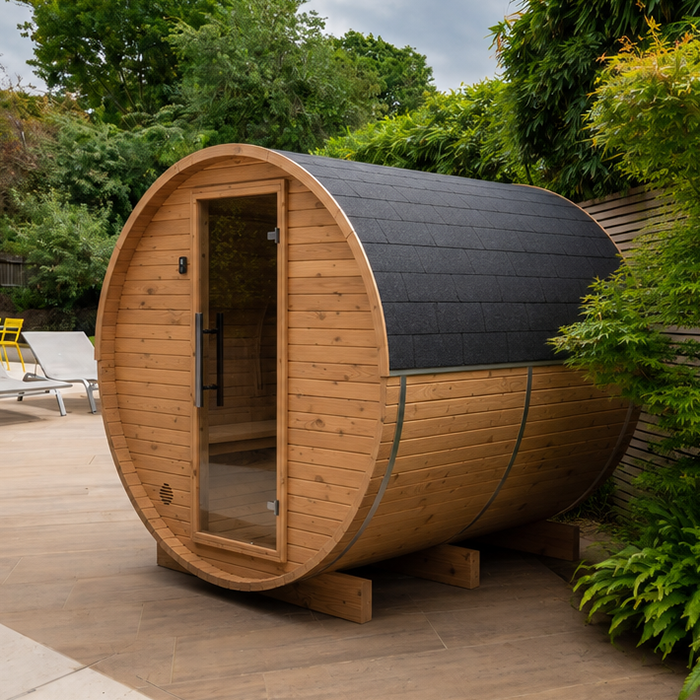
Buyer checklist 3
Clarify the heater and electrical requirements
Find out whether the heater is included, optional or supplied separately, and ask for its manufacturer, model and specification. Clarify what else forms part of the heating package: controls, sensors, guards, stones or other components should be listed rather than assumed. A page such as the N 210 listing identifies a product to ask about, but it does not establish which heater or options are in your quotation. Ask the sauna maker to confirm that the selected heater is compatible with the quoted configuration and to state any conditions or equipment needed for that combination. If a heater is not included, ask who confirms compatibility before you order.
Request the heater’s technical information and the sauna manufacturer’s written requirements for the supply and connection. Give those documents to a qualified electrician to check the electrical provision and installation for your property; a casual assurance that the unit uses a “standard” connection is not a substitute for that review. Ask who performs and pays for connection, whether it is included in an installation quotation, and what information the installer needs in advance. If a supplier gives a heating-time or performance estimate, ask what room configuration and conditions it assumes, and compare estimates only on a like-for-like basis. Make sure the heater, controls and responsibilities are clear before ordering.
Compare complete, itemised quotations
Ask for a written quotation tied to one exact model and configuration. It should separate the sauna itself from any heater and controls, accessories, assembly, site preparation, delivery, unloading, electrical work and other services, marking each included, excluded or still to be confirmed. A product page such as the N 250 listing can help you identify which model you are discussing, but the quotation must state the selected options and actual scope. Ask whether the quoted amount includes applicable taxes and freight to your address, and whether extra charges could arise if access, site conditions or the agreed design change.
Ask how payment is scheduled, what amount is due at each stage, and what event triggers each payment. Request written terms for price validity, design changes, cancellation, delays, refunds or other changes to the order, and check that they match what the salesperson has explained. There is little value in comparing two headline totals if one excludes transport or installation and the other includes them. Put both quotations into the same scope: model, options, delivery destination, unloading, assembly and electrical work. If a line is described as “to be confirmed”, ask who will confirm it and when before treating the total as final.
Buyer checklist 4
Pin down delivery, unloading and damage handling
Ask exactly what delivery means at your address. Does the quotation cover transport to the property, placement at an agreed access point, unloading or movement to the final site? Ask who books the carrier, who contacts you with the delivery window, and what lifting or handling equipment must be arranged by someone else. Request the packed dimensions and weight from the supplier, plus any access details the carrier needs, then compare them with your gates, driveway and route to the installation site. A page such as the LC 260 listing lets you name a particular model when requesting delivery details; it does not tell you how its package will reach your property.
Separate manufacturing or dispatch estimates from the time in transit and the date delivery is actually booked. Ask what can alter the schedule, how changes will be communicated and whether you must be present to receive the goods. Get the procedure for checking the shipment, recording visible damage or missing items and reporting a problem, including the contact point and any time limit stated in the supplier’s terms. Clarify who is responsible for the packaging and its removal after delivery. Also confirm which access assumptions the quotation uses and who would handle extra transport costs if they do not match your property.
Agree who prepares the site and installs the unit
Ask the manufacturer to divide the work into clear responsibilities: who prepares the site, who assembles the sauna, who connects or commissions the heater, and which tasks are outside the quotation. If the manufacturer uses an installer or subcontractor, ask who appoints them, who your contact is and whether the installer receives the current drawing and specification. For a named product such as the HCF 300 listing, get the installation arrangement attached to that exact quotation; the listing itself should not be read as confirmation that installation is included. Ask for the installer’s scope and any requirements the supplier expects them to follow.
Request written site-preparation information before work begins. It should explain the manufacturer’s expectations for the support surface, clearances, access, ventilation and services, while leaving structural assessment and electrical work to appropriately qualified professionals. Do not substitute a generic diagram or conversation for requirements that apply to your configuration and property. Confirm who checks site readiness, what happens if the site is not ready on the agreed date, and whether a return visit or extra labour would cost more. At handover, ask for the operating and care documents, an explanation of the controls and the contact for follow-up questions.
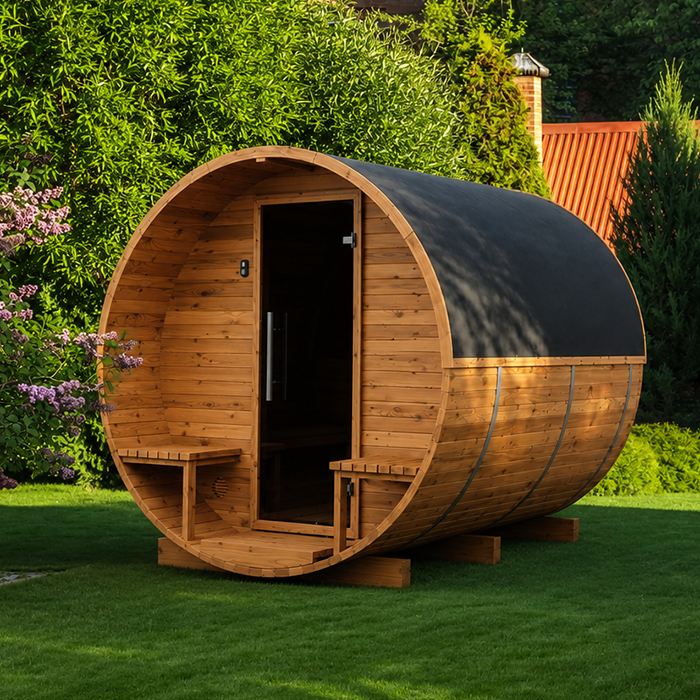
Buyer checklist 5
Read the warranty and after-sales terms
Ask for the full written warranty before ordering, not only a summary of its headline duration. Check what coverage applies to the structure, finish, heater and controls; when each period starts; and what exclusions, maintenance conditions or changes to the unit may affect a claim. Ask what evidence the supplier needs and how a fault is reported, assessed and resolved. Warranty terms are not interchangeable between manufacturers or components, so compare the wording rather than just the number of years mentioned in a conversation. When checking the LCF 300 listing, ask the seller to provide the warranty that applies to that exact sauna and any separately supplied equipment.
Clarify who provides support after delivery: the manufacturer, the seller, an installer or a service partner. Ask where to submit a request, who arranges inspection or repair, whether replacement parts can be supplied and how transport or service costs are handled. For your address in South Africa, ask how support is provided and what happens if a component needs to be sent in or replaced; do not assume that after-sales care is local or automatic. Request care instructions and a parts-contact route in writing, and save them with the invoice and specification. This is especially useful if the person answering pre-sale questions is not the person who handles issues later.
Compare suppliers using the same written scope
Build a comparison from the same questions, not from a supplier’s presentation or the word “manufacturer”. For each offer, record who is selling and manufacturing the unit, the exact model and options, material description, dimensions, heater specification, included work, delivery terms, warranty and service contact. Mark each answer as documented, outstanding or unclear. Use the same delivery address and installation scope when comparing totals, then follow up on any difference that could change the final amount or who is responsible. If a supplier gives an answer verbally, ask for it in the quotation or an attached email so it can be checked against the final order.
Before committing, read the order confirmation against the quotation and latest drawing. Check that the model name, options, materials, price, payment stages, destination, delivery and installation responsibilities, and promised documents are consistent; ask for a corrected version if they are not. Keep replies that resolve important questions, especially agreed changes and exclusions. A supplier who explains what is included, acknowledges what still needs professional review and provides a clear support route gives you a stronger basis for a decision than one relying on broad assurances. Do not treat an unanswered point as included; ask for clarification before the order is finalised.
Frequently asked questions
Does buying direct from a manufacturer guarantee a lower price?
No. The sales route alone does not show what is included or whether costs sit elsewhere. Compare itemised quotations for the same model, delivery, unloading, installation and heater scope, and ask each supplier to identify exclusions before comparing totals.
What should be in the written quotation?
It should name the exact sauna and options, describe what is included and excluded, and set out the price, delivery and installation scope. Ask for payment terms and the applicable warranty information as well, so you can compare the complete offer rather than a headline amount.
Can a model name tell me the sauna’s dimensions?
No. Treat a model name as an identifier, not a measurement. Request a current dimensioned drawing for the exact configuration you would order, and check that the quotation and drawing refer to the same options.
Who should verify the electrical requirements?
Ask the sauna manufacturer for the heater and connection specifications, then have a qualified electrician check what is suitable for your property. Confirm who is responsible for the electrical work and whether it is included in the installation quotation.
What should I ask about after-sales support?
Find out who handles service requests, how to report an issue, whether replacement parts can be supplied and how any inspection, repair or transport costs are managed. Get the contact route and warranty terms in writing.
A well-documented direct purchase is one where the quotation, drawing and written answers agree on what is being supplied and who is responsible at each stage. If a key detail remains vague, clarify it before committing. That gives you a fairer basis for comparing manufacturers and a clearer record to refer back to after delivery.
