
Choosing Interior Timber for Sauna Benches and Backrests
SAUNA BUYING GUIDE
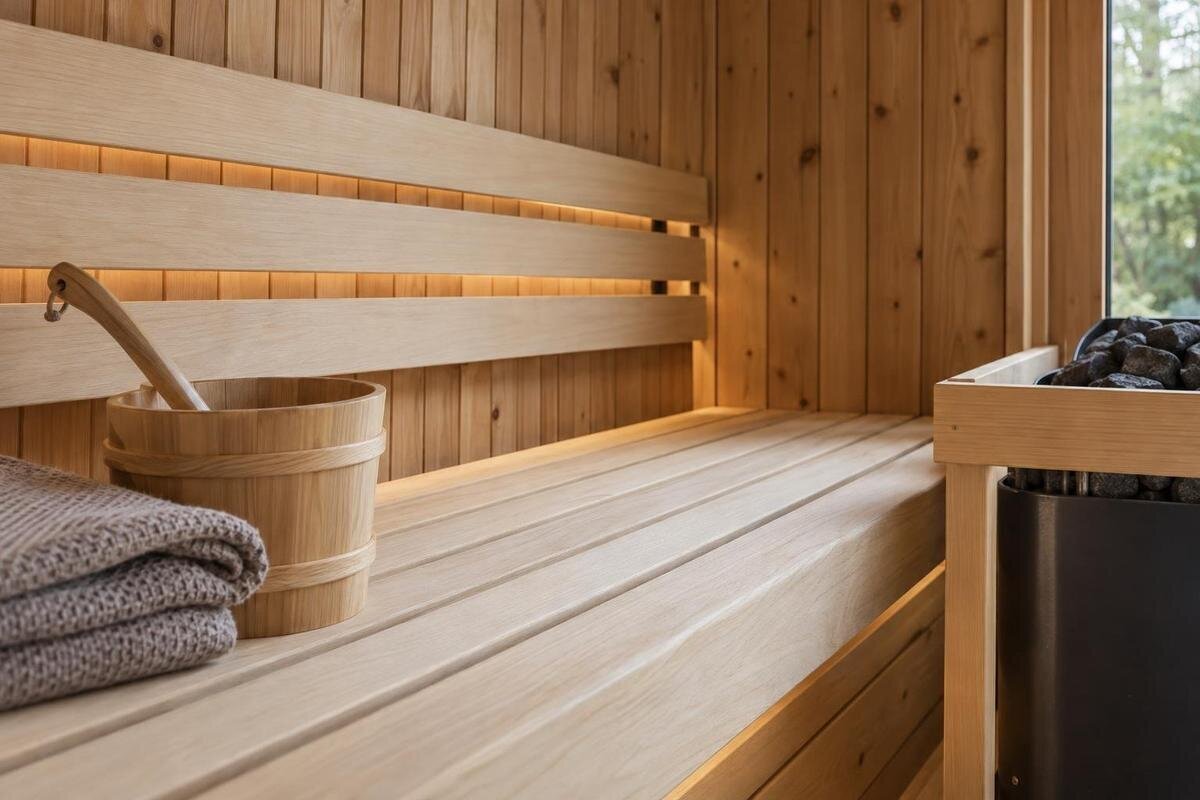
Benches and backrests are the sauna surfaces people touch most, yet their timber is often described less clearly than the exterior cladding. The species, finish and care instructions should be confirmed for each contact surface, not inferred from a sauna’s overall name. In particular, an exterior Thermowood description is not a specification for the bench or backrest. A sound comparison traces information from the model’s documents to the exact component, then checks that the proposed finish and maintenance instructions are intended for its interior use.
Before you buy 1
Do not infer bench timber from exterior Thermowood
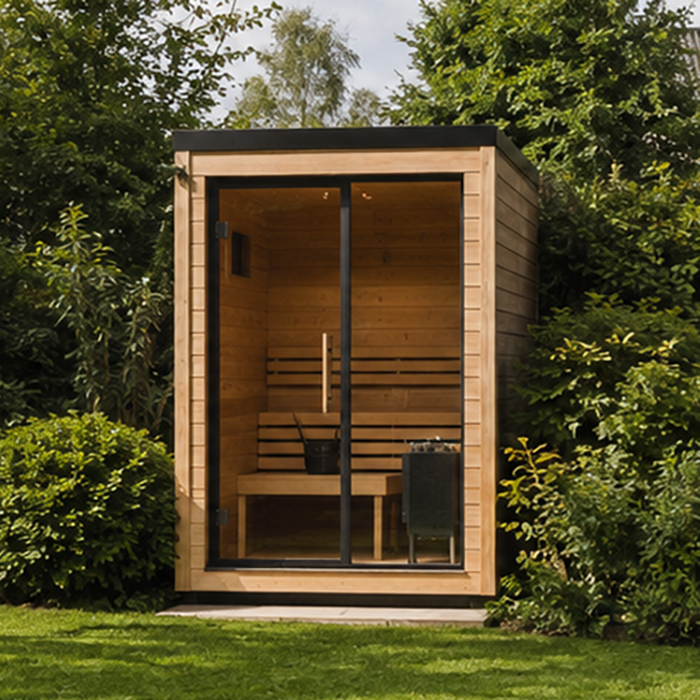
An outdoor sauna can contain several timber components: exterior boards, structural framing, interior lining and the slats people sit on or lean against. Their specifications answer different questions. Exterior treatment may address the wood used outside; bench and backrest selection concerns the material and finish on surfaces intended for direct contact. Even if two components share a species, their preparation or finish may differ. One label cannot stand in for all component details. Heat, moisture and cleaning conditions matter to the interior specification, but the maker’s instructions—not the exterior wood’s marketing name—must establish what is intended for the bench and backrest. An exterior material schedule alone is not evidence for an interior contact surface.
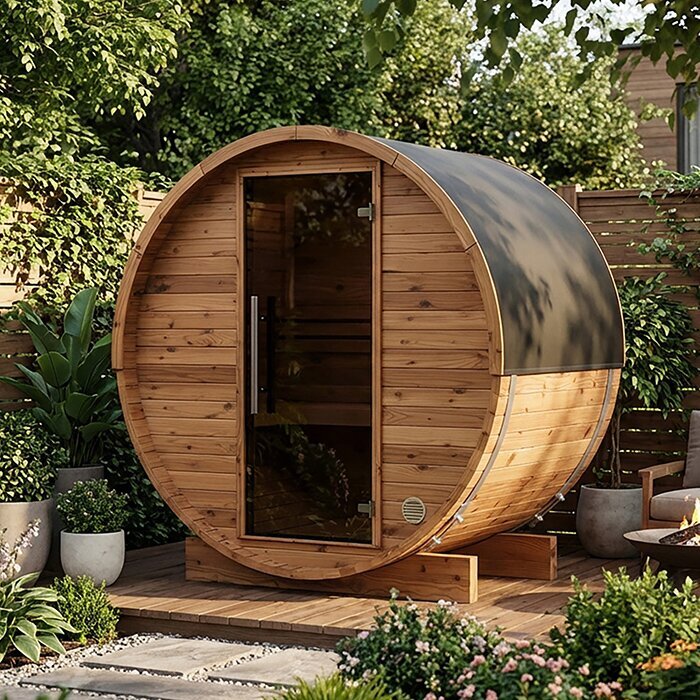
With a listing such as Thermowood Barrel Sauna LC-260, treat the model name as identification, not proof of bench species or treatment. Look for a drawing, component schedule or manual that labels the bench and backrest separately. If the documents describe only the exterior timber, request the interior contact-surface specification from the seller. Keep exterior structural treatment and bench selection in separate notes, so a confirmed outside material is not accidentally recorded as the timber used for the seat or backrest. The same distinction applies even if a brochure shows the interior and exterior together.
Identify the timber for each contact surface
Ask what timber is used for the seat slats and backrest slats, and whether the two match. Include edges or accessories that might also touch skin, such as an armrest or headrest if those parts are included. Do not assume an internal support and an exposed slat have the same species; record each component by its proper name. A description such as ‘wood’ or ‘solid timber’ identifies a broad material category, not the actual timber. Request the common species name and, where available, the botanical name. Also check whether the specification permits mixed species or substitutions between exposed pieces.
Match the answer to the exact model and configuration. For a listing such as Thermowood Barrel Sauna HCF-300, ask whether the stated species applies to every exposed bench and backrest piece in the version being sold. Check how substitutions are handled and whether optional seating or backrests have a different specification. A catalogue description for a product family may cover more than one arrangement, so request the relevant document or written confirmation. Colour and grain can help you discuss a sample, but they do not reliably establish a species. Keep the seller’s answer with the model details so you can compare it accurately with other options.
Before you buy 2
Confirm the finish on benches and backrests
Species is only part of the decision: establish whether the contact timber is supplied unfinished or has a factory-applied coating. If it is coated, request the product name and confirmation that it is intended for sauna bench or backrest use under the maker’s stated operating conditions. Words such as ‘natural’, ‘clear’ or ‘low odour’ are not, on their own, evidence of suitability. A finish used on exterior boards is not automatically appropriate for an interior surface people touch. Ask whether the coating covers visible faces, edges and cut ends, or whether those areas are treated differently.
For Thermowood Barrel Sauna LCF-300, as for any model, check the finish information against the exact configuration before applying a product of your own. Establish whether the surface is ready to use as supplied, whether further treatment is required and which parts need it. If a coating must be applied or renewed, obtain the specified preparation, ventilation and curing instructions. Do not fill missing information with generic oil, varnish, stain or wax; the maker should confirm both the product and method for these contact surfaces. Keep the instructions with the manual rather than relying on a label that describes the product only in general terms.
Inspect the actual contact surfaces
A touch and visual check can reveal workmanship issues that a timber name will not. Examine the front edge, joins and all accessible areas likely to be touched. Look for splinters, sharp corners, raised fibres, cracks, loose or protruding fixings, and coating that is uneven or flaking. Ask how knots, colour variation and grain variation are assessed rather than assuming every visible difference is a defect—or that a smooth-looking finish proves suitability. Check more than a convenient piece of wall lining: the seat and backrest are separate components and should be inspected as such. If you cannot see an area clearly, ask the supplier to show it.
A product photograph for Thermowood Barrel Sauna S-140 can identify a model, but it cannot establish texture, finish or the condition of the delivered timber. If a sample or display unit is available, ask whether it uses the same species and finish as the configuration you are considering. Check that the sample represents the surface treatment as well as the timber; an unfinished swatch will not show a coated surface. A sample helps with appearance and feel under ordinary room conditions, while model-specific documentation must establish whether the material is intended for sauna contact. Ask how much variation between boards to expect if a consistent appearance matters to you.
Before you buy 3
Read care instructions before choosing
Ask for care instructions before comparing finishes, not after the first clean. The manufacturer should explain what routine care is permitted for the benches and backrests, whether it differs from cleaning the walls, and what to do after normal use. Look for guidance on dry or damp cleaning, any named cleaning product, drying and ventilation. Do not assume that a method recommended for exterior timber, garden furniture or an untreated board is suitable for a sauna contact surface. The aim is not to prescribe one universal routine, but to find out what applies to the supplied timber and finish, including whether the instructions distinguish between regular care and a deeper clean.
For a candidate such as Thermowood Barrel Sauna HC-150, locate the manual for that model and configuration, then find instructions that specifically cover the seat and backrest. A general statement about cleaning the sauna may leave the key question unanswered. Ask the supplier to clarify whether water, a brush, cloth or any cleaner is permitted, and how often any deeper clean is recommended. Keep the instructions with the purchase documents. If a separate product label or general online advice suggests a different method, check with the manufacturer before using it on the bench timber.
Stain removal and refinishing
Removing a persistent mark is a different task from routine cleaning. A surface that can be wiped may not be suitable for abrasive pads, solvents, bleach or pressure washing. Establish whether the maker’s stain-removal instructions apply to untreated timber, a coated surface or both; do not assume the methods are interchangeable. Do not try a cleaner on a hidden edge unless the instructions allow it, since that is still the same timber and finish. Ask for the approved cleaner, dilution if applicable, tools and steps for persistent marks. If the manual is silent, request clarification rather than experimenting, particularly if an older maintenance note describes a different finish.
Where sanding or re-oiling is mentioned, verify whether it is permitted on the bench and backrest, which material it applies to, and whether a suitable service provider should do the work. Ask for the exact product, preparation and curing or ventilation instructions; a repair method for exterior wood should not be carried across to interior seating. For Thermowood Barrel Sauna HC-225, use the model name to request matching model-specific guidance, not to infer what treatment the benches need. Save the answer for future maintenance and note whether it applies to all exposed pieces or only to a particular component.
Before you buy 4
Plan for repairs and replacement parts
Make periodic visual checks part of care, using the method the manufacturer permits. Watch for a splinter or sharp edge, a crack, a loose slat or fixing, or finish that is peeling. Discolouration alone does not identify its cause, so do not automatically sand or coat a marked area. If a seat or backrest piece moves, has a sharp damaged edge or appears compromised, stop using that affected area until the manufacturer or an appropriate repairer advises you. Do not treat a visible surface problem as proof that the supporting structure is sound; the cause may not be clear from appearance alone.
Before ordering, ask whether individual slats or backrest pieces can be replaced and how to identify the correct part. A replacement should match the specified timber and finish, or be an alternative expressly approved by the maker; a visually similar board may have different care requirements. For Thermowood Barrel Sauna N-210, confirm current replacement-part information directly rather than assuming a part is available or interchangeable. Ask what model details the supplier would need if a piece has to be ordered later, and whether the repair instructions cover the relevant bench or backrest component.
Match documents to the model and configuration
Check that every document refers to the model and configuration you are buying. A product page, assembly drawing, parts list and use-and-care manual serve different purposes; none should be treated as a complete timber schedule unless it actually names the contact surfaces. Confirm whether benches and backrests are included in the configuration or listed as options, and whether the drawing shows the parts you expect. If the supplier mentions a substitution, ask for the revised material and finish details in writing. Note the document version or date if shown, so you can distinguish it from information for a different model or an earlier arrangement.
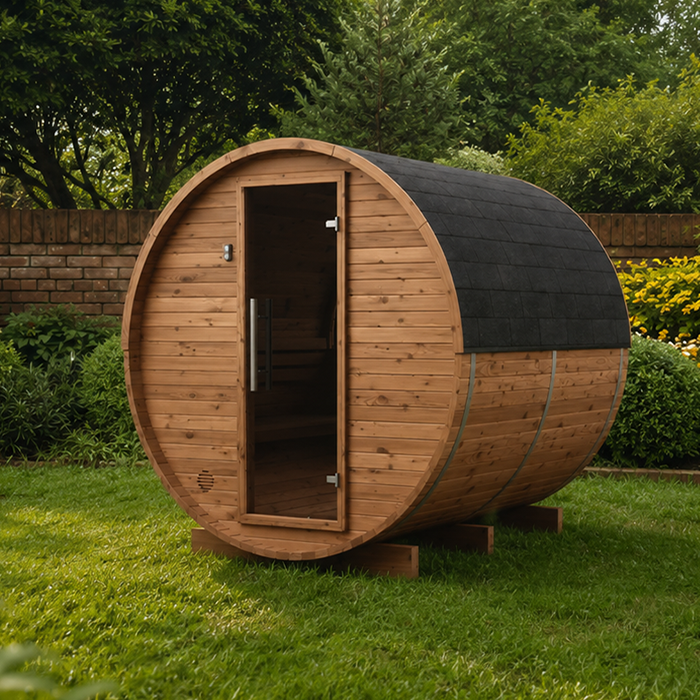
For Thermowood Barrel Sauna N-250, as with any listed model, request documents that match the exact local configuration, not only a brochure for the range. Confirm current availability and included components with the seller, then compare the bench and backrest details with the manual or parts list. If documents use different names for a part, ask the supplier to reconcile them. A clear model-specific answer is more useful than assuming similarly named products share identical interior materials. Keep the answer alongside the order information so there is a record of which contact-surface specification you relied on.
Before you buy 5
Balance comfort, appearance and maintenance
There is no useful universal ranking of bench timbers based on the name alone. Decide which practical qualities matter in your household: a smooth, comfortable surface; a consistent appearance; clear cleaning instructions; or a repair route if a piece is damaged. Think about how frequently the sauna will be used and how much time you can realistically give to maintenance. If users may lean against the backrest or sit without a towel, consider every surface likely to be touched, not only the seat top. These preferences help organise a comparison, but they do not replace confirmation that the timber and finish are intended for this use.
Keep preference and proof separate. A sample can help compare colour, grain and feel, and you can inspect its edges under ordinary room conditions, but it cannot demonstrate how a complete bench will behave in use or establish what is in the delivered unit. Ask how much natural variation is expected between boards and whether the sample has the same coating. Compare documented care and replacement details alongside appearance. If a key contact surface remains unspecified, mark it as unknown rather than giving that option a favourable score on the strength of a photograph or a showroom sample.
Record the details before ordering
Before placing an order, make a short written record with one line for each exposed bench or backrest component. Note the named timber, finish status and any permitted substitution; attach the relevant drawing or manual and the care instructions. Record which components are included, so a feature visible in a photograph is not assumed to be part of the supplied configuration. Use the manufacturer’s terms rather than creating your own technical description. If an answer is missing or ambiguous, ask the seller to confirm it in writing before you rely on it for comparison or maintenance.
Keep this record with the order confirmation, and leave unanswered items clearly marked rather than filling them in from photographs or descriptions of the exterior. When the sauna arrives, use the record to compare the supplied components and care information with what was specified. Note any discrepancy using the same component names, so the seller can identify the part concerned. Retain any clarification with the original instructions instead of relying on memory. This gives you a useful reference when buying a care product or discussing a replacement later, without having to reconstruct which timber and finish were supplied for each contact surface.
Frequently asked questions
Does a Thermowood exterior mean the benches are Thermowood?
No. An exterior Thermowood description identifies the timber or treatment being described; it does not specify the bench or backrest. Check the exact model’s documentation for each contact surface, including its finish. If that information is missing, ask the supplier rather than inferring it from the sauna’s name.
Which timber is best for a sauna bench?
There is no universal choice based on a timber name alone. Check that the manufacturer specifies the material for sauna bench or backrest use, then compare its documented finish, care instructions and replacement options. A sample can help you assess appearance and feel, but it cannot confirm suitability.
Should sauna benches be oiled?
Only if the manufacturer’s instructions approve a particular product and method for those surfaces. Do not assume that a general-purpose timber oil is appropriate for a sauna bench. First establish whether the bench is unfinished or already coated, and what maintenance the supplied finish requires.
How should I clean sauna benches and backrests?
Follow the care instructions for the exact model and contact surfaces. Check which cloths, brushes, cleaners and drying methods are permitted. Guidance for exterior cladding or garden furniture may not apply to bench timber. If the manual does not address benches separately, ask the manufacturer before trying a cleaner.
Can I sand or replace a bench slat?
Check the manufacturer’s repair instructions first. Sanding can alter a surface or its finish, while a replacement piece may have a different timber or care requirement. If a slat is loose, cracked or has a sharp edge, seek advice from the manufacturer or a suitable repairer before using that area.
Choose bench and backrest timber from the specification for those surfaces, not from a description of the sauna’s exterior. When the species, finish and care instructions all relate to the exact model and configuration, it becomes much easier to judge how the contact surfaces will suit your preferences and what their upkeep will involve.
