
How to Compare Sauna Quotes When Inclusions Differ
Sauna buying guide
A sauna quote can look cheaper because it covers a smaller job: one supplier may price the sauna alone, while another includes equipment, delivery or assembly. The totals are not comparable until the product configuration and work scope match. Use one written brief, record each inclusion and exclusion, and put a cost or a clear uncertainty against every gap. That gives you a more useful comparison than choosing from headline figures.
A shared project brief for every supplier
Write a one-page brief before asking what each supplier’s total means. State the model or configuration under consideration, where it will be placed, how many people you expect to use it at a time, and which layout choices matter. Say whether the comparison is for supply only, delivery of a kit or a completed installation; these are different scopes even if each document is labelled a sauna quotation. Separate essentials from preferences. An essential belongs in every quote, while a preferred extra can be priced separately. Add known site constraints that could affect access or work, but mark unconfirmed details as assumptions rather than facts.
Use the same brief for every supplier, and amend it only when you deliberately change the project. If one quotation is based on a particular site condition or an assumed option, record that assumption instead of letting it pass as an agreed requirement. Ask for any drawings or specifications used to prepare the quote, and note their revision or date. Where the layout is not final, choose one provisional baseline for comparison, then ask each supplier to price alternatives on separate lines. This prevents different layouts from being mistaken for a price difference on the same sauna.
Matching the model and configuration
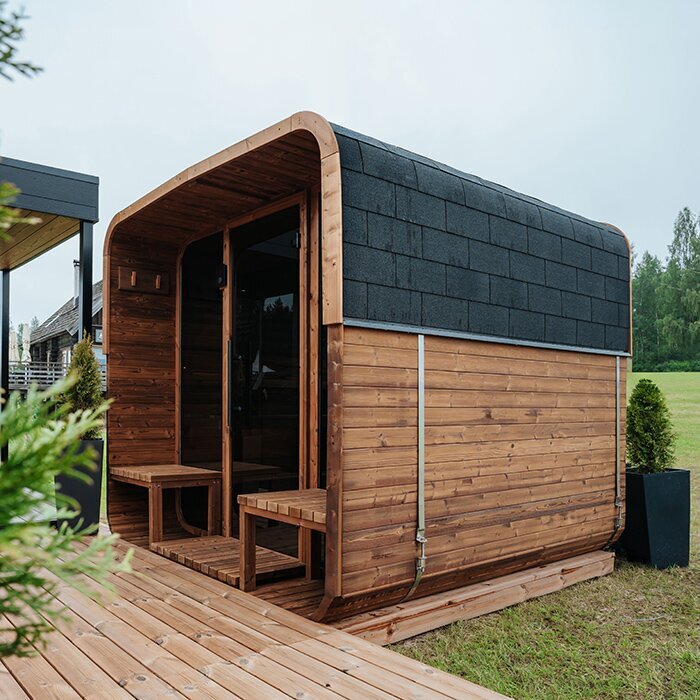
Confirm that each quote refers to the same sauna, not just a similar description. Ask for the exact model name, any configuration code, the drawing or specification revision, and the dimensions and layout shown on that document. Check doors, windows, benches and selected options against your brief; do not infer them from a photograph. For example, the Sauna S-140 listing identifies the model with a stated area of 1.93 m². Record that reference alongside the configuration being priced, and confirm current local availability. Give any alternative configuration its own entry rather than placing it in the same column as the original specification. This lets you see whether a price difference relates to the same product or to a change in what you would receive.
If one supplier uses a short model name and another describes a variant, ask them to confirm in writing whether both refer to the same configuration. Compare the relevant drawing rather than assuming that a similar name or area figure settles the question. Ask each supplier to identify any differences in layout, dimensions or selected options and show how those changes affect the quote. If a specification is still being finalised, label the version being priced clearly. That gives you a stable basis for comparing totals and makes later changes easier to spot.
What the quoted package includes
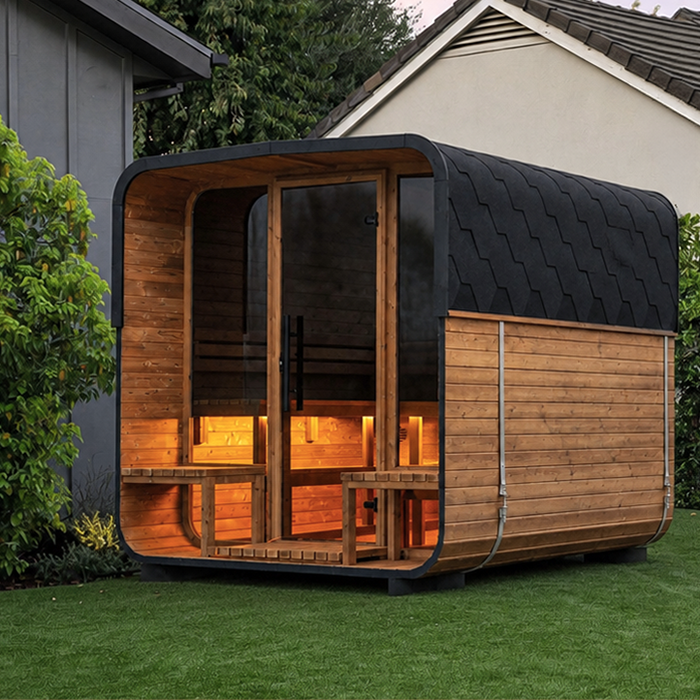
Create an inclusion schedule instead of relying on a broad phrase such as ‘complete sauna’. Ask whether the cabin, heater, controls, benches, stones, lighting, door and window fittings, protective items and basic accessories are included, supplied separately, optional or absent. Not every item will apply to every configuration, so use the supplier’s specification to establish what is relevant. If your quote names the Sauna HC-150, use that model reference and its listed area of 2.97 m² to identify the product, then record the quoted contents beneath it. Give each required component its own row, even where the supplier has bundled several items into one price. You do not need an individual price for every included component, but you do need a clear statement that it forms part of the package.
For each component, record the quantity and any stated make or model where relevant. Note whether an item is included in the total, listed as an extra, or left for you to source. This matters when two quotes use different shorthand: one may show a single package line while another breaks out several components. Ask for clarification rather than assuming a missing line is included. Keep discretionary accessories separate from items your agreed configuration requires, so you can compare the core package first and review optional additions on their own merits.
Heater scope and electrical responsibility
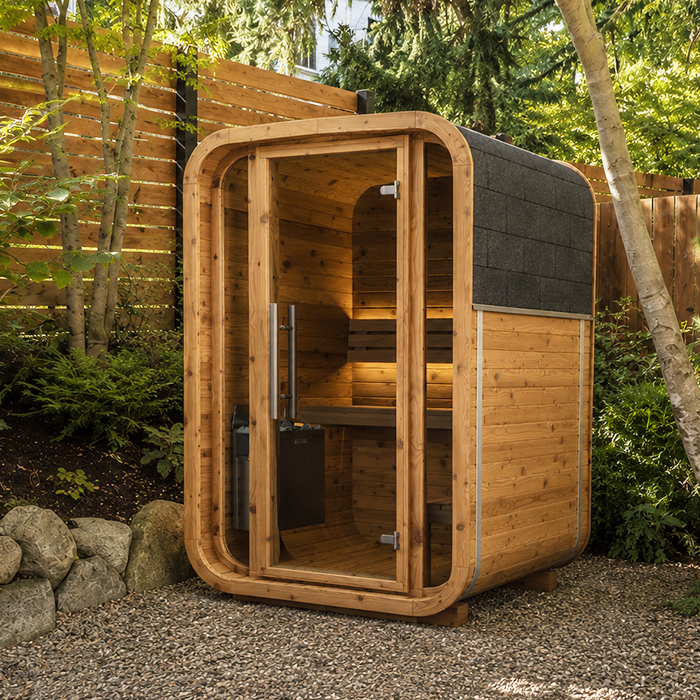
Treat the heater and its controls as a separate part of the scope. Ask for the proposed heater’s make and model, the heating type, the control arrangement and any associated components included in the price. Request the relevant product documentation so the supplier can confirm that the quoted equipment matches the specified sauna configuration. A quote for the Sauna HC-225, listed at 4.4 m², should identify the proposed heating equipment separately from the cabin reference. Where a heater is optional, ask for both the cabin-only amount and the total with the selected equipment. Where it is bundled into the package, record the equipment details without adding its cost again. This keeps a separately priced heater from making one offer look more expensive simply because another supplier has included it in a package line.
If the proposed setup is electric, state who is responsible for assessing and completing the electrical work, any changes to the supply, connection and final testing. Have a suitably qualified electrician assess work that falls outside the supplier’s stated scope; do not treat a vague line such as ‘electrical connection’ as a complete description. For another heating arrangement, ask the supplier to identify its required components and who supplies each one. Keep the sauna package, heater and professional services distinct in your comparison, even when one supplier presents them as a single total.
Delivery, offloading and final placement
Make sure each delivery figure relates to the same address and scope. Provide the suburb, postal code and relevant access information, then ask whether the quote covers transport only, offloading, movement to a particular position or placement where the sauna will be assembled. If you are comparing quotes for the Sauna N-210, listed at 4.43 m², put the delivery destination and agreed handover point beside that product reference. Use the same description for every supplier: delivery to the entrance and placement at the assembly position are not interchangeable entries. If one supplier combines delivery and placement in a single charge, record both tasks as included under that charge rather than adding a second allowance for work already covered.
Ask suppliers to state any assumptions about vehicle access, restricted routes, lifting equipment, packaging removal or separate deliveries. Clarify who arranges each service and whether an item is included, separately priced or left to you. Do not assume that delivery to the property means unloading or carrying the package to its final position. If access has not been assessed, record that as an open point and ask how a change in the stated conditions would affect the quote. Keeping these details in writing helps distinguish a genuine price difference from a difference in delivery scope.
What 'installation' covers
Ask suppliers to define installation in specific tasks. It might refer only to assembly, or it may include additional work; the label by itself does not tell you what is covered. Check who assembles the sauna, what preparation must already be complete, whether fitting the quoted equipment is included, and what work remains for another provider. For a quote naming the Sauna N-250, listed at 5.27 m², keep the product reference and the installation description in separate rows. Ask the supplier to describe the point at which their work is complete. A statement such as assembly only leaves a different set of responsibilities from a scope that also names equipment fitting and testing. Compare those tasks before deciding whether two installation charges cover equivalent work.
Separate assembly from delivery, site preparation and electrical work, even if one supplier can coordinate several of them. Ask whether labour, travel, removal of packaging and any stated testing or commissioning are included or excluded. Confirm who needs to be on site and what must be ready before the installer arrives. If work cannot proceed because a prerequisite is missing, ask how the supplier will handle the resulting visit or variation. These questions do not require technical assumptions: they make clear which tasks are part of the quoted service and which remain your responsibility.
Site preparation and third-party work
Check what must be ready at the site before delivery or assembly. Depending on the specified product and location, the supplier may identify requirements relating to the supporting surface, drainage, access or services. Ask for the relevant drawing, manual or written prerequisites rather than guessing from a product photograph. If the selected model is the Sauna LC-260, whose catalogue entry states 5.12 m², attach the site-preparation requirements for that quoted configuration to your comparison. Separate work the supplier has priced from work they expect you to arrange beforehand. For each prerequisite, note whether it is already satisfied, needs a price or still needs clarification. This distinguishes an existing site feature from a project cost that has simply been left out of the sauna quotation.
List work that might sit outside the sauna supplier’s package, such as preparing the site, altering an existing service or arranging a separate specialist. Ask which items are included, which you must arrange and which depend on an assessment that has not yet taken place. Where a building, electrical or other specialist review may be relevant, confirm the need with an appropriate local professional or authority rather than assuming the quotation answers it. If the site has not been assessed, keep the possible work visible as an unresolved cost instead of treating it as zero. When obtaining a separate estimate, describe the same task and completion point used in the supplier’s scope. Otherwise, you may price only part of the excluded work or pay for a task already covered elsewhere.
Exclusions, assumptions and allowances
Read the notes below the price as carefully as the main item list. Mark phrases such as ‘excluded’, ‘by client’, ‘subject to site inspection’ and ‘allowance’, then turn each one into a clear question: what work is involved, who will do it, and is its cost included? On a quotation for the Sauna HCF-300, listed at 6.89 m², keep these qualifications alongside the relevant work items rather than in a general notes box. If an exclusion contradicts an inclusion elsewhere in the quotation, ask the supplier to resolve it in a revised version. Do not choose whichever wording gives the lower total. A clear answer should identify both the task and its price status, so the same uncertainty does not remain hidden under different wording.
Keep firm prices, provisional sums and optional estimates in separate columns. For an allowance, ask what it covers, what assumptions it uses and how any difference will be handled once the work is confirmed. If a necessary task has no price, request a separate estimate or obtain one from the appropriate provider before treating the overall project as comparable. Do not add an arbitrary amount to fill a gap, and do not let a blank line disappear from the decision. An unresolved item is a real uncertainty, even if the quoted total does not show it.
Adjusted totals, tax and quote terms
Once the scope is aligned, calculate a comparable project total: start with the quoted amount and add the priced cost of any required work or components it leaves out. Keep optional extras out of that figure unless they are part of your brief. The Sauna LCF-300 listing states 6.89 m², the same area listed for the HCF-300; that shared figure is not proof of matching configurations or quotation packages. Keep each model’s adjusted total attached to its own specification. Show the original quotation, the additions needed to meet your brief and the resulting comparison total separately. If removing an unwanted option would reduce a quote, use the supplier’s revised amount rather than subtracting an assumed value. Leave any unpriced required work clearly marked beside the total.
Ask whether each amount includes VAT and whether any work will be invoiced separately, so you are comparing totals on the same basis. Check the quotation date and validity period, payment stages, stated lead-time assumptions and how variations are handled. These terms can affect how useful a total is, even when the item lists look similar. Do not assume a blank field means there is no charge or that a verbal clarification has changed the written offer. Ask for corrected or revised figures where necessary, and keep the version used for comparison with your project brief.
A comparison sheet for the final decision
A simple spreadsheet or written table is usually enough. Give it one row for each requirement: model and configuration, supplied components, heater and controls, delivery, offloading, installation, site preparation, tax basis and quote terms. For each supplier, record what is included, excluded, optional or unresolved, then note any price for filling a required gap. Add a column for the document or answer supporting each entry, such as a revised quotation, drawing or written clarification. Use a consistent label for each status: a blank cell is too easy to mistake for an included item. Where one package price covers several rows, refer those rows back to the same charge and count it only once. Keep the date or version of each answer with the entry, so an older assumption does not override a later clarification.
Before deciding, mark every difference as matched, priced, optional or still uncertain. Ask suppliers to revise their quotations against the same schedule if a material point remains unclear, and make sure the revised total reflects the agreed work rather than a changed configuration. Compare the adjusted amounts alongside the remaining assumptions and the responsibilities you would need to manage. If an unresolved item could change the scope substantially, settle it or keep it prominent in the decision. The result is a comparison of the projects being offered, not simply the figures printed at the top.
Frequently asked questions
Should I compare the headline totals or the line items?
Start with the line items to check whether both quotations cover the same product and work. Then add the cost of required items that are missing from either quote. Compare the resulting totals on the same tax basis, while keeping any unpriced gaps visible rather than treating them as free.
What if one quote leaves out delivery or installation?
Ask that supplier to price the missing work separately, using the same address, access details and installation scope as the other quotation. If the supplier does not provide it, request a comparable estimate from another provider and record who would be responsible for coordinating the work.
Can two quotes for the same model still differ?
Yes. They may refer to different configuration choices or include different components, delivery arrangements and labour. Check the exact model reference and supporting drawing, then compare the written inclusion schedule. A matching model name is a useful starting point, not proof that the complete packages are identical.
How should I treat a provisional sum or allowance?
Record it as an estimate, not as a confirmed fixed amount. Ask what work and quantities it covers, what assumptions it relies on, and how any difference will be calculated. Keep it separate from firm prices in your comparison, especially if the work is necessary for the project.
Is the lowest sauna quotation necessarily the best value?
Not until you know that the scope matches. A lower figure may exclude equipment, site work or installation that another supplier has included. Once required gaps are priced, compare the adjusted totals, the clarity of each supplier’s assumptions and any unresolved work—not just the amount at the top of the page.
When the scope is aligned, a price difference becomes easier to understand: it may come from the selected configuration, supplied components, delivery, labour or work left outside the quotation. Keep those causes visible, and give unresolved items their own place in the decision. The fairest comparison is the one that shows what each total actually buys and what you would still need to arrange.
