
How to Calculate Electric Sauna Cost per Session
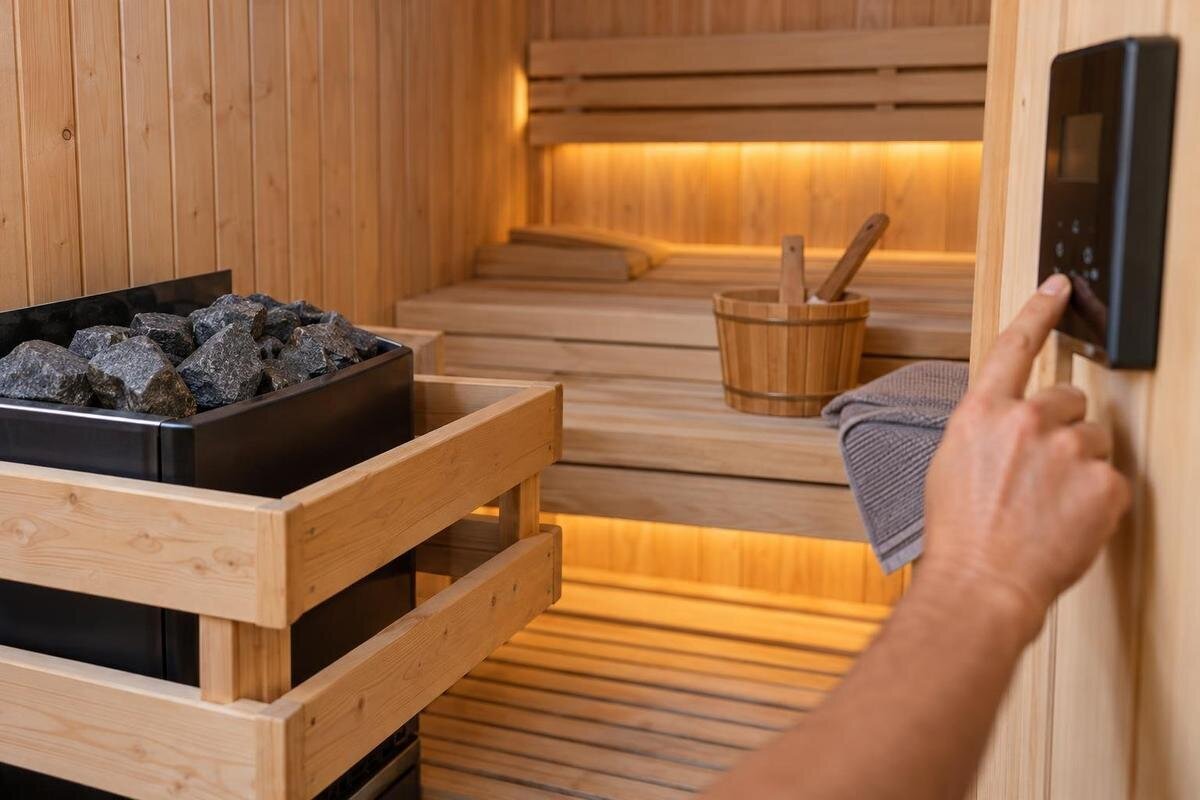
Sauna running costs
To calculate an electric sauna’s electricity cost per session, use the energy measured from heat-up through the end of use and the tariff that applied to those units. This gives you a figure you can check and compare. A heater’s rated power is useful context, but it does not mean the heater draws full power continuously. The calculation below separates what the meter records, how your tariff prices it and what remains an estimate.
Set a clear boundary for one session
First decide exactly what counts as one session. Measure from just before the heater is switched on until it is switched off after the last bathing period. That captures preheating, bathing and pauses when the heater stays on. If you switch it off between rounds and reheat, include those reheating periods only if they reflect the pattern you want to cost. Note whether the sauna starts cold or is already warm; equal bathing times do not make those sessions equivalent. If you heat it well before people arrive, begin the measurement at that earlier switch-on or record the preheat separately so it is not left out.
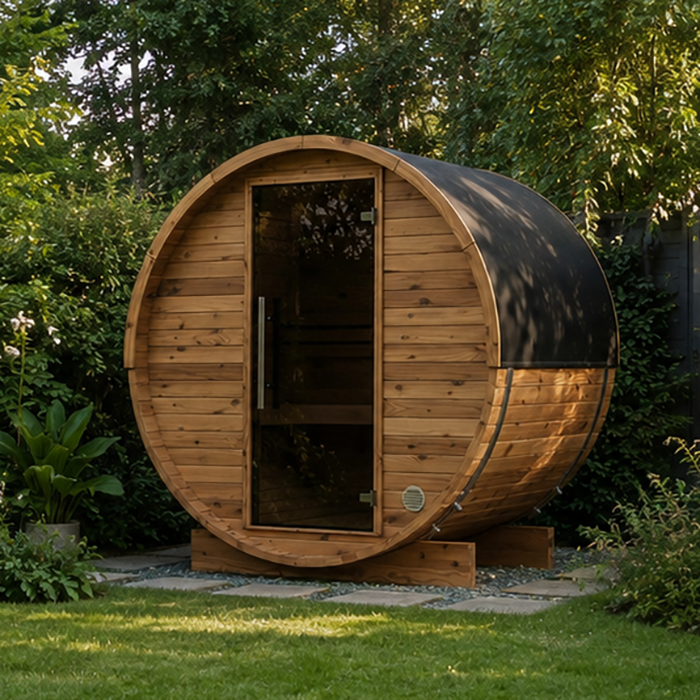
Decide which electrical loads your answer covers. A reading from the heater supply is heater-only; a meter covering a wider sauna supply may also include lighting, controls or ventilation, if those are on that supply. Neither scope is automatically wrong, but use the same one for every comparison. The listing for Thermowood Barrel Sauna LC-260 identifies a model with a listed floor area of 5.12 m²; that helps identify the cabin, but it is not a kWh-per-session value. Record the actual heater setup and any separately metered loads beside the model name. If a light or fan runs on a separate circuit, it will not appear in a heater-only reading.
Measure from heat-up to switch-off
Take the first reading immediately before the heater starts and the second after the session is finished and the heater is off. Use the meter’s cumulative energy reading in kWh, not an instantaneous power display in kW. Subtract the first value from the second; the difference is the measured consumption within that meter boundary. Write down both readings, the date and the times, rather than keeping only the calculated cost. This makes it possible to check the subtraction and spot a missed preheat or a reading taken after warming had already begun. If a monitor gives a session total directly, keep the start and end times as context.
Resolution and timing matter. If a display rounds to whole kWh, one session’s change may be too small to read accurately; log several comparable sessions over a longer interval or use a suitably precise meter, then mark the result as approximate. Do not report more decimal places than the display supports. A smart-meter graph helps only if its interval data are granular enough to isolate heat-up and use. In a log for Thermowood Barrel Sauna HCF-300, pair each reading with the heater configuration and whether the cabin began cold or warm; the product name alone cannot explain what produced the recorded number.
Separate sauna use from household electricity
The clearest reading comes from a suitable meter that records energy for the sauna circuit only. A whole-house meter can still provide a rough check: compare readings before and after, but only the increase caused by the sauna belongs in the session total. Fridges, pumps, cooking, water heating and other loads may run at the same time. Their use accumulates during the test, even if the sauna is the only thing deliberately switched on. Turning appliances off can reduce interference, but does not remove every background load. Repeat the test under similar household conditions and label the result as approximate rather than assigning every extra unit to the heater.
Check the measurement boundary too if the home has solar generation, a battery or a meter that reports net import: energy supplied or stored during the interval can make an import difference lower than the sauna circuit’s actual use. Some sauna heaters are fixed-connected or unsuitable for ordinary plug-in energy monitors, so do not assume a smart plug is appropriate. For a trial with Thermowood Barrel Sauna LCF-300, confirm that the chosen meter covers the intended loads; ask a qualified electrician to advise on suitable metering for the actual installation rather than changing wiring yourself. Label a heater-only result if other sauna loads are outside that meter.
Use the tariff for the measured units
Use the current tariff for your account and supply arrangement, not a remembered average or a rate from another household. Find the variable energy charge in rand per kilowatt-hour. If it is shown in cents, divide the cents figure by 100 to express it in rand per kWh. Check whether the displayed rate already includes VAT or other per-unit items; follow the bill’s convention and do not add a charge twice. With prepaid electricity, use recorded kWh and the relevant tariff breakdown, not the amount loaded as though every rand bought units at one unchanged rate. Avoid deriving a per-session rate from the total bill divided by total units if that folds in fixed fees.
If rates vary by time of use, split measured energy between the applicable time bands and calculate each portion separately; a single before-and-after total cannot show how much fell into each band. Use interval data or readings at the band change; if neither is available, state the allocation assumption. With block tariffs, the marginal rate may depend on total account use for the billing period. Exclude fixed supply fees from the extra cost of one session unless you deliberately show an allocated all-in average; handle demand-based items under their own billing rule. A comparison involving Thermowood Barrel Sauna S-140 is useful only when tariff and timing assumptions are held constant.
Work through a measured example
Suppose a suitable meter starts at 1,250.0 kWh and reads 1,258.4 kWh after a session that includes preheating and bathing. The difference is 8.4 kWh. A timed record might split that into 5.6 kWh during heat-up and 2.8 kWh while the heater is left on during bathing; the two parts still add to 8.4 kWh. At a flat, entirely hypothetical rate of R3.20/kWh, the energy charge is 8.4 × R3.20 = R26.88. Assume the meter isolates the session and no other load is included. R3.20/kWh is illustrative arithmetic, not a current South African tariff.
R26.88 is a variable electricity charge, not the complete cost of owning or installing a sauna, and it excludes fixed monthly fees unless you add an explicit allocated share. If the rate changes during the session, use the sum of each band’s kWh multiplied by its rate instead of one price. This arithmetic is a method, not a forecast for Thermowood Barrel Sauna HC-150: do not assign the example’s 8.4 kWh to a model. Use readings from the selected heater setup, or label a pre-purchase result as an estimate with its assumptions. Keep full precision through the multiplication and round only the displayed rand total.
Why heater rating is not measured energy use
Power and energy answer different questions. A rating in kilowatts (kW) describes power at a stated operating condition; consumption is energy accumulated over time in kilowatt-hours (kWh). Multiplying rated kW by session hours assumes the heater draws full rated input every minute. For example, a 6 kW heater at full input for two hours would use 12 kWh; that multiplication is correct only under that assumption and for the heater alone. A thermostat-controlled heater can switch or cycle rather than remain at full input, so multiplying its rating by the session length does not give you measured consumption. It gives you a theoretical full-load figure, not an actual electricity charge.
Use the rating as a sense-check or a provisional scenario, not as the final cost calculation. For an estimate, check documentation for the actual heater selected and confirm the intended configuration with the supplier or installer; a cabin model name does not supply that information. The listing for Thermowood Barrel Sauna HC-225 identifies the sauna model, but it does not by itself establish heater input, cycle time or energy per visit. Do not invent a thermostat duty factor to turn the rating into a precise kWh value. Once installed, replace assumptions with readings from complete sessions.
Why session readings vary
Equal session lengths do not necessarily use equal energy. Starting with a cold cabin can require more energy during heat-up than starting with a cabin that is already warm. Outdoor conditions, the chosen temperature setting, cabin construction, ventilation, heater control behaviour, door openings and the time the heater remains on all affect consumption. A longer preheat or pause with the heater left on can raise consumption even if bathing time is unchanged. Record only the conditions needed to explain a difference. You do not need to model every variable to get a useful measured cost, but noting the starting state and heater-on duration makes comparisons more meaningful.
Build a typical figure from several readings taken under conditions you expect to use, and keep the range visible instead of choosing the lowest result. Record cold or warm start, preheat duration and total heater-on time; compare sessions with similar conditions. At a single tariff, average kWh can describe typical use. If sessions fall into different time-of-use rates, calculate the cost of each session first, then average the costs or compare the bands; averaging kWh and applying one unrelated rate can mislead. For Thermowood Barrel Sauna N-210, as for any model, repeated measured results are more useful than one assumed figure.
Estimate running costs before buying
Before there are readings, keep an estimate separate from an observed cost. Ask which heater configuration is included or intended for the exact sauna being priced, what its rated input is, and which other electrical loads belong in the session total. Check the details in the relevant product documentation or written quotation; do not infer them from a cabin’s name or footprint. A measured result from another sauna is a comparison point only if its heater, starting condition, session pattern, meter boundary and tariff are sufficiently similar. If these details are unknown, state that the estimate is provisional rather than presenting a precise number.
For a candidate such as Thermowood Barrel Sauna N-250, the model name helps label the option, but the worksheet still needs a documented heater setup, expected warm-up and bathing pattern, and your own tariff. If only rated power is available, calculate a clearly labelled full-load scenario rather than claiming it represents likely use; a range can show how different operating-time assumptions change the result. Keep the assumptions beside the figure so it can be reviewed. After the sauna is in use, replace the scenario with measured readings. This separates a purchase estimate from a promise about actual running costs.
Project the monthly electricity cost
Once you have a representative session cost, multiply it by the number of sessions expected in a month for a first monthly estimate. You can also estimate monthly energy by multiplying average kWh per session by planned sessions, then pricing that quantity using the applicable tariff. If use varies, state how many sessions you assumed and calculate high-use or seasonal months separately. When rates change by time of use or consumption block, use the corresponding energy and rate rather than multiplying every session by a convenient single price. Keeping sessions, average kWh, tariff and meter scope visible makes the projection easy to revise when your routine changes.
Separate marginal energy use from fixed or shared bill items. A monthly supply charge remains even when the sauna is not used, so spreading it across sessions creates an allocated average, not the extra electricity cost of one more session. If your tariff includes a demand charge or tiered rate, the sauna may affect the bill in a way simple kWh multiplication does not show; apply the tariff’s own billing basis or leave that component outside the estimate and say so. Purchase, delivery, installation and maintenance are separate budget lines, not part of the session-energy calculation.
Keep a simple session log
Use one row per session with the date, meter start and end, calculated kWh, time the heater was switched on and off, tariff band if relevant, and whether the measurement covers the heater alone or the wider sauna supply. Add a short note such as cold start, warm start or unusually long hold only when it explains a result. Keep unrounded readings where the display allows; the original values let you reproduce the subtraction later. If a whole-house meter is the only option, mark the entry approximate and note any major concurrent load. A spreadsheet or paper log is enough if the entries are consistent.
At regular intervals, compare sessions with similar starting conditions, calculate an average and keep the lowest-to-highest range. Recheck the tariff when it changes; a stable kWh reading can still produce a different rand cost. Investigate an outlier by checking measurement boundaries, display resolution and other loads before interpreting it as a change in heater performance. If your meter rounds heavily, combine several sessions for an average instead of overstating precision. This small record makes it easier to distinguish one session’s cost from a monthly estimate and to update an early assumption using evidence.
Frequently asked questions
Can I multiply the heater’s rated kW by the session length?
Only if the heater draws its full rated input for the entire period. A thermostat-controlled heater may switch or cycle, so rated kW multiplied by hours describes a full-load scenario, not necessarily actual consumption. Measure the session in kWh where possible, then apply the tariff. The calculation also excludes any other loads outside the meter.
Should the warm-up period be included?
Yes, if your figure is meant to cover a complete session from switch-on. Take the first reading before preheating begins and the second after the heater is off at the end of bathing. If you heat the sauna earlier, include that period in the reading or state clearly that you have costed it separately.
How can I estimate use without a separate sauna meter?
A whole-house meter can give a rough estimate if you take readings immediately before and after use, but other household electricity also accumulates during that interval. Note concurrent loads and treat the result as approximate. For a dedicated reading, ask a qualified electrician about suitable metering for the actual heater and installation.
Why can the cost change when session lengths are the same?
The same amount of time does not guarantee the same energy use. Starting cold, a longer warm-up, the chosen setting, door openings or keeping the heater on during breaks can change consumption. The tariff may also differ by time of use. Compare readings taken under similar conditions and record the rate used.
Can a sauna’s model or floor area tell me its running cost?
No. A model name or floor-area listing does not establish the heater configuration or measured kWh for a session. To calculate a cost, you need energy used by the actual setup and the applicable tariff. Before buying, use documented heater information only for a clearly labelled estimate; replace it with meter readings when available.
Use the meter to establish how many kWh the complete sauna session actually consumes, then use the rate that applied to those units. A good figure says whether it includes heat-up, bathing and any other sauna loads; it also names the tariff and any exclusions. Keep the model, heater setup and assumptions attached to the record, and update the result when conditions or prices change. The result is not a universal sauna price, but a transparent per-session figure for your own use and budget.
