
Planning Five Years of Outdoor Sauna Ownership Costs
Outdoor sauna ownership costs
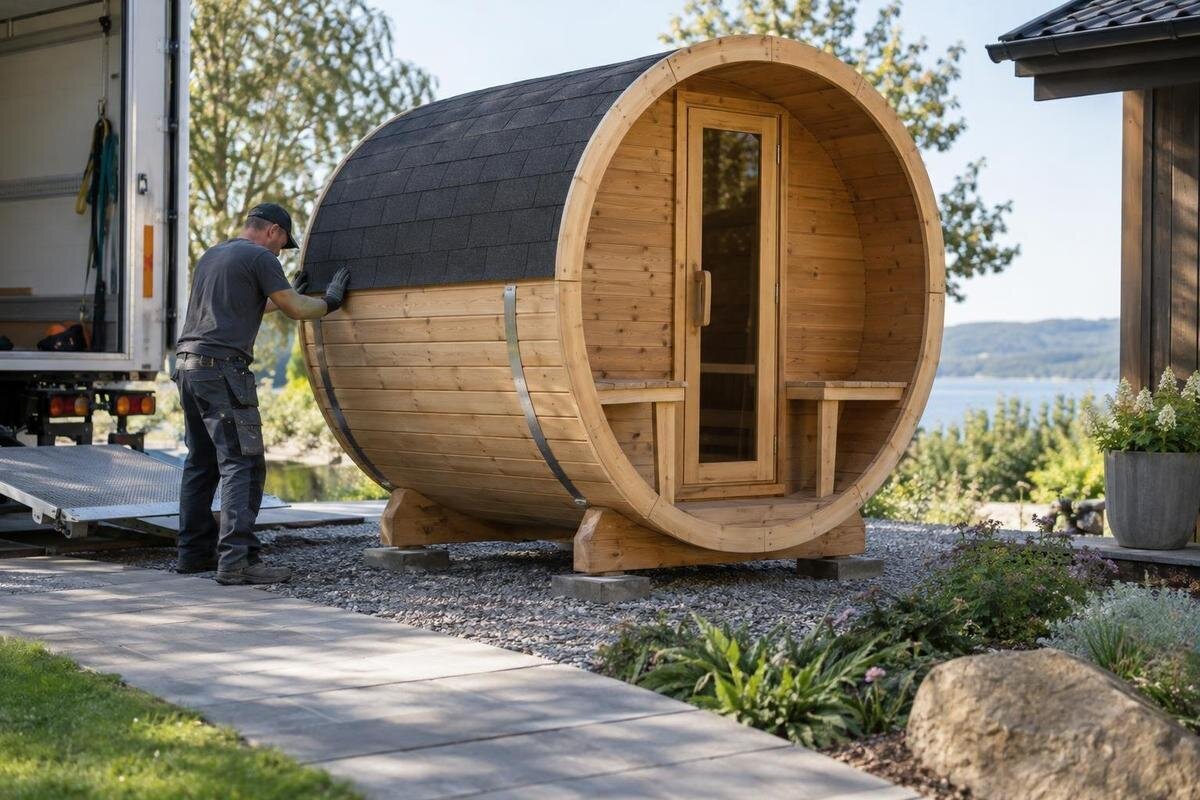
Owning an outdoor sauna for five years involves more than paying the quoted product price. Delivery, site preparation, installation, energy, servicing and routine upkeep can appear on different invoices, and the amounts depend on the configuration, property and actual use. Without a verified local quotation or tariff, a rand total would be guesswork. This guide sets out a clear planning scenario, shows where to enter real figures, and keeps the initial installed project cost separate from later ownership spending.
01
The five-year total is more than the sauna price
Treat the figure on a product listing or product-only quotation as one input, not as the budget for ownership. Split the five-year view into two periods: the one-off project spend before first use, then recurring or occasional costs in years one to five. Initial expenditure can include the sauna and chosen configuration, delivery and unloading, the base or other site work, assembly, professional electrical connection for an electric setup, and commissioning if separately charged. Any item may be bundled or excluded. Ask the seller to mark inclusions and exclusions in writing; leave unknown entries labelled provisional rather than entering zero. This stops a product price being confused with the cash needed for a particular installation.
A simple ledger keeps the figures clear. Set C0 as the product and configuration, delivery, site preparation, assembly or installation, connection and commissioning. Then calculate the five-year estimate as C0 plus energy, servicing, routine maintenance and any repair or replacement allowance for years one to five. Keep optional items such as finance or insurance outside the core total unless you have a specific figure and choose to include them. Record every amount in rand (ZAR), with its date and whether it is a quote, measured bill or estimate. The store listing for Sauna LCF-300 identifies a Thermowood Barrel Sauna and shows 6.89 m²; that listing is a product reference, not an installed-cost figure or evidence of what the quotation includes.
A transparent five-year use scenario
For a clearly defined base case, assume one electrically heated outdoor sauna is bought and installed at the beginning of the five-year period. The household plans to use it twice a week for 50 weeks each year: 100 sessions annually and 500 across five years. Count one complete heating cycle as one session, regardless of how many people share it. These figures are planning assumptions, not typical-use claims. Put the actual written purchase quotation for one exact configuration into the purchase line, and record installation costs separately. Exclude finance charges and any resale value from this base case so that it shows planned project and ownership spending.
For servicing, the example has a placeholder for one paid visit in each year. Replace that count with the schedule and charges confirmed for the selected sauna; an annual visit is not a universal requirement. For routine maintenance, enter an allowance based on the care tasks and supplies specified for that model, and keep uncertain repairs in a separate line rather than inventing a failure cost. The store lists Sauna S-140 as a Thermowood Barrel Sauna with 1.93 m². That product detail does not establish its heater type or what is included, so do not apply the example’s electric-use assumptions to it without confirming the configuration.
02
Separate the sauna purchase from site and installation costs
Ask for an itemised price for the exact sauna and configuration, then request separate amounts for delivery to your address, unloading, assembly, site preparation, professional connections and commissioning where applicable. Do not assume that a quotation includes access or handling arrangements, a prepared base, wiring or foundation work unless it says so. The reverse is also true: if a service is included in a package, do not add it again as a separate cost. Ask whether the amount includes applicable taxes, what delivery assumptions it uses and how long the quotation remains valid. Scopes differ, so a clear list is more useful than comparing headline amounts alone.
Give the supplier and relevant tradespeople enough information about the intended site to identify what still needs assessment. Ask for a drawing for the exact model and have site work and electrical requirements assessed by appropriately qualified professionals; this guide does not specify a foundation or connection design. The listing for Sauna HC-150 shows 2.97 m², but that number alone does not confirm the unit’s footprint, required base or clearance. Ask what the listed area measures and which drawing should be used for site planning. Keep any unassessed work visibly provisional until it has been quoted.
Calculate five years of energy use from real readings
For the example’s 100 sessions a year, estimate energy costs from the consumption of a complete heating cycle and the tariff that applies to the additional electricity used. For each year, multiply the planned session count by the measured or otherwise supported kilowatt-hours per cycle, then by the applicable rand-per-kilowatt-hour rate. Add the five annual amounts for the five-year total. Use data for the selected configuration where possible, and include the full cycle rather than only the time spent bathing. Heater power by itself is not a measurement of energy consumed during a session.
Use your electricity account for the relevant rate and note the date; if rates change, show the assumption used for each future year rather than treating today’s rate as certain for all five. If you need separate consumption information, ask the supplier or a qualified professional about suitable, safe measurement rather than altering wiring yourself. Do not allocate an unchanged household fixed charge entirely to the sauna unless the project creates that additional charge. The Sauna HC-225 listing shows 4.4 m², but listed area does not establish heater consumption. Confirm the exact heater and configuration before filling in the energy estimate.
03
Set servicing costs from the actual maintenance schedule
Use the documentation for the exact sauna and heater to identify any service tasks, intervals and qualifications that apply. Ask the manufacturer or installer to confirm which inspections are required or recommended, who may carry them out, and whether there are relevant service conditions in the supplied paperwork. Do not assume every model needs an annual paid service. In the example, one visit a year is only a provisional budgeting line; replace it with the confirmed schedule, including no paid visit if that is what the applicable instructions support. Keep routine owner care separate from a paid service appointment.
Ask a service provider to state what the price covers, such as travel, call-out, labour, materials and any testing, and to identify work that would be charged separately. Estimate the line as the number of scheduled visits multiplied by the applicable written charges, with other work listed separately until it is priced. Check whether commissioning already includes a first visit so that year-one costs are not counted twice. Keep service records with the product documentation and use them to update later estimates. The listing for Sauna N-210 shows 4.43 m²; that detail identifies a product entry but does not specify its service schedule.
Budget for routine care and possible repairs
Separate ordinary care from repairs. Follow the chosen model’s instructions for cleaning and any other routine tasks, and record the supplies used and when the work is done. Do not assume that a generic oil, sealant or other treatment is suitable for every sauna; use a product only if the relevant instructions support it. A visible change or damaged component may need assessment rather than an improvised fix. For anything involving electrical equipment or a heater, ask an appropriately qualified professional instead of attempting a repair yourself.
Set a maintenance amount for each year from the tasks and materials actually specified for the model, using current prices or written quotations where possible. Keep a separate repair or replacement allowance and describe what it covers; do not invent a percentage or treat a reserve as proof that a part will fail. If an allowance is included in the plan but nothing is spent, distinguish the forecast from the eventual cash paid. The Sauna N-250 listing identifies a Thermowood Barrel Sauna and shows 5.27 m². Use the exact model details to request the correct care information, not to infer a finish, treatment or future repair bill.
04
Test how use and tariffs change the total
A small change in planned use changes the number of sessions in the energy calculation. With the same assumption of 50 weeks a year, one use a week produces 250 sessions over five years, two produces 500, and three produces 750. These are arithmetic examples, not forecasts. Recalculate energy from the revised session count and consumption data for the selected setup. If the length or pattern of a heating cycle changes, use evidence that reflects that pattern. Do not increase paid service visits in direct proportion to session count unless the actual service schedule calls for it.
Tariffs, service rates and repair quotations may change during the five-year period. Keep the base case dated, and use low and high cases only when they are grounded in your own use records or documented provider assumptions; do not present an invented escalation rate as fact. If you want a view in today’s rand as well as the expected cash amounts, show the method separately. The listing for Sauna LC-260 shows 5.12 m². If you change the model during planning, request a fresh quotation and recalculate the relevant costs from its confirmed configuration rather than carrying over assumptions about power or servicing.
Compare like-for-like quotes
To compare quotations, align the exact model and configuration, then check whether each amount covers the same work. List the sauna, included equipment, delivery and unloading, site preparation, assembly, professional connection, commissioning and any optional additions on separate rows. Mark each as included, excluded or not priced; an unpriced item is not the same as a zero-cost item. Check that quotations use the same delivery location and note their dates, tax treatment and validity. If a seller gives a bundled amount, ask for a breakdown or clearly mark which parts cannot be compared.
Apply the same five-year use assumptions to each option. Add the initial project costs, then use supported energy information, the relevant service schedule and the same approach to maintenance for both. If a future charge is unknown, leave it visible as unknown or enter a clearly labelled allowance, rather than making the cheaper-looking quotation appear complete. The store listing for Sauna HCF-300 identifies a Thermowood Barrel Sauna and shows 6.89 m². Use the exact product entry when requesting an offer and drawing, but do not infer delivery, heater details or installation from that listing. Compare the full estimated totals and any gaps in the evidence.
05
Set out the budget by year
A worksheet with columns for the initial project and years one to five makes the estimate easier to review. Put the sauna, delivery, site work, installation and commissioning in the period when they will be paid. Put energy, servicing and routine maintenance in the year they are expected, and record repairs when they occur or in a clearly labelled allowance. If your budget years run from the installation date rather than following calendar years, state the start and end dates of each 12-month period. For every figure, keep its source, date and status as quoted, measured or estimated; add the yearly totals to check the five-year sum.
Keep the assumptions beside the figures: the selected configuration, the 100-session annual plan, the tariff used, the service schedule and the basis for maintenance. As ownership begins, replace estimates with invoices, service records and electricity data, then compare actual use and spending with the plan. If one year is unusually quiet, do not automatically assume the same session count for every later year; update those columns to match your current plans. A reserve is a planning amount, not necessarily money spent, so show it separately from actual payments when reviewing the total.
Use the total to make a practical ownership decision
The five-year figure is useful for more than comparing product prices. It shows the initial cash needed for the project, the expected ongoing amount and which lines are still uncertain. If it helps with comparison, divide the projected five-year total by the planned 500 sessions to calculate an average ownership cost per planned session. That figure includes the initial project and other budgeted costs; it is not the electricity cost of one session. Recalculate it if your planned use changes, and keep the session count visible so the result is not mistaken for a fixed price.
Before choosing, check whether the upfront project amount and the ongoing budget are both manageable, and resolve the biggest unknowns in the site, installation, energy and servicing lines. Ask for a revised written quotation if the configuration or scope changes. Keep assumptions separate from confirmed charges, and revisit the estimate when measured use and actual bills become available. A five-year budget is most useful when it reflects the sauna you intend to buy, the work your site requires and the way you expect to use it—not a product-only price presented as the full cost.
Frequently asked questions
What should a five-year outdoor sauna budget include?
Include the quoted sauna and configuration, delivery, site preparation, installation or connection, and commissioning in the initial project cost. Add five years of energy, servicing, routine maintenance and any repairs or replacements you choose to allow for. Keep bundled costs from being counted twice.
How many sauna sessions should I use in the example?
This guide assumes two uses a week for 50 weeks a year: 100 sessions annually and 500 over five years. It is a planning assumption, not a prediction. Use your own expected pattern and recalculate the energy line if it differs.
Can I use a product listing price as the installed price?
Not unless the listing or quotation confirms that it includes all the work and charges for your project. Check delivery, site preparation, assembly, professional connections and commissioning individually. Treat items that are not priced as unknown, rather than as free.
How can I estimate electricity costs without a tariff figure?
Use the applicable rate shown on your electricity account and an energy figure based on the selected setup and a complete heating cycle. If you do not have reliable consumption data, ask the supplier or a qualified professional what evidence is available. Do not substitute heater power for measured consumption.
Should I budget for a paid service visit every year?
Use the maintenance schedule for the exact sauna and heater, confirmed with the manufacturer or installer. The annual visit in this guide is only a placeholder for a scenario; it is not a universal service interval. Replace it with the actual schedule and written charges.
A useful five-year sauna budget begins with the full, itemised project cost and continues with realistic estimates for use, energy, servicing and maintenance. The example’s 500 planned sessions, provisional annual service line and care allowance make the assumptions visible without pretending to know prices or product-specific requirements. Replace each placeholder with details for the exact configuration, written quotations and actual electricity data. That leaves you with a budget you can review and update, rather than a product price that hides the costs still to come.
