
Compact Premium or Larger Basic Sauna: Budget Priorities
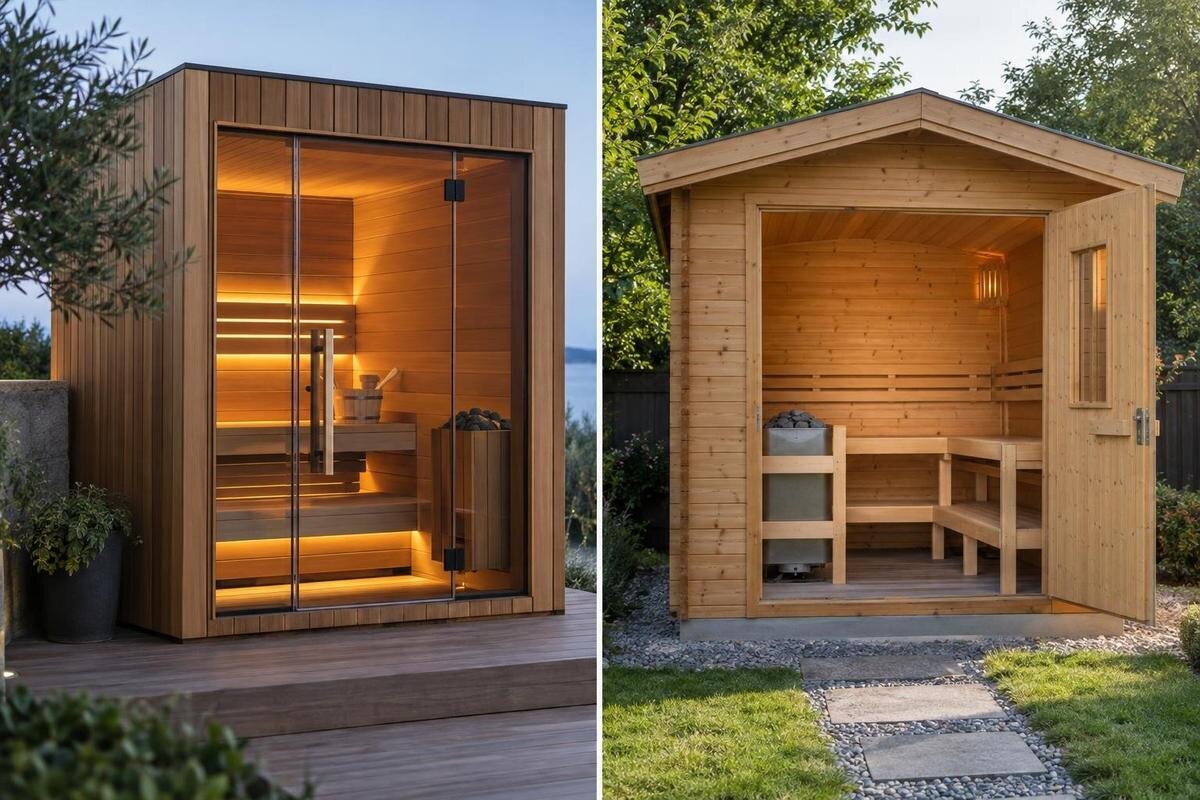
Sauna buying guide
A fixed sauna budget forces a choice between competing priorities, but “compact premium” and “larger basic” are not reliable product categories. One option may suit frequent solo use while another fits shared sessions, but the answer depends on the room you will actually use, the construction details you can verify and what is included in the project price. Compare complete, like-for-like options against your own must-haves instead of assuming that a bigger footprint or a premium label is automatically better value.
Treat “premium” and “basic” as labels
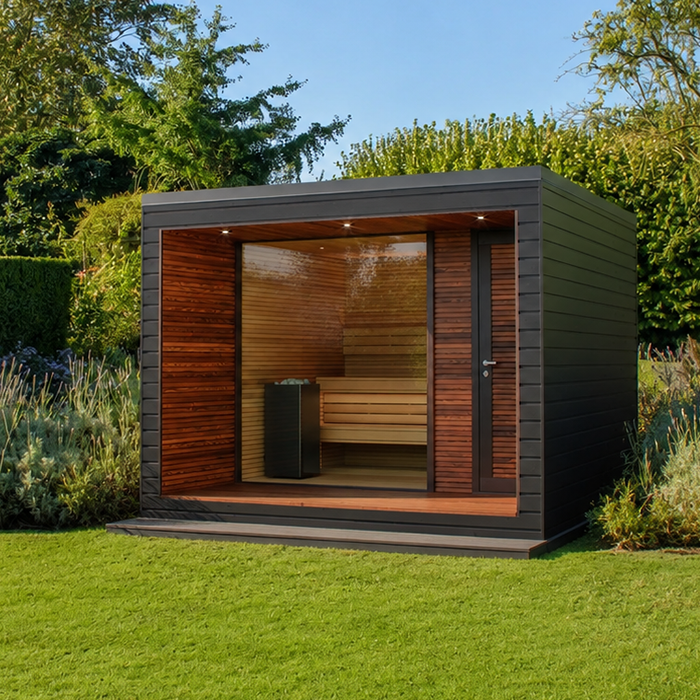
In this comparison, “premium” and “basic” are shorthand for two packages you are considering, not universal grades with a fixed list of features. A seller’s label cannot tell you by itself which timber, floor, wall or roof construction, door, heater, controls or accessories are included. Nor does “basic” automatically mean unsuitable, or “premium” guarantee a better-built cabin. The same words can refer to different combinations from different sellers, so ask which exact model and configuration the description covers. Treat each offer as a set of stated specifications and inclusions, not as a quality ranking. Save the exact wording and list unanswered questions so revisions can be compared accurately.
Before browsing, write down who will use the sauna on a normal occasion, the busiest group you reasonably expect and how often the two situations occur. Note whether everyone will sit upright or whether a longer bench position matters, and how much room is available at the site. Add the fixed limit for the whole project, not just the cabin. These answers define the trade-off: extra room may be valuable if several people will use it regularly, while a compact room may suit mostly solo use. Give more weight to frequent use than to an occasional maximum headcount, unless hosting is a central purpose.
Budget for the complete project
Set aside the portion of the budget that must cover more than the cabin. Ask for a written scope showing the sauna, selected heater and controls, delivery, assembly, base or site preparation and any required services; mark every line as included, optional, excluded or still to be confirmed. Details vary by product and site, so do not assume a displayed cabin price is the full amount you will spend. Ask who is arranging any work outside the quote. A larger room may use more of the allowance before you have priced the items needed to make the project workable. A written split also clarifies responsibility for excluded items.
Keep one-time project costs separate from ongoing ownership costs when comparing priorities. The purchase and installation are one decision; electricity and any maintenance materials belong in a separate view, with figures based on the proposed configuration rather than a guess. There is no useful universal percentage to reserve for each line without knowing the site and configuration. Total the amounts you can verify, mark what remains unquoted and decide how much of the fixed ceiling must stay available for those items. This makes it harder for an appealing size or finish upgrade to displace an essential part of the project unnoticed. If two cabins require different service arrangements, compare those too.
Measure usable room, not just listed area
Catalogue area is not automatically the usable seating area. Benches, the heater, the door opening and the room’s shape affect how people fit and move, while an outside measurement may say little about clear internal dimensions. Ask for a dimensioned plan that separates external and internal measurements and shows bench positions. Then map those positions against the people who will use them. Check bench width and depth, legroom and the route to sit down and stand up; a single area figure cannot tell you whether seats are comfortable or whether the room suits the way you plan to sit. If a plan gives only external measurements, request the interior dimensions before deciding which cabin offers more useful room.
For a sense of how a catalogue can present a compact-size figure, the store lists Sauna S-140 at 1.93 m². That figure alone does not establish internal dimensions, seating capacity or clear floor space after fittings. Use it as a prompt to open the product information and request the drawing, not as a person-count rule. Apply the same check to every candidate: compare documented interior measurements and bench layout with your needs, and ask how the stated area is measured if the product information does not say. Record unanswered measurements rather than filling them in from a product photo or model number.
Check how the cabin fits the site
Check how each cabin would fit on the proposed site. Mark the full external footprint, then account separately for door swing, a clear route in and out, access for delivery and space needed around the cabin for assembly or future care. Check how people will reach the entrance from the house or changing area, and whether that route stays usable when wet or cluttered; do not count it as sauna floor space. A smaller cabin can still be awkward to reach if its entrance faces an obstruction. Include nearby walls, trees and other obstacles in your sketch so you can compare positions rather than judging the fit from floor area alone.
The catalogue lists Sauna HC-150 at 2.97 m². To assess its fit, use the external dimensions on the manufacturer’s drawing and confirm the required clearances and base details with the seller or installer against the supplied instructions. Site access and ground conditions are property-specific; do not choose a foundation from the listed area alone. Ask whether assembly access must remain clear during the work, as this can influence the position you choose. If the site or services need assessment by a qualified professional, allow for that before committing the budget. Compare any site-specific work required for each option alongside the cabin price.
Look for evidence of build quality
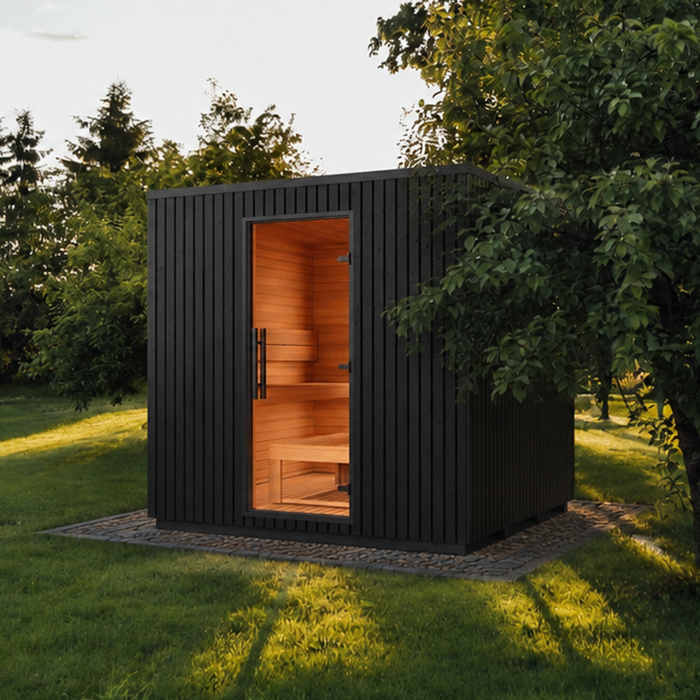
Turn “build quality” into questions with evidence behind them. Ask what is specified for the timber and the floor, wall and roof build-up; how the parts are joined; how exposed edges and openings are finished; and how the door and glazing are fitted. Request the installation and care instructions and a clear schedule of what arrives as standard versus optional. Ask for drawings or written details where a sales description uses broad terms such as “solid”, “premium” or “weather-resistant”. Compare the actual specification, and have unclear terms defined for the exact configuration you are considering. Keep the answers with the quote so you can check whether a revised offer changes them.
The store identifies Sauna N-210 as a Thermowood Barrel Sauna and lists 4.43 m². Neither the name nor the area establishes its construction quality. For your budget comparison, identify the specific construction detail you would pay more for and ask where it appears in the written specification. That might mean comparing the stated wall build-up, jointing or roof finish rather than choosing by appearance. If both offers specify the same detail, it does not explain a premium on its own. If they differ, consider how much that difference matters to your priorities before giving up usable room to obtain it. Keep this assessment separate from optional decorative finishes.
Compare the same configuration
Make a side-by-side comparison of the exact packages, not a premium cabin against a bare listing with different assumptions. Record the cabin construction, internal dimensions, bench arrangement, heater model and controls, glazing or other selected extras, delivery, assembly and site work. Mark each item included, optional, excluded or not confirmed. Then ask for revised quotes so both describe the use and project scope you want. If the configuration cannot be identical, write the differences beside the totals. Otherwise, a cheaper-looking figure may simply leave out a cost you have not yet allowed for, rather than demonstrate better value. Keep the same assumptions for access, site work and heater selection in both comparisons.
The catalogue lists Sauna LC-260 at 5.12 m². When requesting an offer for this or another candidate, identify the exact version and selected options so that the drawing, manual and quote describe the same package. Confirm current local availability and configuration, then check that any upgrades you selected appear in the itemised offer. If the supplier proposes a substitution, update the comparison rather than carrying over the earlier assumptions. Keep the quote date and configuration together so that a later revision does not get compared with an outdated package. A model code helps identify the cabin, but the itemised offer establishes what you are comparing for the money.
Comfort features that matter in daily use
Comfort is personal, so list the details you will notice on every visit rather than treating every optional feature as essential. Bench width and depth, back support, seat height, foot position, headroom and the postures users prefer are worth checking against the plan. Think about the entry and controls too: can the intended users reach them comfortably, and is there room to move without repeatedly shifting someone else? A polished finish cannot compensate for a bench that feels cramped or an awkward route. Distinguish features that change how the room is used from decorative choices you would notice only occasionally. If someone expects a particular posture, check that the bench plan supports it.
The listing for Sauna HC-225 gives an area of 4.4 m². Assess its comfort through the interior measurements and layout rather than assigning a comfort rating from that figure. Separate your seating requirements from preferences for controls, lighting and other extras, and check which are included in the offer. Heater choice must suit the specified room and configuration; ask the manufacturer or supplier to confirm the match, and use a suitably qualified professional for electrical matters. Do not assume a sauna of a particular area will work with a heater you already own. Compare the proposed package with your comfort priorities before allocating money to optional extras.
When extra room is worth the trade-off
A larger room earns its place when the extra usable space solves a regular problem: more than one user at a time, different preferred seating positions, or enough space to move without disturbing somebody else. Test that against the busiest use you genuinely expect, rather than occasional guests who may never visit. Extra area can also claim more of the site and affect equipment or project scope, so ask whether it creates practical capacity or simply raises the listed area. If you cannot name the repeated use that needs the space, a larger cabin may not be the best use of the fixed budget. Ask each user whether they value extra movement or a more enclosed seating arrangement.
The store lists Sauna N-250 at 5.27 m². Use its internal plan and bench dimensions to identify what the extra room would actually let your group do; the listed area is not a seating-capacity claim. Compare that benefit with the difference in complete project quotes. Then name the feature you would have to forgo to afford the larger option. Is the additional seating or movement more important than that feature during normal use? This makes the compromise concrete rather than treating every increase in area as an improvement. If the listings use different area measures, clarify those before comparing them, and keep the final judgement tied to usable space.
Compare both options within the same budget
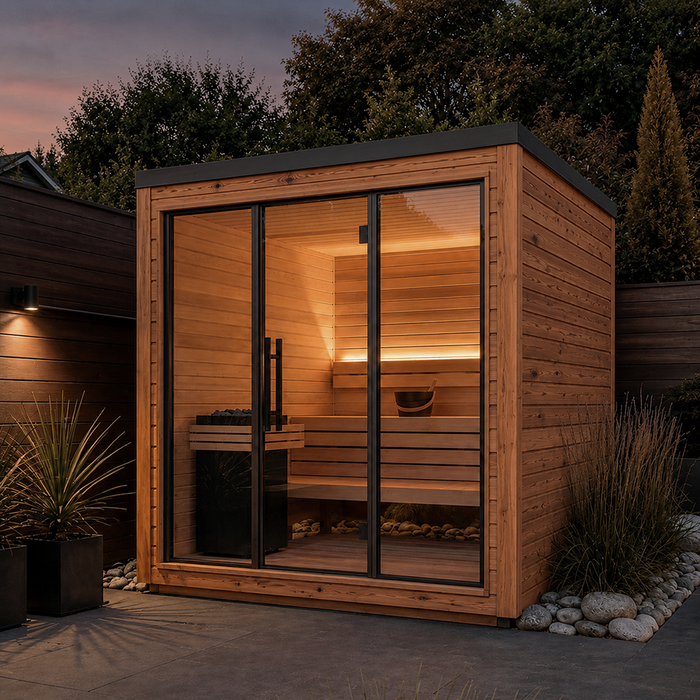
Compare two defined options against the same spending limit. In one column, specify the compact cabin and the construction or comfort details you would not give up; in the other, specify the larger cabin with the simpler specification you are prepared to accept. For each option, record what you gain, what you give up and which requirements remain unmet. Include the same project items and note every unresolved amount. If one option fits only by removing an essential, it is not genuinely within budget as quoted. Keep uncertain work separate from confirmed totals so that the apparent winner does not depend on best-case assumptions. This comparison should reveal the compromise, not merely produce two prices.
The Sauna LCF-300 catalogue listing shows 6.89 m². If it is among your candidates, assess its documented layout and quoted package against the same priorities as the compact option; do not assign it to a value or quality tier from its size. Rank your requirements as essentials, worthwhile extras and optional finishes. An essential is something whose absence would make you reject the purchase, while an extra remains negotiable. Apply those definitions consistently to both columns. Mark an incomplete quote as incomplete rather than treating its current total as final. Then consider whether changing the cabin size or specification would improve everyday use enough to justify the corresponding sacrifice.
Consider future use and care
Test the decision against the way you expect to use and care for the sauna over time. Ask for care instructions, what inspection or upkeep is expected, and whether replacement parts or support information can be identified for the exact model. These are sensible quality questions, not proof that one tier requires more care than another. Consider whether the cabin’s surfaces and access make the specified care practical at your site, and whether you are comfortable doing that work or arranging help. Include any service or maintenance costs you can verify in the appropriate budget rather than assuming they are identical. Care guidance can clarify what you would need to do routinely without implying a particular maintenance schedule.
The store lists Sauna HCF-300 at 6.89 m². If you are considering it, ask how its specified care requirements would fit the position and access shown on your site plan. Keep that question separate from whether you need its usable room: a listed area does not describe maintenance access or upkeep. Revisit your expected use over time as well. Would the larger layout still serve a regular need, or are you spending on capacity for an occasional possibility? Equally, would choosing a compact cabin mean accepting a space constraint from the outset? Base the decision on the use you reasonably expect and the care you are prepared to undertake, rather than either label.
Frequently asked questions
Is a larger sauna automatically better value?
No. Extra room is valuable when it solves a regular need, such as accommodating several users or a preferred seating arrangement. Compare usable interior space and complete project quotes, then weigh them against the construction and comfort details you would give up to stay within budget.
Does the listed area tell me how many people can use the sauna?
No. A listed area does not show the internal measurements, bench layout or clear space after fittings. Ask for a dimensioned plan and compare the seating positions with the number of people and postures you expect.
Does “premium” guarantee better build quality?
No. Treat “premium” as a label, not proof of a particular construction method or inclusion. Ask for the specification, drawings and care instructions for the exact configuration, and compare those details with the alternative.
Should I choose the heater before the sauna?
Compare the heater and cabin as a proposed configuration. Ask the manufacturer or supplier to confirm that the heater suits the specified room, then have electrical matters assessed by a suitably qualified professional. Do not assume an existing heater will suit a different cabin.
How should I compare two quotes?
Check that both quotes cover the same intended use and project items. List what is included, optional, excluded or unconfirmed, including the cabin, heater, delivery, assembly and site work. An incomplete total is not a reliable basis for choosing.
The decision is sound when the cabin’s measured usable room matches your likely users, the construction and inclusions are confirmed, and the complete project fits the fixed budget. A compact, well-specified option and a more spacious, simpler option can each make sense. Choose the one that meets your essentials and leaves you with compromises you can comfortably accept, rather than the label that sounds most impressive.
