
Growing ginger successfully in a greenhouse
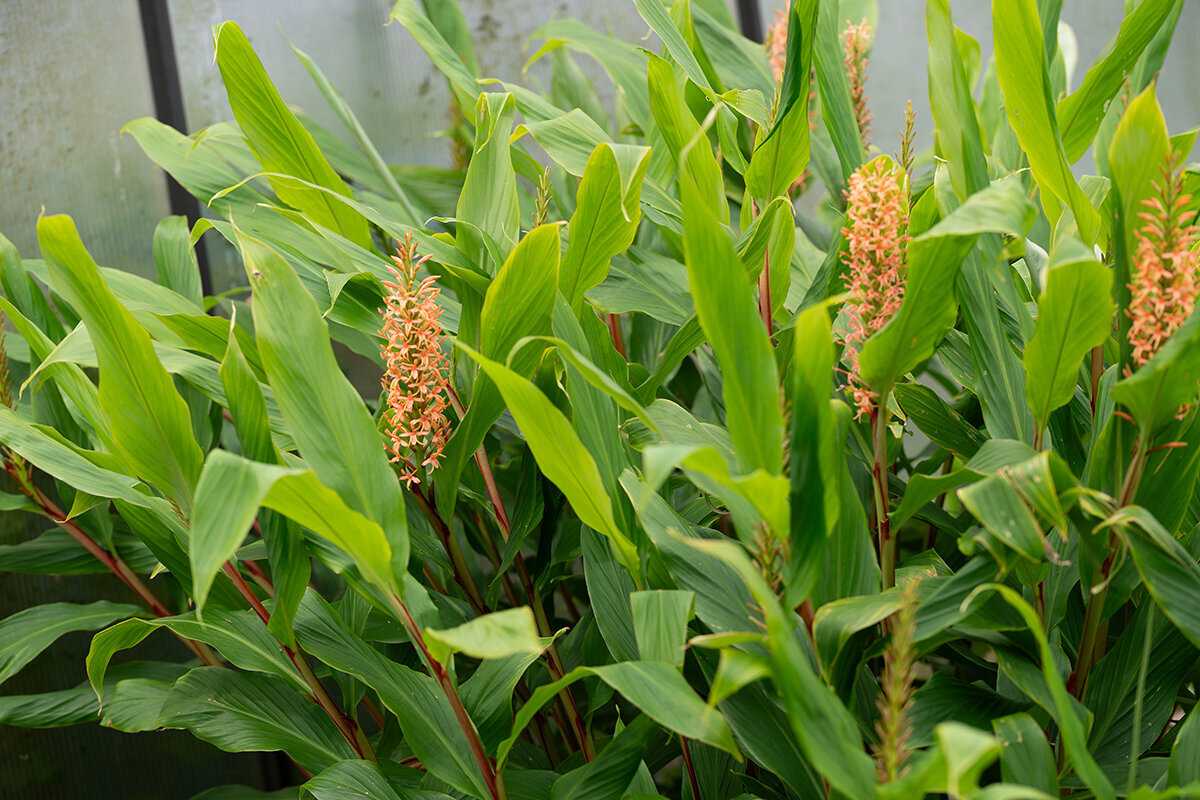
Classic aluminium greenhouseGreenhouse growing profile · South Africa
Stored warmth / slow growth / aromatic harvest
Grow ginger successfully
in a greenhouse
Ginger does not need a tropical spectacle, but a long season with dependable warmth, airy humidity and patience for its sideways-growing rhizome.
The greenhouse advantage
For ginger, a greenhouse is less a shelter than a way to hold on to summer.
Edible ginger is a heat-loving rhizome plant. In many South African areas, a protected space helps maintain the consistent warmth needed to form strong, well-branched rhizomes, especially in cooler inland districts and through cold winter nights. A greenhouse offers more than occasional hot days: it provides a protected start, steadier root-zone temperatures and a gentler transition when nights cool.
That control matters because the real harvest develops below ground. Ginger dislikes swings between cold soil, waterlogged growing medium and sudden dryness. It performs best in a broad, free-draining planting area that stays warm and evenly moist, never wet. Starting it warmly and then growing it on without lengthy pauses is therefore the most reliable approach.
Cooler inland regions Start indoors or with gentle heat; cold winter nights make protected growing especially valuable.
Highveld and elevated areas Watch for cold spells, then prevent summer heat build-up with timely ventilation.
Hot inland regions Ventilate early in heat, shade when needed and monitor container moisture closely.
Coastal and subtropical areas Use ventilation and shade to moderate heat while avoiding persistently wet conditions.
01 / Underground architecture decides
Choose rhizomes as though the season depends on them.
It does. Ginger is propagated from rhizome pieces rather than seed. Buy fresh, healthy planting material from a nursery or specialist supplier where possible. Grocery-store ginger may sprout, but is not necessarily disease-free and may have been treated to inhibit sprouting. Do not begin a carefully managed greenhouse crop with soft or doubtful material.
Choose
Firm, plump, lively
- Smooth, full surface
- One to two visible buds
- Dry, clean cut surfaces
- Fresh scent and good weight
Reject
Soft tissue is a warning.
- Mould or fermented smell
- Dark cavities or mushy nodes
- Severe shrivelling
- Very small, weak pieces
For home growing, the Bavarian State Institute for Viticulture and Horticulture recommends rhizome pieces of roughly 30 to 40 g, each with two sprouting buds. Divide larger hands with a clean knife. Let fresh cuts heal fully in a clean, well-ventilated place before placing pieces in moist propagation medium. Firm tissue, clean tools and air around cut surfaces are simple, effective precautions against rot.
02 / The hidden beginning
Pre-sprouting follows a warmth calendar, not impatience.
Ginger may seem motionless for several weeks while the rhizome wakes and forms its first roots. For this stage, use a shallow container with drainage holes and lightly moist coir or loose propagation mix. A heat mat or reliably warm indoor location at around 22 to 26 °C creates good conditions; about 24 °C is a useful guide.
Days 1–2Cuts healDry and airy.
Weeks 1–2Warm restMoist, never wet.
Weeks 3–4Roots and shootsLook for green.
Weeks 4–6Plant with momentumProtect, then transplant.
Keep the propagation medium lightly moist, never saturated. Allow the surface to dry slightly between waterings, then moisten it gently instead of flooding the container. Open any humidity cover daily to release stale, still air. Once sturdy green shoots and fine roots are visible, prepare the permanent position. If pieces remain crowded for too long, their delicate roots tangle and are unnecessarily damaged at planting.
03 / Broad room for sideways growth
Plant shallowly, turn buds upwards and allow room for earthing up.
Ginger spreads horizontally. A wide container is therefore more valuable than an unnecessarily deep one. Allow a starter piece a pot of roughly 25 to 35 litres with at least 30 to 35 cm of growing-medium depth. Several plants can share a wide trough or bed at around 30 cm spacing. Multiple large drainage holes are essential; slightly raised pots allow excess water to escape reliably. Leave enough access for watering, checking and later earthing up.
Bud upwards
The growth point faces the surface.
The growth point faces the surface.
Cover lightly
Only 3–5 cm at first.
Only 3–5 cm at first.
Drainage below
Loose medium, open outlets.
Loose medium, open outlets.
Use high-quality peat-free container mix, enriched with mature compost and an aerating mineral component such as perlite, pumice or fine expanded clay. Heavy, clay-rich garden soil compacts in a pot, drains poorly and makes moisture harder to control. Set the rhizome with buds facing up, cover it lightly and water gently once. Do not keep it wet afterwards. When new rhizome tips press towards the surface in summer, add 2 to 4 cm of loose medium or mature compost at a time. This keeps branches out of the light without burying the stem base deeply.
04 / Climate management, not a tropical display
Give ginger humidity, oxygen at the roots and an escape route for heat.
Greenhouse ginger is often mistaken for a crop that needs constant wetness. It does not. The plant enjoys a warm, pleasantly humid atmosphere and an evenly moist root zone. At the same time, the rhizome needs drainage, oxygen and a watering rhythm that lets the upper growing medium breathe. Think of a warm, living climate, not a sealed steamy room.
Warmth
Root zone first.
Around 25–30 °C in active growth
StartMidsummerMaturity
Moisture and air
Fresh below, never airless.
Water the medium, ventilate the greenhouse consistently.
Light
Bright, filtered, adjustable.
Protect leaves from heat stress.
Warmth
During pre-sprouting, 22 to 26 °C works well. After transplanting, keep the root zone above 20 °C where possible for active growth; in summer, ginger often grows productively at 25 to 30 °C. Measure the medium as well as the air. A sunny winter or spring day may warm the glazing, but it cannot replace a warm night. Cold potting mix can check a healthy rhizome for weeks.
Moisture and ventilation
Water thoroughly enough to reach the root zone. Wait until the top 3 to 5 cm has noticeably dried before watering again, while the medium beneath remains lightly moist. Drip irrigation or slow watering directly onto the soil is better than repeatedly wetting foliage. Ventilate in the morning before the house heats up and again in the afternoon during humid weather. If glass, leaves and pots remain wet for long periods, reduce watering frequency and increase air exchange.
Light and summer heat
Ginger tolerates filtered light, but grows weakly in a permanently dark greenhouse. Choose a bright position and protect leaves from intense midday sun through the glazing. In persistent heat, external shade cloth of around 30 to 40 percent can be useful. Open roof vents and doors early and in balance so that cross-ventilation develops. Shade must not replace heat release; it complements effective airflow.
A Classic aluminium greenhouse provides a clearly managed setting: protection at the start of the growing season, effective ventilation on warm days and enough space to separate tall ginger shoots from lower sun-loving crops.
05 / Growing-season journal
Care for ginger with small, repeatable routines.
A well-cared-for ginger plant looks calm above ground: upright green shoots, clean leaves and no dramatic daily changes. That appearance comes from measured interventions at the right time, not frantic corrections after stress is already visible.
Watering routine
Feel first, then water slowly.
Check the top 3 to 5 cm with your fingers. If it is dry while the zone beneath is still lightly moist, the next watering is near. Water slowly and deeply at the stem base until excess runs from the pot, then empty the saucer. In a bed, drip irrigation or gentle deep watering brings moisture to the rhizome zone without puddles. In sunny, warm greenhouse weather this may be needed every one to three days, and much less often in cloudy conditions.
Feeding routine
Feed without salt build-up.
The compost component supports the crop initially, but ginger has a long growing season. Once sturdy shoots are established, apply a weak organic liquid fertiliser every two to three weeks, or use a balanced slow-release fertiliser suitable for local use, following its label. A moderate nutrient supply with enough potassium is useful. Pale leaves may indicate deficiency, but check temperature, drainage and roots before adding fertiliser. Cold or waterlogged medium can prevent uptake even when nutrients are present.
Earthing-up routine
Cover rhizomes, keep the base clear.
When growing rhizomes press towards the surface, add 2 to 4 cm of fresh loose medium or mature compost over them. Repeat only when needed, usually one to three times during summer. A thin mulch of shredded leaves, straw or untreated hemp fibre reduces evaporation and temperature peaks. Keep it slightly away from the stem base so that this sensitive area remains airy.
Keep a short greenhouse journal. Record planting date, first shoots, heat spells, feedings and the start of autumn yellowing. Memory can be unreliable during a long crop. A few precise observations help distinguish normal maturity from a problem. Growing space, access and ventilation routes should also suit the crop from the outset; a Classic aluminium greenhouse offers a durable framework for this.
06 / Regional season sets the rhythm
Your growing plan should answer local weather, not tropical wishful thinking.
Cool season start
Begin in late winter or early spring at a warm indoor spot, on a heat mat or in a temperature-controlled greenhouse. An unheated greenhouse becomes suitable only when nights are reliably milder and the potting medium remains clearly above 15 °C. Around 20 °C soil temperature is useful for starting vigorous growth. In the Highveld, elevated areas and frost-prone districts, this warm head start can determine the length of the harvest period.
Hot inland summers
During heatwaves, check not only the air but also dark pots and areas near the floor. If the medium stays well above 30 °C for long, ventilate earlier, shade if necessary and water in a controlled way. Suddenly flooding with large amounts of water does not solve heat stress and can displace oxygen around the roots.
Humid, rainy areas
Here, insufficient air humidity is rarely the problem; slow drying is more critical. Raise containers slightly, avoid water standing in saucers and leave air space around each pot. Coordinate open doors and roof vents. If surfaces stay wet for long, first reduce watering frequency instead of adding more moisture to the system.
Long, mild autumn
Continue moderate care while foliage remains healthy and green. Mature rhizomes gain size and flavour from additional warm time. Only when shorter days, cooler nights and even yellowing signal natural slowing should watering be reduced gradually. Not every yellow leaf calls for fertiliser.
A well-proportioned structure makes these adjustments easier. Discover the Classic aluminium greenhouse if you are planning broad container zones, clear paths and considered window and door positions for heat-loving crops. For more ideas on a garden structure you can use for years, explore the Classic aluminium greenhouse.
07 / Read warning signs before treating
Symptoms point the way; they are not a blanket diagnosis.
First inspect the growing medium, root zone and pattern across the whole plant. An evenly yellow leaf at the end of a season means something different from a green shoot that suddenly wilts in midsummer. If rot is possible, isolate the pot. Do not carry medium or irrigation water from affected plants to healthy ones on tools or hands.
Seasonal yellowing
Possible natural maturity
Brown leaf tips
Sun, heat or dry root ball
Stalled growth
Cold, nutrient shortage, compaction
Speckling or webbing
Check for spider mites
Wilting or soft rhizomes
Act quickly; suspect rot
Follow the clue
Even yellowing at season end: This often indicates natural maturity. Reduce watering gradually, stop heavy feeding and decide whether to harvest now or let the rhizomes mature a little longer.
Brown tips or pale leaf areas: Check for direct sun through glass, dry soil and an overheated root zone. Filter midday light, even out watering and improve airflow. Do not keep the pot permanently wet as a countermeasure.
Weak growth and slowly yellowing lower leaves: Check medium temperature, drainage holes, compaction and previous feeding. A pot that is too small can also restrict growth. Correct only one limiting factor at a time so the plant’s response remains clear.
Fine speckling, webbing or dull foliage: Look beneath leaves for spider mites, especially in hot, dry and poorly ventilated corners. Isolate the plant if needed, wash leaves carefully and reduce an early infestation mechanically. Improve air movement at the same time.
Sudden wilting of green shoots, soft tissue or dark-smelling rhizomes: Take possible root damage or serious rot seriously at once. Remove and isolate the affected plant with its growing medium; diseased material does not belong in compost. Clean pots and tools thoroughly, and check drainage and watering practice on neighbouring plants. Do not use affected rhizomes for propagation. Clean planting material, separate media and a long crop rotation are more dependable than a late rescue attempt.
08 / From moist growth to harvest
Harvest according to the ginger you want to use.
Two harvest styles are especially appealing. Baby ginger is tender, juicy and covered by only a thin pale skin. More mature ginger is firmer, spicier and better suited to somewhat longer storage. A greenhouse gives you this choice rather than ending the crop abruptly with the first cold night.
Baby ginger
Tender and immediate
- Harvest with green foliage
- Rinse gently
- Use promptly
Mature ginger
Firm and suited to storage
- Harvest after natural dieback
- Air-dry out of direct sun
- Keep flawless planting pieces
Baby ginger
According to the LWG, fresh ginger can be harvested after as little as three to four months. Choose a vigorous plant and carefully lift an outer rhizome section, or empty the whole container. The pale skin is tender, while the interior is juicy and less fibrous. Baby ginger is especially good for tea, syrup, delicate dishes and pickling. Use it soon after rinsing or store it briefly in cool conditions. During a partial harvest, disturb the main branching as little as possible.
Mature ginger
For firmer, more aromatic rhizomes, leave the plant until foliage naturally declines. Once most leaves yellow and nights become cooler, reduce watering gradually. Harvest on a dry day. Carefully empty the pot or loosen a bed with a garden fork; do not pull the stems. Remove stem remnants, brush away loose soil gently and leave the rhizomes to dry in moving air for several hours.
Freshly harvested rhizomes must not dry in blazing sun or be packed tightly while wet. Keep healthy pieces cool, dry and frost-free for a short time, checking them regularly. Particularly firm, unmarked sections with clearly visible buds may be kept separately as planting stock for the following season. Remove suspicious medium after harvest and clean containers, tools and drainage areas. This calm hygiene is already part of a successful next season.
Questions from the potting bench
Greenhouse ginger FAQ
Can ginger grow year-round in a greenhouse?
Only under reliably warm conditions throughout the year. Most home gardeners should treat edible ginger as a long, warmth-demanding seasonal crop. An unheated winter greenhouse may not keep the root zone warm enough and can stop growth entirely. It is usually better to pre-sprout warmly in late winter, grow the main crop under cover through the warm season and harvest deliberately as conditions cool.
How much sun does greenhouse ginger need?
Bright light is important, but intense summer sun through glass can overheat leaves and growing medium. Position ginger brightly and filter midday sun during prolonged heat. The important factors are the actual leaf response, root-ball moisture and measured root-zone temperature, not a fixed number of sunshine hours.
Can ginger grow in a greenhouse raised bed?
Yes. A raised bed works well if the medium is loose, free-draining and sufficiently warm at the start of the growing season. Keep around 30 cm between planting positions and leave room to add medium around visible rhizomes later. Containers remain more practical if you want to isolate individual plants, control moisture more precisely or move the crop during cold spells.
Why is my ginger not sprouting?
Common causes include a dormant or treated rhizome, a root zone that is too cold, permanently wet propagation material or simply insufficient patience. Check that the piece is firm and free from dark, soft areas. Keep the medium only lightly moist and provide around 22 to 26 °C. Healthy ginger often needs several weeks before a visible shoot appears.
Should ginger be misted every day?
Not instead of properly watering the root zone. Light misting can help during pre-sprouting or in very dry air. Permanently wet leaves, a closed cover and poor air exchange can encourage problems, however. Prioritise evenly fresh growing medium, free drainage, dry leaf surfaces overnight and regular ventilation.
What greenhouse layout suits ginger?
Ginger does not need a huge footprint, but benefits from broad pots, a warm lower zone and good air movement around tall shoots. A Classic aluminium greenhouse is particularly practical when one side provides a generous pot or bed zone and clear paths make watering, earthing up, checking and harvesting easier.
Sources and further reading
A working library for a long-season crop.
These specialist sources underpin the guidance on temperature, early propagation, growing medium, water management, plant health and harvest. The recommendations have been adapted to manageable quantities for home growing and to the varied greenhouse seasons found in South Africa.
More from Bloomcabin: Setting up a greenhouse: layout, plants and care · Classic aluminium greenhouse overview · Frequently asked questions about Bloomcabin aluminium greenhouses
- Bavarian State Institute for Viticulture and Horticulture – Growing your own ginger
- LWG – Ginger: cultivation information and growing tips PDF
- FiBL – Ginger growing guide for protected cultivation PDF
- University of Illinois Extension – Watering and Soil Moisture Guidelines for Ginger
- University of Illinois Extension – Fresh Ginger Rhizome Cultivation: Pre-Sprout Process
- University of Florida IFAS Extension – Ginger, Galangal, and Turmeric Production
- Bavarian State Institute for Viticulture and Horticulture – Practical ginger-growing experience
