
Growing blueberries in a greenhouse
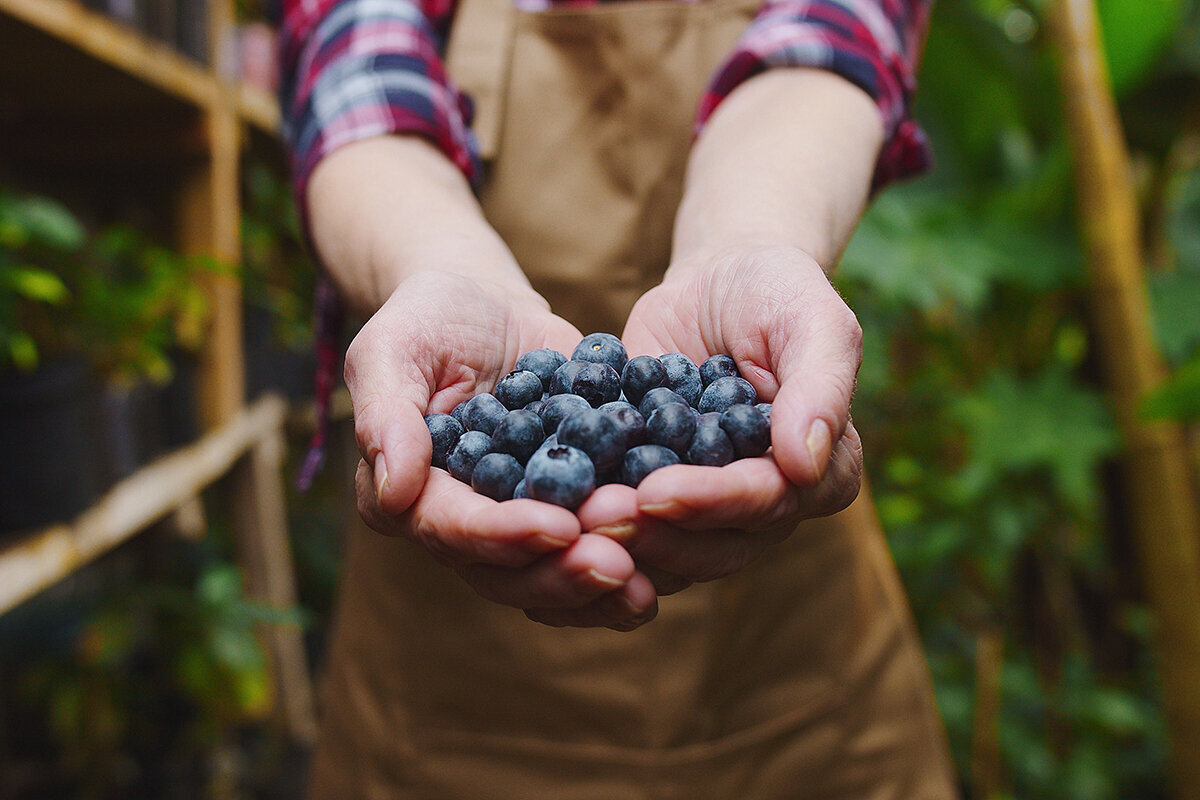
The wax-bloom guide · South Africa
Growing blueberries in a greenhouse
A greenhouse gives blueberries protection, order and a more manageable season. Their requirements remain exacting: good fruit starts with a variety suited to your region, a deliberately acidic root zone and a pollination plan that keeps the house ventilated.
01 · The principle
Under glass, precision becomes visible.
A blueberry bush appears self-contained: bell-shaped spring flowers, silvery wax bloom on the fruit and fine roots just beneath the surface. In a greenhouse, each detail is easier to observe – and easier to mismanage when the space is treated simply as a warm standard shelter.
The main advantage is control. A container can hold substrate developed for acid-loving plants instead of trying to turn ordinary, often lime-rich garden soil into something it is not. The roof softens heavy rain, wind and some bird pressure. Drip lines, mulch and a clear path make routine checks easier. At the same time, the greenhouse reveals daily extremes: an over-dry root ball, condensation after watering, vents opened too late or flowers visited by no insects.
A greenhouse does not remove the need for winter dormancy. Depending on the variety, cultivated blueberries need a certain cold period before they reliably leaf out and flower. Keeping a Northern Highbush variety adapted to a cool climate actively warm all winter can disrupt this rhythm. For suitable varieties, an unheated or lightly frost-protected greenhouse is usually more useful than a warm year-round space. In winter it protects against cold wind, excessive wet and hard freezing of the root ball; in spring it supports frost precautions and crop management. A locally experienced nursery should confirm cold requirement and suitability for your regional climate.
For a lasting, clearly arranged growing space, the Classic aluminium greenhouse offers a calm setting for a root-focused system: room for broad containers, effective ventilation, organised water management and access to every bush. Plan a stable, level foundation and drainage from the outset. The roof protects the fruit; real growing success begins beneath it, in the substrate.
02 · Chemistry before confidence
Build acidity. Then measure.
Blueberries thrive in substrate that is acidic, structurally stable and airy. For many home-grown plants, approximately pH 4.0–5.0 is a practical working range; professional substrate systems often use a slightly wider range of pH 4.5–5.5. The point is not to worship one decimal place. What matters is avoiding drift towards alkalinity, where iron and other nutrients become less available to roots even when they are present in the substrate.
3.54.04.55.05.56.06.57.0
Working range for blueberries: The highlighted acidic zone shows why a purpose-built container is more dependable than an incidental planting hole in ordinary garden soil.
Four checks give a better picture
Test irrigation water. Water with high alkalinity can gradually raise the pH of a container. If readings repeatedly drift upwards, ask your water supplier or a suitable laboratory about water hardness and alkalinity rather than relying only on a handheld meter.
Check the substrate. Use a suitable substrate analysis or reliable measuring method before planting and again at sensible intervals. Do not take samples directly beside fertiliser granules, and do not treat a dry pot edge as representative of the entire root zone.
Read the plant cautiously. Yellow areas between green leaf veins on young leaves can indicate restricted iron uptake. Cold or damaged roots, drought, waterlogging and salt build-up can produce overlapping symptoms. One measurement is therefore not a complete diagnosis.
Correct carefully. Do not reach for household remedies on suspicion. Where container substrate has badly drifted or compacted, rebuilding it in a controlled way is often more predictable than repeated acidification. First check substrate, water and drainage; larger corrections should follow test results and the manufacturer’s instructions for suitable products.
Use a lime-free, free-draining substrate for acid-loving plants or rhododendrons with stable structure. Coarse acidic bark can improve air space if the mix retains water without becoming porelessly wet after every watering. Avoid lime-rich garden soil, ash, mushroom compost and untested high-pH composts. For planning paths, container rows and irrigation, the Classic aluminium greenhouse provides helpful spatial guidance.
03 · Partnership, not a name pairing
Choose for climate first, flowering second.
Buy varieties only after confirming their suitability for your regional climate. Robust Northern Highbush varieties can be a useful starting point in cooler South African locations, but local chill conditions and summer heat must guide the choice. Duke ripens early, Bluecrop is a proven main-season variety and Elizabeth extends harvesting towards late summer. These notes do not replace advice: hardiness, cold requirement, flowering time and disease pressure vary by variety and site. A specialist, locally experienced nursery should confirm the final selection.
Illustrative flowering overlap
Early
Mid
Late
Overlap
Two different varieties with compatible flowering are often the most dependable route to better fruit set, larger berries and a longer harvest. Yet two bushes do not automatically make a good pair. Cultivated blueberries are largely self-fertile, but benefit from cross-pollination to differing degrees. What matters is genuine overlap in flowering periods – not simply different harvest dates on a label.
Blueberry flowers are designed for insect visits, not a sealed room and hopeful air movement. Open doors and windows during flowering whenever weather allows, and watch for bees and bumblebees. Avoid applications that could harm pollinators, and keep flowers bright and accessible. Cold wind must not chill the bloom, but permanently closed windows on sunny days will not solve pollination either.
In a small space, two or three similarly sized containers can stand along a bright greenhouse side. Keep the route to the door clear and add bird protection only after flowering has finished. As bushes grow, ventilation areas, irrigation access and the harvest path must remain reachable. The structure should protect the crop without biologically isolating it. A Classic aluminium greenhouse provides an architectural basis with a clearly planned container zone.
04 · The shallow root zone
Keep roots moist, airy and near the surface.
Container size. For a strong young container-grown plant, a broad vessel holding about 40–60 l is a useful starting size. The container can increase as the plant grows. Width benefits this shallow root system more than excessive depth; greater volume buffers moisture and temperature under glass.
Choose several generous drainage holes and raise the container slightly on feet or suitable slabs so water can run away freely. The pot must never stand permanently in a saucer filled with drainage water.
Root zone in section
Moist
Air remains available.
Air remains available.
Wet
Oxygen becomes scarce.
Oxygen becomes scarce.
Dry
The root ball shrinks.
The root ball shrinks.
Watering rhythm. Before watering, check beneath the mulch and several centimetres into the substrate. Bright, hot weather can require daily attention; on cool, cloudy days consumption falls considerably. Water according to actual condition, not a rigid calendar.
Drip irrigation or slow hand watering creates repeatability. Moisten the root zone rather than leaves and fruit, and check whether some water emerges from the drainage holes. If water runs down the sides of a dried-out root ball, moisten it gradually and thoroughly instead of flooding it once.
The desired middle state is more than simple wetness. Blueberry roots need acidic, porous substrate that remains evenly moist while still exchanging air. A layer approximately 5 cm thick of acidic bark, pine material or another lime-free organic mulch slows evaporation and protects the upper root zone. Leave some space around the stem base. Apply water slowly at the surface so it penetrates the root ball without creating an oxygen-poor saturated zone.
Plant the bush at roughly the same depth as it stood in its nursery container. Loosen a matted root ball gently without needlessly tearing fine roots. Water thoroughly afterwards and mulch. On a weak young plant, flowers can be removed in the first year so energy goes into roots and framework shoots. In the second year, plant vigour – not gardener impatience – should decide the fruit load.
A well-proportioned Classic aluminium greenhouse accommodates this root-focused arrangement elegantly: broad containers on the bright side, accessible drip lines at the front and a dry place for meters, labels and mulch. Do not fill the house so tightly that care and air movement suffer.
05 · Fertilise moderately, prune purposefully
A vigorous bush is not overfed.
Blueberries react sensitively to unsuitable fertiliser salts and products formulated for neutral garden soils. Use only a lime-free fertiliser labelled for blueberries or other acid-loving plants, and set the amount according to the label, plant condition and readings. Start cautiously in spring and never fertilise dry substrate. Several small, need-based applications are usually easier to control for shallow roots than one heavy dose.
Do not fertilise a bush visibly suffering from waterlogging, drought or unsuitable pH in the expectation that nutrients will cure the cause. Restore root conditions first. Salt accumulation in a container is another reason not to combine products and to assess the substrate regularly instead of applying ever more fertiliser.
Pruning should also remain moderate. In late winter, remove damaged wood, very weak shoots, low branches and poorly placed inward-growing sections. On established bushes, take out individual old, weakly fruiting stems close to the ground so young basal shoots can replace them. The aim is an open framework of strong wood of different ages. Do not cut the plant back radically or shape it into a dense ball.
06 · Glass changes the weather
Fruit needs light, leaves need moving air.
Blueberries need ample light, yet a greenhouse can turn a cool spring morning into intense afternoon heat very quickly. Overheating is not proof of successful protection. It raises water demand, stresses foliage, can reduce insect visits and affects fruit quality. Ventilate consistently in sunny weather by around 22 °C at the latest. On very bright summer days, light diffuse shading helps prevent dark container walls and leaves from heating unnecessarily.
Ventilate early, before heat accumulates. Open opposing vent areas and the door where possible so humid, still air can escape from the plants. Foliage should stay dry after watering, so avoid late overhead irrigation. Also leave enough space between leaves and damp glazing. In cold wind, ventilate gradually without suddenly chilling flowers.
A thoughtfully designed greenhouse makes this daily rhythm more dependable while retaining necessary access. Information on a suitable structure is available with the Classic aluminium greenhouse. Technology supports observation; it does not replace it.
Daily greenhouse check
Morning: Check vents, pollinator access, dry foliage and moisture beneath the mulch.
Midday: Check heat before leaves wilt. Increase air exchange or shading before the space becomes uncomfortably hot.
Evening: Check drainage after watering, remove fallen fruit and do not leave the house wet, closed and full of condensation.
In winter: Protect container roots from hard freezing where needed, but do not keep a cold-requiring blueberry in constant warmth.
07 · Evidence at blueberry hour
Colour starts ripening; it does not decide it.
Blueberries may look blue for several days before reaching their best sweetness and full flavour. Assess every berry by several signs: even colour to the stem end, easy release with a gentle twist, full flavour and intact silvery wax bloom. Harvest preferably in the morning into small, shallow containers and handle the fruit minimally. Unwashed berries store better when cool; wash them only immediately before eating.
1 · Green Firm. Wait.
2 · Changing colour Colour develops.
3 · Blue Taste first.
4 · Ripe Releases easily.
5 · Wax bloom Handle gently.
This sequence is not merely a colour chart. Green fruit is unripe. During colour change, green or reddish areas can remain near the stem. Even fully blue berries may need several more days, depending on variety and weather, for their best flavour. A ripe berry releases with a gentle twist. Put it in a shallow container rather than piling it high. The pale wax bloom remains most attractive when berries are held at the sides rather than rolled in the hand.
A greenhouse reduces some bird pressure, but open doors, windows or loose gaps do not provide complete protection. After flowering, fit clean netting or another suitable barrier that retains ventilation and harvest access. Check regularly that no animals are trapped. Remove fallen and damaged fruit to maintain hygiene and visibility. Pick every few days during peak ripening; over-ripeness is not a reward for waiting longer.
08 · Diagnostic guide
Read symptoms with the root zone.
Young leaves yellow between green veinsPossible direction: restricted iron uptake, often linked to overly high substrate pH or alkaline irrigation water.Check more closely: Test substrate and water, then inspect root health, moisture and temperature. A short-term leaf greening does not prove the cause is resolved.
New growth stays weak, container remains wetPossible direction: poor drainage, lack of oxygen, compacted substrate or early root damage.Check more closely: Inspect drainage holes, pot elevation, weight, smell and substrate structure. Reduce wetness before applying fertiliser.
Leaves scorch or curl in sunPossible direction: heat stress, rapid water loss or increased salt concentration in the container.Check more closely: Improve ventilation and diffuse shading, check moisture deeper in the root ball and arrange a suitable analysis if salt build-up is suspected.
Many flowers, but few or small berriesPossible direction: no flowering overlap, few insect visits, flower frost, weak vigour or water stress during bloom.Check more closely: Compare flowering dates, open pollinator access and assess pruning, watering and temperature management during flowering.
Spotted leaves or shrivelling fruitPossible direction: disease pressure, persistent leaf wetness, poor air movement or hygiene gaps.Check more closely: Remove affected material, improve air exchange and consult a nursery or regional adviser before treatment.
09 · Four seasonal calibrations
Run the greenhouse as a rhythm, not an emergency room.
Late winter Check dormancy and frost protection, renew mature bushes and inspect drainage, vent fittings, meters and irrigation before growth begins.
Spring flowering Measure substrate if needed, fertilise lightly, open pollinator access, watch for late frost and release trapped solar heat in time.
Summer fruit Check moisture beneath mulch regularly, ventilate and use diffuse shade against heat stress, harvest often and protect ripening fruit from birds.
Autumn rest Remove remaining fruit and diseased leaves, review water and pH notes, stop nitrogen applications, inspect drainage and prepare containers for regional winter conditions.
Small details also deserve planning: a hose route that does not cross the harvest path, a dry shelf for meters and labels, and enough space to inspect every container all around. A greenhouse feels especially calm and clear when its recurring care ritual is built into the layout.
10 · Frequently asked questions
Clear answers about greenhouse blueberries.
Can blueberries remain in the greenhouse all year?+
Yes, provided winter dormancy and the variety-specific cold requirement are respected. In cool South African regions, an unheated or only lightly frost-protected greenhouse can suit cold-requiring blueberries better than permanent winter warmth. In container culture, protect the root ball from hard freezing where necessary and keep the substrate slightly moist in winter, never wet.
What container size does a blueberry bush need?+
For a strong young container-grown plant, a stable, broad vessel of approximately 40 to 60 litres is a sensible starting size. The container can become larger as the plant grows. Generous drainage holes are essential; greater root volume buffers rapid changes in moisture and temperature.
Do I need two blueberry bushes in a greenhouse?+
One self-fertile variety can bear fruit. For higher, more even yields, however, a pair of varieties with truly overlapping flowering is usually the better plan. Check the specific variety information, as self-fertility, flowering time and the benefit of cross-pollination differ.
Can I use ordinary potting soil?+
Only if its composition is demonstrably acidic, lime-free, low in salts and structurally suitable for blueberries. Ordinary mixes can be too alkaline or retain water poorly. Choose a labelled substrate for acid-loving plants or rhododendrons, test it, and avoid lime-containing ingredients, ash and unsuitable composts.
Why do blue berries still taste sour?+
A blue berry is not always fully ripe. Depending on variety and weather, blueberries can need several days after changing colour to develop their best flavour. Wait until they release easily with a gentle twist, taste one berry and look for even colour at the stem end.
11 · Sources and further reading
Practical knowledge for a more reliable berry harvest.
This article is intended for home gardeners in South Africa. Confirm variety choice and water chemistry with local specialist advice and a nursery, and follow current South African product labels for plant-protection decisions.
More from Bloomcabin: Setting up your greenhouse · Bloomcabin greenhouse growing calendar · water-wise greenhouse gardening
- Bavarian Garden Academy – cultivated blueberries in the home garden
- Saxony State Office – cultivated blueberries in the garden
- LAVES Lower Saxony – pollination guide for cultivated blueberries
- North Rhine-Westphalia Chamber of Agriculture – protected berry growing
- University of Florida IFAS – blueberry production in containers
- Oregon State University Extension – growing blueberries in your home garden
- LWG Bavaria – specialist information on cultivated blueberries
A protected place for demanding fruit
Make room for a small acidic landscape.
Start with what blueberries truly use: broad containers, acidic airy substrate, spring access for pollinators, dependable summer ventilation and a harvest path that protects the wax bloom. A greenhouse turns these choices into a visible, repeatable ritual that becomes more precise with every season.
Discover the Classic aluminium greenhouse and plan a blueberry zone with the same care as a small orchard: measured, airy, accessible and designed to mature beautifully for years.
Classic aluminium greenhouse