
Planning a Holiday Rental Sauna: Guest Use, Cleaning and Costs
Holiday rental sauna guide
A sauna can seem like a straightforward holiday-rental extra, but preparing it for successive guest groups takes planning beyond the purchase and installation. The owner needs to know whether the manufacturer permits the intended rental use, who will prepare and clean the space between bookings, what guests are allowed to do, and how energy use and staff time will be recorded. Treat those as part of the plan, not details to sort out after installation. The right choice is one whose documented use and care instructions can be followed consistently at this property.
Before you commit 1
Match sauna availability to the changeover schedule
Before choosing a sauna, test whether the rental can deliver the amenity reliably throughout the year. Map the booking pattern against staff hours and changeover windows: a unit that needs preparation or a check after use may not fit a same-day turnover unless a named person can do it. Look at typical arrival and departure times, not just the number of bookings, and identify days when the property is turned around without an on-site manager. Decide when guests may book the facility, how they get access, and what happens if the person responsible is away. Put the availability decision into the booking process so no one offers a time the team cannot support.
Use a shortlist to compare the work each option would involve, as well as where it might fit. The listing for the Sauna N-210 records an area of 4.43 m², which may help with an initial comparison; request the manufacturer's drawing to confirm exact dimensions, access clearances and siting requirements. Alongside each option, note the information still needed about guest operation, cleaning and staff access. Include space for changing and towels in the proposed arrangement. Ask the person responsible for changeovers to review the plan before purchase: they need to be able to prepare the sauna without blocking guest access or leaving other essential housekeeping unfinished.
Confirm rental use and warranty terms in writing
Obtain explicit written confirmation for the intended rental use before paying for a model or arranging installation. Give the manufacturer or supplier the exact model, heater and control configuration, property type, expected guest turnover and whether guests would operate it without an employee present. Ask whether repeated holiday-rental use is permitted, what operating limits or supervision apply, and whether rental use affects warranty cover or service support. A general description such as for home use does not answer whether paying guests may use the equipment. Request the applicable terms, current manual and any conditions on maintenance, inspection or parts. If the response is qualified, record who must meet each condition.
Treat the Sauna N-250 listing, which records 5.27 m², as model identification, not proof of rental approval or site suitability. Confirm separately with the property insurer, owner or landlord if you do not own the property, and any relevant building manager or local authority, what they require for this particular site. Ask a qualified installer or electrician to assess installation and supply questions rather than relying on a product photograph or a generic online answer. Keep written replies with the purchase records; do not treat verbal reassurance as confirmation. If the intended use or warranty position remains unclear, pause and do not advertise sauna access as a confirmed amenity.
Before you commit 2
Give guests instructions for the exact setup
Prepare guest instructions before taking bookings and put a copy where guests can find it without searching through a welcome folder. Use the exact model and heater configuration when asking for operating guidance: the Sauna LC-260 product page can help identify the model under consideration, but the listing does not replace the current manufacturer instructions. Base each step on the documentation and any use conditions confirmed in writing. State who may use the sauna, whether guests must reserve a time, how access is arranged and when it is unavailable. If a user limit or supervision rule applies, reproduce it accurately rather than deriving one from the product's area or appearance.
Keep the wording brief and practical: explain only the approved start and stop sequence, any permitted water use, ventilation or cool-down actions, and what guests must leave untouched. Use the same names for controls as the manufacturer, so guests can match each instruction to the equipment. Keep essential operating guidance separate from general welcome information, with the host or manager's contact details easy to find. Do not add your own temperature or session schedule, or promise health benefits. If someone asks whether sauna use is appropriate for a health condition, direct them to an appropriate health professional. Staff can explain the facility rules, not assess a guest's health.
Include sauna cleaning in every changeover
Make cleaning a defined changeover job rather than relying on departing guests to leave the sauna ready for the next booking. After each booking, follow a written sequence for removing used towels, collecting rubbish, checking for spills, wiping approved touch surfaces, and cleaning benches and floors in the manner the manual allows. Record which cleaning products, cloths and methods are permitted; a product suitable elsewhere in the rental may not be approved for sauna surfaces. The Sauna HCF-300 listing identifies a model, but does not replace care instructions for the exact sauna and heater configuration supplied. Keep those instructions with the staff checklist.
Allow enough staff time for the listed tasks, any drying or ventilation period specified by the manufacturer, and a final inspection before access resumes. Check for belongings, damp towels, residue, visible damage and anything that needs to be reported to the responsible person, rather than masking a problem to meet a tight check-in. Separate routine changeover cleaning from periodic deep-cleaning or service tasks in the manufacturer's instructions; do not invent a schedule or use an unapproved chemical to speed up the work. If cleaning cannot be completed as documented, keep access closed and tell the guest through the normal host channel. A short checklist that staff can initial helps keep the standard consistent across shifts.
Before you commit 3
Assign responsibility for checks and faults
Name one person or role accountable for each changeover, even when a contractor does the physical cleaning. Set out who opens or closes access, checks the sauna, replenishes approved supplies, completes the checklist and tells the owner about faults. Agree who covers if the usual cleaner is absent or a booking changes at short notice; without cover, the host needs a clear way to make the facility unavailable. Give authorised staff the current guest rules, cleaning steps and a contact chain. A cleaner should not be expected to decide whether a heater, control or other equipment can return to use without the manufacturer's procedure and relevant professional support.
Keep routine housekeeping separate from technical maintenance. Follow the manufacturer's requirements for periodic inspections and servicing, and use an appropriately qualified service provider where the instructions call for one. Record the date of each report, what was observed, who was notified, what action was taken and when access resumed. If a guest reports a fault, stop offering the facility until the responsible person has followed the documented process; do not ask the guest to test equipment or attempt a repair. For damage, record observable details under the property's usual incident process. These records support shift handovers and help the owner spot recurring issues without asking staff to diagnose them.
Check the site, access and user limit separately
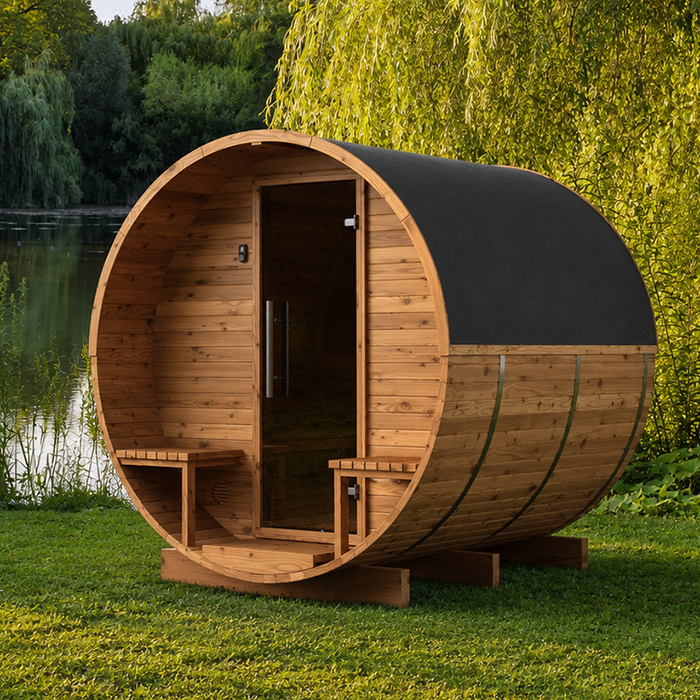
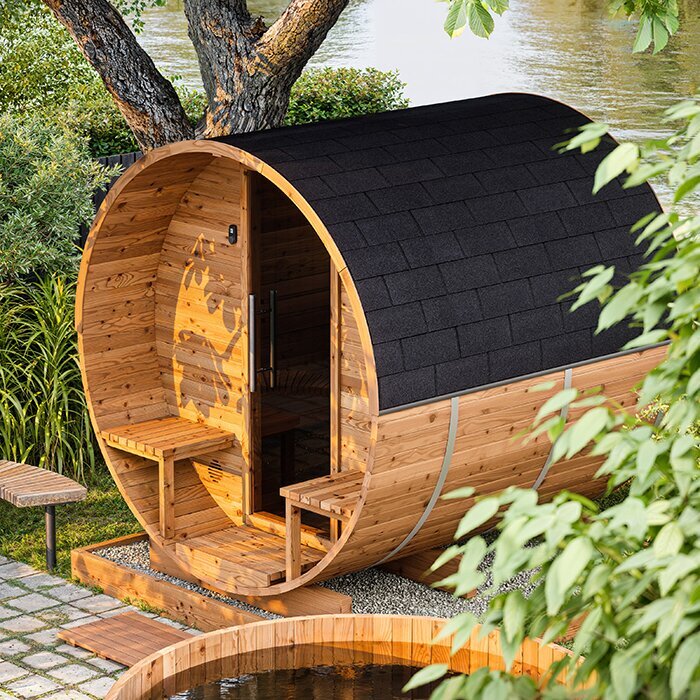
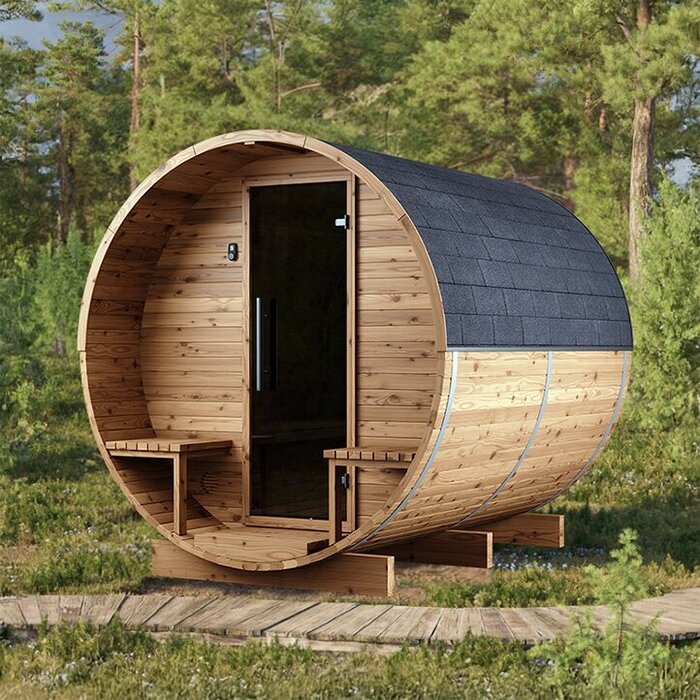
Check the route and setting before choosing a model. Consider how the sauna will be delivered, whether a housekeeper can reach it with cleaning supplies, where towels can be stored, and whether guests can approach it without crossing another unit's private area. Confirm the surface, exposure, clearances, ventilation and service connections from manufacturer documentation and with a qualified installer; a barrel shape should not be taken as proof that every exposed outdoor position is suitable. The Sauna LCF-300 listing records 6.89 m², but a listed area is not a substitute for the manufacturer's drawing. Compare exact dimensions and required clearances with the proposed site before committing.
Capacity is a separate question from area. Ask the manufacturer for the stated maximum number of users and the conditions that apply, then consider whether the arrangement still allows practical access, a clear exit, cleaning and any required supervision. Do not translate square metres into a guest count or promise group use from a product photograph. Use the approved limit in the rental listing and on-site guidance, and make sure it does not conflict with site restrictions or insurer terms. If the intended group cannot be managed under the approved arrangement, adjust the booking rules or reconsider the location rather than trying to fit more users into the available space.
Before you commit 4
Estimate operating costs from real consumption
Build a running-cost estimate from actual records, not a model name or generic assumption. For an electrically heated installation, ask the installer for the heater's rated input, then establish energy consumed over representative operating cycles using suitable meter data or the property's energy records. Multiply measured kilowatt-hours by the applicable energy rate on the property's bill and add any other use-based charges; keep fixed charges separate. If the tariff has time bands, use the actual rate for the time the sauna will operate. A qualified electrician can advise on safe metering. The Sauna S-140 listing records 1.93 m², but area is not an energy rating or a reliable proxy for kilowatt-hours per use.
Add costs that do not appear as a sauna-specific electricity line: staff time, extra laundry, permitted cleaning products, routine servicing, replacement consumables and administration for guest bookings. Track costs per use where practical and separate them from fixed monthly or yearly costs, such as a service contract or an insurance cost if applicable. If the chosen heater uses a different energy source, price its fuel and handling from supplier information and actual records rather than applying an electric calculation. After opening, compare the estimate with a representative period of real operation and update it when use, tariff or staffing changes. This gives the owner a more useful cost per booking than a broad estimate alone.
Plan pricing and break-even costs
Decide whether sauna access is included in the nightly rate, offered as a separately booked extra or limited to certain time windows, and state that clearly before guests reserve. A charge should match a service you can actually deliver: staff preparation, cleaning, access and support all affect the experience. The Sauna HC-150 listing gives an area of 2.97 m², not a forecast of how many paid sessions the property will sell. Do not assume that adding the feature will increase bookings or justify a particular fee. Avoid promising health outcomes, guaranteed availability or a level of supervision that the property cannot provide.
Test the budget with cautious booking assumptions. Separate the purchase and installation outlay from fixed annual costs and expenses triggered by each use. For a simple break-even estimate, divide the fixed costs allocated to the chosen period by the contribution from one paid sauna booking after its variable costs. State those assumptions clearly: fewer bookings mean less income over which to spread the fixed costs. If access is included in the accommodation rate, record the sauna's costs separately rather than treating each use as additional income. Count staff time even when it is part of a general shift, and include cleaning time when estimating how many sauna bookings the team can support. This is a planning calculation, not a demand forecast or a promise that the amenity will pay for itself.
Before you commit 5
Make access rules and fault reporting clear
Set access rules to match the written approval and the staffing you can actually provide. Specify whether guests must reserve a time, the access window, who may accompany them and whether a handover is required. If the manufacturer or insurer requires supervision, arrange it; if you cannot do so, do not advertise unattended access. When considering the Sauna HC-225, include these arrangements in the operating plan rather than leaving them until guests arrive. Make clear whether a reservation covers one guest group and how preparation and cleaning fit between reservations. If more than one rental unit could use the facility, explain how times are allocated and who can close access between groups.
Give guests a simple route for reporting faults and interruptions. Explain whom to contact if a control behaves unexpectedly, power or another service is interrupted, or something is damaged; tell guests not to troubleshoot or repair the equipment. Say who decides whether the sauna can reopen and what will happen if it is unavailable during the booked window. Keep the online listing, pre-arrival message, welcome guide and any sign consistent, so no one is promised access that the operating plan cannot provide. Where responsibility for an incident or supervision is uncertain, resolve the wording with the insurer and manufacturer before guests arrive rather than improvising during a complaint.
Keep one current operating file
Keep an operating file accessible to the owner and authorised staff: the exact model and heater configuration, current manual, written confirmation of rental use, installation and service contacts, cleaning checklist, guest instructions, and records of servicing and incidents. Put a version date on each procedure so an outdated instruction is not left beside the sauna after a change. Keep supplier, warranty and insurance correspondence in the owner's records, and share only the work instructions each cleaner needs. A named file owner should remove superseded copies from guest-facing spaces and replace them whenever approved procedures change.
Review the file when equipment, controls or the operating pattern change, a fault recurs, or a new changeover schedule puts more pressure on staff. Compare the recorded cleaning time with the time allowed between bookings, and check whether actual use and costs match the pricing assumptions. Repeated delays may call for different access windows or staffing arrangements; a recurring fault needs to follow the maintenance process rather than becoming a note that each shift passes on. Record any agreed change in the relevant procedure and update guest information where necessary. This keeps the operating file useful for daily work, rather than leaving the owner with records that no longer describe how the sauna is run.
Frequently asked questions
Does a domestic sauna warranty automatically cover holiday-rental use?
No. Do not assume that terms for household use extend to paying guests or frequent changeovers. Give the manufacturer or seller the exact model and configuration, describe how guests will use it, and request written confirmation of permitted use, warranty conditions and any supervision or servicing requirements before advertising it as an amenity.
How often should the sauna be cleaned between bookings?
Follow the care instructions for the exact model after every booking, then follow any separate periodic-care schedule in the manual. There is no single cleaning interval suitable for every sauna. Allow time for approved cleaning and any required drying before access resumes, and record the changeover task.
Can guests use the sauna without a host present?
Only if the manufacturer's conditions and any relevant insurance requirements permit it, and your operating plan can support it. If supervision or a host handover is required, arrange one. Give guests clear instructions and a contact person; do not advertise unattended access until the conditions are confirmed.
How can I estimate the electricity cost?
For an electric setup, measure actual kilowatt-hours over representative uses and multiply that by the applicable usage rate on the property's bill. Add any other use-based charges, and keep fixed costs, staff time, laundry and servicing separate. If the sauna uses another heat source, estimate fuel costs from actual consumption and supplier information.
Can the listed area tell me how many guests may use the sauna?
No. A listed area may help with an initial site-plan comparison, but it does not establish a permitted user count or supervision requirement. Request exact drawings and the manufacturer's stated capacity and use conditions, then check that guest access, cleaning and any required oversight fit the property.
A rental sauna is workable when written permission, guest instructions, staffing, cleaning and cost records all match the service being offered. Confirm the exact configuration first, then test the changeover routine against a real booking window before opening access. If any part of the plan depends on a guest improvising or on an unavailable staff member, keep the amenity closed until the operating arrangement can support it.
