
How Long Might an Outdoor Sauna Last? Construction and Care Considerations
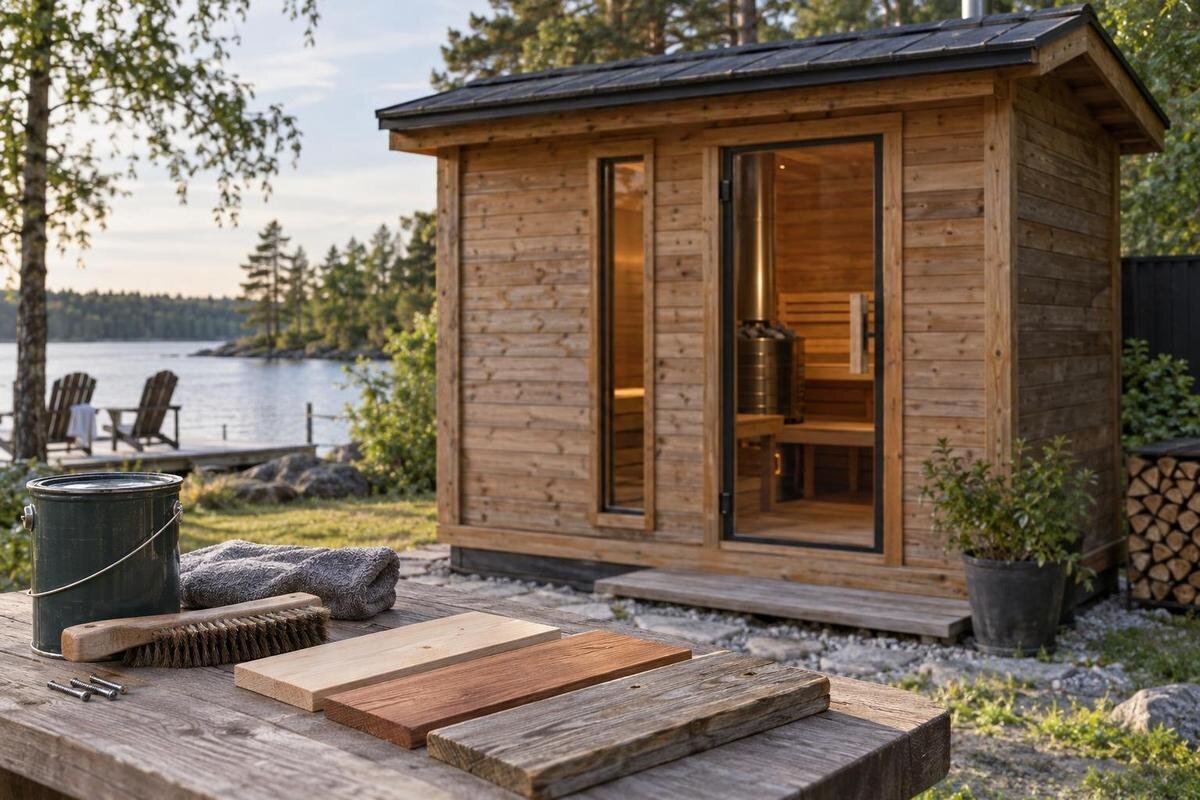
Outdoor sauna care guide
An outdoor sauna has no dependable, universal lifespan. Its useful life depends on the cabin’s materials and assembly, exposure at the site, how moisture is managed, how often it is used, and whether parts subject to wear can be maintained or replaced. A photograph alone cannot answer those questions, and a warranty period is not a forecast of how long every component will last. Compare model-specific construction drawings and care instructions as carefully as appearance, then plan for inspection and servicing from the outset.
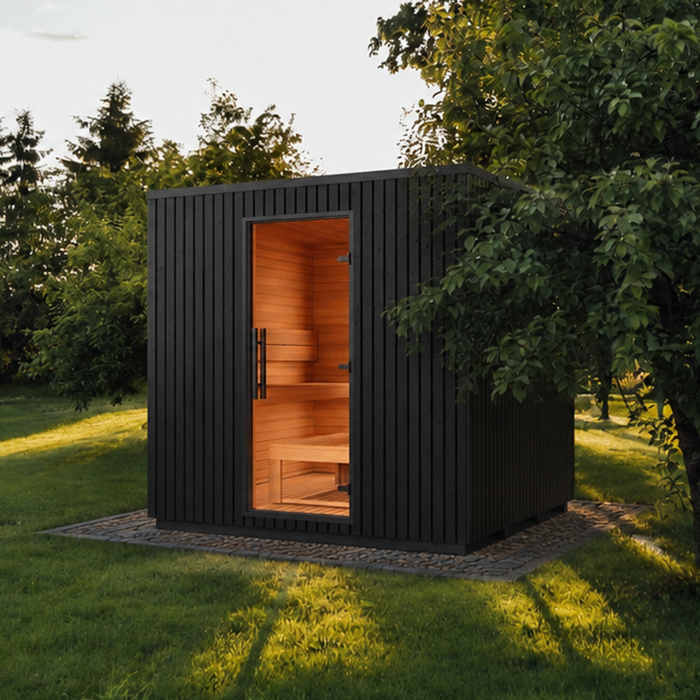
What useful life means for an outdoor sauna
There is no single number that responsibly describes every outdoor sauna. Useful life is not just the number of years a cabin remains standing: doors and fittings must still work, the structure must remain sound, and the heater and controls need appropriate maintenance. Those parts can age at different rates. A replaceable component may need attention while the cabin remains serviceable; damage to a less accessible structural area can have a different consequence. The point at which repair stops making sense also depends on the owner’s expectations and the availability of suitable parts. Treat general lifespan claims as broad context, not a promise for a chosen model.
When comparing a specific purchase, separate three questions: how well it resists conditions at your site, what routine care it needs, and what can be repaired if it wears. Use the exact model name when requesting evidence; the Thermowood Barrel Sauna HCF 300 is a listed option, but its identity does not establish a service life. Ask for that model’s construction details, maintenance instructions and warranty wording. If a lifespan estimate is offered, ask what assumptions it rests on. A product title, photograph or area figure can help identify a catalogue entry; none, by itself, predicts the condition the sauna will be in after years of outdoor use.
Timber specification and condition
Timber is not one uniform material. Species, grading, moisture condition, machining and the way boards are assembled all affect how a finished cabin behaves as conditions change. Timber can move as it takes up or releases moisture; poorly matched parts or exposed end grain can make movement more troublesome. Ask what timber is used in each part rather than accepting a broad label: walls, floor, roof elements, benches and door parts may have different specifications. Request the material details for the supplied configuration, along with information about any finish. Clear, model-specific answers make it easier to compare products and understand what needs protection or maintenance.
A name such as Thermowood Barrel Sauna LCF 300 identifies a catalogue model, but the name alone is not a full material schedule. Ask which timber species and grade are specified, whether any modification or treatment is involved, and which surfaces receive a finish. If a term such as thermowood appears in the product name, ask the manufacturer to define it for the supplied configuration and explain the remaining care requirements. Check whether instructions cover inside and outside surfaces separately. This avoids treating a material label as proof that the cabin needs no attention or will last for a particular number of years.
How joints and assembly affect durability
Construction details determine where water can enter, how joints cope with movement and whether common wear can be repaired without replacing a larger assembly. Review drawings and assembly instructions for board connections, corners, door openings, floor edges, fixings and the junctions between major parts. Ask how exposed joints are protected and where water is intended to run off; do not infer those details from a photograph. Confirm what the base must support and whether the supplied design includes all the parts shown in the drawing. A clear parts list also helps distinguish structural components from optional extras and shows what the installer is expected to assemble.
Use a precise model reference, such as Sauna S-140, when asking for the assembly manual, parts list and available repair guidance. Find out which components can be replaced separately and whether repairs must be carried out by the manufacturer or a service provider. Ask what to do if a board splits, a fixing loosens or a door no longer closes as intended. These questions are not a prediction that a fault will occur; they help establish whether the construction can be inspected and maintained. If information is unavailable, do not use an attractive image as a substitute for a technical drawing.
Weather exposure and the installation site
Outdoor exposure is specific to the site, even within one property. Direct sun can age finishes, while wind-driven rain, runoff, irrigation spray and splash from paving can keep particular surfaces wet. Leaves or debris may collect against the cabin, and plants close to the walls can restrict airflow. Check how the proposed position changes through the day and after rain, not just how it looks during a viewing. A position with space for inspection and cleaning is easier to care for than one that is boxed in. Ask the supplier or installer what supporting surface and clearances the particular design requires.
The Sauna HC-150 catalogue entry gives a stated area of 2.97 m²; do not treat that figure as a confirmed installation footprint or the clearance needed around the cabin. Obtain a dimensioned drawing for the exact model and check access for assembly, opening doors, cleaning and future service. The supporting surface must meet the manufacturer’s instructions and suit the site. Where ground conditions, drainage or structural support are uncertain, have a suitably qualified installer assess them before work begins rather than guessing from a generic diagram.
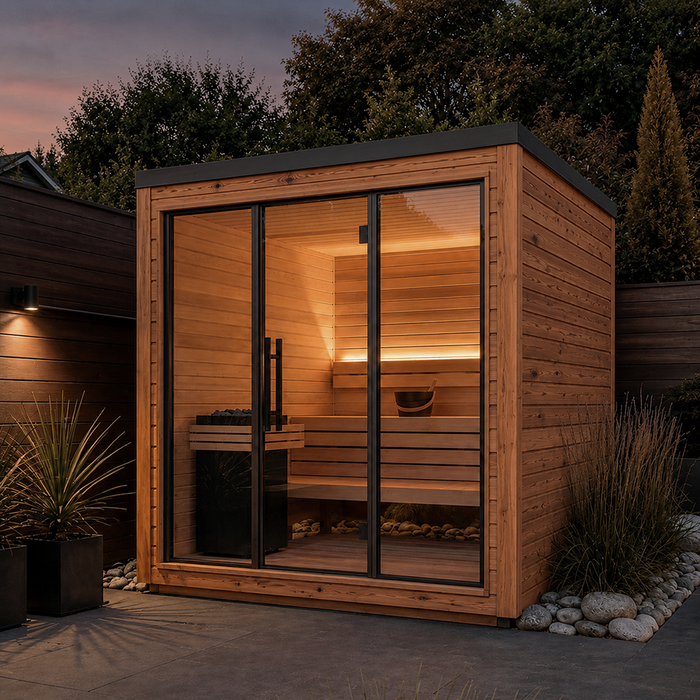
Ventilation and drying after use
Water reaches a sauna from outdoor weather and from moisture generated during use. The cabin’s ventilation arrangement and the manufacturer’s drying instructions help manage the latter, but they are not a substitute for protection from rain or ground moisture. Read the manual for how to air the room after a session, what to do with damp towels and how to keep vents unobstructed. Do not close, enlarge or relocate openings on your own; changing airflow can alter the way the product is intended to operate. If the manual is unclear, ask about the exact configuration rather than applying a general sauna rule.
For a named option such as Sauna HC-225, ask for the relevant user manual and ventilation guidance. Check how the instructions distinguish ventilation during use from airing the cabin afterwards, rather than relying on a general product description. Follow the supplied care advice and note any persistent dampness, condensation or musty odour. If the room does not dry as described, ask the manufacturer or installer to investigate the cause instead of covering the symptom with a new coating or altering the ventilation.
Exterior finishes and care instructions
Finishes need their own maintenance plan. An exterior coating can weather or wear, and the appropriate refresh depends on the product applied, the timber beneath it and the site exposure. Ask for the finish name, the surfaces to which it applies, preparation steps and the manufacturer’s recommended inspection or renewal triggers. Do not assume that ordinary exterior paint, stain, sealant or household cleaner is suitable for a hot interior. Use only products the sauna manufacturer approves for the surface, and keep treatments away from areas the manual says must remain untreated. A low-maintenance description does not remove the need to check instructions.
When requesting care advice, identify the exact listing, such as Sauna N-210, so the answer can be matched to the model and its supplied finish. Ask whether a finish is applied before delivery, whether any treatment is left to the owner, and how to recognise when maintenance is due. Keep the names and application instructions for products used on the cabin, including replacements; a visually similar coating may not be compatible. This record helps you follow the correct care instructions later. Avoid adding treatments to hidden or interior surfaces without written approval.
Routine cleaning and inspection
A simple inspection routine can make changes easier to assess. When the sauna is cool and not in use, look for persistent wet or dark patches, softening timber, new gaps, damaged edges, loose fittings, corrosion, a door that binds, and water collecting near the base. These signs do not all mean the same thing: a minor cosmetic change does not by itself establish serious damage, while continuing softness or damp deserves prompt advice. Clean surfaces only as the manual permits, remove leaves and debris from around the cabin, and avoid forcing a part back into alignment. Note the date and location of changes so a service professional can see whether they are progressing.
Ask about replacement parts while comparing models. The Sauna N-250 name is useful when confirming whether items such as door hardware, seals or fixings can be ordered for that exact configuration; do not infer parts availability from a product photo. Find out how to report a fault and who can inspect it, particularly if the problem affects a joint or component that is hard to reach. Keep invoices, the assembly record, manuals and dated inspection notes together. Good records do not prevent wear, but they make the maintenance history clearer and support a more useful conversation about repair.
Use patterns and serviceable components
Frequency of use changes the amount of exposure to heat, moisture, cleaning and repeated opening and closing. That can affect how often you should inspect wear points, although no simple use count translates into a guaranteed lifespan. The cabin, door hardware, heater and controls are separate items with different maintenance needs and possible replacement routes. Read the instructions for each supplied component and follow the specified servicing arrangements. Do not treat a fault with a heater or electrical control as a timber-care job; stop using affected equipment and have it assessed by a suitably qualified service professional. Avoid making alterations to vents, controls or electrical parts yourself.
If you are comparing Sauna LC-260, ask which heater and control configuration is supplied with the exact model, what maintenance documents cover it and how servicing or replacement is arranged. Confirm whether proposed accessories are included or separately specified, and keep the equipment instructions distinct from the cabin’s timber-care guidance. This matters if your expected use is frequent: you need to understand the upkeep of the complete configuration, not just the enclosure. The aim is to match the maintenance plan to your actual pattern of use, rather than assume that a named model is automatically suitable for a particular duty cycle.
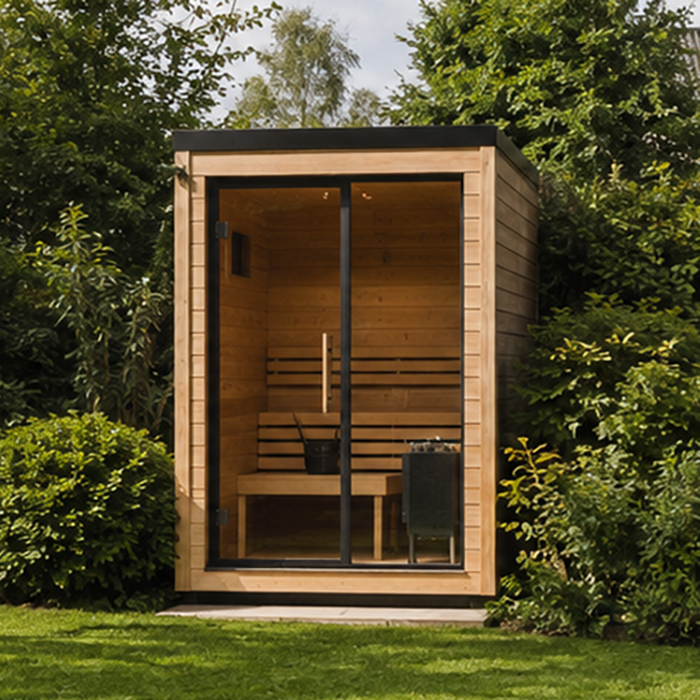
Warranty duration is not expected lifespan
Warranty duration and useful life answer different questions. A warranty sets out a defined period and scope for specified remedies under stated terms; it does not promise that every part will remain unchanged for that length of time, nor does a shorter term by itself prove poor construction. The cabin, heater, controls, finishes and accessories may be treated differently in the documents. Before buying, read the full terms for the exact model and configuration, including when cover begins, which parts are included, what counts as a claim and any exclusions or maintenance conditions. Do not rely on a duration printed separately from its scope.
Compare the actual remedy and process, not just the number of years in a headline. Check who handles a claim, what evidence must be retained, whether repair or replacement is offered, and which costs or conditions the written terms address. Look closely at references to assembly, use, site exposure, finish care or unauthorised changes; these are examples to check, not universal exclusions. Keep the warranty with the invoice and manuals, and record maintenance in the format the manufacturer requests, if one is specified. A warranty can be useful protection, but it cannot substitute for suitable care, sound siting or serviceable parts.
Documents to compare before you buy
Make a side-by-side comparison using documents for the exact models, rather than broad category descriptions. Ask for the material schedule; drawings showing dimensions and main connections; a list of what is included; guidance on the supporting surface, airflow and finishes; a maintenance schedule; details of serviceable parts; and the full warranty terms. Check whether the advice assumes a particular site or pattern of use. If answers are verbal, ask for them in writing so the instructions can be followed later. Any missing item is a reason to clarify the offer before purchase, not to fill in the blank with assumptions from a different sauna.
Allow room for inspection, cleaning and service access, and consider who will carry out routine care over the years. Base the plan on the maker’s manual and actual exposure: a sheltered position does not cancel maintenance, and a demanding site does not automatically make a cabin unsuitable if its design and care instructions address it. Verify the model and configuration being sold, because names and inclusions can vary. A realistic choice is one whose construction evidence, expected care and repair route fit the place where it will stand and the time you can give it.
Frequently asked questions
Can anyone give a reliable number of years for an outdoor sauna?
Not from the category alone. A useful estimate would need to account for the specific materials and construction, site exposure, maintenance and pattern of use. Even then, it is an expectation rather than a guarantee. Ask what assumptions any lifespan estimate is based on and which parts it covers.
Does a thermowood label mean the sauna is maintenance-free?
No. A product name does not set out the full material specification, finish, care schedule or expected life. Ask for written instructions for the exact model, including which surfaces need protection and which products are suitable. Outdoor exposure and drying still need attention under the manufacturer’s guidance.
Does the warranty period show how long the sauna will last?
No. A warranty describes cover for specified items under written terms; it is not a forecast of the cabin’s total service life. Compare the covered parts, exclusions, maintenance conditions and remedies as well as the duration.
How often should I inspect and maintain an outdoor sauna?
There is no interval that suits every design and site. Follow the model’s manual, then account for how often the sauna is used and how exposed it is to weather. Check it more closely after unusual weather or if you notice water ingress, persistent dampness or a change in how a door or fitting works.
Which changes should prompt me to seek advice?
Persistent damp or dark patches, softening timber, new gaps, loose or corroded fittings, a door that binds, or water entering the cabin deserve investigation. If heater or electrical equipment is damaged or behaves abnormally, stop using the affected equipment and arrange an assessment by a suitably qualified service professional.
An outdoor sauna’s lifespan is best understood as the result of several factors, not as a single number on a product page. Compare model-specific materials and construction, the conditions at the site, clear drying and care instructions, serviceable components, and warranty terms read on their own. Choose a sauna whose maintenance demands and repair route you can support, then follow its manual and keep a record of changes over time.
