
How Long Does an Outdoor Sauna Take to Heat Up?
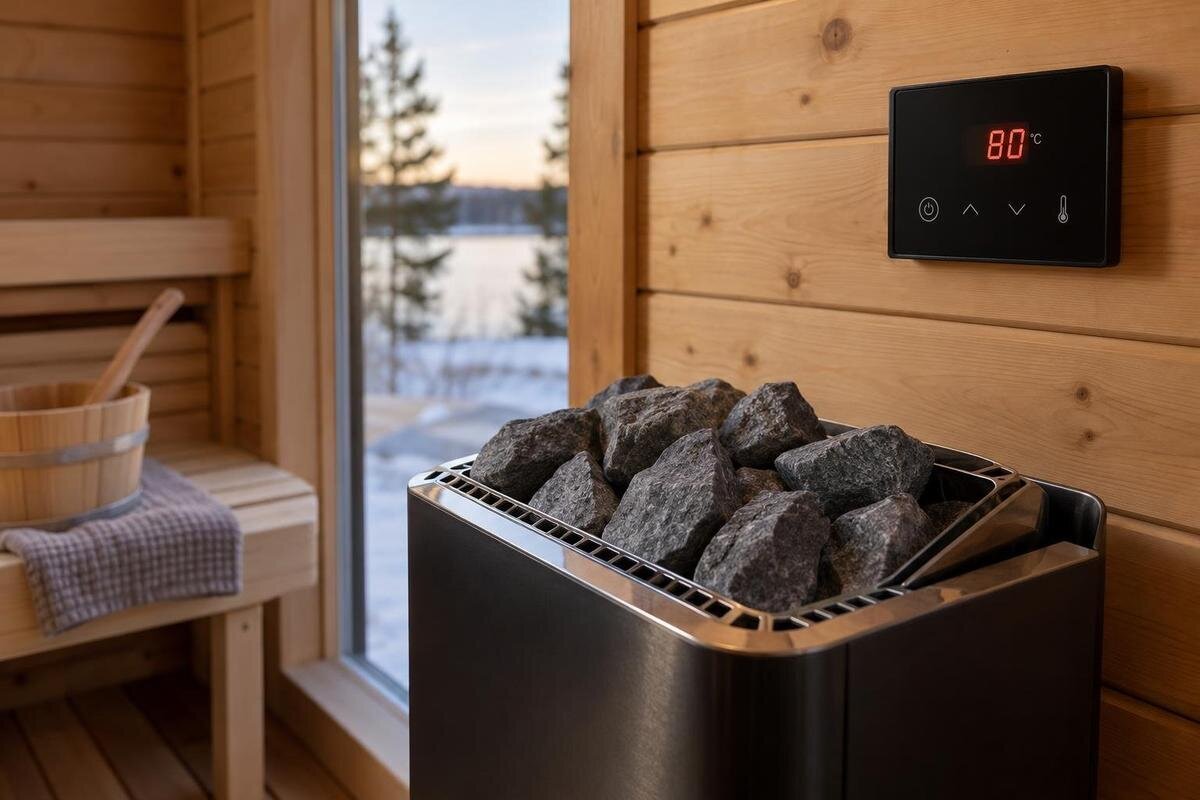
SAUNA HEATING GUIDE
Outdoor sauna heating time is best treated as a measured result, not a fixed product promise. The starting temperature, local weather, cabin construction, heater configuration and measurement point all matter. This guide explains what a useful warm-up test records, why two quoted times may not be comparable, and how to build a realistic estimate for your own setup without relying on a bare number.
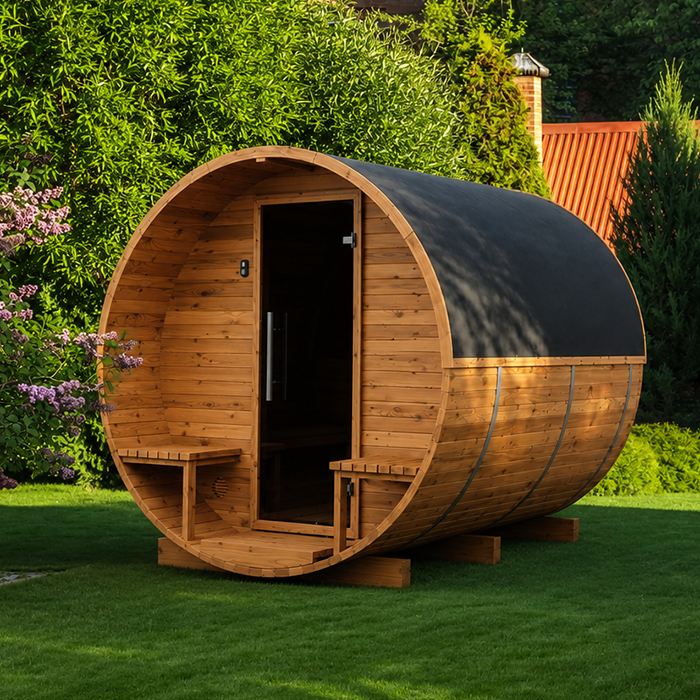
Why there is no single outdoor sauna heat-up time
An outdoor sauna does not have one dependable heat-up time that applies to every cabin. The elapsed time depends on the enclosure, its heater and control settings, and the temperature and exposure when heating begins. A quoted result is useful only if it says what started the clock, what temperature counted as the finish, where that temperature was measured and which conditions applied. Without those details, a result from a controlled test may have little bearing on your installation. A bare number is not a reliable promise for a different site or setup.
Another source of confusion is what “heated” means. The controller may reach its set temperature while an independent thermometer elsewhere still reads differently. Air near a sensor can warm before benches, walls and other interior surfaces have warmed through, so the cabin may not feel uniform at the instant the display changes. Opening the door can then alter the reading. A measurable end point is the temperature at a named location, not an undefined sense of readiness; report any separate judgement about comfort as such rather than calling it a test result.
Define the start and finish of a heat-up test
Before timing, record the actual temperature outside and inside the cabin rather than assuming the two are the same. A sauna that has cooled after earlier use is a different starting point from one whose walls and benches have been cold for hours. Note whether the heater was off and cold or already warm. Describe each run as a cold start or a warm restart, and explain what that description means in your record. Matching cabin air readings alone do not establish that the benches, walls and heater began in the same condition. For a wood-fired system, state whether timing begins at ignition or at another defined event; for an electric system, say whether it begins at switch-on. Include that event alongside the elapsed time, so readers do not have to infer it from the heater type. Otherwise, two clocks may be measuring different tasks.
At the other end, name the target in degrees Celsius and state whether it means the controller reading or a separate thermometer reading. Use the same measurement point when comparing runs, and note if the timer stops as soon as the reading is reached or only after it holds there for a defined period. The model name and area are identifiers, not a timed result: the listed Thermowood Barrel Sauna S-140 is recorded at 1.93 m². That area does not establish a starting temperature, heater specification or elapsed time.
How outdoor weather changes the result
The outdoor temperature affects the difference between the cabin’s starting conditions and the target. Cooler air outside can increase heat loss from a warm cabin; wind may also matter, depending on the enclosure and its exposure. A mild, sheltered afternoon and a colder, windy morning are not equivalent test conditions, even if the heater setting and target match. The time taken to heat up can therefore vary at the same site from one day to another.
For a useful comparison, note the outdoor air temperature near the sauna when the test starts, as well as the cabin’s starting temperature. Record whether direct sun has been warming the exterior and whether wind or weather changes during the test. A daily high or forecast does not describe the conditions at the time of measurement. Keep weather observations separate from the measured temperatures: “sheltered and sunny” adds context but does not replace a thermometer reading. If one run starts on a mild afternoon and another on a cold morning, retain both records rather than averaging away that distinction. They may help describe your experience across different conditions, but they do not isolate the effect of the heater. Repeat tests under reasonably similar starting conditions where possible; there is no reliable universal multiplier for turning one weather result into another.
Cabin size and construction affect heating time
The heater has to warm the air and the cabin’s interior surfaces. Internal volume depends on more than floor area: shape and height matter, as do features that affect heat loss, such as insulation, glazing and how well the enclosure retains heat. The manufacturer’s guidance for the cabin and heater is a better basis for selection than a general rule based only on square metres. A design with a larger internal volume or more heat loss may take longer to reach a given reading, but area alone cannot quantify the difference.
If you are considering the Thermowood Barrel Sauna HC-150, its listed area is 2.97 m². That catalogue figure helps identify the model, but a heating-time comparison needs more detail about the enclosure used in the test. Check whether the report names the exact cabin and describes its dimensions and construction, rather than referring loosely to a sauna of a similar size. Keep floor area and internal volume separate when reading the information; one should not be substituted for the other. Two saunas with similar listed areas can still differ in height, interior surfaces or heat loss. If a report attributes a quicker result to a smaller cabin, check whether the heater, starting conditions and target also differed. Otherwise, the result describes two complete setups rather than demonstrating the effect of cabin size alone.
Match the heater to the cabin
The heater’s output, controls and settings all affect a warm-up test. The selected heater must be appropriate for the cabin according to the heater manufacturer’s sizing guidance, which may account for internal volume and features such as substantial glazed surfaces. Avoid treating a generic floor-area rule as a heater-sizing calculation. A larger output is not automatically a suitable shortcut: compatibility, operation and the manufacturer’s instructions matter as well as the time taken to reach a target.
For the Thermowood Barrel Sauna HC-225, listed at 4.4 m², separate the cabin details from the heater details in any warm-up quotation. Look for the exact heater model, its output and the setting used during the test, rather than treating the cabin name as a complete equipment specification. A result recorded with one heater configuration should not be presented as the expected time for every configuration of that cabin. Equally, naming the heater without identifying the enclosure leaves part of the comparison unexplained. When comparing two reports, check which of these details stayed the same and which changed. This helps you judge whether the times describe the setup you are considering, without using the figures as a sizing calculation. If the heater or its compatibility is uncertain, check the relevant manufacturer documentation and seek confirmation from a qualified professional.
Comparing electric and wood-fired warm-up tests
A test must explain how its clock starts, especially when comparing different heating methods. For an electric system, the start might be when the controls are switched on. For a wood-fired system, a report might start at ignition or at a later, clearly defined point. Fuel condition, how the fire is managed and the state of the heater can all affect a result. If two reports begin timing at different stages, their elapsed times do not describe the same process.
Do not assume that one type is always quicker. The outcome depends on the particular equipment, cabin and test conditions. For a cabin such as the Thermowood Barrel Sauna N-210, listed at 4.43 m², the model name and area do not tell you which heating method was used in a reported test. Record the heater type and model explicitly. Then distinguish the measured heating interval from any preparation that took place before the clock started. A report may describe either interval usefully, but it should not quietly include preparation in one result and exclude it from another. For your own planning, keep preparation time as a separate entry if it matters to your routine. This preserves a clear comparison of the warm-up measurements while also showing what the quoted elapsed time does, and does not, cover.
Keep ventilation and door use consistent
Ventilation is part of the sauna’s operating conditions. Follow the cabin and heater instructions rather than closing or obstructing vents to try to reach the target sooner. For a controlled comparison, use the prescribed ventilation arrangement consistently and record it. If the vent setting differs between two tests, that difference may affect the result, making it harder to attribute a change in time to weather or heater performance alone.
A door opening also changes conditions by letting warm air escape, so note when and how often the door is opened. A run with someone entering before the end is not directly comparable with one taken without interruptions. For a test involving the Thermowood Barrel Sauna N-250, listed at 5.27 m², include door use in the record alongside the cabin identity. If the door was opened to check a thermometer, say so rather than describing the run as uninterrupted. Use the same observation method in later tests where practical. You can keep an interrupted run as an example of everyday use, but label it separately from a controlled comparison. There is no need to discard useful observations; the important distinction is between a time recorded under consistent conditions and one that includes changes during heating.
Thermometer position changes the reported temperature
A controller reports what its own sensor detects, not necessarily the temperature at every point in the sauna. Readings can differ by position, so a displayed target is not automatically the same as a measurement at bench height or elsewhere in the cabin. Follow the heater manufacturer’s instructions for its sensor and do not reposition system components to improve a test result. If you use a separate thermometer, state where it is placed and use that same point in each run.
A report for the Thermowood Barrel Sauna LC-260, listed at 5.12 m², should identify the measurement point as carefully as it identifies the cabin. Distinguish the control display from any independent thermometer reading, and state which one determines the timed endpoint. If both are recorded, label them separately rather than switching between them as the test progresses. A short description of the independent thermometer’s location should let you use the same position on another day; “inside the sauna” is too vague for that purpose. When reading somebody else’s result, check whether their measurement position matches yours before treating the times as comparable. If the location is not given, the result tells you less about when your chosen point will reach the target. Consistency matters more than selecting whichever display reaches the desired number first.
How to record comparable warm-up tests
A useful test log names the exact cabin and heater, records outdoor and cabin temperatures at the start, and states the heater setting and target. It also identifies the thermometer and its position, the point at which the timer starts, the ventilation arrangement and any door openings. For wood-fired tests, include the timing definition and relevant fuel conditions. Keep these details as similar as practical between runs; if they differ, report the difference instead of presenting the times as a direct comparison.
A clear report can follow this format: “Cabin and heater: ___; outdoor air at start: ___ °C; cabin air at start: ___ °C; timer started at: ___; target and measuring point: ___; ventilation and door use: ___; elapsed time: ___.” For the Thermowood Barrel Sauna HCF-300, the listed area of 6.89 m² can sit alongside the model name in the record, while the heater and test conditions need their own entries. Add a brief note explaining any departure from the planned method, rather than leaving an unexplained time in the log. If a field was not recorded, mark it as unknown instead of filling it in from a later test. Keep individual runs visible when summarising the results, including slower ones. A summary should show the spread of observations and their conditions, not turn the fastest recorded run into an implied promise.
Use repeated tests to plan your own warm-up
Once your sauna is installed, a small record of actual runs is more useful for planning than an isolated advertised time. Note the conditions you usually start with and whether the cabin is fully cooled or still warm from earlier use. Repeat the measurement on different days, recording the weather and any changes in heater or control settings. To make the record useful, group broadly similar runs together: cold starts should not be mixed indiscriminately with warm restarts. Look at the range within each group rather than choosing one convenient number to represent every occasion. If your next use is likely to begin under colder conditions than those you have recorded, recognise that the existing results are a limited guide. This approach gives you an estimate tied to your own setup without presenting a short run of observations as a guarantee.
Do not transfer a time from one model to another just because their catalogue areas look alike. The Thermowood Barrel Sauna LCF-300 is listed at 6.89 m², matching the listed area of the HCF-300, but equal area figures do not prove equal warm-up times or identical configurations. Keep each cabin’s results attached to its own heater and test conditions. If you are comparing these models, an area match is a reason to examine the remaining details, not a substitute for them. The same principle applies when your own setup changes: retain the earlier records, but distinguish them from tests using a different cabin, heater or setting. That lets you review the estimate without losing the context of previous observations. Your practical planning figure should reflect the configuration you actually use, supported by repeated measurements rather than a borrowed model comparison.
Frequently asked questions
How long does an outdoor sauna take to heat up?
There is no reliable single time for every outdoor sauna. The result depends on the cabin, heater, starting temperatures, weather and how the end point is measured. A useful estimate comes from a timed test with those conditions recorded.
What should I record before starting a test?
Record the outdoor and cabin air temperatures, whether the heater is cold or already warm, and the exact event that starts the timer. Also note the heater and cabin models, the target temperature and where you will measure it.
Does reaching the controller’s set temperature mean the whole sauna is heated?
Not necessarily. The controller responds to its sensor, and temperatures can differ elsewhere in the cabin. Benches and interior surfaces may also warm at a different rate from the air. Record the sensor or thermometer position when reporting a result.
Are electric saunas always quicker to heat than wood-fired ones?
There is no sound universal comparison. Tests may start the clock at different points, such as switch-on or lighting the fire, and the equipment, settings and operating conditions also matter. Compare results only when the method and starting conditions are clear.
Can I predict heating time from a sauna’s listed area?
No. An area figure helps identify a cabin but does not give its internal volume, heat loss, heater configuration or a measured warm-up time. Use the manufacturer’s sizing guidance and look for a timed test with stated conditions.
A heat-up time is meaningful only when the start, endpoint, cabin and heater are named. Compare measured results taken from similar starting temperatures and with the same thermometer method; then use repeated observations in your own local weather to set expectations. Without that context, neither a listed area nor a heating time quoted on its own can tell you how long a particular outdoor sauna will take.
