
How Much Maintenance Does an Outdoor Sauna Need?
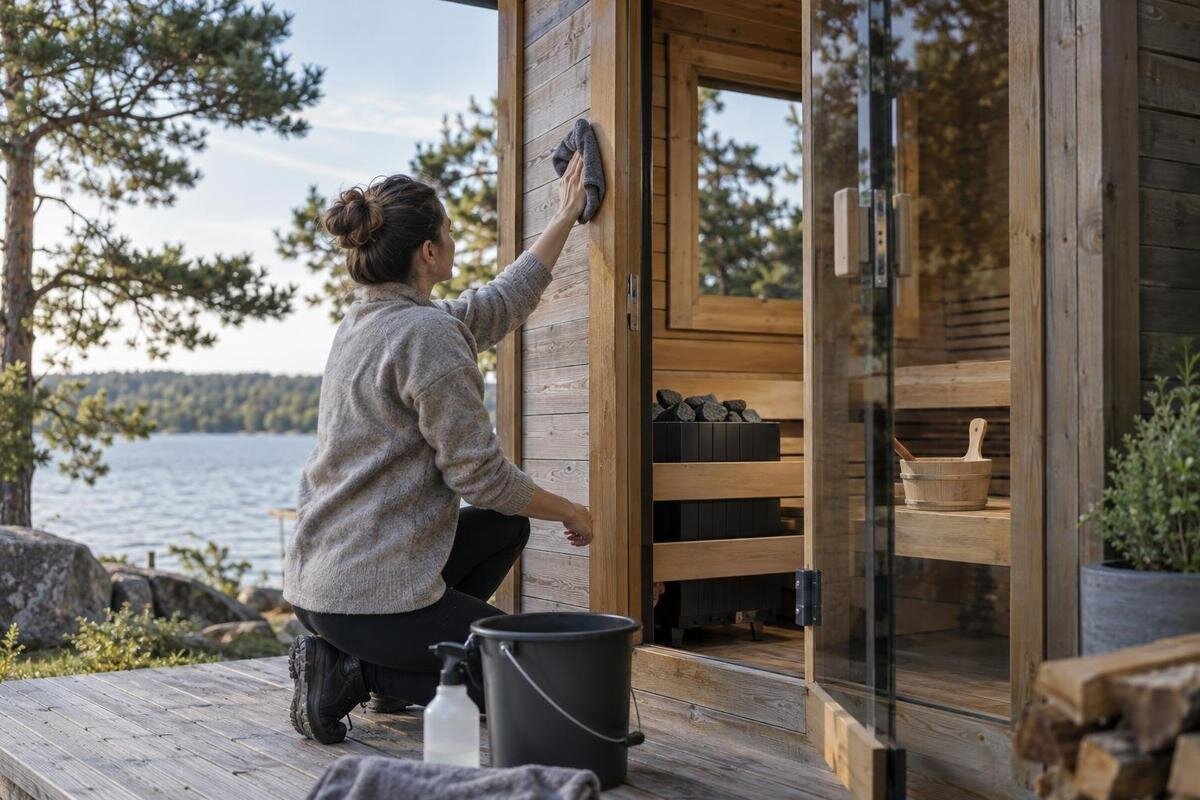
Outdoor sauna care
Outdoor sauna maintenance is a mix of routine cleaning, checks of the exterior and surrounding site, and care of the heater or other equipment. There is no single schedule that fits every model: materials, finishes, configuration, use and exposure all matter. Some tasks are light and frequent; others are triggered by visible change or by the maker’s instructions. The most reliable way to estimate the workload is to read the care documents for the exact sauna and heater, then separate tasks you can safely do from work that needs a qualified professional. A product name alone cannot tell you what treatment or servicing is required.

What outdoor sauna maintenance involves
Maintenance is easier to estimate when you separate routine cleaning, condition-led checks and occasional work specified by the manufacturer. Cleaning is linked to use; outdoor inspections respond to exposure or visible change; treatment and repair depend on the materials and assembly. These are different kinds of work, not one service interval, and some are owner tasks while others may need a technician. If you are considering the Sauna S-140, ask for its care instructions alongside the product details. Use those instructions to distinguish the tasks you will repeat regularly from work needed only under particular conditions, rather than treating every item as part of the daily routine.
For each written task, identify who will do it and what prompts it: finishing a session, noticing surface wear, reaching a manufacturer-stated interval or finding a problem that needs professional attention. Estimate the practical burden for your garden and pattern of use. Several users can mean more interior tidying; a leaf-covered or exposed position can mean more attention outside. Those observations help you judge convenience, but they do not establish maintenance intervals. A phrase such as “low maintenance” is useful only if the seller explains which tasks remain, which products or services are needed, and who is expected to perform the work. Keep routine cleaning separate from repairs in your estimate.
Cleaning the sauna interior
The interior is where use leaves moisture and dirt, but the permitted routine depends on the model. Follow the manufacturer’s instructions for ventilation and drying rather than assuming a particular door or window should be left open. When suitable, remove loose debris and wipe visible water or sweat from surfaces the manual says can be wiped. Use a clean, non-abrasive cloth and avoid flooding the floor or soaking timber unless a specific instruction calls for it. When considering the Sauna HC-150, ask which interior surfaces need cleaning after use and how they should be left to dry. This helps you understand what finishing a session will involve.
Ask which cleaners and brushes are acceptable for the interior and how often each surface should be cleaned, including any removable accessories or floor parts. Do not transfer advice for a household bathroom to a timber sauna: strong chemicals, disinfectants, scouring pads, oils or a pressure washer may damage surfaces or leave residue, so use them only if expressly approved. Remove visible grit before wiping so it is not rubbed across a bench. Keep the approved instructions where the person doing the cleaning can find them. This makes the routine easier to follow without turning a simple clean into an unapproved surface treatment.
Care for the exterior finish
Exterior surfaces are exposed to weather, and different parts may need different care. Identify what is supplied: untreated timber, pre-finished cladding, a painted or stained surface, roof material, metal fittings, glazing or seals, where fitted. A product title does not establish a coating or suitable re-treatment. For the Sauna HC-225, for example, ask which exterior surfaces have a finish and what care each requires. Written instructions should explain what can be cleaned, whether later coating is permitted and which products are compatible. Separate cleaning from finish renewal in your workload estimate; they are different jobs, even when they concern the same surface.
From a safe position, look for changes such as peeling, cracks, exposed patches, uneven colour, splintering, corrosion or water marks. These observations are prompts to check the instructions or ask the supplier, not a diagnosis or an automatic instruction to repaint. Do not set a re-coating interval based on a calendar for a different product. Preparation and suitable coatings can be surface-specific; sanding or applying oil, stain, paint or sealant without approval may conflict with the supplied finish. If the care document is unclear, ask before treating the exterior and note what was applied for future reference.
The effect of weather and the surrounding site
The garden around a sauna affects how much dirt and moisture you need to manage. Direct sun, wind-driven rain, shade, dust, falling leaves and irrigation can all change what you see on external surfaces. Note whether watering or rain regularly splashes onto the cabin, whether debris collects around it, and whether plants conceal the base. Clear loose leaves and soil from accessible areas if the manual permits, and keep inspection points visible. Do not alter supports, drainage or the foundation by guesswork; clarify the intended installation conditions with the supplier or installer instead.
Compare the model’s site guidance with the place where it will stand. If the Sauna N-210 is on your shortlist, ask how much space its installation needs for exterior cleaning and inspection. Consider whether vegetation, fences or stored garden items would prevent you from reaching the areas you are expected to check. Access matters for ongoing care, not just for getting the sauna into position. If water regularly runs towards or splashes against the sauna, describe the issue to the supplier or installer rather than sealing gaps or redirecting water yourself. Keep any proposed site changes separate from the ordinary task of clearing loose garden debris.
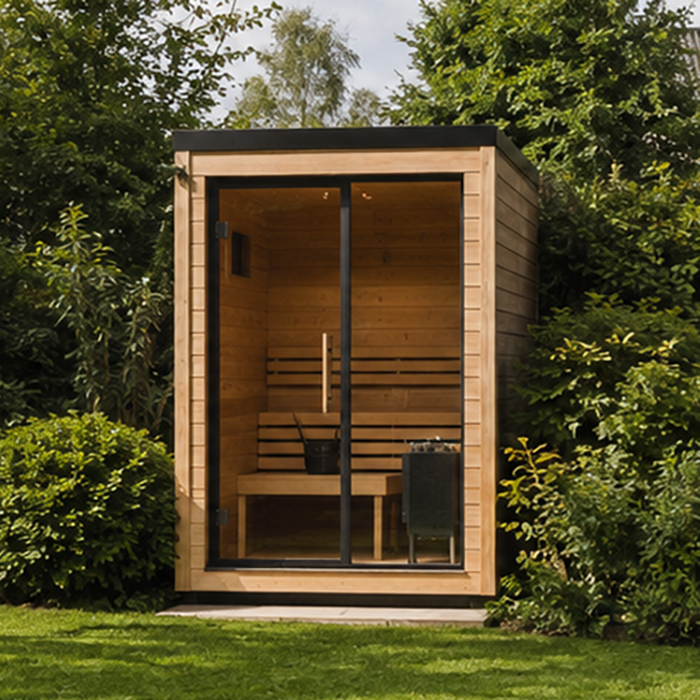
Checking roof edges, joints and visible wear
Where fitted, roof edges, joints, fixings and seals may need attention, but their design varies. Ask the manufacturer to identify the materials and the visible points an owner can check; the manual may distinguish a normal joint from a defect. From a safe position, look for obvious movement, damaged or missing pieces, corrosion, repeated drips or debris blocking an intended drainage path. Do not assume every sauna has the same roof covering or sealed construction. Avoid climbing onto the roof, removing panels or tightening structural fixings unless the manufacturer’s instructions expressly assign that work to you.
If a higher or concealed area cannot be inspected safely, ask for an appropriate professional assessment instead of trying to reach it yourself. For a model such as the Sauna N-250, clarify which roof edges, joints and fittings are accessible to an owner and which require specialist attention. Establish what a useful visual check involves without dismantling anything, and where a leak or loose component should be reported. Keep a note of any recurring drip or visible change and its location. Distinguishing an observation from a repair request gives the supplier or service person useful information without encouraging guesswork or cosmetic patching.
Heater, controls and other equipment
Treat the heater and controls as a separate maintenance system. The correct checks depend on the chosen heater, configuration and manufacturer’s manual; do not assume that a sauna listing includes a heater or that the cabin’s care sheet covers it. Ask which heater is supplied, which manual governs it, what owner checks are allowed and whether professional servicing is specified. Controls, sensors or accessories may have their own care instructions, so ask about those too. Keep the relevant documents together. If the heater is selected or installed separately, obtain its manual as well, so responsibilities are not split between assumptions about the cabin and the equipment.
When discussing the Sauna LC-260, confirm the equipment included in your chosen configuration before asking about servicing. Keep cabin care and heater care as separate entries in your workload estimate, with the relevant contact for each. Limit owner work to tasks the instructions assign. Do not open electrical enclosures, alter wiring or attempt heater repairs. If you notice damage, repeated faults or another unfamiliar change, seek guidance from the manufacturer or an appropriately qualified technician before using the affected equipment. A fuel-burning arrangement, if selected, needs its own manufacturer instructions; advice for an electric heater is not a substitute, even if the surrounding cabin is the same.
Changes that may need attention
Routine checks are most useful when they focus on changes rather than trying to diagnose them. Note persistent dampness, visible mould, unexpected staining, damaged or softened surfaces, cracks, a fitting that has loosened, a door that has begun to bind, or a leak. The same sign can have more than one cause, and an apparent gap may be part of the design, so do not seal, sand, paint or force a component on sight. Compare the condition with the manual, and take a clear photograph if that will help the supplier understand what has changed.
Give the supplier the model name and configuration when reporting a change. For the Sauna HCF-300, as for any model, include the affected part and its location rather than relying on a general description such as “a problem with the timber”. Record when you first noticed the issue, whether it recurs after rain or use, and any approved treatment already applied. Ask the manufacturer or a qualified professional whether the part needs attention and who should do it. If a concern involves electrical equipment, a heater or structural stability, do not attempt a DIY repair; arrange an appropriate assessment rather than covering up the change.
Estimating the workload before you buy
Ask for maintenance information before settling on a sauna, not after it is installed. Request the current manual for the exact model and configuration, care instructions for each interior and exterior surface, and a separate heater guide if applicable. When comparing the Sauna LCF-300 with other options, use the same questions for each: which components are included, what cleaners or coatings are approved, which inspections are owner tasks, and what work needs a technician? Compare the answers task by task. A clear explanation of the expected work is more useful for planning ownership than an unsupported description such as “easy care”.
Translate the answers into a plain workload list: task, trigger or manufacturer-stated interval, person responsible, approved method, and any consumable or service needed. If an interval or finish instruction is missing, ask for clarification rather than borrowing one from another product. Consider whether you can reach every owner-inspection point safely and whether the routine suits the people who will use the sauna. Ask whether recommended cleaners, treatments or replacement parts are included or must be sourced separately. This is a practical way to compare ownership demands without pretending every model can be reduced to one maintenance score.

Owner care and work for a qualified professional
Keep owner tasks simple, clear and within the manufacturer’s instructions. The applicable list may include routine cleaning, visual observation and care of the area around the sauna, but the exact duties belong in the manual. Decide who will do them, where approved cleaning products will be stored and how you will record any exterior treatment. If a property has several users, a short written routine can help prevent someone using a cleaner or coating that has not been approved. The aim is not a long checklist; it is to make the relevant tasks consistent and easy to hand over.
Some work is better left to a specialist: electrical checks or repairs, heater servicing, work at height, changes to supports or drainage, and repairs that require dismantling components. Ask the supplier what service route is appropriate for the exact equipment and whether parts or servicing have specific requirements; do not assume every technician can work on every heater. A qualified person can assess something beyond an owner’s visual check without asking you to improvise wiring, roof work or structural changes. Keep service reports and receipts with the manual, especially if more than one contractor is involved.
How use and exposure change over time
Use patterns and surroundings can change after installation. More frequent bathing, guests or heavier use can mean more interior cleaning; a garden with windblown debris or strong direct exposure can mean more exterior attention. A protected position may reduce some cleaning, but it does not remove the need to follow the maker’s instructions. These are workload influences, not a reason to invent a treatment interval. Reassess the practical routine if planting grows over inspection points, irrigation changes, or a finish is renewed. The actual task list still depends on the model and its approved care methods.
Keep the manual, model reference, approved treatment details and service notes together so the care routine can be followed over time. Record what was done and which surface or component it concerned, rather than leaving a vague note that the sauna was “maintained”. This is particularly useful when someone else takes over cleaning or arranges a repair. If the sauna is altered, moved, fitted with different equipment or handed to another owner, re-check which instructions still apply. Retain the information relevant to the current configuration, and make clear which older notes refer to equipment or finishes that are no longer in use.
Frequently asked questions
How often should I clean an outdoor sauna?
There is no interval that applies to every model. Use the manufacturer’s instructions for cleaning methods and any scheduled checks, and consider how often the sauna is used and how much dirt or moisture is left behind. Keep after-use tidying separate from less frequent, condition-led work.
Does “Thermowood” mean the exterior never needs treatment?
No maintenance schedule or finish can be inferred from a product name alone. Ask whether the exterior is supplied untreated or with a finish, which cleaning and treatment methods are approved, and whether the manufacturer specifies any later care.
Can I use ordinary household cleaner or a pressure washer?
Only if the instructions for the exact sauna and surface allow it. Cleaners, abrasive tools and high-pressure water may affect a finish or leave residue. Check the manual before using a product or method, and do not assume bathroom-cleaning advice applies to sauna surfaces.
Can I service the heater myself?
Follow the heater manual for any checks or cleaning assigned to the owner. Do not open electrical enclosures, alter wiring or attempt heater repairs. For a fault or work beyond the stated owner tasks, contact the manufacturer or an appropriately qualified technician.
What maintenance information should I request before buying?
Ask for the current care instructions for the exact sauna and configuration, plus a separate heater manual if applicable. Confirm approved cleaners and treatments, owner checks, any manufacturer-stated intervals, specialist work, and how to find appropriate service support.
There is no honest maintenance figure that applies to every outdoor sauna. Plan for ordinary interior cleaning and visible checks, then confirm what the exact exterior finish and equipment require. Exposure, use and access affect how manageable those tasks feel, but the manufacturer’s instructions determine the approved methods and any stated intervals. Before choosing, separate the work you can do yourself from servicing or repairs that need a qualified professional. With a clear manual, a suitable routine and the right service information, you can judge whether the upkeep fits your property and how you intend to use the sauna.
