
Can You Move an Outdoor Sauna When You Move House?
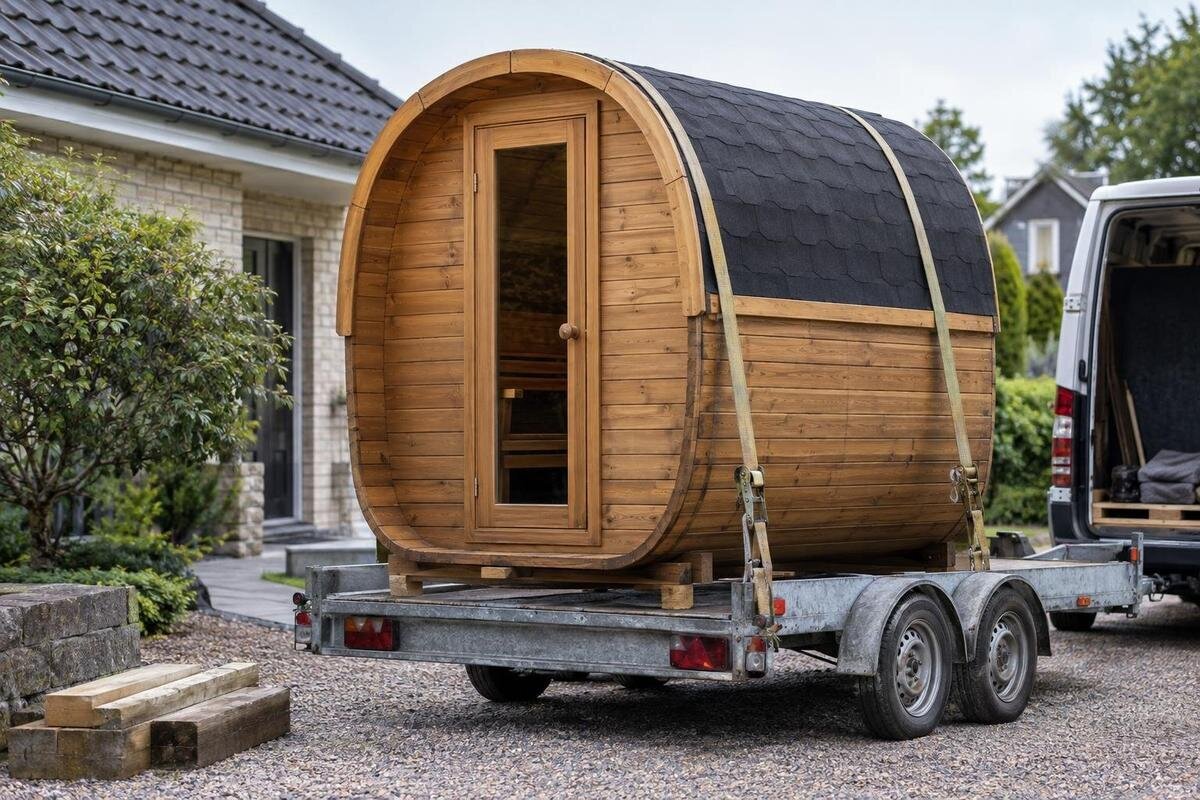
Outdoor sauna relocation
Whether you can take an outdoor sauna to your next home depends on the exact model, its condition and the way its manufacturer says it may be dismantled, lifted and reinstalled. A structure that looks self-contained is not automatically designed to be picked up intact; equally, a sauna assembled from sections is not necessarily intended to be dismantled and rebuilt repeatedly. Before booking a removals company, identify the unit, get relocation guidance in writing and check access and installation requirements at both properties. A sound decision accounts for the whole move, not just getting the sauna onto a vehicle.

Manufacturer's relocation requirements
Begin by asking the manufacturer or authorised supplier whether the specific sauna may be relocated and what method is permitted. Ask whether the answer covers moving the assembled unit, following a documented dismantling and reassembly process, or using a particular installer. The term ‘outdoor sauna’ does not establish that a unit is portable. Joints, frame construction, glazing, roof sections and the way components fit together can make the handling requirements model-specific. A sauna assembled from supplied parts may still have limits on repeated dismantling, so do not infer permission from how it was delivered or from a removals company's general experience. Ask whether any conditions apply to the proposed route, installer or reassembly.
Request the current manual and any model-specific drawings or written handling notes. Ask what, if anything, must be removed, how the maker identifies approved lifting or support points, whether replacement fasteners or parts are required, and who is expected to rebuild and inspect the sauna. Check that the documents correspond to the heater and options fitted to your unit. Do not invent those details on site if the documentation is silent. If the manufacturer no longer provides guidance, a suitably experienced sauna installer can assess the structure, but that assessment does not automatically establish the manufacturer's warranty position. Keep any answer that limits or rules out relocation; silence or a general comment about timber structures is not permission for your unit.
Identify the sauna and gather its records
Collect the purchase record, exact model name and serial or identification label, the assembly manual, drawings supplied with the sauna and records of repairs or alterations. If there is no obvious label, use the paperwork or ask the seller or maker to identify it; do not dismantle parts just to search for a number. Note when the sauna was installed and who assembled it, if you know. Photograph the exterior and interior, support or base, doors and visible fittings, and record existing marks, repairs or known leaks. These details give the manufacturer, installer and removals company the same starting point and help separate old damage from anything observed after transport.
Be precise in your enquiry: if your paperwork names Sauna N-250, use that exact identifier rather than asking about a generic outdoor sauna. Include the heater type and any alterations only if you can verify them, then ask whether the response covers that installed configuration. A product page can help match a model name, but it does not replace the applicable assembly instructions or written relocation guidance. Save the reply, manual version and photographs together, and give the same information to every installer or removals company preparing an assessment. This reduces the chance that a quote is based on assumptions about a different unit.
Moving the sauna intact or dismantling it
Do not choose between an intact lift and dismantling by appearance alone. The manufacturer may specify that certain components come off first, that the sauna is handled in sections, or that a particular method is not allowed. Ask for the sequence, parts list and handling restrictions for your exact configuration, including any instructions for doors or glazing. A suggestion to lift the complete structure should be supported by model-specific guidance and assessed by the company carrying it; visible strength is not proof that a roof, base or joint is intended to take the load. Conversely, the fact that components can be separated does not prove they can be reassembled without affecting fit or stability.
Agree in advance who is responsible for each part of a permitted dismantling and reassembly sequence. If the maker says components may be removed, ask who labels and stores them, how small fittings are kept with the right section, and what happens if something is damaged or missing. Do not force stuck joints or remove fixed equipment outside the instructions. Use the exact model in the request; if yours is the Sauna LC-260, the manufacturer can check the relevant manual rather than relying on a similar-looking sauna. Include packing and protection steps in the written scope instead of leaving them to judgement on moving day.
Assess the sauna's condition before moving it
Inspect the sauna before paying for a move, preferably with the installer or another professional familiar with sauna construction. Look for visible splits, movement at joints, distortion, water damage, soft or deteriorated timber, damaged glazing, a door that no longer fits as expected, corrosion or repairs that may not follow the maker's instructions. Record what you see and take clear photographs; do not test a suspect component by pulling or forcing it. This is a screening check, not a structural assessment. A defect may be hidden or its significance may not be obvious, so appearance alone cannot show whether the unit will tolerate dismantling. Ask a competent person to assess concerns before the removals company accepts the job.
Ask whether a concern needs repair before transport, whether the proposed move could worsen it, and whether the repair method affects the maker's requirements. The answer may change the decision: poor condition could make a sauna unsuitable for dismantling even when a documented method exists for that model. Keep a written condition record at collection and delivery, noting the parts included and any removed for transport. If the installed unit is identified as Sauna HCF-300, put that exact name on the assessment request; the adviser needs to know which product instructions apply, not just the broad category. A professional can also advise whether the safer course is repair, further inspection or no relocation.

Check access at both properties
Walk the full route from the sauna's current position to the vehicle, then from the vehicle to its intended position at the new home. Check gates and doorways, turns, steps, slopes, overhead obstructions, space for handling equipment and whether access surfaces are restricted or uneven. Note narrow points, take photographs and share measured clearances with the removals company. Do not assume a straight-line footprint is enough: moving and handling can require more working room than the sauna itself. Ask the company to inspect the route and decide what access or lifting arrangements the job requires; do not select equipment yourself from a catalogue measurement.
Treat delivery access as a separate survey, not merely a repeat of the old address. Confirm where the vehicle can stop, whether the handling team can reach the prepared site, and whether there is enough room to unload without blocking access or damaging landscaping. Ask the manufacturer for dimensioned drawings for the exact model and use them alongside on-site measurements; photos or a product title cannot establish that a gate, turning area or destination will work. If the records identify Sauna LCF-300, give that model name when requesting drawings and a route assessment. Check any access conditions with the owner or property manager in advance, including arrangements for a gate or delivery window.
Choose a removals company with a clear scope
Choose a removals company willing to assess the sauna as a specialist structure rather than ordinary household furniture. Ask whether it has handled comparable sauna moves, who will supervise the work and whether lifting, packing or installation tasks will be subcontracted. Request a site visit or an assessment of photographs and measurements, then ask what would change its proposed method. A confident verbal promise is not a handling plan: obtain details and compare them with the manufacturer's instructions. The maker's permission and the removals company's willingness are separate checks; one cannot stand in for the other. Make clear who will stop work if the unit's condition or route differs from the information supplied.
Request a written, itemised quotation that states whether it includes inspection, disconnection by the appropriate professional, dismantling, packing or protection, loading, transport, temporary storage if needed, unloading and reassembly. It should also list exclusions and explain how delays, missing parts or newly discovered damage will be handled. For a quote about Sauna S-140, provide the exact model identifier, photographs, route information and condition notes rather than asking only for the price of moving a sauna. Compare quotations on matching scope; a lower figure may cover fewer stages. Confirm that the dates and handovers also align with the maker, installer and removals team's availability.
Prepare the new site before collection
Before the sauna leaves, compare the intended position with the manufacturer's installation drawing and site requirements. Ask a competent site professional to assess the base or support, level, drainage, surrounding clearances and access needed for maintenance; do not assume that a base suitable at the old property will suit the new site. The new property may have different ground conditions, slopes, nearby walls or service locations. Mark the proposed position on a simple site plan so the installer can review it with neighbouring features in view. Have any required preparation completed before delivery is booked, and confirm that the site is ready. Otherwise, the sauna may need extra handling or storage.
Check the exact dimensions and configuration against the available space, leaving room for door movement and any clearances specified by the maker. Do not rely on an online photograph or catalogue title to establish fit. Ask for the model's drawing and confirm with the installer that the unit and any separate heater or flue arrangement have been considered. If your paperwork identifies Sauna HC-150, use that model name when requesting site documentation; a drawing for another version may not answer the question. If the property is rented or managed, check in advance with the owner or relevant manager about siting and access requirements.
Plan reassembly and connected services
Treat installation at the new address as a separate job with its own scope and responsible person. Confirm who will rebuild the sauna, whether they have the model-specific instructions, what items must be checked against the parts list, and who supplies replacement components or fixings if something is missing. A written inventory helps match removed sections and fittings before assembly begins. Do not assume that the removals company that loads and delivers the unit is also qualified or contracted to reassemble it. Arrange a handover recording the condition on arrival and any damage or missing parts before work proceeds. Keep the manual and identification available at the site, not packed in a box that arrives later.
If the sauna has an electrical heater, control equipment, lighting or other fixed services, plan disconnection and reconnection with the relevant qualified professional; do not treat that work as a do-it-yourself extension of the move. If it includes a stove or flue, ask the maker and installer what must be detached, inspected and recommissioned. Fitting and fire-safety instructions should come from current model documents and the professionals responsible for the work, not guesswork on moving day. Give the installer the exact identification, such as Sauna HC-225, and obtain confirmation that assembly and any service checks are complete before use. Ask who keeps records of that work.
Check warranty, insurance and responsibility
Ask about warranty before dismantling, not after a claim arises. A move does not automatically leave every warranty unchanged, nor does it necessarily cancel all cover; terms depend on the maker, product and work carried out. Get written confirmation of whether relocation is allowed under the applicable terms, whether third-party dismantling or reassembly changes cover, whether an approved installer is required, and what inspection records must be kept. Ask separately about the sauna, heater and controls if different suppliers or warranty terms apply. If the response is conditional, ask who must verify each condition and retain evidence before work begins. When contacting support about the Sauna N-210, make clear that the question concerns the installed unit being relocated.
Check transport cover as well as product warranty. Ask the removals company and your insurer what protection, limits, exclusions and claim procedures apply while the sauna is dismantled, in transit, in temporary storage and being reassembled; do not assume household or removals cover includes every component. The written quote or contract should identify responsibility at each handover, which parts are included, how pre-existing damage is recorded, and who must be notified if damage occurs. Confirm how and when a claim needs to be reported under the relevant policy. Keep photographs, condition reports, receipts and the maker's instructions together, especially if one firm transports the unit and another installs it.
Compare the move with the alternatives
Book only when the main checks agree: the manufacturer permits the proposed method, the sauna's condition has been assessed, the removals company accepts the documented handling plan, access is workable and the new site is ready. If any answer is unknown, pause and obtain it before the unit is dismantled or collected. If the dates at the two homes do not line up, storage needs its own plan; ask whether the maker specifies how components must be protected and stored. Write down the order of work and the contact person for each handover, particularly when different teams are involved. A moving date alone does not resolve those requirements.
Compare the complete relocation plan with practical alternatives, including repair, storage, leaving or selling the sauna where appropriate, or buying another unit for the new site. Consider condition, maker guidance, handling, installation, service work, site preparation and full written costs rather than transport alone. A replacement is not automatically like-for-like, so compare documented dimensions and configuration with the new site before treating another model as suitable. If no one can confirm how the existing unit should be dismantled and recommissioned, do not proceed until the gap is resolved. An unclear storage arrangement or responsibility handover is also a reason to pause.
Frequently asked questions
Can I move an outdoor sauna in one piece?
Only if the manufacturer permits an assembled move for your exact model and the handling company confirms that the access and method are workable. Appearance is not enough to judge whether a sauna can be lifted intact. If the instructions call for dismantling, follow that documented process and arrange the specified reassembly.
Will moving the sauna cancel its warranty?
Not necessarily, but do not assume the cover stays unchanged. Ask the manufacturer in writing whether relocation, third-party dismantling, storage or reassembly affects the sauna and heater warranties, and whether an approved installer or inspection is required. Keep the reply and work records. Product warranty and transport insurance are separate.
Can I use an existing base at the new home?
Not without checking. Compare the existing base with the sauna's current installation drawings and have a competent site professional assess its suitability. Differences in location, support, level, drainage or clearance may matter. The fact that the sauna fitted its base at the old home does not establish that a base at the new property is suitable.
Can the removals company reconnect the heater?
Only if that work is within its qualified, agreed scope and the manufacturer's instructions allow it. Arrange electrical disconnection and reconnection with an appropriate qualified professional. If the sauna has a stove or flue, have the maker or installer identify inspection and recommissioning requirements. Do not improvise service work.
What should I tell a removals company before requesting a quote?
Give the exact model identification, current condition, photographs, the intended move method if the manufacturer has confirmed one, route details at both properties and the services or disassembly work required. Ask for a site assessment and an itemised written scope, including storage, reassembly, exclusions and responsibility at handover.
Moving an outdoor sauna can be possible, but the decision depends on model-specific permission, its present condition and a workable plan for transport and reinstallation. Assess the whole project rather than the transport cost alone: dismantling, site preparation, service work and reassembly all affect whether taking it with you makes sense. If the permitted handling method or responsibility for any stage remains unclear, postpone the move or consider leaving the sauna in place rather than improvising on collection day.
