
Outdoor Sauna Costs: Your Upfront Project Budget
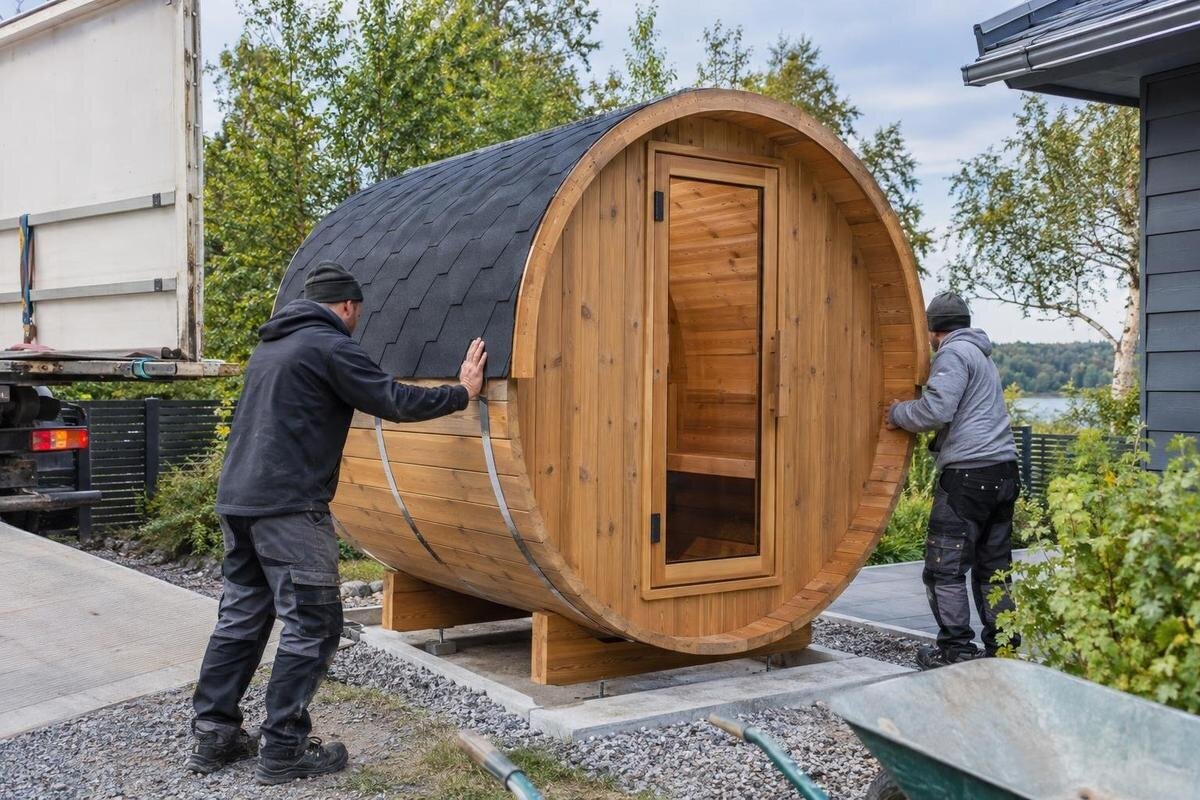
Outdoor sauna budget
An outdoor sauna quote can look straightforward if it names only a cabin, but the cabin is one part of the upfront project cost. The selected heater, a prepared base, service connections, delivery access and installation may all be priced separately. This guide shows how to build a complete once-off budget from current South African quotes without relying on a generic online figure. Compare the same configuration, delivery address and installation endpoint, then keep electricity, fuel and other ongoing costs in a separate section.
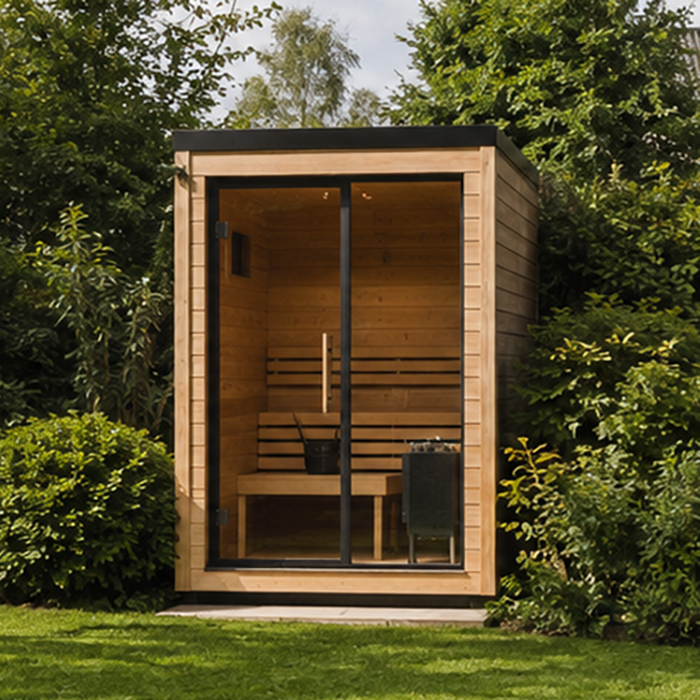
What the upfront project budget should include
An outdoor sauna’s upfront project price is the sum of the items needed for the agreed endpoint: the cabin and parts actually included; the selected heater, controls and accessories if separate; the prepared base and site work; electrical connection or flue-related work where applicable; delivery, unloading and positioning; assembly; and any agreed testing or commissioning. Add confirmed taxes or site-related fees as separate lines. Which costs apply depends on the configuration and property, so a generic online figure is not a substitute for current local quotes.
Define whether your target is a cabin delivered, an assembled cabin in its final position, or a connected and handed-over installation. Different suppliers may use similar labels while pricing different work. Record who supplies each item, who performs it, and whether its amount is fixed, provisional or still unknown. Note assumptions such as a prepared site or straightforward access alongside the affected line. A blank or unknown line is not zero; leaving it visible prevents a partial price from looking like a full project budget.
Set the cabin specification before asking for prices
Before requesting prices, describe how many people you expect to use the sauna at one time, where it will be installed and what configuration you are considering. Ask for the manufacturer’s current drawing and installation documentation so you can confirm external dimensions, entry position, required clearances and support points with the supplier or installer. The Sauna N-250 listing gives 5.27 m² as its listed area; ask what that figure represents. A catalogue area does not necessarily describe the footprint, usable interior or size of a delivered package, so it cannot establish the base size or delivery access. Include the same drawing with each quote request. This gives everyone a common reference for pricing and helps distinguish a change to the cabin specification from a change to the work needed at your property.
Hold one defined cabin model and configuration constant while comparing budgets. Write down the options that change the offer, such as openings, finish, accessories and whether a heater is included, rather than treating similarly named offers as identical. If you are still deciding between configurations, request separate prices for each. A model’s listed area can help identify what to ask about, but it cannot replace a drawing or prove that a cabin will fit your site. Keep the product identifier, drawing version and quote date together in your notes.
Price the heater as a separate choice
Check the selected listing and written offer to establish whether the heater is supplied. If it is, note its exact model and any controller, fittings or accessories the supplier says are included; if it is not, ask for an itemised price for a compatible option and identify who will confirm compatibility. For the Sauna LC-260 heater enquiry, specify the cabin model as well as its listed area of 5.12 m². The area alone does not identify a heater package or its electrical requirements. Use the cabin documentation and heater manufacturer’s guidance to obtain a price for the exact configuration. Where the quote offers a heater upgrade, ask for the additional cost separately and check whether it replaces the original heater price. Otherwise, you may accidentally budget for both the included item and its replacement.
For an electric option, keep the heater purchase separate from the electrician’s work to assess and make the connection at the proposed site. Ask which supply-side work, parts and testing are included, and what can only be priced after an assessment. For a wood-fired option, ask the supplier or a qualified installer to identify the flue, chimney and other components or work specified for that exact setup. If the heater supplier and installer are different businesses, record where their responsibilities meet. Do not assume either package is included or suitable based on the cabin name alone.
Include the base and site preparation
Treat the base as its own quoted part of the project. Request the manufacturer’s requirements for supporting the selected cabin and have an appropriate local contractor assess the actual site. For the Sauna HCF-300 base quotation, supply the relevant drawing alongside the model details. Its listed area of 6.89 m² is not a construction drawing and does not establish the base outline, suitable surface or construction requirements. Ask the contractor to distinguish the work needed for the specified support from any preparation needed at your chosen location. This makes it easier to understand the quote if you later consider another position on the property. Keep the cabin specification unchanged when comparing those locations, so the difference in price reflects the site work rather than an unrecorded change of model.
Ask the contractor to state exactly what the base price covers: site clearing or excavation if needed, preparation, supply and placement of the specified support, disposal of removed material, and any finishing around the installation point. These tasks are not automatically part of the sauna supplier’s price. If the location needs separate landscaping, access work or another trade, show that separately rather than hiding it in an unexplained allowance. Confirm who checks the finished base against the sauna documentation before the assembly team arrives, so responsibility for any remedial work is clear.
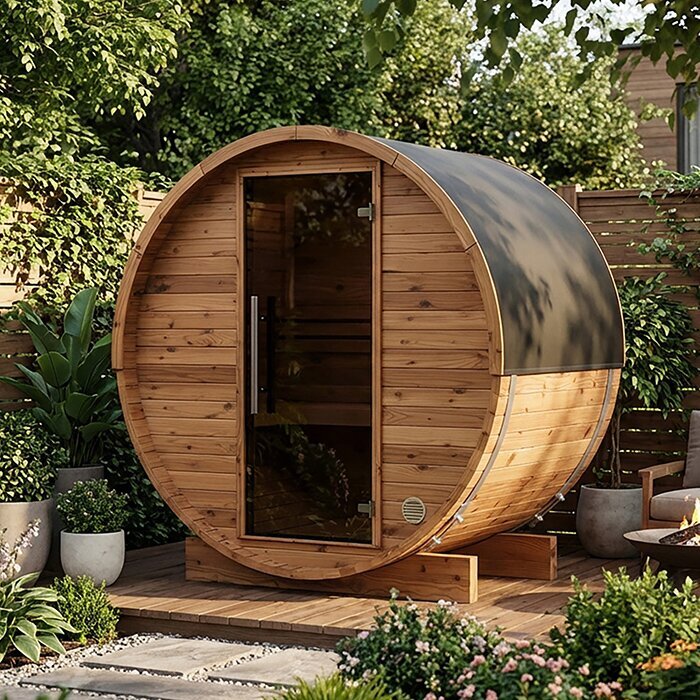
Budget for electrical or flue-related work
List connection costs according to the heater you actually choose, rather than using one blanket figure for every outdoor sauna. Have a qualified electrician review the selected electric heater’s documentation and proposed position, then quote any assessment, supply-side changes, connection and agreed testing. When considering the Sauna LCF-300 configuration, note that its listed area of 6.89 m² does not specify electrical requirements or the work needed at your property. The connection quote should refer to the selected heater and installation location, not just the cabin’s area. Ask whether travel or a second visit is charged separately, and distinguish the assessment fee from the installation amount. If the final scope is not yet known, record what the initial assessment covers and leave the remaining work clearly marked as unpriced.
For wood-fired heating, obtain an installation scope for any flue or chimney and related components identified by the manufacturer and qualified installer; do not assume a standard route, component set or cost. If your design includes a water supply or drainage, ask the relevant contractor for a separate price; do not add plumbing just because the sauna is outdoors. If a professional identifies an inspection, approval or sign-off that may apply, establish locally what it involves and who arranges it. Keep verified one-off connection costs distinct from the cabin and heater purchase.
Check delivery, unloading and site access
Get delivery priced to the correct address and clarify the point at which the service ends. Does the quote cover transport only, unloading, moving components to the installation area, or placement at the final position? Ask how packaging is handled and whether extra labour or lifting equipment needs to be allowed for, if the supplier considers it necessary. For the Sauna S-140 delivery enquiry, request package dimensions, shipping weight and unloading requirements; its listed area of 1.93 m² does not provide those details. Record transport, unloading and movement across the property as separate tasks, even if one supplier includes them in a single charge. This is particularly useful when comparing a bundled delivery offer with a transport-only quote: you can see which tasks still need a price without counting the included work twice.
Describe access honestly before delivery is booked: the distance from the vehicle to the site, gates or narrow passages, steps, surface conditions and any limits on where a vehicle can stop. Provide photos or measurements if the supplier requests them, and ask whether a site visit is available before the final price is set. Confirm whether travel, waiting, restricted access, extra carrying or a failed delivery attempt could add charges, and how any such charges would be priced. These are conditions to clarify, not automatic fees. Delivery to the property is not necessarily delivery to the installation position.
Define what installation covers
Installation should be described as a task list, not just a single labour figure. Ask whether the team assembles the cabin, positions it, installs the selected heater, connects services, fits supplied accessories and completes any agreed handover checks. The Sauna HC-150 assembly quote should identify the exact model and configuration; its listed area of 2.97 m² does not establish which tasks are included. Define whether the price covers an assembled cabin or also includes the heater and agreed connections. Ask the supplier to identify any work assigned to another contractor rather than leaving it under a broad exclusion such as ‘services by others’. That wording may describe a valid division of work, but your budget still needs a named responsible party and a price for each excluded task before you can treat the installation total as complete.
Ask who supplies the labour and equipment, whether travel or a call-out is charged, and what preparation you must complete before the team arrives. If a separate electrician or heater installer is needed, identify who books each visit and coordinates the work. Confirm whether packaging removal, clean-up, testing or commissioning are included or priced separately. Written responsibilities make gaps easier to spot: otherwise, two suppliers can each assume the other has allowed for a task. Note any conditions that could require the team to return, and get the related charges clarified in advance.
Compare written quotes on the same scope
Send each supplier the same brief: exact cabin model and options, chosen heater if known, delivery address, access information, base status and the work you want completed before handover. The Sauna HC-225 model details identify a model with a listed area of 4.4 m²; use that model identifier, not just a broad product category, when requesting a matching offer. If a decision is still open, ask for alternatives as distinct options so you can see which line changes the total. Give revisions a date and make sure each supplier is pricing the latest brief. An earlier quote may still be useful, but mark any differences before comparing it with a revised offer. This avoids mistaking a reduced scope for a saving on the same project.
Make a comparison sheet with a row for each cost and columns for the supplier, amount, scope, exclusions and status as fixed price, allowance or not yet priced. Ask whether the quoted amount includes VAT, how long it remains valid and whether site conditions could change it. Record any deposit and later payment dates separately from the total project cost; a deposit is a payment stage, not an extra cost to add again. When one offer bundles delivery or installation, ask for a breakdown or a clear written description before treating it as comparable to an itemised quote.
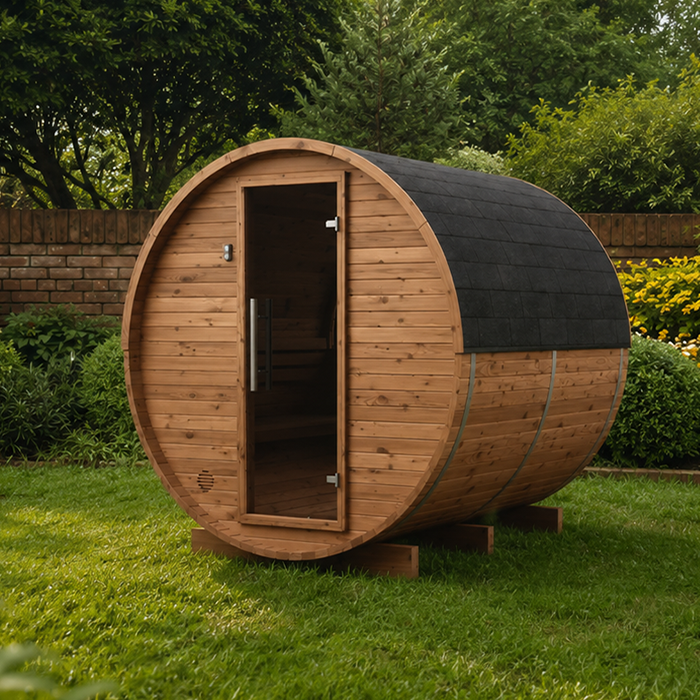
Keep operating costs outside the installation total
Separate the once-off purchase and installation from costs that recur after handover. The Sauna N-210 product information lists an area of 4.43 m², but that information does not establish energy use or fuel consumption. Those depend on the selected heater, how the sauna is used and the relevant local electricity tariff or fuel price. Keep future electricity or firewood estimates in a running-cost section instead of adding them to the upfront installation figure. Label the period covered by any operating estimate so it cannot be mistaken for a once-off charge. If a supplier combines purchase costs and projected running expenses in one proposal, separate those amounts before comparing its installation price with another offer.
Use a separate line for routine cleaning, maintenance or repairs if you want to plan for them, and label them as future costs rather than part of the installation quote. If you choose to buy any supplies at the time of installation, show that purchase as a separate start-up item and confirm whether it is optional or included. This distinction makes the one-time amount useful for comparing project quotes without implying that the sauna has no costs after it is installed.
Allow for unresolved items without hiding them
Alongside the comparison sheet, keep a short record of unresolved items. Identify the chosen model, heater configuration, delivery address and quote date, then state what remains unknown, who will clarify it and which budget line it affects. For example, an unloading allowance may remain open until access has been assessed; keep that question against delivery rather than adding an unexplained amount to the cabin price. Use the same approach for the base, site preparation, connections, assembly, agreed handover work and any fees awaiting confirmation. Keep the relevant quote or written scope with each entry. When an answer arrives, replace the allowance with the confirmed amount and record the date, rather than leaving both figures in the total. This makes the outstanding financial commitment easier to follow.
Where a site visit or technical assessment is still outstanding, mark the item as unconfirmed and ask for a price once the relevant details are known. If you want a reserve for uncertainty, choose it for this project based on the unresolved work rather than applying an unexplained standard percentage. Remove duplicate items when one supplier’s package already covers them, and update the total when an option or responsibility changes. A clear list of confirmed costs and open items is more useful than a precise-looking total built on assumptions.
Frequently asked questions
What should a full upfront outdoor sauna budget include?
Include the cabin and items supplied with it, the selected heater and any separate controls, base and site preparation, required service or flue work, delivery and unloading, assembly, and any agreed testing or commissioning. Show each cost separately so you can see what is still unpriced.
Does a cabin price include the heater and installation?
Do not assume that it does. Check the written offer for the exact heater, accessories and installation tasks included. A cabin-only price may exclude both heater supply and the work to connect or install it.
How can I compare local sauna installation quotes?
Give each supplier the same model and configuration, delivery address, access details and installation endpoint. Compare itemised totals, exclusions, allowances and tax treatment, rather than comparing headline prices that cover different work.
Can I use the listed sauna area to price the base or delivery?
No. A listed area does not establish the cabin’s overall dimensions, support requirements or packed size. Request the manufacturer’s drawing and relevant delivery details, then have the site and access assessed for the specific project.
Should electricity or wood be included in the upfront cost?
Include the one-off connection or installation work required for the chosen heater, as confirmed by the relevant qualified professional. Keep future electricity or fuel use, along with routine upkeep, in a separate running-cost budget.
A useful outdoor sauna budget is tied to a named model, a confirmed configuration, an assessed site and a written division of work. Once those are clear, the cabin, base, services, delivery and installation can be compared as a complete once-off project rather than a collection of uncertain extras. Keeping future running costs separate gives you a clearer figure for deciding whether the quoted installation scope fits your budget.
