
Does an Outdoor Sauna Need a Water Supply or Drainage?
Outdoor sauna planning
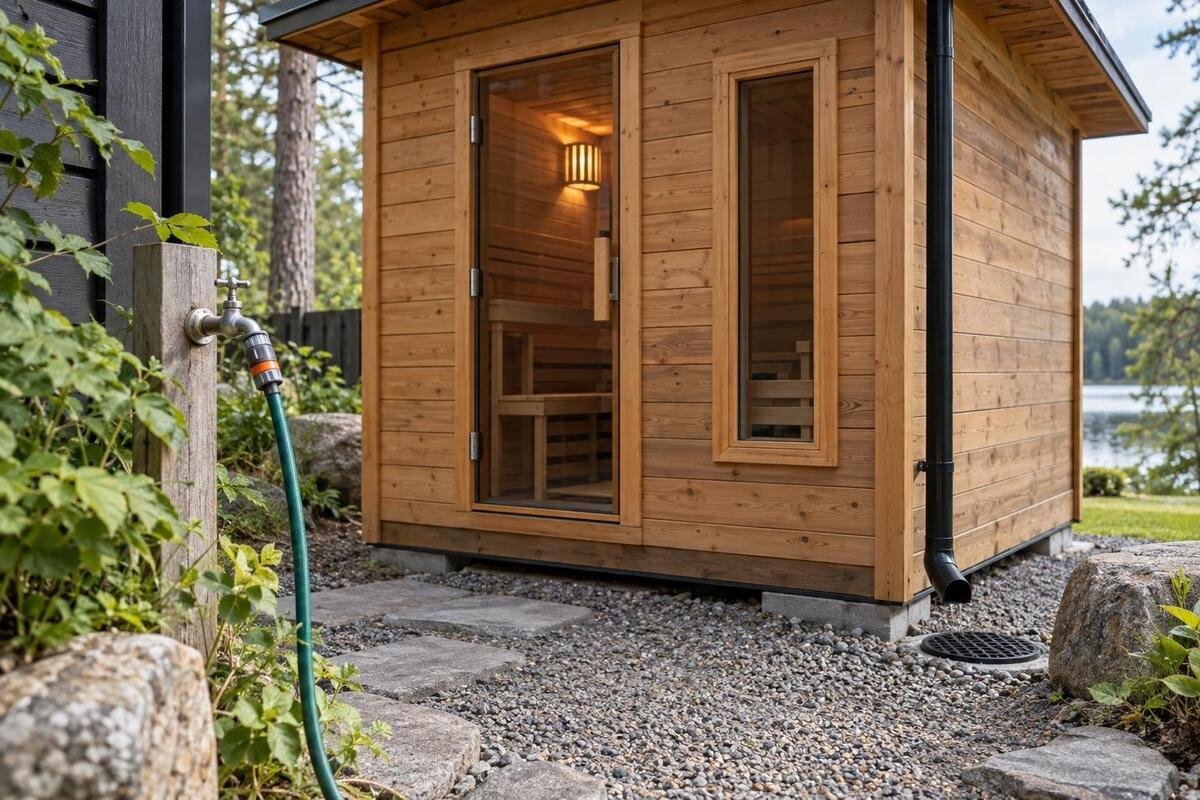
An outdoor sauna cabin and the water services around it are separate planning decisions. A fixed supply and a drain are not automatically required simply because the sauna is outside; they may become relevant with a particular heater, cleaning method or optional shower. The answer depends on the exact cabin and heater instructions, how you intend to use and clean the space, and where water comes from and goes. Separate those questions before preparing the site or ordering a configuration.
Before you buy 1
A sauna cabin is not automatically a wet room
An outdoor sauna is a heated cabin, not automatically a wet room. Its plumbing needs depend on the exact design and accessories, not simply on the fact that it sits in a garden. If you intend to use the cabin without a shower, bring in any water the heater permits and clean it by the manufacturer's method, you may not need a permanent water pipe or floor drain. That is a planning possibility rather than a universal specification: the cabin instructions, heater manual and selected configuration take precedence. An integrated wash area, shower or design-specific instruction can change the answer. Treating all these uses as one plumbing question can lead to unnecessary services or leave a planned feature without a viable route.
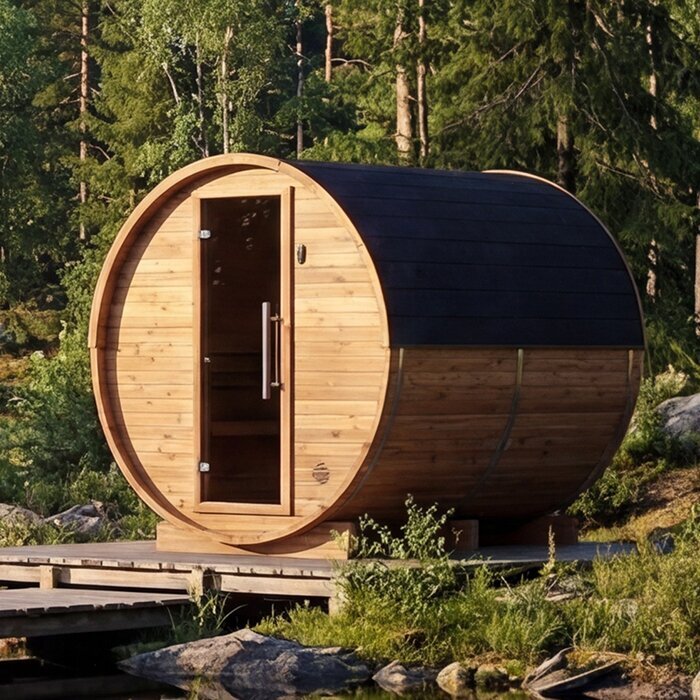
Separate the uses before answering yes or no. Water placed on heater stones, hand washing, surface cleaning and showering create different requirements. A tap beside the cabin could serve an optional shower without supplying water to the sauna space itself; the shower's wastewater still needs its own route. A catalogue image or product title cannot confirm those details. When considering the Thermowood Barrel Sauna S 140, check the current specification, heater and supplied parts for the exact configuration before laying services. Establish which water uses the cabin is designed to accommodate and whether any water-related accessory is included or optional.
Water on heater stones depends on the heater
Some sauna routines involve putting water on heated stones; others do not. Whether water is permitted, and any conditions for using it, are questions for the selected heater's manual. Do not infer permission from the cabin's appearance or assume that the possibility of using water means a pipe must be installed. If the instructions allow water and your routine needs it only occasionally, carrying it in may be an option. If you want a tap, decide whether it is for the heater, hand washing, a nearby shower or another use; each choice changes the services plan. The answer belongs to the actual heater, not to sauna cabins as a category.
Before selecting a water supply arrangement, identify the heater make and model included in the configuration you intend to buy. Check its instructions for restrictions on water use and where water may be placed; do not guess at an amount or use water in a way the manual excludes. Keep the manual with the purchase details so it matches the selected heater rather than a different model. If you are considering the Sauna HC-150, ask the supplier which heater will be supplied and obtain its documentation. If the heater is still to be chosen, settle that choice before deciding whether you need a fixed supply or can carry in any permitted water.
Before you buy 2
Cleaning does not always mean rinsing
Cleaning is often where a drain starts to seem necessary, so describe the job precisely. Removing loose dust, wiping a surface with a damp cloth and rinsing a floor are different methods. Timber, joints, floor and finishes may each have care instructions; use the directions for the actual sauna rather than assuming that an outdoor cabin can be hosed down. Write down which surfaces you expect to clean and how wet they will become. Ask whether the floor is intended to get wet and how any cleaning water should be handled. That answer is more useful than specifying a drain around an undefined wash-down routine.
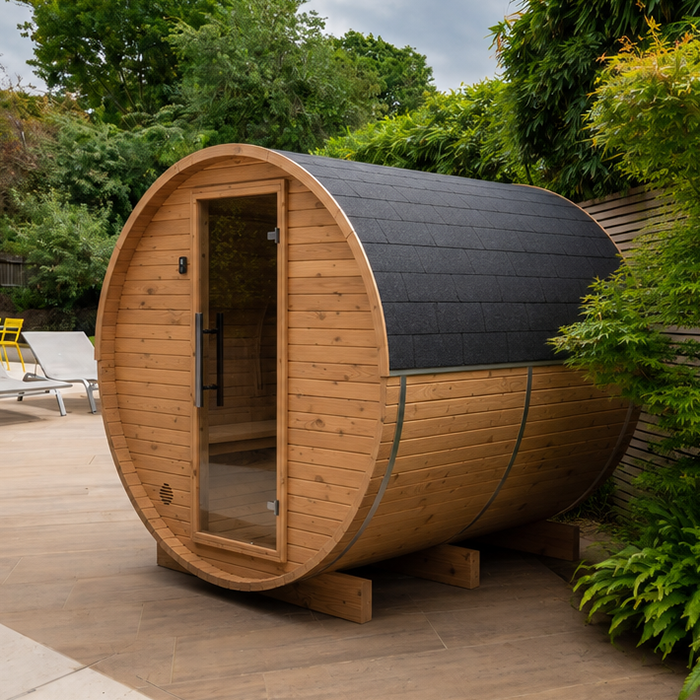
Keep the cleaning plan within the manufacturer's guidance. Do not let water run beneath or around the cabin unless the documents say that arrangement is suitable, and follow directions on drying and maintenance afterwards. A controlled wipe may create little runoff, while a regular rinse needs a deliberate way to collect and dispose of water. If you propose a cleaning product, check its compatibility with the stated materials instead of assuming any household cleaner is suitable. The Sauna HC-225 listing identifies a model, not its wash-down capability; request the floor details and cleaning instructions for the exact version.
Choosing a water source
List every source you might use: a nearby tap, a hose point, water carried from the house, or a supply such as a rainwater tank or borehole. These sources are not automatically interchangeable; reliability and suitability depend on the site and intended use. If water is for showering or washing, establish that the source and connected system are appropriate for that purpose. If it will be used with a heater, follow the heater instructions. A permanent connection is one option, not a default requirement for every cabin. Decide whether water must be available inside the cabin, beside it or only when cleaning.
A fixed line can make repeated use more convenient, but it adds a route to plan and a system that will need maintenance. Carrying water or using a nearby tap may suit a simpler routine if the manuals and site allow it. Consider the distance, access, storage and who will look after the connection; a qualified plumber can assess a permanent supply. For a chosen listing such as Sauna N-210, confirm the supplied configuration and ask whether a pipe or water-related accessory is included, optional or outside the package. Keep the property's available supply separate from the question of what the cabin includes.
Before you buy 3
An optional shower changes the service plan
A shower is a clear reason to plan water and drainage as part of the sauna project, but first establish whether it is a separate outdoor fixture, a room alongside the cabin or an option expressly designed for the selected product. Do not assume that any sauna cabin is suitable for a shower inside it, or that an accessory shown in a photograph is included. Ask for a drawing of the proposed arrangement and written details of where the user will stand, how access works and which surfaces are meant to get wet. Physical proximity to the cabin does not confirm compatibility.
Consider all the services a shower needs, not just a cold-water tap. The intended hot-water source, controls, privacy, convenient access, drainage and maintenance all affect the plan. If the shower is outside the cabin, its wastewater still needs a destination; if it is proposed inside, obtain manufacturer confirmation that the design is intended for that use. When considering the Sauna N-250, distinguish the cabin purchase from any proposed shower package. Compare the included accessories with the proposed arrangement before drawing service routes, and identify who will confirm the plumbing and which parts of the work fall outside the cabin supply.
Drainage has to match the water use
An outdoor sauna does not automatically need a floor drain. Whether one is appropriate depends on how much water will be used, where it will land and how the cabin floor is designed. Water used with a heater is not the same as shower wastewater or a regular wash-down. Check drawings for floor construction, any stated drain provision and the cleaning method. If no wash area is planned, do not add a cabin drain just because you expect one; if the manufacturer's instructions require a particular arrangement, make that part of the site plan. An outlet without a suitable destination and maintenance access is not a complete drainage plan.
Where a shower or wet cleaning is planned, decide where discharged water will go before work starts. Do not assume it can be left on soil, directed to a stormwater route or connected to a sewer without confirming that the proposal suits the site and applicable local service requirements. A qualified plumber can review the intended outlet and any existing system; the product documents should clarify whether the cabin itself has a drain feature. For Sauna LC-260, as for any listed model, confirm that detail for the exact version rather than guessing from its name. An interior floor drain and a suitable wastewater connection are separate questions.
Before you buy 4
Water supply, wastewater and rainwater
Keep three flows separate in your site sketch: water arriving for use, wastewater leaving a shower or cleaning activity, and rainwater or runoff outside the cabin. A plot can have a suitable water source but no convenient wastewater route, or vice versa. Identify existing taps, drains, sewers, tanks and known service routes before choosing the cabin position. Note which details are confirmed and which still need checking; do not assume that a nearby surface drain is suitable for wastewater simply because it is accessible. This distinction helps prevent a rainwater drainage route from being mistaken for a suitable wastewater connection.
Rain and surface runoff also need consideration, but they are separate from drainage for shower or cleaning water. Follow the supplier's base and site instructions, and avoid a position where water is likely to collect around the cabin; the appropriate treatment depends on the actual site and design. An outdoor location does not remove the need to manage water. If you select the Sauna HCF-300, use its drawings alongside your site sketch to consider the cabin position and surrounding drainage. Involve a qualified professional if buried services or ground conditions are unclear, rather than treating a visible drain as confirmation of what lies beneath.
Plan the route and ongoing access for services
Choose how water will reach the user: carry it, use a nearby existing tap or arrange a fixed service. Which is sensible depends on frequency, distance, available services and the selected equipment. A temporary hose is not automatically a complete answer: consider where it will run, how it can be stored, who will connect and disconnect it, and whether it suits the intended use. Do not modify existing plumbing based on a catalogue photograph. For a permanent connection, have a qualified plumber confirm the route and relevant connections before other site work makes them difficult to reach.
Think about access and upkeep after installation as well. Someone should be able to reach the agreed service points, and those responsible for upkeep should know who to contact if a leak, blockage or other fault appears. If wastewater is to enter an existing service, confirm that the arrangement is suitable rather than assuming any nearby outlet will work. Discuss the route before paving or landscaping, so future access is not overlooked. For a model under consideration, such as the Sauna LCF-300, bring the product documents and site assessment together when planning service access around the cabin.
Before you buy 5
What to verify in the drawings and manual
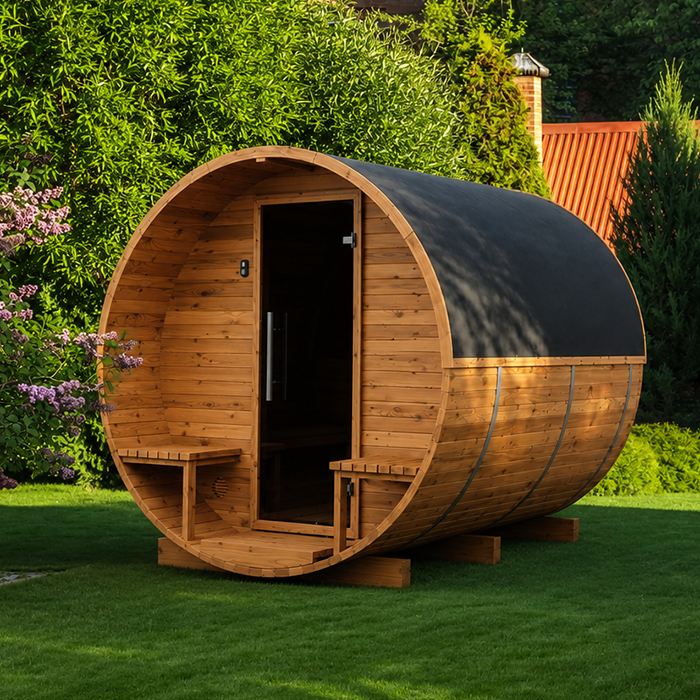
Ask for documentation for the exact supplied configuration, not just general marketing. Useful records include assembly and installation drawings, floor details, cleaning guidance, the heater make and model with its manual, and a list of included accessories. Ask directly whether any water supply, shower, sink or floor drain is included, required, optional or excluded. If a page shows a standard model, check that the version offered has the same heater and accessories. A product image may show an optional item; do not use it as proof of inclusion. Written details reduce the risk of preparing services for a feature that is not supplied.
Cross-check those documents against your intended routine: where a water container can stand, whether cleaning wets the floor, what water source a shower would use and where wastewater would go. Keep product questions separate from site questions. The manufacturer or seller can clarify intended use and inclusions; a qualified plumber can assess the proposed supply and discharge on your property. If documents conflict or leave an important point open, resolve it for the exact configuration before preparing a service route. This is especially important if the plan includes a shower or a permanent drain.
Match the setup to how you will use the sauna
Three straightforward arrangements illustrate the choice. A cabin with no shower, with water carried in only where the heater permits, may not need a permanent supply or cabin drain. A nearby tap can make routine water use or cleaning easier, while leaving shower wastewater out of the plan. Add a shower, sink or regular wet cleaning, and you need to plan an appropriate supply and a destination for used water. These are descriptions of how you intend to use the space, not product categories, and each must be checked against the selected cabin's instructions.
Settle the routine before siting the cabin: identify which water use matters now, whether an optional shower is genuinely planned, what the selected manuals say, and who can confirm supply and discharge routes. If you may add a shower later, raise that before the site is prepared; whether a future change is feasible depends on the model and services, not just on available space. A one-page note listing each water use, its source and its outlet can expose unanswered questions. Keep the final arrangement proportionate: do not add services merely because they are familiar household features, but do not omit them where the chosen design or intended use calls for them.
Frequently asked questions
Does every outdoor sauna need a mains water connection?
Not automatically. A cabin without a shower may be planned without a fixed supply if the selected cabin and heater instructions allow the intended use. Water carried in may be enough for some routines, but confirm how it can be used and what is included in the version you are buying.
Does a sauna cabin need a floor drain?
Not automatically. Check the model's floor details and cleaning guidance; water used with a heater is different from shower wastewater or a regular rinse. If you plan a shower or wet cleaning, confirm both the drainage arrangement and a suitable destination with a qualified plumber.
Can I hose down an outdoor sauna to clean it?
Do not assume that you can. Follow the manufacturer's cleaning instructions for the timber, joints and floor. If they do not cover hosing, ask before doing it. An outdoor setting does not prove that the cabin or its base is designed for wash-down runoff.
Can I add a shower beside the sauna later?
It may be possible, but the cabin design and site services determine what is practical. Consider the location, water source, hot-water arrangement, drainage route and access before buying. A nearby tap or drain does not, by itself, confirm that a shower can be connected suitably.
Can I use borehole or rainwater for a sauna?
That depends on the intended use, water source and equipment. Check the heater instructions for water used with it, and confirm that a supply for a shower or hand-washing point is appropriate for that purpose. A plumber can advise on a proposed connection; do not assume every source is interchangeable.
Specify the intended water use first, then match the services to it. A sauna cabin, water used with a heater, cleaning and an optional shower do not create the same plumbing requirements. The key distinction is between water you can bring in as needed and water use that calls for a planned supply and wastewater route. A permanent supply and drain may not be necessary for your chosen setup; where a shower or wet-cleaning routine is planned, account for both in a way that suits the cabin's instructions and the site.
