
Glamping Accommodation: Private or Shared Saunas?
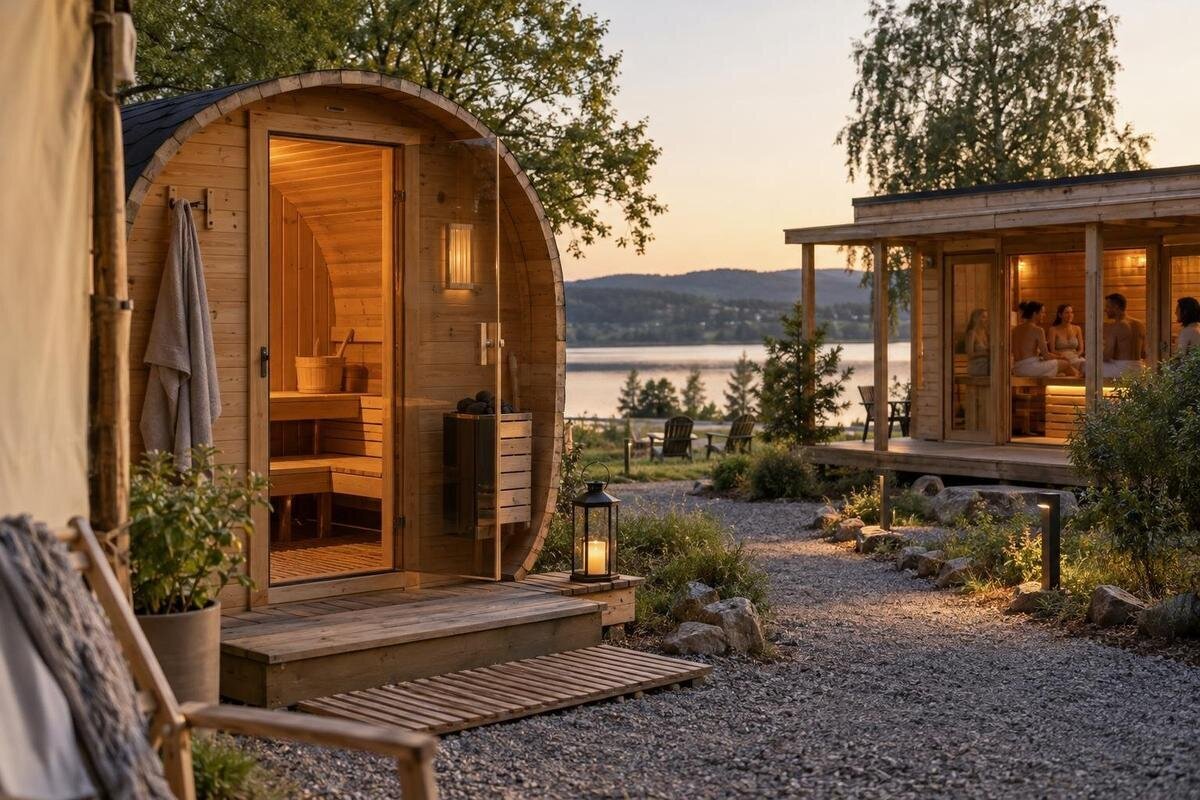
Glamping sauna planning
Glamping operators choosing between a sauna for each accommodation unit and one shared facility are deciding how access, staffing and upkeep will work, not simply how many structures to buy. A private, unit-assigned sauna can make availability straightforward for the guests in that unit; a shared sauna needs a booking or access system and a plan for cleaning between parties. Neither arrangement is automatically better. The right choice depends on unit layout, stay patterns, guest expectations, service routines and written confirmation that the selected sauna is suitable for the intended business use.
01
What private and shared sauna access means
A private sauna in this comparison means one assigned to a specific glamping unit or booking party, rather than one scheduled for general site use. Guests use it under that unit’s access rules during their stay and in line with the manufacturer’s instructions. A shared sauna is available to guests across several units; access could be by reservation, a managed timetable or another clearly explained arrangement. The word private does not automatically mean unlimited access, and shared does not have to mean a queue. Define whether access is exclusive, reserved or subject to availability before comparing the two layouts.
The operational difference is who coordinates use. With per-unit facilities, each booking has a direct point of access, but the operator must issue instructions, inspect and service several locations. With one shared facility, there is one common place to maintain, while someone has to allocate access fairly and explain availability. A hybrid site has both sets of work. Put the access promise in the booking information and repeat it at arrival; otherwise guests may assume that a sauna is available whenever they want it, even when a timetable, cleaning or maintenance closure applies.
How guest numbers and party sizes affect access
Map the accommodation mix and consider who might use the amenity together. Is a unit intended for a couple, a family or a larger group? Do arrival times differ, and do stays overlap? Use booking records where they exist; at a new site, label assumptions clearly instead of presenting projected occupancy as fact. A sauna assigned to one unit may be simple to explain, but approved occupancy and the equipment’s permitted operating cycle still matter. For shared access, compare requests with the time windows your team can actually offer. Do not promise a number of daily bookings until technical limits, cleaning time and staff coverage have been checked.
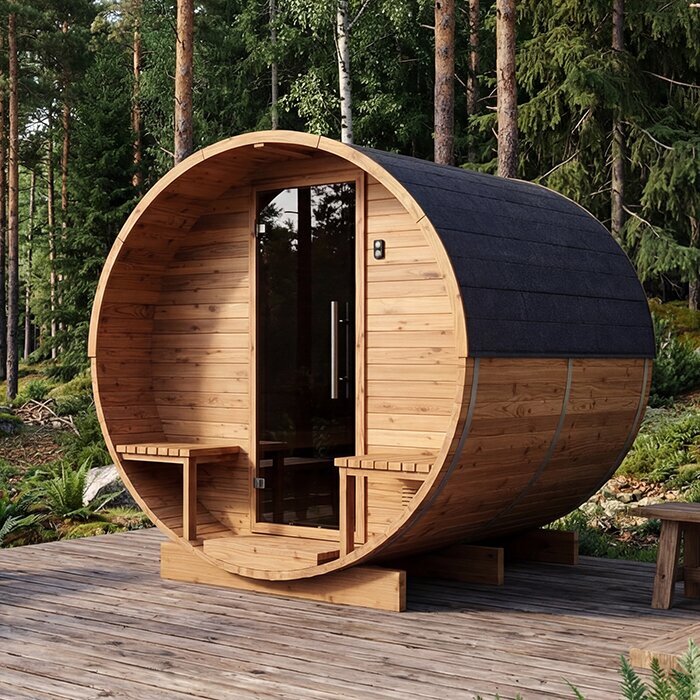
Do not turn catalogue area into a seating limit. The listing for Thermowood Barrel Sauna N-250 records 5.27 m², but that figure alone is not an occupancy rating or proof that a particular party size can use the sauna. Ask for a current manufacturer’s drawing and stated occupancy for the exact configuration, then compare it with your unit sizes and booking patterns. For shared access, use confirmed occupancy when setting booking rules; for unit-by-unit access, make sure the stated amenity works for the largest group you intend to host. If the information is unclear, leave the comparison open rather than filling the gap with an estimate.
02
Booking and scheduling a shared facility
Shared access needs a timetable guests can understand and staff can administer. Decide whether guests reserve before arrival, select a slot at check-in or use a managed open period. Explain how cancellations, late arrivals and overlapping bookings are handled, and who updates the timetable if a closure is needed. Set reservation lengths only after the manufacturer’s operating guidance is clear; allow for cleaning and inspection tasks your team must complete between parties. Publish who may book, how long a reservation lasts and whether availability can change for maintenance. Avoid offering consecutive slots until the exact equipment and service routine have been reviewed.
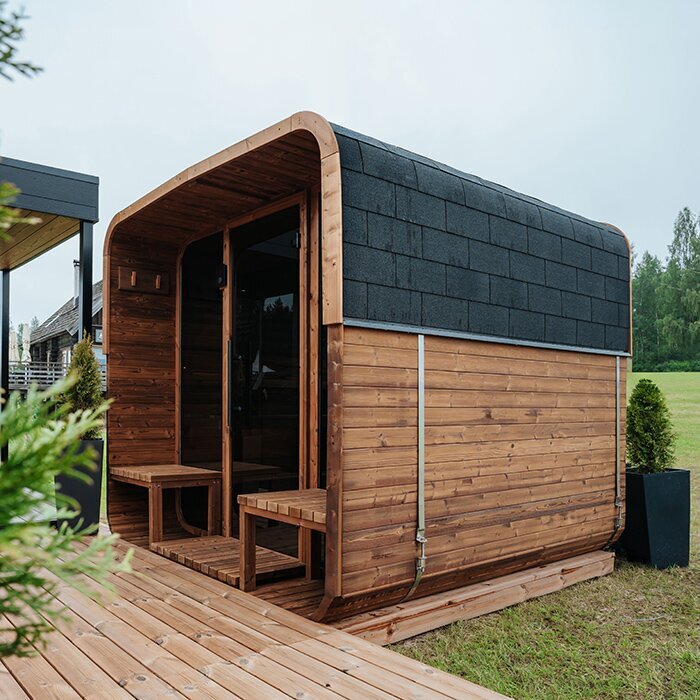
Turnaround cannot be inferred from a model name or area. The product entry for Thermowood Barrel Sauna LC-260 lists 5.12 m², but that does not establish warm-up time or how many consecutive sessions are suitable. Obtain the relevant manual and written operating limits for the proposed configuration, then test the timetable against staff coverage, cleaning and actual check-in patterns. A shared facility works only if guests can see how to access it and the booking system does not promise periods the site cannot reliably provide. Decide how you will notify guests when the facility is unavailable, rather than leaving them to discover a change at the entrance.
Where the sauna sits and how guests reach it
With a sauna assigned to a glamping unit, consider how guests reach it without crossing another party’s private outdoor area or disturbing neighbours. Check the route from the accommodation, sight lines, lighting and the practical path for staff doing inspections. Screening may support privacy, but it should not obstruct access needed for servicing or make the entrance difficult to find. For a shared facility, a central location may be easier to identify, while a route past occupied units could affect the quiet or seclusion guests expect. Walk the likely route at night and in ordinary site conditions before fixing the layout.
Use a manufacturer’s drawing, not a product photograph, to plan placement. If you are considering Thermowood Barrel Sauna HCF-300, request the drawing for the exact version and check its footprint, door orientation and required clearances with a qualified installer. The listing records 6.89 m², but an area figure cannot show where a door opens, the access needed around the sauna or whether the proposed location works with the rest of the accommodation. Use the drawing to plan the entrance and a clear service route, then confirm the final arrangement before describing access to guests.
03
Cleaning between guest visits
Cleaning differs less by the access label than by frequency and responsibility. With a private sauna, include inspection and reset in the turnover routine for that accommodation; record who does the work and what must be checked before the next arrival. With shared use, the facility may turn over between parties while the site remains occupied, so decide who responds, how it is checked and how a temporary closure is communicated. The exact tasks and approved products should come from manufacturer guidance for the particular surfaces and fittings. Keep the checklist practical: a task without a named owner or a realistic place in the shift can be missed.
Ask for care instructions for each shortlisted model rather than assuming every sauna interior can be cleaned with the same products or routine. For the Thermowood Barrel Sauna LCF-300, request guidance for its exact materials and supplied fittings, along with a cleaning schedule your staff can follow. Confirm the product inclusions before writing a checklist, and decide separately how used towels or other guest items are handled. Record who checks the facility and how a missed inspection is reported. For shared use, make clear how bookings are paused if a required clean and inspection have not been completed.
Maintenance, downtime and service access
Plan maintenance as an operating task, not an occasional afterthought. With several private units, inspections and service access are spread around the site, and a fault may affect the amenity promised with one accommodation. With a single shared unit, the issue is concentrated: temporary closure can change the offer to guests in more than one booking. Neither outcome should be treated as a guaranteed failure risk; it is a reason to record who monitors condition, how faults are reported and who arranges service. Check how service personnel reach the facility and whether booked use can be stopped while work is carried out.
Before choosing a model such as Thermowood Barrel Sauna S-140, request the manufacturer’s maintenance schedule, parts information, recommended service arrangements and guidance for the intended pattern of guest use. The listing records 1.93 m²; that catalogue detail does not describe maintenance frequency or service coverage. Confirm whom the operator contacts if a fault occurs, what information they need and how the unit is made unavailable while awaiting qualified work. If service depends on a provider or parts that may take time to arrange, include that possibility in the operating plan rather than assuming a quick repair.
04
Guest instructions and operating responsibility
Guest instructions should be short, visible and consistent with the manual for the exact equipment. Set out how guests gain access, which controls they may use, what they must not change, where to report a problem and how to reach the host. Explain reservation rules for a shared facility and whom to contact if another party has not left on time. For private access, provide the same essentials in each unit rather than relying on a previous guest to explain them. If children or guests needing assistance may use the facility, decide suitable supervision and access arrangements with relevant qualified advisers before publishing the policy.
Check the manufacturer’s guest-facing instructions before choosing a self-service arrangement. The listing for Thermowood Barrel Sauna HC-150 identifies the model, but does not establish which controls are supplied or how guests should operate them. Request the manual, confirm whether the proposed configuration permits guest operation and decide whether staff need to unlock, start or check the facility. That answer affects access planning: a private sauna may still require host coordination, while a shared facility may need a named person to monitor bookings and respond to questions. Keep house rules within the manufacturer’s guidance rather than adding operating advice based on appearance or assumption.
Site planning, installation and utilities
Before comparing prices, check how the access model changes the site plan. Per-unit installations need a position and service route for each planned facility; a shared installation needs a route that guests from all participating units can use without crossing private space. Ask qualified professionals to assess site conditions, utilities, access and installation requirements. Do not treat a photograph, catalogue area or outdoor-sauna label as evidence that a particular site is suitable. If the proposal depends on changes to buildings, power supply or other site services, have the appropriate professional assess the specific plan before ordering.
Get current drawings and installation documents for the exact model and configuration under consideration, including Thermowood Barrel Sauna HC-225. Have a qualified installer compare the manufacturer’s requirements with the intended site and guest use; ask for written confirmation if the arrangement is unusual or service access is constrained. Check exactly what is included in the supply too, so a model name is not mistaken for a complete installed facility. Any site-specific electrical, fire-safety or structural questions belong with suitably qualified professionals and relevant authorities where applicable. Resolve these points before advertising the sauna as available, rather than discovering that the planned location cannot be used as intended.
05
Commercial suitability and costs to compare
Compare operating plans, not only the purchase price. For per-unit access, gather separate quotations for each sauna and its site-specific installation, then include inspections, cleaning time, service access and the effect of an individual unit being closed. For shared access, cost the facility, guest booking administration, cleaning between bookings and staff time for access questions. Ask suppliers to state actual inclusions and exclusions, and obtain installer and service quotations for the proposed site. Use your own records for likely demand; do not build a revenue case around assumed occupancy or an unverified number of sessions. Keep estimates separate from confirmed supplier information.
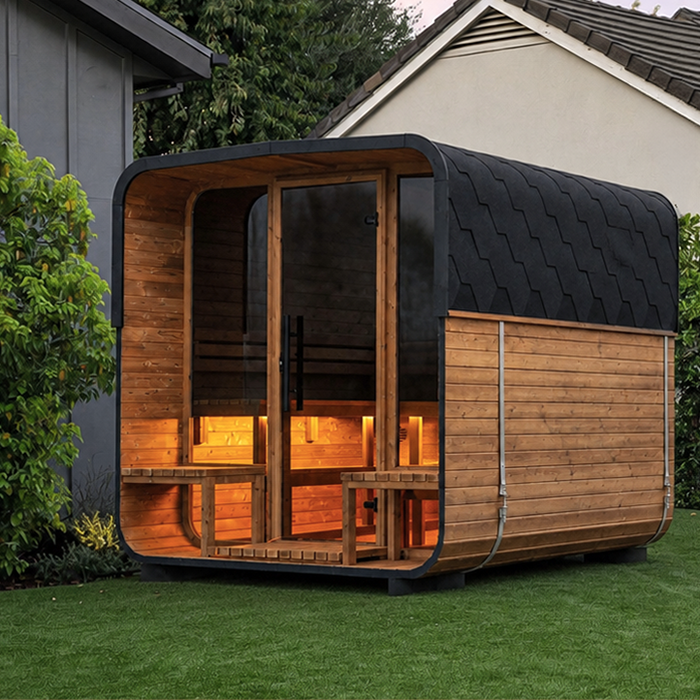
Commercial approval is a separate question from model identity or catalogue area. The Thermowood Barrel Sauna N-210 entry lists 4.43 m², but that figure cannot establish suitability for rental or repeated guest use. Ask the manufacturer in writing about the exact sauna and proposed heater combination, approval for the intended business use, operating guidance and responsibilities. Confirm service and warranty terms for that use, and check any insurance requirements with your broker. Have qualified installers review the project as well. Compare options only when you have answers that apply to your accommodation operation, not merely a general product description.
When a hybrid arrangement may work
A hybrid is worth considering when different parts of the site have genuinely different access needs, or when an operator wants to introduce one shared facility before making a larger per-unit commitment. It is not automatically a compromise: it adds separate guest instructions, booking rules, cleaning routines and service records. Specify which accommodation units can use which sauna, how access is allocated and what happens when one option is closed. If guests can move between private and shared use, explain any restrictions clearly; otherwise the booking page may promise an experience the staffing and timetable cannot deliver.
Compare the choices against a real operating week, using confirmed booking data where available and clearly labelled assumptions where it is not. Write out arrivals, access requests, cleaning and inspection tasks, staff cover and a possible service closure; then check whether the arrangement still delivers the access you intend to offer. Record outstanding technical questions about approved occupancy, operating cycle, installation and commercial use instead of filling them with guesses. If a shared option relies on a booking system the team cannot maintain, or private facilities exceed the team’s service capacity, revise the plan. The best fit is the one whose guest promise, documented suitability and day-to-day work agree.
Frequently asked questions
Does a private sauna mean guests can use it whenever they want?
Not necessarily. It can mean the sauna is assigned to that accommodation’s booking, but use may still be subject to operating instructions, maintenance or access rules. State whether access is exclusive and when it is available. Avoid promising unlimited access unless the documented operating plan supports it.
Is a shared sauna suitable for a small glamping site?
It can be, but the number of units alone does not settle the question. Consider how guests reach the facility, how access will be allocated, and whether staff can manage bookings, cleaning and interruptions. Compare those practical demands with the site layout and the sauna’s confirmed operating guidance.
How should I decide how long shared booking slots should be?
Set slot lengths only after confirming the manufacturer’s operating guidance for the exact equipment. Allow for the cleaning and inspection tasks your team must complete, then check whether staff can maintain the timetable. Do not base a schedule on a general estimate of warm-up time or session frequency.
Can a catalogue area tell me how many guests a sauna can accommodate?
No. A listed area is not, by itself, a seating limit or approved occupancy rating. Request the current manufacturer’s drawing and stated occupancy for the exact configuration. Use that information, together with the site layout and your guest arrangements, when setting access rules.
How do I confirm that a sauna is suitable for commercial guest use?
Ask the manufacturer in writing about the exact sauna and proposed heater configuration, including approval for the intended use and the applicable operating guidance. Confirm service and warranty terms for that use, and have qualified professionals assess installation requirements. Check any insurance requirements with your broker.
Private and shared glamping saunas solve different access problems. Choose by the promise guests can rely on and the operating routine the team can sustain: unit-by-unit privacy requires inspections and servicing across separate locations, while shared access depends on fair scheduling and day-to-day management. Test both against the site layout, cleaning, downtime, guest instructions and written confirmation of commercial suitability. If those details do not yet support a clear choice, collect them before selecting equipment; an unverified capacity or availability promise is harder to correct after bookings open.
