
Ready-Made Sauna or Building from Scratch?
SAUNA BUYING GUIDE
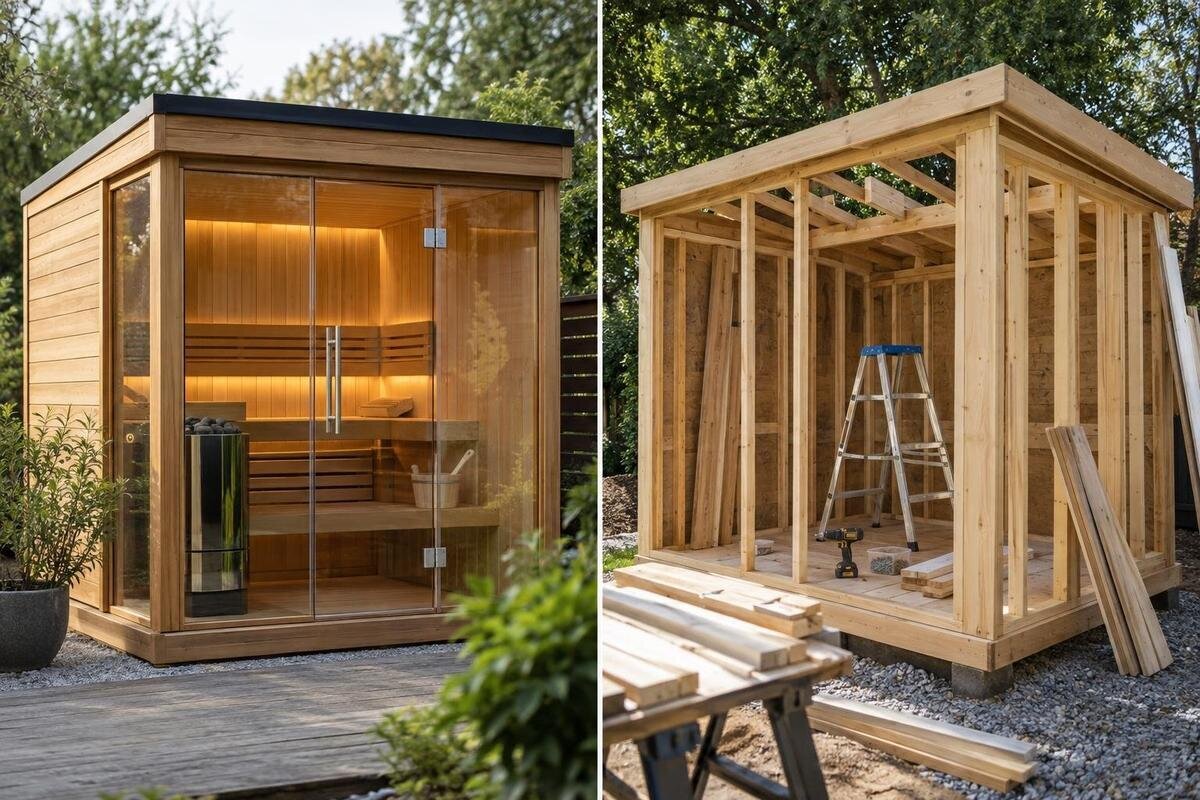
Choosing a ready-made sauna or building one from scratch is mainly a choice about how much of the project is already designed and who takes responsibility for the rest. A defined model can limit design work, but you still need to check its configuration, delivery format and inclusions. An independent build offers more control and asks you to organise the brief, sourcing and construction, whether you do the work yourself or appoint professionals. A supplied kit is a separate route: its design may be set while assembly remains your responsibility. Compare the work and accountability behind each option, not just the product name.
What a ready-made sauna does—and does not—include
A ready-made sauna is bought to an established model and design rather than developed from a blank page for your site. That describes how much of the concept is predetermined, not how it will reach you. Depending on the offer, it may arrive assembled, in sections or as components for assembly. The word ‘complete’ also needs a precise meaning: a defined sauna design does not automatically include every accessory, connection, site-preparation task or installation service. Treat the product and the work around it as separate parts of the decision.
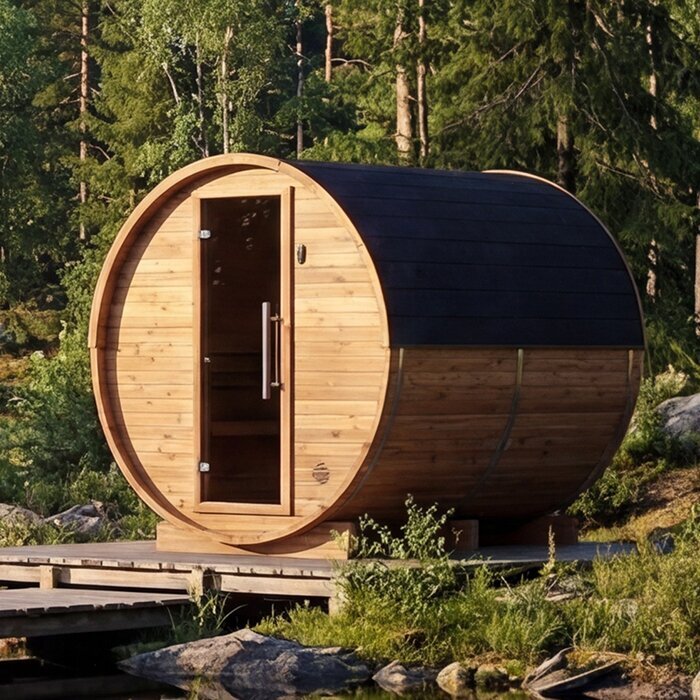
Ask for the exact configuration, current drawings, itemised inclusions and a written list of excluded work. Check whether choices such as finishes or layout changes are standard options, custom work or unavailable. When enquiring about the Thermowood Barrel Sauna LCF-300, use the model name to identify the product, then establish what the particular offer covers. Keep the agreed configuration with the quotation so that later discussions refer to the same version. If you change an option, ask whether the scope and price need updating too. This gives you a defined product offer to compare with an independent build, rather than a catalogue name on one side and a partly developed idea on the other.
Design and sourcing for a scratch build
A scratch build starts with your requirements and site constraints, not an existing model. The project needs a brief, a design, component choices, sourcing and coordination. It does not mean you must personally do every task: you can appoint a designer, builder, electrician or other trades. Someone still needs to define where each person’s work begins and ends, keep decisions aligned and make sure the selected components suit the agreed design. Separate product descriptions and invoices do not, by themselves, create one coordinated project scope.
Write down the intended use, the features you consider essential and the limits of the site before asking for a design. Separate firm requirements from preferences: a feature that determines the layout needs different attention from a finish you would be happy to change. Then identify who will prepare drawings, choose materials, place orders, receive goods and resolve gaps between suppliers. Compare that brief with an established model such as the Thermowood Barrel Sauna S-140 without assuming that it meets your needs. Note which requirements the proposed configuration addresses and which remain unanswered. This makes the comparison useful: you can see what you would gain from a custom design, what you would still need to decide, and whether those choices justify the extra coordination you would take on.
A sauna kit is a different buying route
A kit usually means a pre-designed structure supplied in parts for assembly, although what is included varies between offers. It can reduce the need to design each component yourself while leaving you responsible for some or all of the assembly. That is different from buying a sauna supplied fully assembled, but it is also different from creating a design and sourcing materials independently. The delivery format and the design route are related questions, not interchangeable terms.
Before choosing a kit, ask which parts are supplied, whether all components arrive together, what preparation and assembly the buyer must arrange, and what support or instructions are provided. Ask the same delivery-format questions when enquiring about the Sauna HC-150 or another ready-made model; a model name does not establish that it is supplied as a kit. Separate the assembly task from the purchasing task in your comparison. Who orders the components is one question; who receives, checks and assembles them is another. If you intend to appoint someone for assembly, give them the supplier’s information before agreeing their scope. That helps distinguish a price for putting supplied parts together from a price that also includes sourcing missing items or completing other work.
Decide how much design control you need
A defined model gives you a starting point with many design decisions already made. That can suit you if its available configuration meets your essential requirements and you are comfortable choosing from the options offered. If you need a particular layout, doorway position, seating arrangement or finish, list those requirements early and ask which can be changed. A small-looking alteration may affect other parts of the design, so do not assume that every requested change is simple or available.
A scratch build offers more scope to develop a design around a specific brief, but it is not unlimited freedom. Material availability, compatible components, site conditions and professional advice can constrain the choices. Use the Sauna HC-225 model as one reference when asking which aspects of an offered design are fixed and which can be adjusted, rather than assuming a particular alteration is supported. For either route, ask for proposed changes to appear in the drawings and written scope. Keep a distinction between a change you need and an alternative you are merely considering. Before accepting a revision, check that it still addresses the rest of your brief. This keeps design freedom tied to a clear purpose instead of allowing a succession of optional changes to obscure your original requirements.
Compare inclusions and exclusions line by line
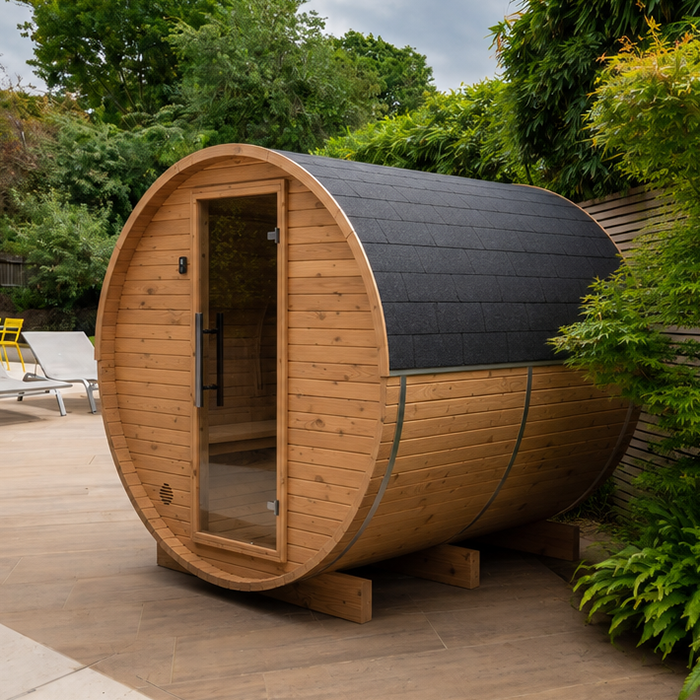
A useful comparison names the parts and services covered by each offer. Depending on the project, questions may include whether the sauna structure, heater and controls, benches, door, lighting, accessories, delivery, assembly, finishing and electrical connection are included or separate. These are items to verify, not assumptions about any particular model. Also ask whether the quoted configuration matches the drawings and whether optional items have been priced as options or left out entirely.
With an independent build, you may need to source components from several suppliers and arrange their delivery, storage and compatibility checks. Assign each task to a person: who checks orders against the drawings, deals with missing or damaged goods, and coordinates the work on site? When requesting a quotation for the Sauna N-210, use the same list of parts and services to record what the supplier includes. Mark each item as included, separately quoted, supplied by you or not required. Leave unanswered items visibly unresolved rather than treating them as included at no cost. This gives both routes a comparable scope and makes gaps easier to discuss without relying on broad labels such as ‘complete’ or ‘ready to install’.
Allow for design, supply and construction time
A ready-made design can reduce the time spent developing the sauna concept, but it does not guarantee a shorter project. You still need to confirm the model and options, arrange delivery, prepare the site and agree who will assemble or install it. Supplier availability and the schedule for any work at your property also affect the overall plan. Ask for current timing information for the exact configuration you are considering; do not assume that a product listing gives you a delivery date.
A scratch build adds design decisions and sourcing to the construction schedule. Delays to one component or a late change can affect tasks that depend on it, so coordinate dates across the people and suppliers involved. A kit may reduce design work while still requiring time for delivery and assembly. For the Thermowood Barrel Sauna N-250, ask for current timing for the configuration under consideration and clarify which dates depend on your site being ready. Distinguish the expected delivery date from the date when all agreed work should be complete. For an independent build, also record when design choices and orders need to be finalised. These milestones let you compare the work remaining on each route, rather than comparing a supplier’s dispatch estimate with a builder’s proposed completion date.
Compare the full project cost, not one price
A product price and a completed project budget are not necessarily the same thing. For a ready-made sauna, check whether the quotation covers the chosen configuration, delivery, unloading, assembly, site preparation, electrical connection and finishing, where relevant. Ask for separate prices for optional items and services so you can see what changes the total. A quotation for the Sauna LC-260 should be compared with the cost of the same agreed scope on the other route, not simply with a materials list. Keep optional upgrades separate from essential work in both budgets. Otherwise, a difference in what you have chosen to include can look like a difference in the cost of buying versus building.
A scratch build may involve design fees, materials, transport, tools, storage, professional services, waste removal and the cost of correcting work that does not match the plan. Include your own hours for research, ordering, coordination and site supervision when judging whether it is worthwhile, even if they do not appear on an invoice. You can record that time separately from cash expenditure rather than assigning it an arbitrary monetary value. Ask each bidder to state assumptions and exclusions, then compare the same set of tasks. Distinguish a firm quoted amount from an allowance for work that has not yet been defined, and note which figures still need confirmation. A lower headline figure is not a meaningful saving if it leaves substantial work unpriced.
Check the site, access and services
Before settling on a design, check that the proposed location and delivery route work for the actual model. Use current drawings to assess the space the structure needs, access to its entrance and room for the work involved in delivery and assembly. Consider the route from the point where goods arrive to the installation area, including any turns, narrow passages or changes in level. A product photo or model name cannot show whether the sauna will fit your site or the route to it.
Also establish what the sauna requires from the site and which services need professional attention. Ask the supplier or designer for the relevant installation information and have a qualified professional assess site conditions, supporting surfaces and electrical work where needed. If you are considering the Thermowood Barrel Sauna HCF-300, obtain current dimensioned drawings for the proposed configuration before making site decisions. Keep questions about the finished location separate from questions about getting the sauna there: a space assessment alone does not settle delivery access. Record any preparation assigned to you and share the relevant information with the people doing that work. For a scratch build, use the agreed design as the reference instead of assuming that a general sketch establishes the footprint, service requirements or installation method.
Agree who is responsible for the work
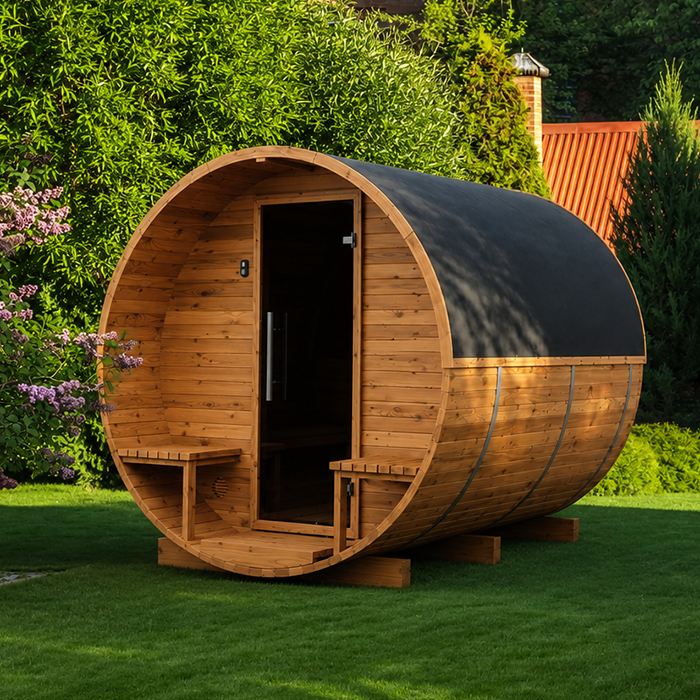
With a ready-made product, the supplier’s responsibilities depend on the order you place; assembly, site preparation and connections may sit outside the product supply. With a scratch build, the owner may be coordinating a designer, material suppliers and several trades rather than dealing with one point of contact. Neither route removes the need to record who is responsible for each part, what work is included and how changes will be agreed. If a professional is involved, confirm their scope and the information they need before work starts.
Ask for the relevant product documents, instructions and written terms for the exact purchase, and keep them with the drawings and records of any changes. Clarify who to contact about product support, assembly questions, defects or servicing, and what applies if the sauna is altered or installed by someone else. Do not assume that one person’s warranty or workmanship terms cover the whole project. Where several parties are involved, record the work each has agreed to complete and the information they will pass on. For example, distinguish a query about a supplied component from a query about how it was fitted, without deciding in advance who would be at fault. Clear handovers help you direct a question to the appropriate person and explain which part of the project it concerns.
Which sauna buying route suits you?
A ready-made sauna may suit you when an established design meets your essential requirements and you want fewer design and sourcing decisions. A scratch build may make sense when your brief cannot be met by the available models and you have the time, budget and support to manage design, purchasing and coordination. Those are not guarantees of speed or savings. If you want a pre-designed product but are prepared to handle assembly, a kit may be worth comparing as its own route rather than treating it as a custom build.
Focus the final comparison on the trade-offs that matter to you. If an established model meets the brief, consider whether additional customisation would improve something essential or simply add choices you do not want to manage. If it does not meet the brief, identify the specific requirement that makes an independent design worthwhile. Be equally clear about your role: choosing finishes is a different commitment from coordinating orders and trades throughout construction. A kit belongs in the comparison only if you are comfortable arranging the assembly it requires. Choose the route whose remaining decisions and responsibilities you are willing and able to manage, not the one with the most appealing label.
Frequently asked questions
Does a ready-made sauna arrive fully assembled?
Not necessarily. Ready-made describes a sauna sold to an established design; it does not specify whether it arrives assembled, in sections or as components. Confirm the delivery format, assembly requirements and any separate site work with the supplier.
Is assembling a sauna kit the same as building from scratch?
No. A kit usually uses a pre-designed structure and supplied components, although the owner may be responsible for assembly. A scratch build involves developing the design and sourcing or coordinating the components as well. Check exactly what a particular kit includes.
Will building a sauna myself cost less?
There is no reliable answer without comparing the full scope. Include materials, delivery, tools, professional services, waste and any remedial work. Also account for your own time: doing the work yourself does not make the hours or project coordination disappear.
Which option is quicker?
A ready-made design can reduce design work, but that does not guarantee a shorter overall timeline. Supplier availability, delivery, site preparation and assembly all matter. A scratch build adds design and sourcing decisions, so ask each supplier or project team for a current schedule based on your actual scope.
Can I use my own builder with a ready-made sauna?
Possibly, but confirm the supplier’s requirements before arranging the work. Ask what drawings and instructions are available, who is responsible for assembly and connections, and whether your proposed changes or installer affect the supplier’s support or stated terms.
Before deciding, compare the same essentials for each route: the design you will receive, what arrives on site, which tasks are included, how long the confirmed work will take and who is responsible for each handover. A ready-made model is not automatically a fully installed sauna, and a scratch build is not automatically a saving. Once those details are clear, you can choose the amount of design freedom and project management that suits you.
