
Remote-Controlled Sauna Heating: Compatibility and Safety Features to Check
SAUNA HEATING
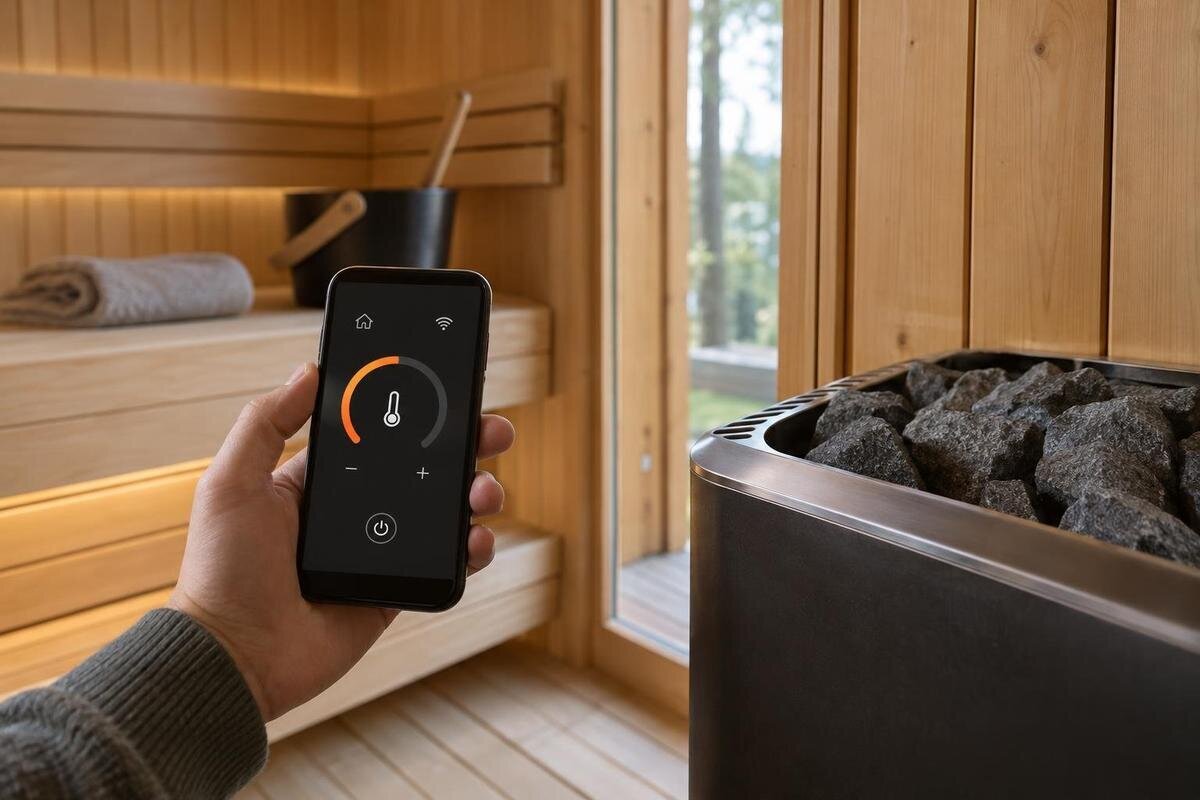
Remote control can make sauna pre-heating more convenient, but convenience does not establish compatibility or safe operation. A phone app, a control unit and a heater are parts of a particular system; the heater manufacturer may allow only named combinations and specific operating conditions. Before buying an add-on or enabling a start function, establish exactly what the system can do, which safety devices it requires and what happens if a condition is not met. Use manufacturer manuals and compatibility documents, then ask a qualified local electrical professional to confirm the proposed installation. The checks below help separate an approved function from a broad ‘smart’ or ‘remote-ready’ claim.
01
Remote monitoring is not the same as remote starting
Remote control can describe several different functions. Monitoring lets you view information from outside the sauna; adjustment changes a setting; a timer schedules an operation; and remote start sends a command to begin heating. These functions are not interchangeable. An app may show status or allow adjustments without offering remote start at all. A claim such as ‘smart control’ or ‘remote ready’ does not explain which functions are available for a particular heater.
Ask the supplier to describe each function separately for the exact equipment you plan to install. Find out whether a start command can be sent from outside the property, whether someone must confirm it at the local control and whether the display shows the current status or only the last recorded one. Describe the function you actually want: checking whether heating has finished is different from starting it before arriving home. Ask the supplier to distinguish those uses in the proposed specification rather than answering with a general description of the app. This distinction matters because a remote command can change what the heater is doing, while a display or notification may only provide information. Treat remote starting as a separate capability that needs explicit manufacturer approval.
Match the control system to the exact heater
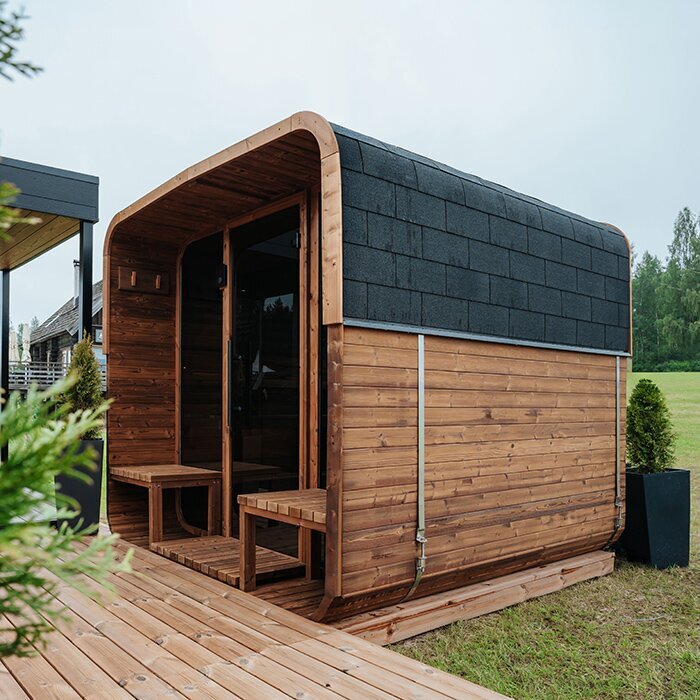
Compatibility is a relationship between named equipment, not a feature of the sauna alone. Record the heater manufacturer, full model number and variant, then identify the control unit and any remote module. A sauna model name describes the cabin, but it is not the heater model. If you are considering the Thermowood Barrel Sauna N-210, ask the supplier to list the proposed heating equipment separately from the cabin in the quotation. The description should let you distinguish the heater from its local controller and any remote accessory. Where a quotation offers alternative equipment, ask which combination the remote-control description applies to. This avoids comparing one heater option with remote features described for another. Do not infer that a sauna product page confirms which heater or remote functions are included.
Check the heater and control manuals for an explicit compatibility statement or approved combination. Similar-looking models, products from the same brand or a controller described as suitable for ‘sauna heaters’ do not necessarily establish that a particular pairing is supported. Confirm whether the approved combination includes the remote-start function you want, rather than only local operation or monitoring. Ask the supplier to confirm the exact model numbers in writing, including any required module or accessory, before purchasing an add-on.
02
Keep a record of the complete system
A useful compatibility record separates the sauna, heater and controls instead of grouping them under one product name. Note the sauna model, the heater’s full model and variant, the controller, any gateway or remote module, and the sensors or safety accessories specified by the manufacturer. If the manuals use hardware or software revision numbers, record those as well. For a proposed Thermowood Barrel Sauna N-250 installation, keep the cabin name in its own field, with separate entries for the heating and control equipment. Distinguish the equipment quoted from the equipment eventually installed, especially if an item changes before handover. Retain the document titles and versions alongside those entries so that a later service enquiry refers to the relevant instructions, rather than a manual for a similarly named product.
Ask for the documents that describe the whole proposed arrangement: the heater manual, control manual, compatibility information, any relevant system diagram and a list of what is included or optional. A picture of an accessory or an app listing cannot show whether it is supplied, required or approved for your heater. If the system depends on a particular control version or software, ask which version the documentation covers and whether a later change affects compatibility. Keep the answers with the equipment records for future servicing.
Understand the rules for remote starting
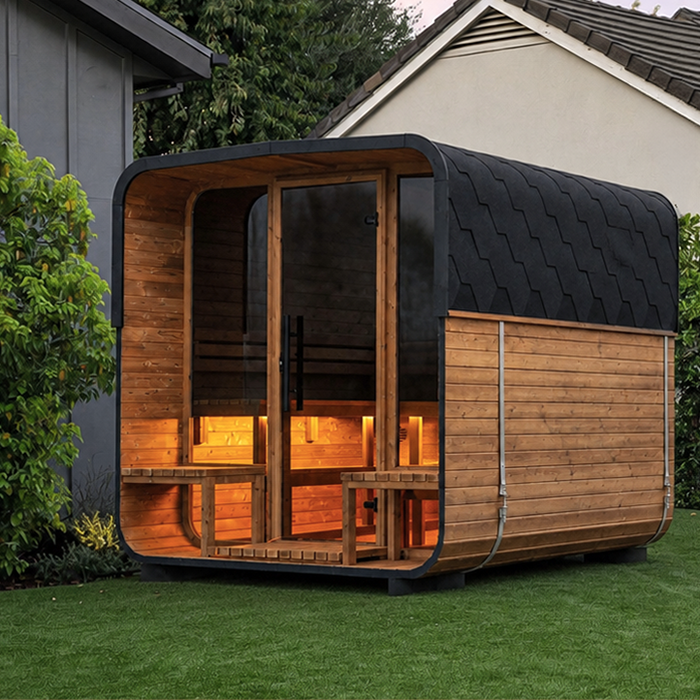
Remote start has operating limits that need to come from the manufacturer’s instructions. Check whether it is permitted when the sauna is unoccupied, whether a door must be in a specified state, whether someone must first check the heater area, and whether local confirmation is required. When discussing remote heating for the Thermowood Barrel Sauna LC-260, describe how you intend to use the proposed controls: starting from elsewhere on the property, starting before arriving home or setting a scheduled start. Ask which of those uses the selected heater and controller permit. Also ask about any start delay, maximum run time, lockout or other condition that prevents a command from being accepted. Have the supplier explain when any required local confirmation must take place and whether it remains valid for a later start. These operating details matter more than a general promise of remote access.
Do not override a restriction because an app offers a button or a schedule. If the manual requires a check that cannot be completed remotely, follow the stated procedure rather than assuming the system has completed it. A temperature reading alone does not show that the physical area around the heater is clear. Find out how a start can be cancelled and what the system does if a required condition is missing. If the manufacturer’s instructions do not clearly permit the use you have in mind, leave remote start disabled until the supplier or installer clarifies the position.
03
Confirm every required safety feature
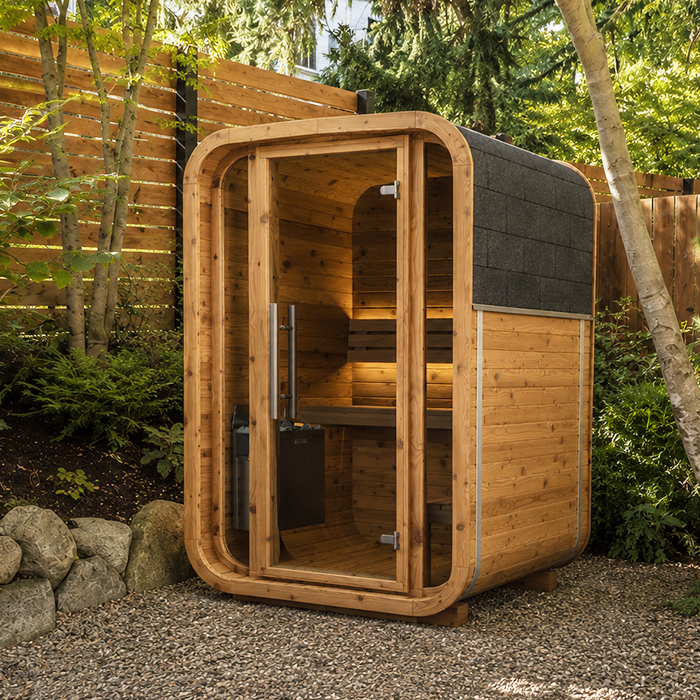
There is no single feature list that applies to every heater. Depending on the manufacturer’s design, the instructions may specify a temperature sensor, an over-temperature cut-out, a door sensor, a heater-guard or cover safety device, a timer, or another interlock. For a proposed Thermowood Barrel Sauna HCF-300 setup, ask the supplier to identify the protective components required by the selected heater and controls. Separate that list from optional convenience accessories so that a required device is not mistaken for an upgrade you can omit. Confirm which items are included in the quotation, which must be ordered separately and who is responsible for fitting and checking them. If the supplier offers alternative controls, ask whether the required safety equipment changes with that choice. The final equipment list should make those dependencies clear before you compare package prices.
Ask what each required device is intended to do, what condition prevents heating and how a fault is shown to the user. A feature name in a brochure is not enough; the system documents should explain its role and the installer should confirm that it is present and correctly configured. Never bypass, cover, relocate or substitute a safety device to make a remote command work. A protective feature is part of the approved setup, not permission to ignore the operating instructions or leave the heater area unchecked.
Check what certification evidence covers
Ask the supplier for the relevant certification or approval documentation and check which exact equipment it identifies. Look for the model or product range, the configuration covered, any stated limitations and whether accessories or a remote module are included in that scope. If your enquiry concerns the Thermowood Barrel Sauna LCF-300, distinguish documents about the cabin from those covering its proposed heating and control equipment. A certificate for a controller alone may not establish compatibility with the heater, and documentation for one model should not automatically be applied to a different variant. Where a document names a product range rather than an individual model, ask the supplier to explain how the offered variant falls within its scope. Keep the explanation tied to the exact equipment on the quotation; a broadly similar product name does not resolve a mismatch.
A general marketing statement such as ‘certified’ is not a substitute for seeing what the evidence applies to. Ask the supplier or installer to explain whether the documents relate to individual components, a defined system or the proposed installation, and have a qualified local electrical professional confirm what is applicable to your project. Do not assume that a mark on one item proves every part of a remote-control arrangement has been assessed. If the documentation does not match the exact models being offered, ask for clarification before relying on the remote function.
04
Plan for professional installation and handover
Remote controls and sauna heaters involve electrical equipment, so use a qualified professional to confirm the installation against the manufacturers’ instructions and applicable local requirements. The professional should review the proposed heater, controls, sensors and safety devices as a complete arrangement, rather than treating the app as a separate accessory. For a Thermowood Barrel Sauna S-140 project, give the installer the proposed equipment list as well as the cabin model. Agree who will supply the controls and accessories, who will commission the complete system and who will explain its operation at handover. If the sauna supplier and electrical installer have different responsibilities, clarify how any unresolved compatibility question will be addressed before work proceeds. Keep this discussion focused on professional installation and responsibility; it is not a wiring or modification project to tackle yourself.
Before the installation is handed over, ask the installer to explain the local controls, the authorised remote functions, any start restrictions and the response to a fault or loss of connection. Have the installer demonstrate the approved operating procedure and explain how the required safety features are confirmed, without disabling them. Record the models actually installed and keep the manuals, commissioning information and any certification documents together. Make sure everyone who may use the sauna understands which controls are permitted and what to do if an error appears.
Check the connection and account arrangements
A remote system may use a local wireless connection, Wi-Fi, an internet service, a gateway or a manufacturer’s app, depending on the equipment. When considering controls for the Thermowood Barrel Sauna HC-150, ask which connection method the proposed system requires and where you intend to use it. Access from inside the home and access while away from the property are different requirements to describe to the supplier. Confirm whether each intended function depends on a working internet connection and which functions remain available at the local control. Ask what happens to heating if the network or service is unavailable, whether a command can be delayed or repeated, and whether the displayed status is live. Also clarify how you can tell that a start request has been accepted, rather than assuming that pressing a button confirms the heater is running.
Find out how the app account is managed: who can start or change the heater, how access is removed when a user no longer needs it, and what to do if a phone is lost or an account is compromised. Use the security and account settings the manufacturer provides, and avoid sharing access more widely than necessary. Ask whether the system needs software or app updates and where to find instructions if the app changes. These questions do not replace heater compatibility checks, but they help establish whether remote access will remain understandable and manageable for the household.
05
Set clear rules for everyday use
Before using remote start, follow the manufacturer’s pre-start checks exactly. If the instructions allow starting an unoccupied sauna, establish how the required conditions are verified, including any check of the heater area or local confirmation. If the manufacturer does not permit the use you are considering, do not adapt the procedure. For a household choosing the Thermowood Barrel Sauna HC-225, keep the operating routine with the manuals for the heater and controls actually installed. Write down the permitted start method and who is authorised to use it. Make clear who completes any required physical check and how other authorised users know it has been completed. Where several people have app access, agree who is handling a planned start so that nobody assumes another person has checked the sauna. Base that routine on the manufacturer’s procedure, not on household assumptions.
Check the documented limits for timers, delays, run time and restarting after a power interruption; do not guess at them or assume that a setting used for one system applies to another. Know how to stop heating locally and what the manufacturer says to do if a sensor warning, error message or unexpected start occurs. If the system reports a fault, do not keep sending remote commands to see whether they work. Follow the stated troubleshooting route and contact the appropriate service professional where the instructions call for it.
Compare integrated controls with add-on systems
A remote function built into a control system and a separately purchased module may have different compatibility rules. Neither arrangement is automatically suitable for every heater. Before choosing, establish which controller is included, whether a gateway or sensor is extra, whether remote start is supported or only monitoring, and whether any later heater replacement would change the approved combination. Avoid assuming that a generic smart plug, relay or third-party automation device can control a sauna heater; use an accessory only where the manufacturer explicitly approves it for the exact equipment and the installer confirms the arrangement.
Before committing, request a clear written answer naming the sauna, heater and control models; the approved functions; the required safety devices; the certification evidence and its scope; the connection method; and the behaviour under the stated operating restrictions. Also ask who will install and commission the system and where to find its operating and fault instructions. If a supplier cannot identify the exact combination or provide the relevant manufacturer documents, pause the remote-control decision. A clearly documented system is easier to assess than a promise based only on an app description.
Frequently asked questions
Can any sauna heater be controlled remotely?
No. Remote control is supported only when the heater manufacturer permits the specific control unit and configuration. Check the heater and controller manuals, including any stated limits on remote starting, and have a qualified electrical professional confirm the proposed setup.
Does Wi-Fi make a heater compatible with a phone app?
No. Wi-Fi or app access describes a connection, not whether the heater accepts that control system. Confirm the exact heater and controller models, any required gateway or sensors, the functions available and what the manufacturer says happens if the connection fails.
Is it safe to start a sauna remotely when nobody is there?
Only if the manufacturer explicitly allows that use and the system is installed with every required safeguard. Check the instructions for pre-start conditions, sensors, local confirmation and run-time limits. If the rules are unclear, do not use remote start until the supplier or installer clarifies them.
Which safety features should I look for?
There is no universal feature list. Follow the heater and control manufacturers' instructions for the exact combination. Depending on the system, they may specify temperature sensing, an over-temperature cut-out, a door or heater-guard safety device, a timer or another interlock. Confirm which items are required and how faults are reported.
Does certification of the controller prove the whole setup is certified?
Not necessarily. Ask for documentation that identifies the equipment and configuration it covers, including the heater, controller and any required accessories. A mark or certificate for one component does not by itself establish compatibility or approval of the complete installation.
Remote sauna heating is not just a phone feature; it is an operating mode for a specific heater-and-control installation. When the manuals, compatibility evidence, certification scope, safety devices and installer handover all refer to the same equipment, you have a sound basis for deciding whether remote operation suits your setup. If the documents leave a start restriction or required safeguard unclear, do not enable remote start until the supplier or installer has clarified it.
