
Choosing a Sauna for Daily or Weekend Use
Sauna planning
How often you expect to use a sauna shapes the work around each session. A daily pattern rewards a repeatable preparation routine, easy-to-understand controls and a cleaning plan that remains manageable after a busy week. Occasional weekend use has a different rhythm: the sauna may sit idle between visits, and preparation needs to fit into the time available. Neither pattern is automatically simpler. Compare the time, attention and upkeep each one asks of you, then check that the exact sauna and heater configuration suits the routine you can realistically maintain.
Before you choose 1
Realistic weekly use
Think in terms of an ordinary month, not an unusually free holiday. Note the days and times you can realistically see yourself using the sauna, who is likely to join, and whether use would be planned or spontaneous. A weekday evening after work may leave a narrow window for changing, operating the heater and tidying; a weekend afternoon may offer more flexibility but compete with family plans or other commitments. Record the pattern that happens most weeks rather than the routine you hope a new purchase will create. If your schedule varies from week to week, record that too instead of forcing it into a daily or weekend label.
Separate daily use from several sessions spread across a week and from occasional weekend visits; these are different patterns, not categories with a universal threshold. Ask what might make you skip a session: an inconvenient route, an involved preparation sequence, little privacy, or the work of restoring the space afterwards. Note whether sessions fall on consecutive days or have a gap, because that changes the time available for the between-session routine. If others will use the sauna, compare calendars and agree who prepares it and handles the tidy-up. Treat your estimate as a planning tool, with room for holidays, guests and changing work routines.
Preparation time for weekdays and weekends
For frequent weekday use, design a repeatable sequence rather than assuming each session can happen on impulse. Keep the personal items you normally need together, make sure the route to the sauna is convenient at the hours you expect to use it, and allow time for the heater’s preparation instructions. A routine that depends on finding equipment, clearing a shared room or remembering several unfamiliar steps can become a barrier after a busy day. Walk through the sequence, including changing and putting things away, before you choose a layout. Note which steps can be prepared in advance and which must wait until the session; convenience should come from sensible organisation, not from omitting a step required by the manufacturer.
Weekend use can allow a longer preparation block, but free time does not mean the sauna will be ready on demand. Include time to reach and check the unit after it has stood unused, follow its operating instructions and restore the area afterwards. If your visit window is short, plan to begin early enough rather than omitting any maker-required checks or drying steps. A small kit of everyday items stored nearby may reduce searching, provided its storage does not conflict with the manufacturer’s directions. No single preparation time applies to every sauna and heater; use the documentation for the configuration you select and refine your routine after experience.
Before you choose 2
Controls for the people who will use the sauna
Repeated sessions make control convenience worth checking before purchase. Find out who operates the heater, where its controls are, what feedback they provide and how the manufacturer says settings are changed. If several household members will use the sauna, make sure every person who may operate it can follow the instructions; agreeing on one straightforward method avoids relying on a single household member. Check which functions are actually included in the chosen configuration rather than expecting a timer, app or other feature because a model is described generally. If possible, review the control arrangement and its manual so you can judge it against your schedule and comfort with the interface. Consider whether the intended operator can understand the controls without assistance.
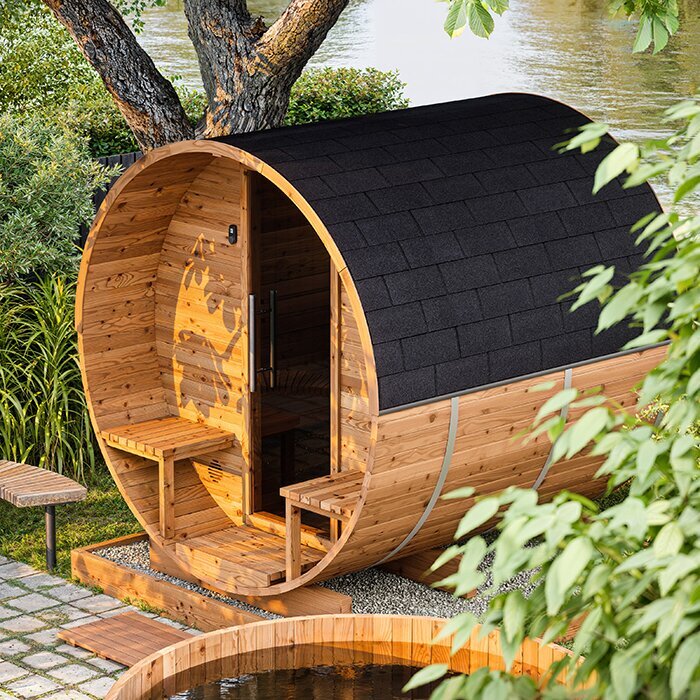
When comparing the Thermowood Barrel Sauna HC-225, listed at 4.4 m², ask which heater and control package accompanies the configuration you are considering. Review how the operator starts and stops the system, reads its status and changes settings using the manufacturer’s instructions. For weekend use, consider whether someone can repeat the correct sequence after a gap without relying on a remembered setting. For frequent use, consider whether the arrangement is convenient enough for the person who normally prepares the sauna. Clarify any differences between the listing and the quoted package, including whether remote operation is offered, and keep the operating instructions accessible.
Layout, access and likely users
Daily use makes access and layout part of the routine several times a week. Consider the route from the changing area, privacy, door clearance, and whether people can move in and out without crossing a busy shared space. Weekend gatherings shift the question towards how many people are likely to share a session and where everyone will wait or change. Count regular users separately from occasional guests: choosing around a rare maximum can make an everyday space unnecessarily difficult to use. Use manufacturer drawings to compare the actual internal arrangement and entrance, rather than relying on the model name or a single area figure.
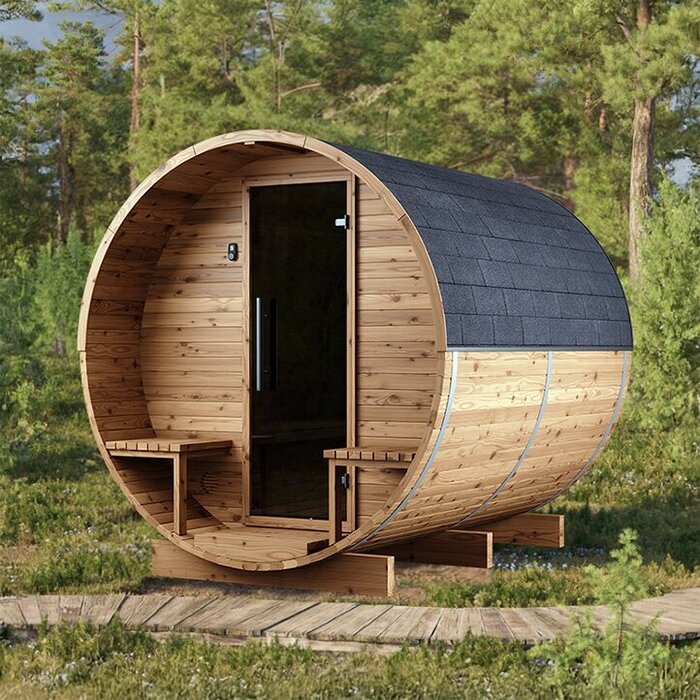
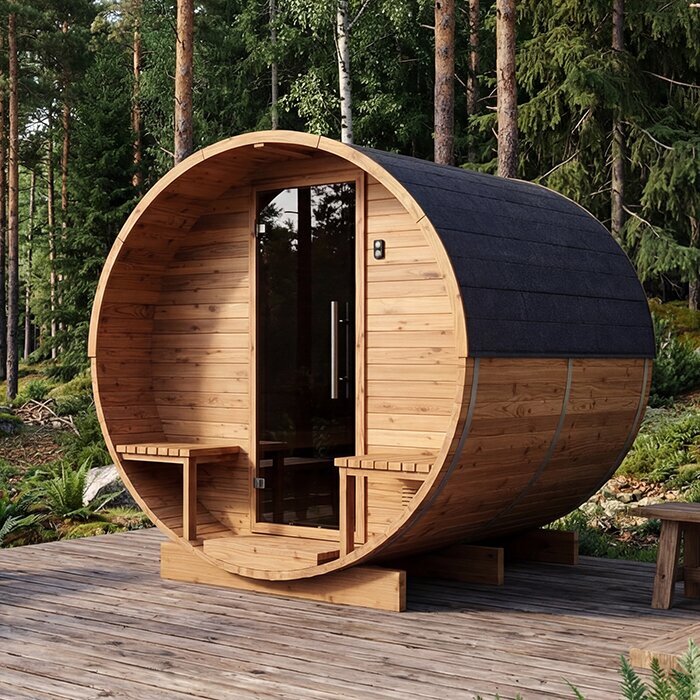
The listing for Thermowood Barrel Sauna N-210 reports 4.43 m². To assess the layout, use the drawing and specified dimensions to identify the entrance, bench arrangement and space available to the intended users. The listed area alone does not establish seating capacity or usable interior floor area. Consider an ordinary session as well as a gathering: where will people change, wait and leave their belongings without obstructing the approach? Confirm the exact configuration rather than assuming similarly named models share a layout. If an important dimension is missing from the drawing, ask for it before deciding how the sauna will fit into your space.
Before you choose 3
Planning the start of each session
Regular use can make the start sequence familiar, but it still needs to fit the heater’s instructions and the time you have available. Do not assume the sauna should remain heated between visits, or that a timer can be used in a particular way; the operating method depends on the selected system and its manual. Leave enough margin for the stated preparation steps instead of treating a hoped-for start time as a guarantee. Once the exact setup is in use, note how it behaves in your setting so future sessions can be planned realistically. If more than one person prepares it, use the same documented sequence rather than separate assumptions.
For weekend use, allow flexibility when the previous session was several days earlier or the routine changes with the season. Separate the preparation tasks you need to carry out from the time you must allow before the sauna is ready. The Thermowood Barrel Sauna N-250 listing records 5.27 m², but it does not establish a preparation time for your chosen configuration. Use the exact heater and control documentation to plan the start sequence, rather than borrowing one from another model. If a short visit depends on a particular start time, clarify any unanswered operating questions before committing to that schedule.
Cleaning responsibilities and frequency
Frequent use creates more occasions to deal with used towels, personal items and visible marks, so make cleaning responsibilities part of the buying decision. Decide who puts items away, which tasks belong in a post-session tidy, and which belong at a manufacturer-specified cleaning interval. Follow the sauna maker’s guidance for cleaning methods and products, particularly around finishes or heater-related parts; do not assume ordinary household cleaners are suitable. A short, regular reset can be easier to schedule than postponing all care, but the precise tasks depend on the product and its instructions. Write the routine down if several people share responsibility.
Weekend users may do fewer resets, yet leaving used items in the sauna for days can turn tidying into an inconvenient pre-session task. Agree on what must be put away before everyone leaves and who will handle the next planned clean. When considering the Thermowood Barrel Sauna LC-260, listed at 5.12 m², review the surfaces and cleaning access in the exact configuration alongside its care instructions. This makes the comparison more useful than judging cleaning effort by area alone. Keep post-use tidying separate from scheduled cleaning, so finishing one is not mistaken for completing the other, particularly when guests share the space.
Before you choose 4
Drying and ventilation between sessions
Cleaning and drying are related but separate parts of care. After a session, the sauna may require ventilation or drying time as described in its instructions; allow for that process when planning another session. If daily use means returning the next day, establish when the required steps will be carried out and who will be responsible, rather than guessing whether surfaces are ready. Include this time in the household schedule, not just the time spent using the sauna. Make sure everyone knows the procedure, especially if the person who usually prepares the sauna is not the one finishing the last session.
For weekend use, the important question is how to leave the sauna between visits, not simply how long the gap will be. Follow the ventilation directions for the precise design and installation, keeping any identified ventilation points unobstructed. The Thermowood Barrel Sauna HCF-300 is listed at 6.89 m²; use its configuration-specific instructions, rather than that measurement, to plan drying. Agree who will complete the required post-session steps before leaving. At the next visit, check for any change or dampness that the instructions identify as needing attention, and seek advice if you are unsure what you have found.
Maintenance schedules and responsibility
Frequency affects how often parts are handled and how many sessions pass between checks, but it does not create a universal service interval. Use the manufacturer’s maintenance schedule for the sauna and heater, distinguish routine owner checks from work a qualified professional should handle, and keep a record of cleaning or service. With daily use, calendar reminders can prevent prescribed tasks being overlooked amid a steady routine. Do not lengthen an interval just because the unit appears to be working normally; the maker’s requirements, not the number of sessions alone, set the baseline. A written record also helps when responsibility changes between household members.
For weekend use, distinguish maintenance tied to elapsed time from tasks linked to use, where the manufacturer makes that distinction. A quiet period should not make a calendar-based task disappear from the household plan. When reviewing the Thermowood Barrel Sauna LCF-300, listed at 6.89 m², ask which maintenance duties belong to the owner and which need a qualified professional. Record the relevant intervals from the exact sauna and heater manuals, together with service contact details. Also note the stated signs that mean use should pause. This gives an occasional user a clear reference without relying on how recently someone remembers using the sauna.
Before you choose 5
Care during longer periods without use
Occasional use may mean pauses longer than a few days, such as a holiday or a seasonal change in plans. Before that gap begins, note the manufacturer’s instructions for care while idle and the procedure for returning the sauna to use. Do not improvise electrical or heater-related shutdown steps or repairs; if instructions are unclear, ask the maker, seller or a qualified professional. On returning, check the accessible areas and components the manual identifies, and make sure the approach is clear. If you notice damage or unusual behaviour, resolve it through appropriate advice before continuing.
Even daily users may have a holiday or a run of missed sessions, so keep a restart plan that does not depend on one person’s memory. For the Thermowood Barrel Sauna S-140, listed at 1.93 m², check the care requirements for the exact configuration rather than assuming a smaller sauna needs less attention while idle. Record when it was last cleaned or serviced, where the manual is kept and which return-to-use instructions apply. If another household member will prepare it after the break, make sure they can find that information. Keeping these details together makes a longer absence easier to manage without inventing a separate procedure.
Compare the whole routine before choosing
Before comparing products, make a simple weekly routine for each pattern you might choose. List the preparation, controls, time between sessions, cleaning, drying and maintenance that the maker’s instructions require; then note who will handle each task and whether that schedule fits work and family life. A daily plan should still be workable on an ordinary busy day, while a weekend plan should allow for the pause since the last use. This comparison exposes inconvenience that a floor-area or model-name comparison cannot show. It also lets you reconsider the planned frequency before choosing a configuration that assumes more use than you expect.
Use the same comparison questions for every shortlisted model, including the Thermowood Barrel Sauna HC-150, whose listing reports 2.97 m². Alongside the listed area, record the confirmed layout, heater, controls, inclusions and care requirements so you can compare complete configurations rather than isolated catalogue details. Mark unanswered questions separately from confirmed features; this helps you see whether a convenience you value is actually included. Have a qualified installer or other relevant professional assess technical suitability for the intended site and connection. Then return to your weekly plan: a configuration should fit the routine you can maintain, whether that means frequent sessions or occasional weekends.
Frequently asked questions
Can one sauna suit both daily and weekend use?
Yes, if the layout, heater and instructions suit the people using it and the time available. Compare the work each pattern creates: convenient access and regular care for frequent sessions, and preparation after longer gaps for weekend use. Frequency alone does not show whether a particular model will fit.
Does daily use mean the heater should stay on?
Not necessarily. Do not assume continuous heating is required, suitable or offered by the chosen system. Follow the heater manufacturer’s operating instructions and check the exact controls and timer functions. If your intended schedule is unclear, ask the seller or a qualified installer before relying on an automatic or remote feature.
What should I do before using a sauna after a break?
Use the sauna and heater manuals to guide preparation after a gap. Check the accessible areas and components identified there, and resolve any damage, unusual operation or uncertainty before continuing. Do not substitute a routine from another model; ask the manufacturer, seller or a qualified professional if the instructions do not answer your question.
How often should a sauna be cleaned?
There is no single cleaning schedule for every sauna. Follow the manufacturer’s guidance for products, methods and intervals, then assign responsibility for post-session tidying and planned cleaning. The number of sessions affects the practical routine, but does not override the instructions for the exact product.
Does a smaller listed area suit occasional use better?
Not by itself. Listed area does not establish internal layout, seating capacity, preparation or care requirements. Compare manufacturer drawings and the exact configuration with the intended users, available space and routine. Weekend use is not evidence that a smaller sauna is automatically a better fit.
The strongest choice is the sauna that fits an ordinary week, not just an ideal one. Frequent use puts particular emphasis on convenient access, familiar controls and manageable care after each session. Weekend use needs a workable preparation plan and a clear way to leave the sauna between visits. If the weekday routine feels unrealistic, occasional use may be the more practical plan. Choose around the pattern your household is likely to sustain, while leaving room for that pattern to change.
