
How to Reduce a Sauna Project Budget Without Cutting Essentials
Sauna project budget
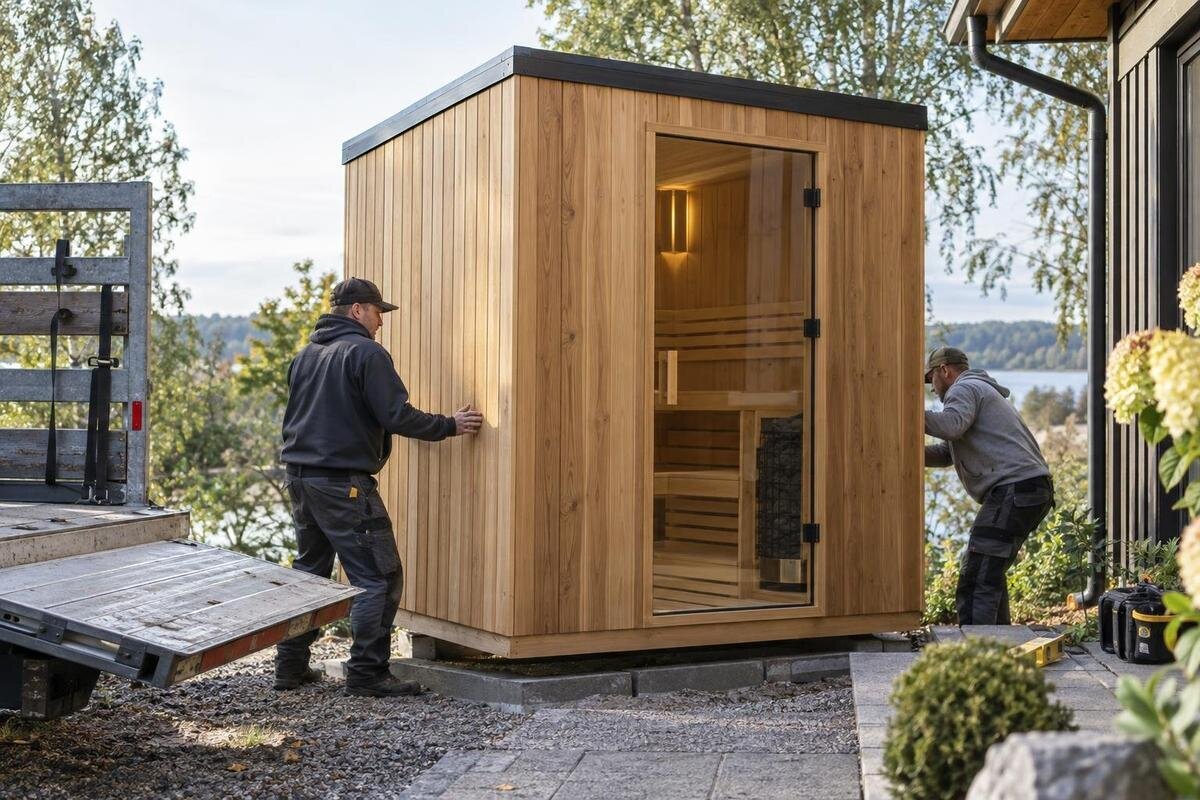
Reducing a sauna project budget is mainly a matter of controlling scope and avoiding late surprises. Decide what the sauna must do, compare complete quotations and confirm the site before buying. Savings should come from a suitable size, simpler discretionary finishes and well-timed preparation—not from removing electrical, structural, fire-safety or ventilation provisions. Those requirements depend on the model and site, so keep them in the budget until the relevant qualified professionals and supplier confirm the specification.
01
Set the budget around a defined brief
Before requesting prices, write down who will use the sauna, how many people usually need it at once, how they expect to sit or lie, and what access they need. Include preferences such as privacy or changing space only if they matter to the project. Add the space and features required for those routines, not every possibility that might be useful one day. A larger cabin for occasional gatherings can still be a deliberate priority, but cost it as a choice rather than an assumed need. This gives each supplier the same brief and makes a simpler proposal comparable without treating comfort, access or usability as expendable. Record the reasons behind any unusual requirement so the quotation can address it accurately.
Set a ceiling for the whole project, not just for the sauna itself. Divide your planning sheet into the product, site readiness, specialist provisions, assembly or installation scope where applicable, finishes and accessories, and unresolved items. Mark each line as essential, a preference or unknown, and note who is responsible for arranging it. Use written quotations and professional assessments to build the figures rather than applying arbitrary percentages. Keep the initial project spend separate from future running costs. If a line has no price yet, label it unconfirmed instead of counting it as zero. That makes gaps visible and shows where the scope can still change.
Choose a size that suits the way you will use it
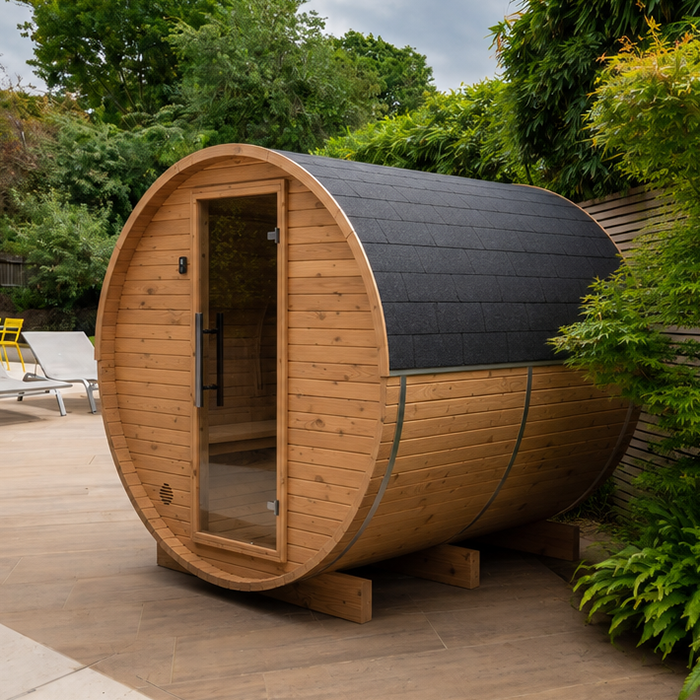
Think about how people will use the sauna before comparing sizes. Decide whether everyone needs to sit, whether anyone wants room to stretch out, how many people will use it together and what access they need. The Thermowood Barrel Sauna N-250 product page records 5.27 m², but that figure alone does not establish usable bench space, clearances or suitability for a particular site. Treat it as one comparison point, not a measure of comfort or capacity. Request the current drawing for the exact configuration you are considering before changing the size or layout to reduce the quote.
Compare drawings with the space available at the proposed location, the route into and around the sauna, and any space a professional identifies as necessary. A smaller option may reduce the project scope, but it is not a saving if it makes your intended use impractical or requires changes elsewhere. Equally, avoid paying for space you have no clear use for. An area label cannot tell you how the benches are arranged or how easy it will be to enter and move inside. Ask suppliers to explain differences between shortlisted configurations in writing, then re-price the changes that matter rather than accepting a larger specification by default.
02
Compare quotations on the same scope
A starting price is not a useful project comparison until you know what it includes. Ask each supplier to name the exact model and configuration, list the items supplied, state which assembly or installation work is included, and identify exclusions. Show site preparation, electrical work, structural assessment or support, ventilation and fire-safety provisions as separate lines rather than assuming they sit within the product price. Record finishes and accessories as well. A lower total may leave more work for you to arrange; that is not automatically a poor option, but you need an estimate for the missing scope before comparing it with a more complete quotation.
Use one comparison sheet with the same headings for every quotation and space to record assumptions, exclusions and responsibility. For example, the Thermowood Barrel Sauna LC-260 listing records an area of 5.12 m². Note the model and stated area, then request the drawings and inclusion list for the configuration actually being quoted. Compare totals only after site and specialist provisions are included or clearly marked as outstanding. Ask the supplier to explain vague wording such as ‘standard supply’ or ‘ready for use’. A written clarification is more reliable than assuming that similar-looking totals cover the same items, work or responsibilities.
Separate required provisions from optional finishes
Separate appearance-led choices from provisions that affect how the sauna fits, functions or can be used safely. A finish is not optional just because it looks decorative: it may be specified for the selected configuration or affect exposure and maintenance. Ask which choices are genuinely available, what the base specification includes and what each alternative changes. Do not infer materials, included accessories or upgrade prices from a product photograph. If the answer is unclear, keep the item in the scope until the supplier confirms its role. This helps avoid removing something that later needs to be restored, replaced or accounted for in another quotation.
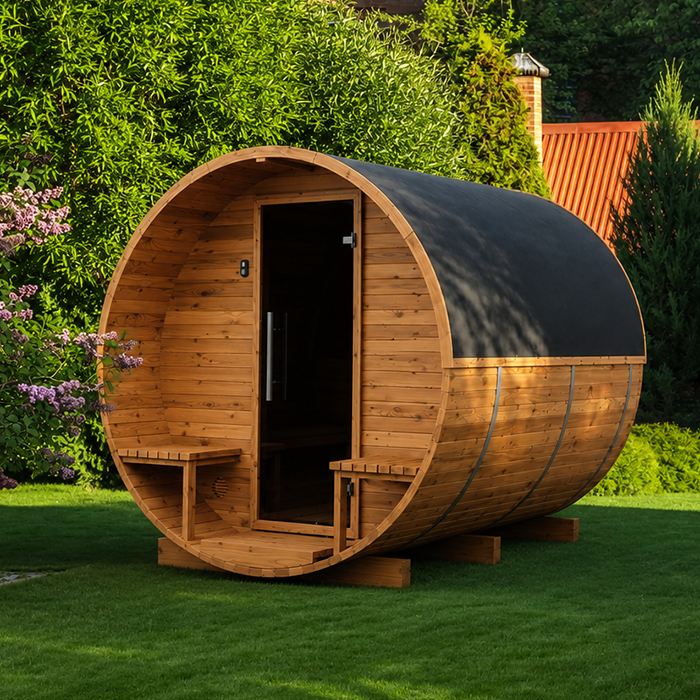
For a candidate shown on the HCF-300 product page, ask for a written breakdown of the base selection and each proposed extra rather than a single package total. Decide which appearance choices matter to you and keep that decision consistent across quotations. Check accessories individually, but remove an item only after confirming it is not needed for the chosen configuration or safe use. If an item is genuinely discretionary, compare the quoted difference with its value to you. A clear distinction between requirements and preferences makes the project less vulnerable to add-ons during ordering while preserving the provisions identified by the supplier and relevant professionals.
03
Check site conditions before finalising the order
Confirm the proposed location before finalising an order. Check the available space, existing services and any access constraints, then have the relevant professional assess the ground conditions and support required for the selected product. Do not choose a base or assume that a level-looking surface is adequate from a photograph or general guide. Use the manufacturer’s current drawing and manual for the exact configuration, and ask a qualified person how site conditions affect the proposal. Guesswork is not a safe budget reduction: a change of position or support after purchase can affect other work and lead to rework.
If you are considering the model on the LCF-300 product listing, use its model identity to request the relevant documentation; the product listing itself is not a site plan. Record who will confirm the support, who will identify nearby services, and which professional will review electrical, ventilation and fire-safety requirements. Agree where owner preparation ends and specialist work begins before anyone starts. Schedule any preparation that has been confirmed as suitable before completing the surrounding area, so work is not repeated. Do not carry out technical or structural changes simply to avoid a quoted professional service.
Phase optional work without delaying essential work
Phasing may help manage cash flow, but only when the work can genuinely wait. Separate the sauna and provisions required for safe, suitable operation from appearance items or surrounding improvements that do not affect access, structure, ventilation, fire safety or manufacturer instructions. Decorative landscaping or non-essential accessories may be candidates to postpone, but first confirm that they are not part of the agreed site specification. A useful phase plan states what will be done now, what may wait and what must be in place before the later work begins. It should never depend on leaving a required provision unfinished.
Mark each line on the quotation as required before use, optional for the initial project or not required, and ask the supplier to confirm classifications that affect the sauna. If you are considering the sauna on the S-140 page, use the same test: confirm the precise supplied configuration, then decide whether any proposed appearance or convenience item can be omitted. Deferring is not automatically cheaper; later work may need separate attention or disturb completed finishes. Compare the quoted cost of doing it now with the likely cost and practical effect of doing it later, and record why the timing makes sense.
04
Keep essential technical and safety provisions in the budget
Keep electrical, structural, fire-safety and ventilation provisions in the budget from the first estimate. Do not remove them to reach a target figure, and do not assume a standard package meets the needs of a particular site. The exact requirements depend on the selected sauna, its documentation and its location. Ask a suitably qualified electrician and the relevant structural or fire-safety professional to review the manufacturer’s current drawings and manuals, define their scope and identify any interfaces with the supplier. This guide cannot determine those requirements, and a product image or model name cannot replace a site-specific review.
Use a product page, such as the HC-150 listing, only to identify a candidate for discussion. For the selected configuration, request the technical information the professionals need and ask who is responsible for each provision, what is included and what remains to be arranged. Put a realistic allowance against unresolved work; do not record a missing estimate as a saving. Written responsibilities also help prevent two parties assuming that the other is covering the same item. If a proposed reduction depends on omitting a safety or service provision, ask the relevant professional to explain an acceptable alternative before changing the budget.
Control changes once the scope is agreed
Once the brief and quotation are agreed, manage changes through a simple written record. For each request, note what is being added, removed or substituted, why it is changing, who approved it and how the supplier says it affects the price, timing, site work or other trades. Ask for a revised quotation before accepting the change. Small upgrades can accumulate, while an apparent saving may simply move a cost to another line. A written process is especially useful when several people are making decisions. Keep one current version of the scope so suppliers and trades are not working from different assumptions.
If you switch candidates after reviewing the Sauna HC-225 product page, repeat the checks for its exact configuration instead of transferring assumptions from the first model. Confirm whether the proposal changes the recorded area or layout, site plan, included items or professional provisions; the listing alone does not answer those questions. Set a simple approval rule: no change proceeds until its cost and effect on essential scope are written down. If the revised total exceeds the ceiling, revisit optional finishes or extras before reconsidering a requirement. This protects the budget without ruling out a useful improvement.
05
Keep running costs separate from the project budget
Separate the purchase budget from the cost of using the sauna. A lower initial price does not, by itself, establish lower running costs, and an energy-saving claim should not be accepted without relevant information. Base an estimate on the exact equipment specification and the way you expect to use it, then ask the supplier or a suitably qualified professional to explain the assumptions. Tariffs and patterns of use vary, so avoid relying on a blanket figure. Keep routine care, replacement items identified by the supplier and any ongoing service needs in a separate forecast rather than folding them into installation costs.
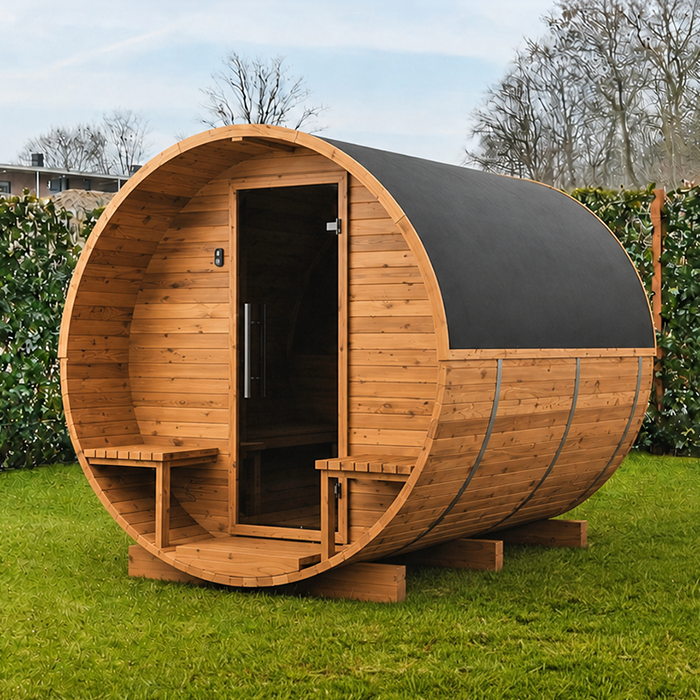
When reviewing the N-210 Thermowood Barrel Sauna listing, do not infer appliance details or future consumption from the model name or listed area. Request the manufacturer information needed for a credible estimate, and record who supplied it and what use pattern it assumes. If a feature is presented as a way to lower bills, ask for evidence relevant to the selected configuration and include the feature’s cost in the comparison. Treat any estimate as an assumption to review, not a guaranteed saving. This keeps the purchase decision grounded in the whole project rather than a guessed operating figure.
Price unknowns before approving the final budget
Before committing, review each line as a confirmed price, provisional allowance, excluded item or unanswered question. Base allowances on site reports and written estimates where available; there is no single contingency percentage that suits every sauna project. List the reason for each unknown, who will resolve it and when. Avoid spending the allowance on upgrades while essential work is still unpriced. Check that each quotation states its assumptions, any applicable taxes or fees, and the period for which it remains valid. This makes the budget transparent and helps distinguish genuine savings from costs that have simply been left outside the quote.
If the total is too high, revisit the brief in a deliberate order: remove an unused feature, consider a different suitable scope, simplify a confirmed optional finish or stage an improvement that can safely wait. Request revised written totals, then recheck the remaining site and professional provisions. Do not ask a supplier to meet the ceiling by deleting a line whose function has not been explained. A sound final decision shows the chosen sauna, site work, required services and discretionary choices in the same plan, with unresolved items openly costed rather than hidden.
Frequently asked questions
What is the safest place to look for savings?
Review the size and scope against how the sauna will actually be used, then consider simpler finishes or extras you do not need. Compare complete quotations before deciding: an apparent saving is not real if it leaves essential work unpriced or shifts it to another part of the project.
Will a smaller sauna always cost less overall?
Not necessarily. A smaller listed area does not establish that the layout will suit your needs or site, and it does not show what other work is included. Compare drawings, configurations and full project costs before changing size.
Can I postpone the ventilation or electrical work?
Do not remove or leave unfinished any provision required for safe, suitable operation. Ask the supplier and relevant qualified professionals to confirm what the selected sauna and site need. Only phase work they confirm can safely wait without conflicting with the documentation or agreed scope.
How do I decide which finishes can wait?
Ask the supplier which choices affect appearance only and which relate to the selected configuration, exposure, maintenance, access or safe use. Consider postponing only items confirmed as non-essential. Check whether later work would disturb completed areas or cost more than doing it as part of the project.
How much should I allow for unexpected costs?
There is no single contingency amount that suits every site. List what is unresolved, obtain written estimates or professional assessments where possible, and make a visible allowance for the remaining uncertainties. Do not treat missing prices as zero or use that allowance for optional upgrades before essentials are costed.
A well-managed sauna budget makes the full scope visible before work begins. Choose a size that fits real use, compare quotations on the same basis and treat optional finishes as choices rather than assumptions. Most importantly, keep the provisions confirmed by the supplier and qualified professionals in the plan. When costs need to come down, return to the brief and adjust what is genuinely discretionary instead of reducing requirements whose purpose has not been verified.
