
Small Hotel or Guesthouse Saunas: Use and Commercial Suitability
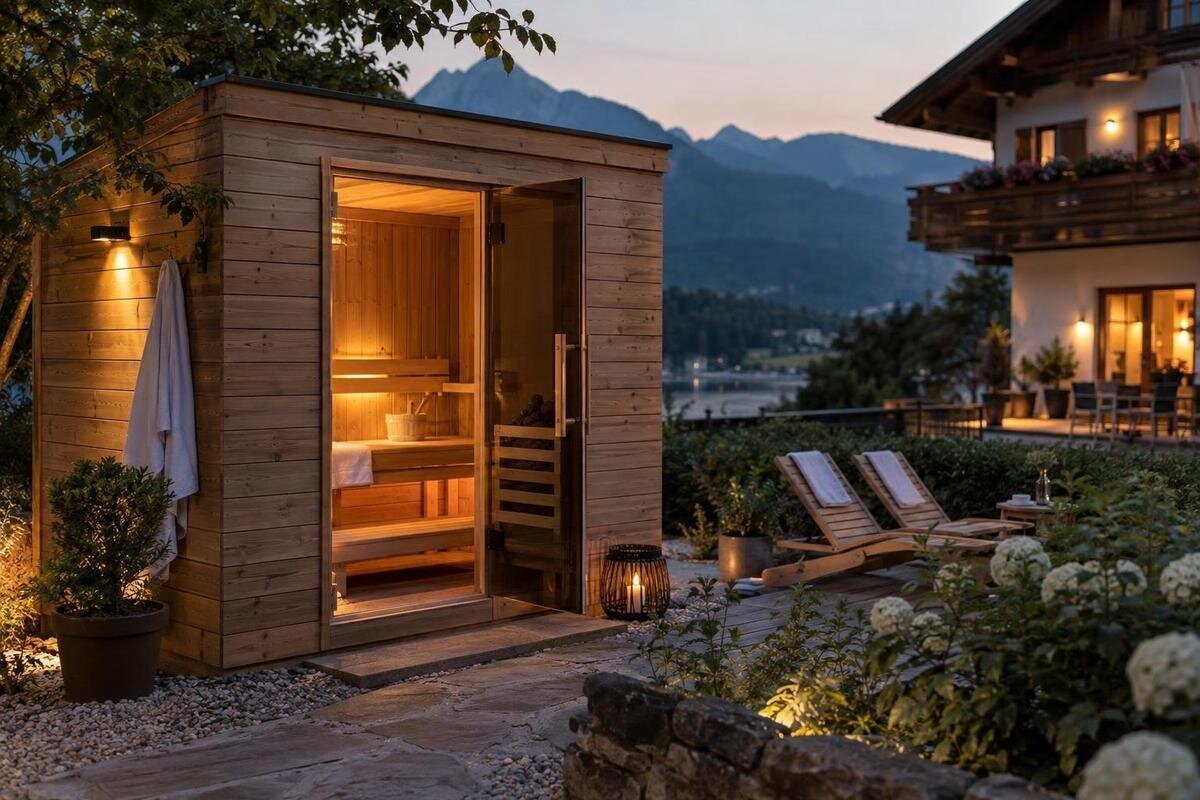
Small-hotel and guesthouse sauna planning
Adding a sauna to a small hotel or guesthouse is an operating decision as much as a product choice. A facility suitable for occasional private use may not be approved for repeated guest turnover, long opening hours or unattended access. Before comparing designs, define who will use it, how often it will run, who checks it and how it will be serviced. Then get written manufacturer confirmation for the exact model and proposed hospitality use. A product image, listed area or residential-style description cannot establish commercial suitability.
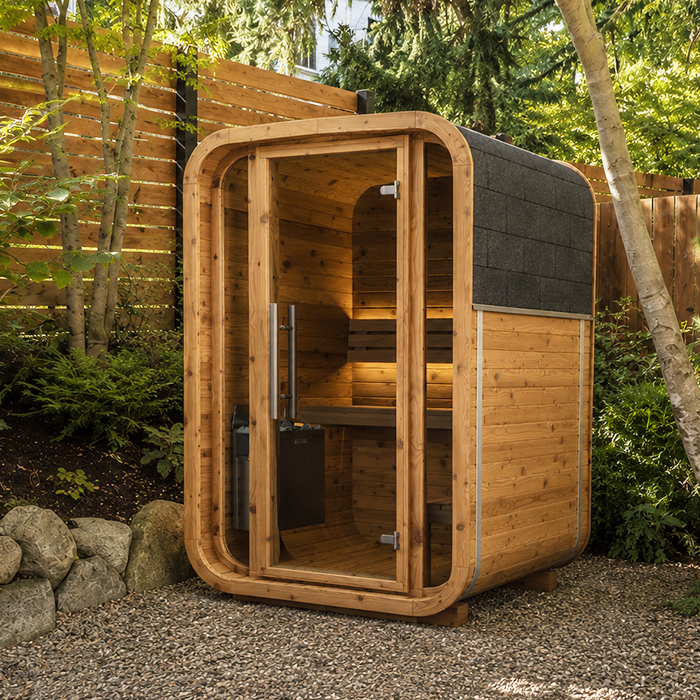
Define the sauna service you want to offer
Decide what sauna access means before comparing cabins. Will it be a private booking for one room, shared access for all overnight guests, a scheduled session with a staff member nearby, or self-service use during set hours? Record whether day visitors are included, whether guests need to book and whether access is part of the stay or separately arranged. Set the opening window and the booking interval. These are operating choices, not product specifications, but they shape guest turnover, staffing and the duty cycle you need the manufacturer to assess.
Map the guest and staff journey from the first enquiry to closing: who explains access, controls entry, prepares the space, checks it between bookings and locks it at day’s end? Decide how late arrivals, missed slots and reception handovers will work. Include the time needed between bookings, rather than scheduling guests back-to-back on paper. If guests may use the sauna when reception is closed, name the person who can respond to a fault or question. Keep this service brief with the supplier enquiry and identify the exact model under consideration—for example, the LC-260 model listing—rather than asking about a generic barrel sauna.
Estimate the daily duty cycle
Build a simple use schedule for ordinary weeks and likely peaks. Note the days and hours the sauna will be available, the expected booking pattern and whether each booking calls for a fresh start-up or forms part of a longer operating block. Count planned start-up events and heated operating hours separately; guest minutes alone can miss the work between bookings. Use enquiry or booking patterns where available, but do not equate room occupancy with sauna demand. If holiday periods bring a different pattern, show that week separately instead of averaging it away. Distinguish the hours offered to guests from the time the equipment is expected to run. For example, a gap between bookings may be planned as continued heated operation or as a shutdown; state which you intend rather than leaving the manufacturer to guess. Mark uncertain demand estimates clearly, and include a busy-day alternative so the assessment is not based only on your opening forecast. The HCF-300 catalogue entry includes 6.89 m²; that figure does not state a duty cycle or daily start-up limit.
Send the schedule to the manufacturer with the exact model and intended configuration. Ask for operating limits that relate to your pattern, including permitted daily hours, repeated start-ups, idle or rest periods, and any conditions on guest use or supervision. Request the stated user capacity and maintenance assumptions as separate answers; neither can be inferred from area or the number of guest rooms. Compare the busiest realistic day with written guidance, not an ideal off-season week. If your expected schedule is outside the confirmed limits, revise the service plan or consider equipment the manufacturer approves for that workload.
Get written approval for hospitality use
A commercial-use decision must apply to the exact sauna and the way your property will operate it. Ask the manufacturer to confirm in writing whether the model and supplied configuration are suitable for guest use at a hotel or guesthouse. Describe whether the facility will be shared, self-service or booked, how often it is expected to run, and whether staff will be present. The LCF-300 model page identifies a particular model to put in that enquiry; do not assume an answer about a similarly named product or occasional household use covers it.
Request the current operating manual and written warranty terms alongside the answer. Check whether the terms address hospitality or commercial use, and ask about any exclusions, maintenance conditions or restrictions on who may service the equipment. Manufacturer approval, warranty cover and professional assessment of the installation are separate questions, so keep the responses distinct. Save the model reference, configuration, documents and written replies together. Avoid relying on a broad description such as “hotel suitable” unless the manufacturer ties it to your exact model and stated pattern of use.
Check capacity, circulation and changing space
Guest capacity is not a conversion from a catalogue area. The entry for Sauna S-140 includes 1.93 m²; confirm from the manufacturer’s drawing what that figure measures before using it in a layout. Ask for the stated maximum number of users, bench arrangement and relevant internal and external dimensions. Use the supplied drawing rather than proportions in a photograph, and do not treat an area figure as an occupancy rating. Match the manufacturer’s user guidance to the way you plan to schedule sessions.
The cabin itself is only one part of the guest space. Mark the route in and out, any separate changing or shower area, a place to wait, and room for staff to clean and check the facility. For shared access, consider how one group leaves while the next arrives without crowding the entrance or compromising privacy. If the route crosses an outdoor area, assess access in the conditions and at the times your guests will actually use it. A layout that works for one private booking may not suit a shared, tightly scheduled service.
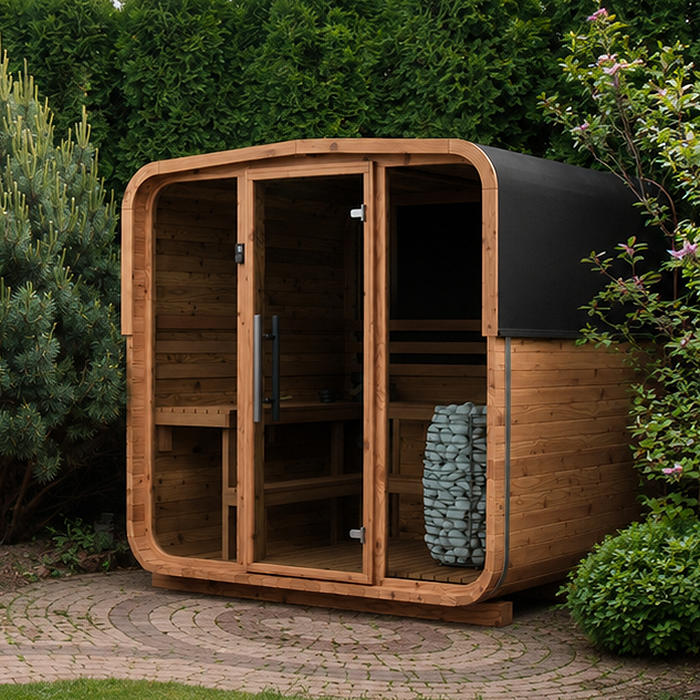
Plan supervision and guest access
Choose and describe the level of supervision: a staff member present, checks at set points, or self-service access with staff available elsewhere. Do not use “supervised” without saying who does what. The roster should name the person responsible for opening, access checks, between-booking checks and closing on every shift, including weekends and staff breaks. If reception and housekeeping duties fall to the same small team, show how sauna checks fit around room cleaning and guest arrivals. Walk through a busy changeover on paper: one booking ends, another group arrives and reception is handling check-in. Identify who checks the sauna and who manages the waiting guests. If both tasks fall to one person, adjust the booking gap or staff allocation before offering those slots. Include cover for absence, rather than assigning every responsibility to the manager by default. A model reference such as the HC-150 listing does not determine these duties; use the manufacturer’s instructions and your service plan.
Train staff on the approved operating instructions, access arrangements, what they must not change and who to contact if a guest reports a fault. Set out how bookings will be paused while a problem is checked, and who can take that decision when the usual manager is away. If the sauna may be used after hours, make sure there is a named response route rather than an unattended phone number. If your intended users include groups or minors, ask the manufacturer whether its guidance or restrictions differ and reflect the answer in your access rules. Use written handovers so the process does not depend on one employee’s memory.
Make cleaning and servicing part of the rota
Work out how cleaning fits between bookings and at the end of the day. Ask the manufacturer for instructions for the exact model, including which surfaces need attention, what cleaning products are permitted and what preparation is required before the next booking. Do not infer materials or care methods from a product photograph. For a model such as the HC-225 model entry, request the relevant manual and base the cleaning rota on its instructions and your actual booking pattern. Include the changing and waiting areas in the property’s plan without confusing their upkeep with care of the sauna itself.
Cleaning is not a substitute for servicing. Ask what routine checks and technical servicing the manufacturer expects, how often they are needed under your proposed use, and who is permitted to carry them out. Do not invent an interval or assume every task can be handled by housekeeping staff. Keep a simple record of operating hours if available, cleaning, fault reports, service visits and actions taken. This makes recurring problems easier to spot and gives staff a clear handover. Include the expected time and responsibility for these tasks when you assess whether the operation is manageable.
Set out repairs and downtime arrangements
Before committing, establish how the property will get help if the sauna develops a fault. Ask who handles support for the exact model, how a service request is raised, whether repairs require a particular service provider, and how replacement parts are sourced. Confirm what the warranty covers and whether hospitality use affects the route to repair. Use the N-210 product page to identify the model in your support enquiry, not as evidence of a particular service arrangement. Request the answer in writing rather than assuming that support will be available because a product is listed for sale.
Decide what happens to bookings when the facility is unavailable. Assign someone to close access, update the booking information and tell affected guests what has changed. Avoid promising a repair time or continued availability until you have confirmed the relevant service arrangements. Distinguish a guest’s existing booking from an enquiry about a future stay: staff need to know which guests require direct contact and which advertised availability needs updating. Agree who will authorise reopening once the fault has been addressed, and how reception will be told. This prevents one shift from accepting bookings while another still understands the facility to be closed. Leave space in the operating plan for planned maintenance, and record faults and their resolution so the same issue is not repeatedly passed between shifts. A small property may have fewer staff to absorb disruption, making a clear downtime process especially useful even when the sauna is not a central part of the stay.
Give guests clear operating information
Check that the manufacturer’s instructions explain how the exact model is intended to be operated and what the guest may control. Ask for clarification if access arrangements, controls or staff responsibilities in your plan do not match the manual. For a specific candidate such as the N-250 listing, request its operating documents before writing guest instructions. Keep house rules consistent with those documents; do not add settings, use limits or technical directions that the manufacturer has not confirmed. Make sure staff can find the same guidance guests receive.
Tell guests how to book, when the facility is available, whether use is private or shared, and whom to contact with a question or fault report. Put the information where it is useful: before arrival, during check-in and near the access point, as appropriate to your service. Keep online descriptions consistent with the actual booking and supervision arrangements. Describe the sauna and its availability factually; avoid promising health outcomes or suggesting that it is appropriate for a particular medical condition. Clear information reduces confusion without asking guests to interpret technical documentation.
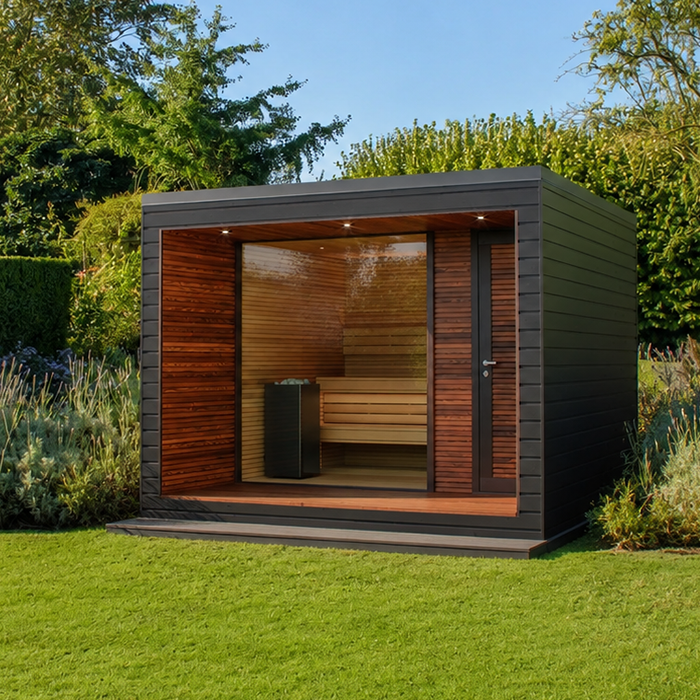
Check the site and installation separately
Treat the site as a separate part of the decision. Obtain the manufacturer’s drawings and installation information, confirm what is actually included, and have qualified professionals assess the proposed location and connections. The assessment should account for access for delivery and servicing, site conditions and the requirements of the equipment; do not work from a product image or listed area alone. If a roof, balcony or elevated deck is being considered, obtain a site-specific assessment rather than assuming a sauna shown in a garden is rated for that position. No installation rating can be inferred from a photograph.
Agree who is responsible for site preparation, assembly, connections, commissioning and staff handover before work begins. Confirm that the installed configuration matches the model and use covered by the manufacturer’s written response. Ask a qualified local professional and the relevant authority about any requirements that apply to your site; do not infer them from a supplier’s marketing material. At handover, make sure the property has the correct operating documents, warranty information, service contact and staff guidance. This keeps the physical installation and the guest operation aligned.
Compare candidates against a written brief
Use one comparison record for each candidate. Include the exact model and configuration, manufacturer’s written response, approved operating pattern, stated user capacity, relevant drawings, warranty terms and servicing route. Add the proposed booking hours, staff responsibilities, cleaning tasks, guest information and installation requirements. Separate requirements you cannot compromise on from preferences. If evening access is essential to your offer, for example, compare each candidate against that same operating window rather than quietly shortening it for one option. Record unanswered questions as unresolved, not as assumed benefits. Where a supplier proposes a different configuration, keep its response separate so that the comparison still refers to the equipment you would actually order. This makes it easier to see whether two options are genuinely comparable. A short list of model names or area figures is not enough to judge commercial suitability, particularly when the property plans to offer shared access or long opening hours.
Put the purchase decision on hold if the manufacturer has not confirmed the intended use, the busy-period schedule falls outside its guidance, or the property cannot cover the required staff and servicing tasks. Reconsider once those gaps have been resolved. If you revise the service plan, a shorter operating window must be realistic for guests and confirmed as suitable for the equipment. A suitable choice is one whose documented use, support arrangements and site requirements match the service you can actually run, not simply the design that looks right in a photograph.
Frequently asked questions
What makes a sauna suitable for a small hotel or guesthouse?
Suitability needs to be confirmed for the exact model, its configuration and your planned guest-use pattern. Ask the manufacturer for written approval and relevant operating guidance, then check warranty terms, servicing arrangements and the site with qualified professionals. Appearance and listed area do not establish commercial suitability.
Can a sauna marketed for home use be used by hotel guests?
Do not assume so. Ask the manufacturer whether the exact model is approved for your hospitality use, including its expected hours, guest access and level of supervision. If the manufacturer’s terms exclude that use, a verbal assurance or a similar-looking model is not a substitute.
How should I estimate a sauna’s duty cycle?
Map likely opening hours, booked sessions, start-up events and heated operating hours for ordinary and busy periods. Share the schedule with the manufacturer and ask whether it fits the model’s documented limits. Guest numbers or room occupancy alone do not describe how often the equipment will run.
Does the area shown on a product listing tell me how many guests can use it?
No. First confirm what the listed area measures, then request the manufacturer’s stated user capacity and drawings for the exact model. Do not convert an area figure into an occupancy estimate or rely on proportions in a photograph.
Can guests operate the sauna without an attendant?
That depends on the manufacturer’s instructions, the particular controls and the way access is managed. Confirm that guest operation is permitted, then assign staff responsibility for opening, checks, fault reports and closing. Self-service should not mean that no one is responsible for the facility.
A hotel or guesthouse sauna is a sound fit only when the manufacturer’s approval, the expected duty cycle and the property’s staffing and servicing arrangements line up. Make those checks against a specific model and the way guests will actually use it. If key operating limits or support arrangements remain unclear, keep the decision open rather than treating a product listing as proof.
