
Thermowood or Untreated Timber for an Outdoor Sauna?
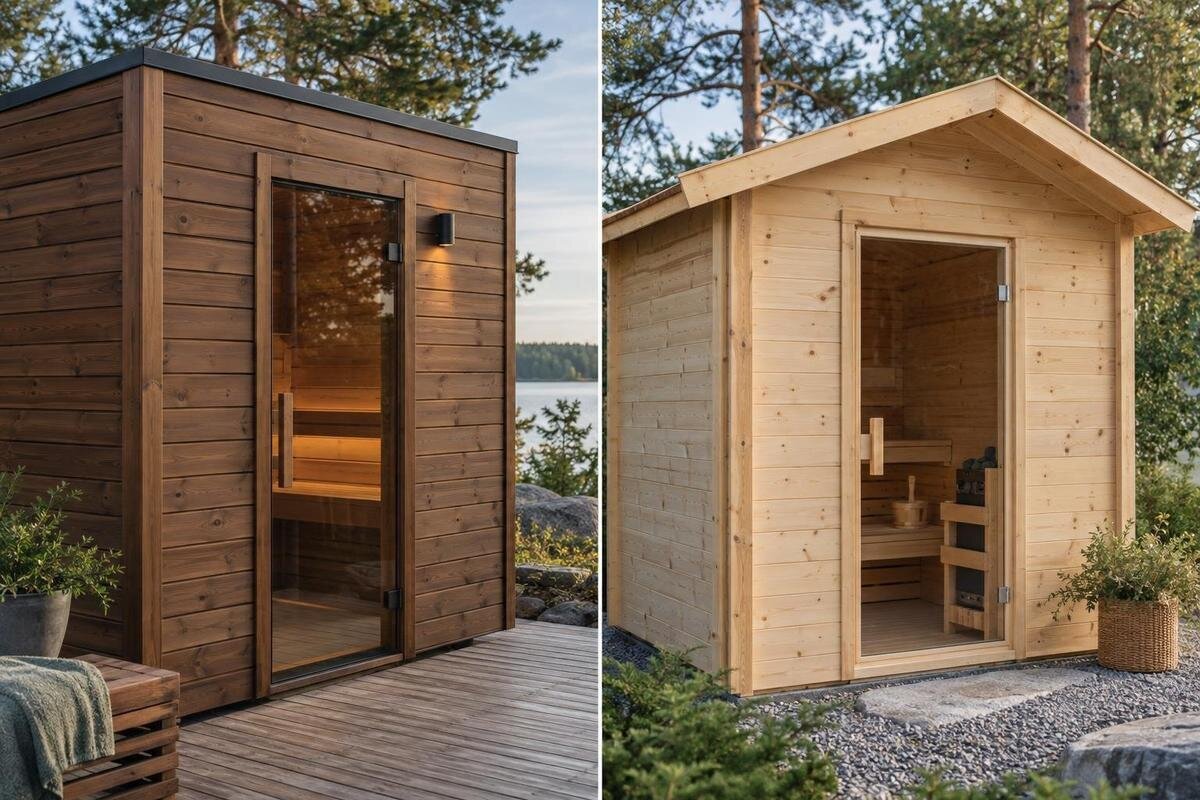
Outdoor sauna materials
An outdoor sauna’s exposed timber has to cope with the conditions at its particular site, not just look right in a catalogue photograph. Thermowood and untreated timber are not interchangeable labels for a single performance level: the species, treatment, finish, construction and care instructions all affect what a buyer needs to maintain. A useful comparison therefore begins with the supplier’s material documents and the weather exposure around the proposed position. It also separates the material from the whole sauna: a timber description alone cannot confirm how the complete model should be installed or cared for.
Before you buy 1
What Thermowood and untreated timber mean
Thermowood is generally used to describe timber that has been thermally modified, but the name does not specify one universal species, process or treatment level. The source wood and treatment conditions can vary, as can any preservative or surface finish applied afterwards. Ask for a technical sheet for the exact timber used on the sauna exterior. It should identify the species, describe the modification and state the intended use. Establish which components use it: outer cladding, trim, supporting members or only selected visible boards. A sauna may combine different materials, so a product title is not a complete material schedule. Visible and concealed timber can also have different exposure and care requirements.
Untreated timber is less precise as a sales description. It can mean no preservative treatment, no thermal modification or timber supplied without an exterior coating; these are not interchangeable. The boards may still have been sawn, planed or dried, and a finish may be added later. Ask the seller what “untreated” excludes and whether any coating is included. For a fair baseline, record separately whether the timber is unmodified by heat, preservative-free and uncoated. Ask whether that description applies to the timber as delivered or to its final installed condition. If the answer addresses only one point, do not assume the others.
What heat modification changes
Thermal modification changes the timber itself; it is not simply a protective layer painted on top. It can alter moisture-related behaviour and dimensional movement, and may change durability, but the result depends on the species and process. That is why a broad claim such as “more stable” or “lasts longer” needs to be tied to the exact material and intended exposure. Modified timber remains wood: it is not a waterproof membrane, and exposed edges, joints and surfaces still meet rain, sunlight and repeated drying. Treat performance information as relevant only when the manufacturer identifies the product and the conditions to which it applies.
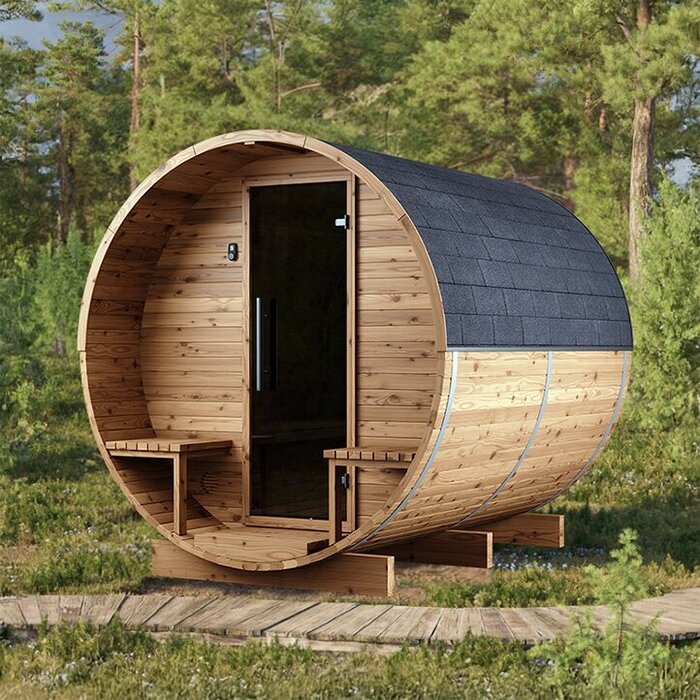
Ask whether the named treatment is intended for exterior use, which sauna components it covers, and whether a separate coating or preservative is part of the system. The process may also affect mechanical properties, so where timber has a structural role, rely on model-specific documentation and seek qualified advice rather than relying on a general statement. The local listing for the Thermowood Barrel Sauna HC-150 identifies a Thermowood model; that product name is not, on its own, a species, treatment record or maintenance schedule. Those details need to come from the relevant product documents.
Before you buy 2
Assess the sauna’s exact site
Inspect the proposed position before deciding which timber sounds more suitable. Note which sides receive direct sunlight, the direction from which wind-driven rain reaches the site, and whether trees or nearby walls keep parts of the exterior shaded. Include sprinkler spray, roof runoff, damp paving and water that may collect near the base. A sheltered spot is not automatically dry: it may receive less direct rain but remain damp for longer. An exposed position may dry more readily but face stronger sun or repeated wetting. Describe these conditions clearly so a supplier can respond to the actual site rather than a vague label such as “outdoors”.
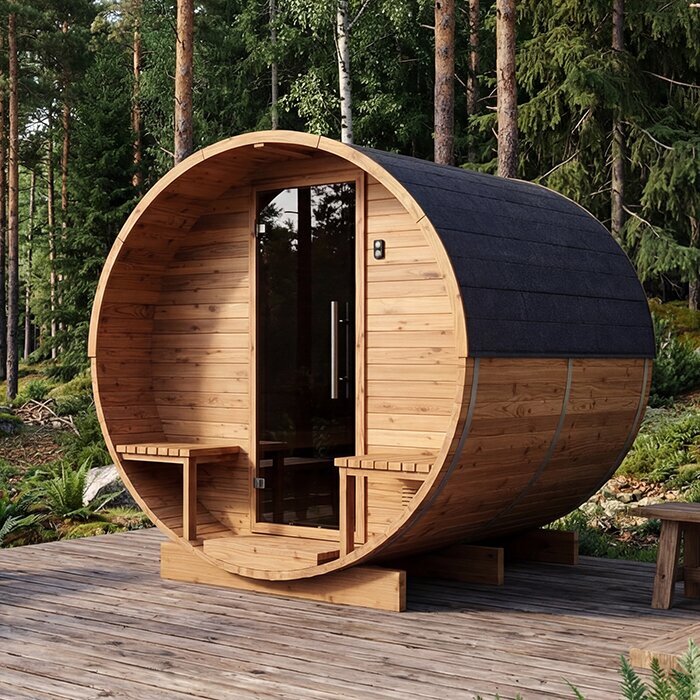
Use the same site description when comparing options such as the Thermowood Barrel Sauna HC-225 and an untreated alternative. Describe exposure on each side rather than calling the entire position sheltered or exposed. Ask the sauna maker how those conditions relate to its placement and care instructions, particularly where shade and repeated wetting occur together. Do not assume that a tree, overhang or raised support resolves every moisture issue. If the instructions do not cover your proposed conditions, clarify the placement before choosing the timber. This gives each supplier the same practical question to answer and avoids comparing recommendations based on different assumptions about the site.
How rain and slow drying affect the exterior
Repeated wetting and slow drying matter when you are considering an exterior timber surface. Moisture can linger at lower edges, horizontal ledges, end grain, joints, places behind foliage and areas where leaves or soil collect. Sprinklers and roof runoff can wet an apparently sheltered surface; shade, limited airflow or ground moisture can slow drying. These are not reasons to assume a defect, but they are useful clues when checking the site and planning inspection. Ask which surfaces and details the manufacturer expects to be protected, and whether the installation instructions explain how water should drain away.
Review the assembly drawing and manual for the exterior arrangement, recommended clearances, drainage and ventilation requirements. For a model such as the Thermowood Barrel Sauna N-210, relate those details to the places where water could collect at your proposed site. Check whether nearby foliage, paving or runoff would interfere with the arrangement described in the instructions. Do not assume that models with the same timber description use identical profiles, joints or finishes; the whole construction affects how exposed timber meets water. Where the drawing leaves a placement question unanswered, ask the supplier or a qualified installer rather than improvising changes to the sauna.
Before you buy 3
What untreated timber means for maintenance
An untreated exterior should not be treated as a zero-effort option. If the timber is left uncoated, its surface appearance can change as it sees sunlight and weather; depending on the species and exposure, checking, roughness or uneven colour can also develop. Those changes may be acceptable if you prefer a naturally weathered look, but that preference does not make a product suitable for every exposure. Request the maker’s written guidance on what is normal for that timber, which changes need attention, and whether leaving the boards bare is intended. Use that guidance to distinguish expected surface weathering from a sign that a joint or finish needs attention.
If maintaining a particular colour or surface is important, ask which coating system is compatible, whether it is supplied as standard or must be applied separately, and how its maker says to prepare and renew it. A coating can change the appearance and create its own maintenance obligations; the right choice depends on the specified timber and construction. Do not choose a generic deck oil, stain or sealer solely because it is marketed for outdoor timber, or coat areas the sauna instructions say to leave bare. When comparing untreated timber with a Thermowood option such as the Thermowood Barrel Sauna N-250, establish the permitted finish for each rather than assuming the same coating advice applies to both.
Thermowood still needs a care plan
Thermally modified timber still needs a maintenance plan for the complete exterior, not simply a decision about whether the boards are modified. Dust, organic debris, persistent damp and coating wear can affect the visible surface, while connections and concealed edges may need attention too. Any claim that a treatment means fewer coatings or less frequent maintenance should be tied to the named timber system and its written schedule. A general statement about Thermowood cannot tell you the care interval for an assembled sauna, especially if different parts use different materials or finishes.
Turn the care instructions into a practical schedule covering cleaning, inspection, compatible products and any recoating interval. For the Thermowood Barrel Sauna LC-260, request the model-specific instructions and note which tasks apply to the boards, finish and other exterior components. Keep exterior care separate from care of the hot-room interior; a product suitable for an outside surface is not automatically appropriate inside. Record the finish used and the date of any work so you can track changes between inspections. This also helps you distinguish routine cleaning from work on a coating, rather than treating every visible change as a reason to recoat.
Before you buy 4
Appearance changes with treatment and weather
Thermal modification can change timber’s natural colour, but the shade depends on the species and process. Sunlight and weather can change the appearance of exposed wood as well, so do not assume that Thermowood will always look dark or that untreated timber will stay pale. A coating may also alter the initial colour and how the surface looks over time. Decide whether you prefer a finished appearance or are comfortable with visible change, then check what the manufacturer says is possible for the particular timber. If colour matters, ask whether a representative sample is available in the same finish as the sauna.
Compare samples in daylight if you can, and remember that a screen image cannot guarantee the colour of a delivered product or its appearance after exposure. When considering the Thermowood Barrel Sauna HCF-300, ask whether any sample represents the timber and finish in the configuration you intend to order. Timber tone can vary, so clarify how much variation to expect and which changes are considered normal for that material. Separate three questions: whether you like the initial colour, whether you accept the expected weathering, and whether you are willing to maintain the chosen finish. None of those answers, on its own, establishes durability.
Compare timber documents on the same basis
Compare information for the same part of each sauna and the same intended exposure. A statement about outer cladding does not necessarily describe trim or supporting members, while information about bare timber may not describe the finished surface being supplied. Keep the species, treatment, finish and construction separate in your comparison so that a difference in one is not attributed to another. If a performance claim is made, check which material and use it describes before comparing it with a claim for another product. The word Thermowood alone is not evidence of chemical-free status, a separate certification or a particular performance class; those are distinct claims requiring their own relevant documentation.
Use a short comparison table, with a column for each option and rows for timber species, thermal modification, preservative treatment, surface finish, intended exposure and care requirements. For the Thermowood Barrel Sauna LCF-300, enter details from the timber specification and care documents rather than filling gaps from the catalogue name. Apply the same approach to an untreated option, including what the seller means by untreated and whether a finish is expected after installation. Mark unanswered points as unknown rather than treating silence as confirmation that no treatment is present. The table should make differences clear without giving one label an automatic advantage.
Before you buy 5
Choose according to exposure and maintenance
Separate your priorities into three questions: is the exterior specified for the exposure at your site, do you like the expected appearance, and are you prepared to follow the care instructions? Answer these independently. If you do not want to maintain a coating, do not select an option whose manual depends on one. If you prefer an uncoated, naturally weathering surface, confirm that the manufacturer permits that approach for the exact product. Also consider whether the installed sauna will leave you able to inspect and care for the exposed areas as instructed.
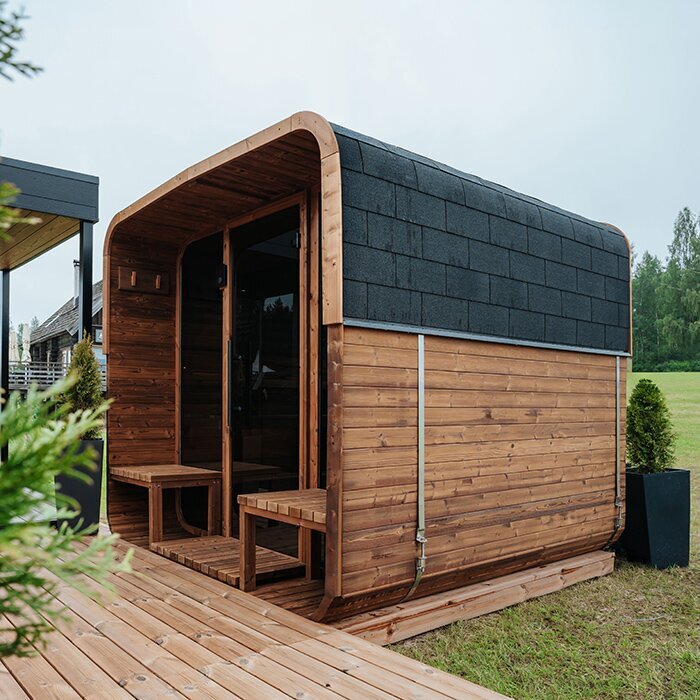
Use those priorities to decide between the actual products, rather than choosing a timber label first and trying to make the site or care routine fit afterwards. If the Thermowood Barrel Sauna S-140 is on your shortlist, consider its specified exterior use, expected appearance and maintenance requirements together, then assess the untreated alternative against the same priorities. Neither label automatically identifies the lower-maintenance choice. A preference for Thermowood does not resolve a mismatch with the proposed placement, just as a preference for natural weathering does not establish that an untreated exterior may be left bare. Choose the option whose stated requirements you can accommodate.
What to confirm before placing an order
Before ordering, confirm the exact model and configuration, then ask which exterior parts are Thermowood, untreated timber or another material. Check whether a finish is included, whether any treatment is applied after delivery, and which manual covers installation and exterior care. Ask for the written timber specification and clarify whether the maintenance guidance applies to every exposed surface. These details matter if the catalogue title or photographs show a general product family rather than the precise configuration being supplied. Keep the product information and care instructions with your purchase records.
Check that the maker’s placement instructions cover the conditions at your planned site, including any stated clearances or drainage requirements. If the documents leave questions about installation, structure or exposure, ask the supplier or a qualified installer to review the situation rather than guessing or altering the product. Confirm current local availability and the configuration offered at the time of purchase; do not assume that every option shown in an image is included. A clear written answer about timber, finish and care is more useful than an unqualified claim that one material is best.
Frequently asked questions
Is Thermowood waterproof?
No. Thermal modification is not a waterproof coating, and it does not remove the effects of rain, sunlight or moisture at joints. Ask for the exact timber specification, exterior-use guidance and details of any separate finish. Follow the sauna maker’s instructions for the complete construction.
What does untreated timber mean?
The term may mean no preservative treatment, no heat modification or no surface coating. Ask which treatments and finishes are absent, and whether anything will be applied after delivery. Drying and machining are separate questions, so do not assume that “untreated” means unseasoned or completely bare.
Can untreated timber be used for an outdoor sauna?
It may be suitable if the manufacturer specifies that the particular timber and construction are intended for the exposure. Check the care instructions and any finish requirements against the conditions at your site. The word “untreated” alone cannot confirm suitability.
Does Thermowood need an exterior coating?
There is no answer that applies to every product. The manufacturer may specify an uncoated finish, recommend a coating for appearance, or give other care instructions. Check the exact model’s manual, and use products only on the surfaces and in the way the manufacturer specifies.
Which option lasts longer outdoors?
The material name alone cannot settle that. Species, treatment, construction, exposure, finish and maintenance all affect outdoor performance. Compare documentation for the exact timber and intended use, and be wary of a general lifespan claim that does not identify the product and conditions.
Thermowood and untreated timber are meaningful choices only when their terms are defined for the exact sauna. The comparison that matters is the exterior material and treatment, the manufacturer’s exposure guidance, the finish system and the maintenance you are prepared to carry out. A Thermowood label is not proof of a particular lifespan or coating, and untreated timber is not automatically unsuitable. Let the written specification and the conditions around the planned site settle the choice, rather than relying on a general claim that one material always wins.
