
Traditional vs Infrared Sauna: Choosing Your Experience
SAUNA BUYING GUIDE
Traditional and infrared saunas can both provide an enclosed warm space, but they create heat in different ways. In a traditional sauna, a heater warms the room and stones; in an infrared sauna, radiant emitters are the main source of warmth. That changes how a session feels, which equipment needs comparing and what must be confirmed before buying. The useful question is not which label sounds more impressive, but whether you prefer heated air with an optional water-on-stones ritual or direct radiant warmth, and whether the exact cabin and installation fit your home.
The main difference is how each sauna produces warmth
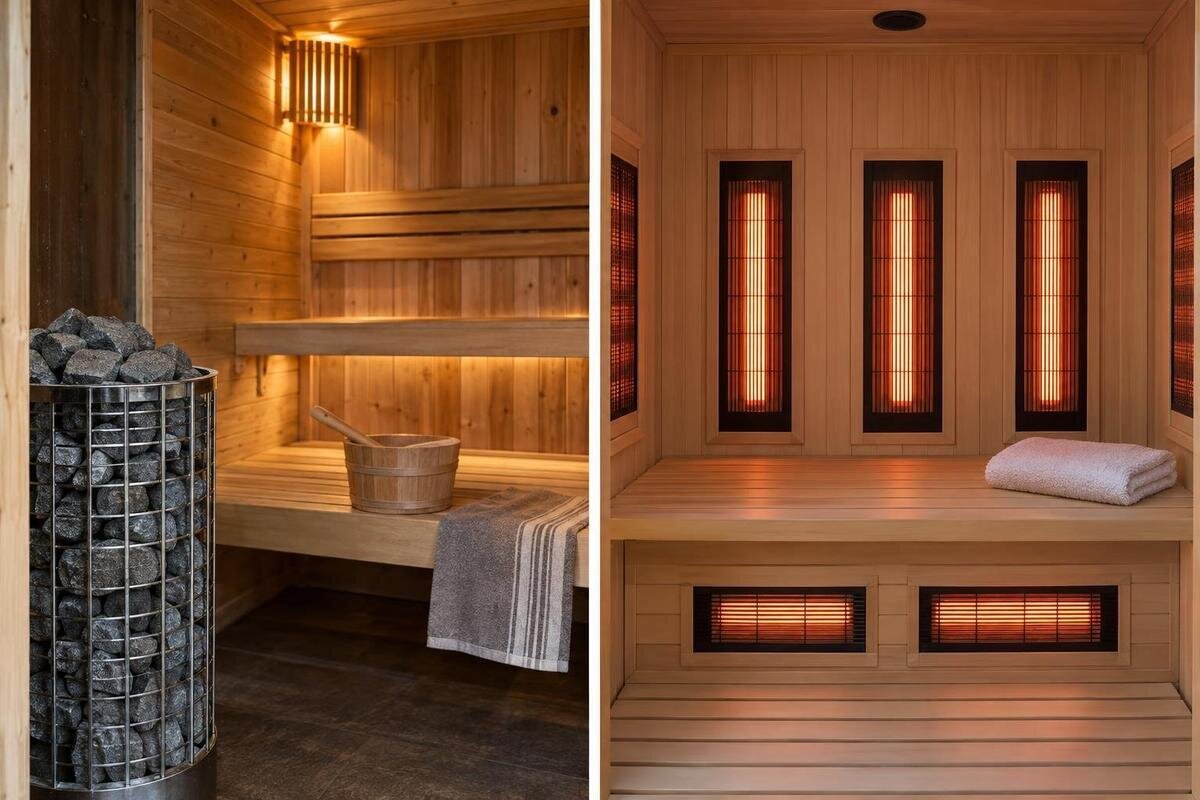
The main distinction is the route by which heat reaches you. A traditional sauna normally has a heater that warms sauna stones and the air around them. An infrared sauna uses emitters that radiate warmth towards people and nearby interior surfaces; the cabin air can warm too, but it is not the primary mechanism. Both are enclosed sauna experiences, yet one centres on a heated room and the other on radiant heat. That difference is more useful than appearance: a timber cabin, rounded profile or product photograph cannot tell you which system is fitted. Begin any comparison with the heater description for the exact model.
The category names are broad, not complete technical specifications. The word traditional tells you neither whether the heater is electric or wood-fired nor whether the controls, stones or other equipment are supplied. Infrared does not identify the emitter type or position, how the controls work or what is included. A product summary may leave these details to a separate manual or drawing. Look for the exact model code, a technical sheet, an operating manual, a dimensioned plan and an inclusions list. A manual tied to the model code is more useful than a generic brochure for a whole range. If the documents describe a different configuration from the listing, ask which version is available before comparing it with another sauna.
Traditional saunas heat stones and the surrounding air
With a conventional sauna heater, the unit warms the stones and the surrounding cabin air. You experience heat across the room and from the surfaces inside it, rather than only in the direction of a panel. Seat position, air circulation and cabin design all influence how even the warmth feels. The cabin also needs time to reach its operating condition, but there is no single reliable warm-up figure for every sauna: the heater, construction, ventilation and outside conditions matter. Use the selected model's manual for its operating sequence and readiness guidance instead of treating a general online estimate as a promise. A stated warm-up period is useful only when it applies to the configuration you are considering and the manufacturer's definition of readiness.
Some traditional heaters are designed for water to be poured over hot stones. That can briefly raise humidity and change the feel of the heat; it is an optional part of the experience, not something to assume from the word sauna. Use water only if the manufacturer permits it for that heater and explains how. A wood-fired model adds fuel handling and flue planning to the heated-room experience, while an electric model has a different energy and connection profile. The heating method can therefore be traditional in either case even though setup and day-to-day practicalities differ. Check the relevant manual before treating stones or a water ritual as part of a package.
Infrared saunas use radiant emitters
An infrared sauna uses electric emitters to produce radiant warmth directed towards occupants and the cabin's interior surfaces. The air may warm during use, but the design does not depend on a hot-stone heater to heat the whole room as its primary method. The sensation may feel more direct and less like being surrounded by uniformly warmed air, although that is not a guarantee about every model. Emitter position, bench layout, cabin construction and control settings all affect what you notice. When comparing controls, check what each display measures; readings from different systems may not describe the same conditions.
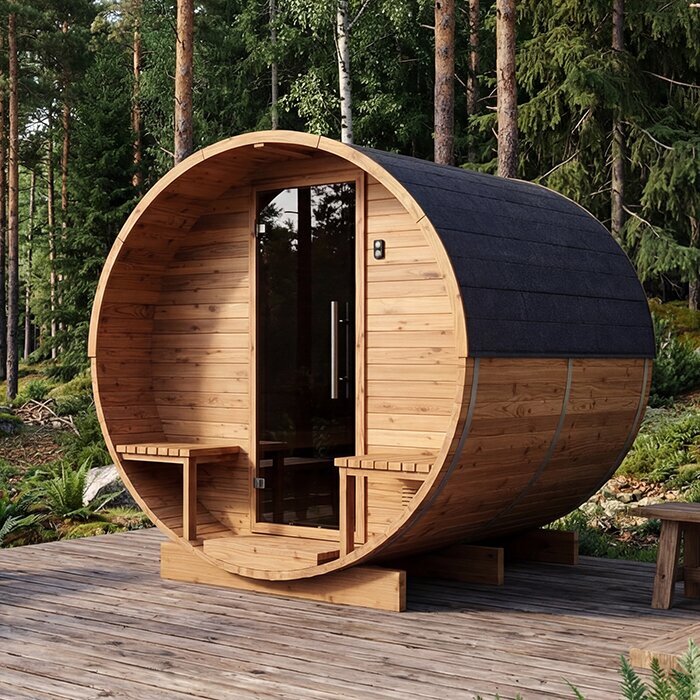
A timber cabin or barrel shape does not identify the heating system inside it. For example, the Thermowood Barrel Sauna N-210 name identifies a catalogue model, but does not establish whether it uses a traditional heater or infrared emitters. To classify a candidate correctly, look for a description of the actual heating equipment and its configuration. For an infrared option, that means identifying the emitters and their positions, rather than assuming that a cabin photograph shows the complete system. If the heating method is unclear, ask the supplier to confirm it before including the model in your comparison.
The session feels different in each type
With a traditional sauna, the heated air and warm surfaces form much of the experience. If the heater allows water on its stones, you can also choose whether a temporary rise in humidity is part of the session. That offers a particular atmosphere, but it does not make the cabin a steam room. You may prefer the ritual and changing sensation, or prefer a steady dry heat without it. Focus on the experience you want rather than assuming traditional guarantees a particular intensity, temperature or length of session. Humidity, airflow and how long the room has been running can all affect what you notice, as can your position in the cabin.
Infrared places more emphasis on the areas reached by the emitters; the warmth can feel different depending on where you sit and how the panels face the bench. An interior view or technical drawing can help you understand that relationship, whereas an exterior photograph cannot. When considering the Thermowood Barrel Sauna N-250, establish its heating method and bench arrangement before drawing conclusions about the experience. A model name cannot tell you how a session will feel. If demonstrations are available, trying both heating types can help clarify your preference. Distinguish your impression of the demonstration model from the equipment and layout of the model you intend to buy.
Compare the heater, controls and package contents
Traditional systems involve more than a box labelled heater. Compare the energy source, the heater itself, approved stones, control method and any sensor or accessories listed. Check whether stones are supplied or need to be sourced separately, whether controls are integrated or separate, and where they are located. The manufacturer's instructions should also cover ventilation and maintenance. Electric and wood-fired systems call for different site planning; with wood-fired equipment, ask a qualified installer about the flue and clearances for that exact appliance. These are practical differences rather than proof that one arrangement is superior. Do not assume a traditional model is wood-fired, or that a heater shown in a photograph is included.
Infrared systems need a clear account of their emitters, controller, sensors or safety controls, electrical connections and any separate parts required for operation. Confirm whether you are looking at a complete system or a cabin that needs other equipment sourced separately. When reviewing the LC-260 sauna package details, separate the cabin from any heating equipment or accessories included in the offer; the model name does not establish those contents. Record what is included, what is optional and what must be bought separately. Also ask who handles servicing. A complete traditional package and an infrared cabin-only package are not like-for-like, even if their product descriptions appear similar.
Check seating, dimensions and access
Heating method does not tell you how many people will sit comfortably. Assess usable bench length and depth, the seating arrangement, headroom, door opening and surrounding space against the needs of the people who will use the sauna. A floor-area figure alone will not show whether the bench suits your preferred posture or whether the entry feels convenient. Use a dimensioned drawing and check what each measurement describes: the outside footprint, internal space or a different component. Both traditional and infrared models need sufficient space for users to enter, sit and reach the controls without awkward movement. Consider the approach to the cabin as well as access through its door.
Use the plan for the precise model code and configuration, not an image of a similar sauna. If you are considering the HCF-300 sauna, use its own dimensioned drawing to assess usable seating, door position and the space occupied by the heating equipment. These details help distinguish the cabin's overall size from the space available to users. If the plan omits an interior measurement or seating view, identify the missing detail before deciding that it suits your household. Check any optional layouts separately rather than transferring measurements between them. This establishes whether the layout fits your needs, independently of which heating experience you prefer.
Choose around the routine you want
Think about the session you want to repeat, not only the first impression of a brochure. If the appeal is sitting in a warmed room, noticing the stones and choosing whether to introduce humidity where permitted, a traditional model may match that preference. If you want radiant warmth to be the main feature and are not looking for a stones-and-water ritual, infrared may be worth exploring. Neither description guarantees a particular sensation: bench position, air movement, controls and individual preference all matter. This is a choice about comfort, routine and equipment, not a promised outcome for health or fitness. Consider whether the manufacturer's warm-up guidance also fits the time you expect to set aside.
Consider who will use the sauna and how a session will fit into the household routine. A solo user may prioritise a comfortable seat and straightforward controls; a shared session makes the bench arrangement, entry and room to move more important. For a candidate such as the LCF-300 sauna model, assess the seating layout and heater specification against those priorities rather than assuming a capacity or experience from the name. Discuss differing preferences before ordering, including whether the appeal lies in heated air and stones or radiant warmth. Separate the features everyone needs from individual preferences, so an attractive cabin does not overshadow a mismatch in the experience you want.
Compare running costs from model data
Running costs need to be compared from the actual equipment and likely use, not broad claims that infrared is always cheaper or traditional always uses more power. Check the rated input for the exact configuration; warm-up time, cabin construction, ventilation, frequency of use and session length also influence energy use. For a wood-fired model, include fuel and any electrical use rather than applying a simple electricity-only calculation. Your current electricity tariff affects the result too. No responsible estimate is possible from the category name alone, so use the same session frequency and duration assumptions when comparing two options.
Request the manufacturer's electrical data, operating guidance and any published consumption information for the exact configuration. Before purchase or installation, have a qualified professional assess the electrical requirements; another model's figures cannot establish circuit suitability. If you are comparing the S-140 sauna option, first identify the heater and configuration to which any energy estimate applies. Keep purchase and installation costs separate from ongoing use, and include fuel if the system is wood-fired. Label estimates clearly with their assumptions. Where consumption figures are missing or use different assumptions, leave the cost comparison open rather than presenting an unsupported saving.
Confirm site and installation requirements
Traditional and infrared equipment raise different questions about the room and its services. Check the manufacturer's requirements for electrical supply, clearances, ventilation, the floor, moisture exposure and maintenance access. A wood-burning heater also needs flue and fire-safety planning for that exact appliance and site. Infrared units still have electrical and cabin requirements; a lower air temperature does not make them suitable for every location or mean they can be connected without assessment. Details vary by model and property. Do not copy a generic installation diagram from another sauna; ask a qualified installer to review the manufacturer's instructions and the actual site conditions.
For a candidate such as the HC-150 sauna, establish who is responsible for each part of the installation. Use the model's drawing and assembly instructions to discuss how it will be moved into place, whether the intended base or room is ready, and who will fit and commission the heating equipment. Ask the supplier which work is included in the order and which trades you need to arrange separately. A suitably qualified professional can assess the site services and installation requirements. Resolve any gaps between the supplier's scope and the installer's responsibilities before ordering, so neither party assumes that the other is handling essential work.
Compare complete configurations side by side
Put the finalists into one comparison sheet. Record the heating method and energy source; the heater, stones or emitters included; controls; the manufacturer's operating and warm-up guidance; interior measurements and bench layout; site requirements; and who will handle installation. For running costs, note the rated input and the assumptions you use, without treating unlike figures as comparable. Keep a separate list of unanswered questions. If one supplier provides a drawing and contents list while another provides only a photograph and a headline, that difference is useful evidence about how confidently you can assess each option, not a detail to ignore.
Write one exact model identifier on each line and update it if the supplier offers a different configuration. If the HC-225 sauna model is a finalist, keep its current local configuration distinct from any alternatives discussed during the enquiry. Record the date and configuration associated with each answer so that a revised package does not get compared with an earlier offer. Ask the same questions of each supplier, and mark unclear details as unconfirmed rather than borrowing another model's specifications. The finished comparison should show both how each option matches your preferred session and what equipment you would actually receive.
Frequently asked questions
Is a traditional sauna the same as a steam room?
No. A traditional sauna heats the cabin air and stones; water may be used on the stones only where the heater manufacturer allows it, creating a temporary increase in humidity. A steam room is designed around a steam-filled environment. They differ in equipment and atmosphere, so do not assume a sauna can be operated as a steam room.
Does an infrared sauna heat the air?
Yes, the air in an infrared cabin can warm. The defining difference is that infrared emitters provide radiant warmth as the main heating method, rather than a hot-stone heater warming the room as the central feature. How much the air warms, and how the session feels, depends on the model. Check its manufacturer description, controls and operating manual.
Which type costs less to run?
There is no reliable universal winner. Use the rated input for the exact heater or emitter configuration and a realistic pattern of use, including warm-up, session frequency and duration. Include current electricity costs, and fuel costs for wood-fired equipment. If figures are missing or cannot be compared, do not turn broad marketing language into a promised saving.
Can I pour water on the stones in any sauna?
No. Water is appropriate only when the specific heater and sauna design allow it. A traditional heater with stones may permit water, but instructions vary; infrared emitters do not mean stones are present or that water is safe. Follow the exact product manual, and ask the supplier if the instructions do not clearly address it.
Does traditional mean that the sauna is wood-fired?
No. Traditional usually describes a sauna experience centred on heated air and stones, not a particular fuel. Depending on the model, the heater may be electric or wood-fired. Check the exact heater, energy source, controls and installation instructions; the word traditional alone does not tell you which equipment is included.
Choose traditional if the heated air, stones and optional water ritual are what you want to experience. Investigate infrared if radiant warmth is the main draw. Then test that preference against an exact model's equipment, controls, seating and installation requirements. The labels are a useful first filter, not a complete specification. A sound decision comes from comparing documented configurations and being comfortable with how each would fit your routine.
