
How to Choose a Sauna for a Weekend Holiday Home
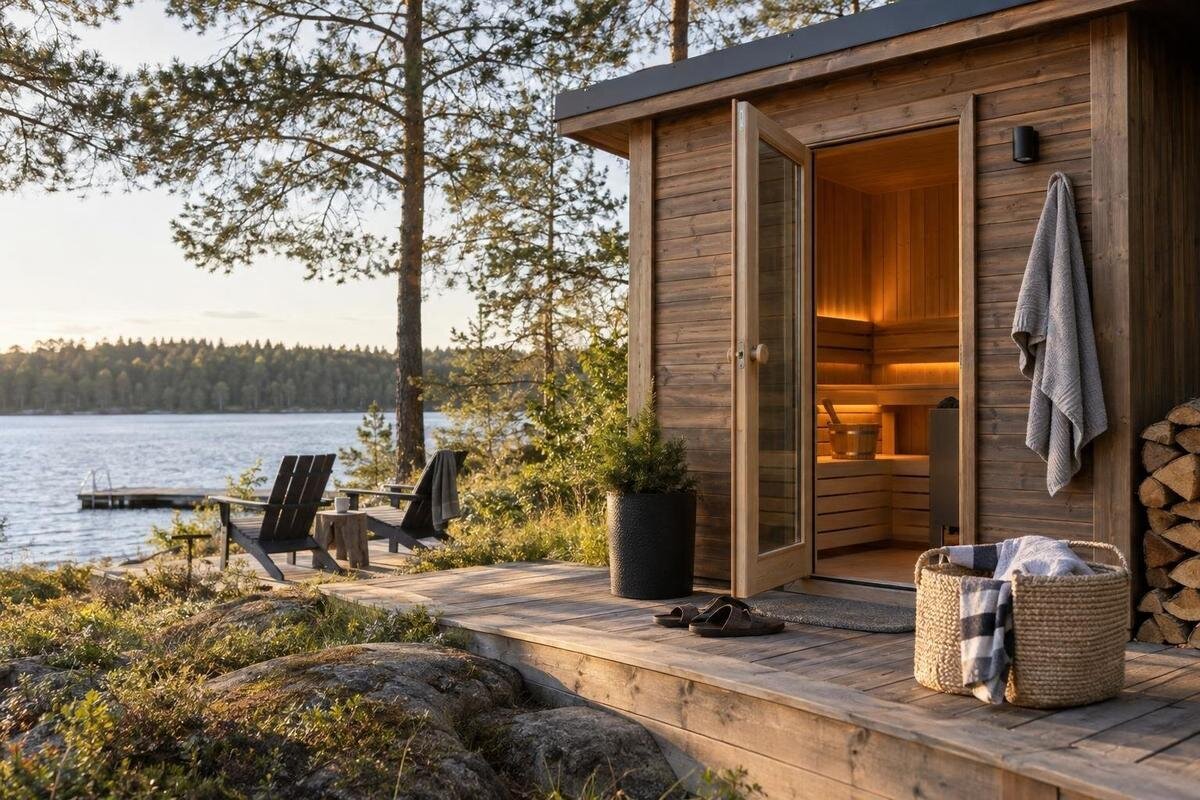
Weekend holiday home sauna
At a weekend holiday home, a sauna may be used for a few hours and then left unused for days. The buying decision therefore has to cover both the visit and the vacant interval: who starts it, how long arrival preparation takes, how it is shut down, and who checks the property before the next stay. Do not assume that a timer or app makes unattended preheating suitable. Unless the manufacturer approves the exact control setup and a qualified installer confirms it, plan to operate the sauna only when someone is present and following its instructions.
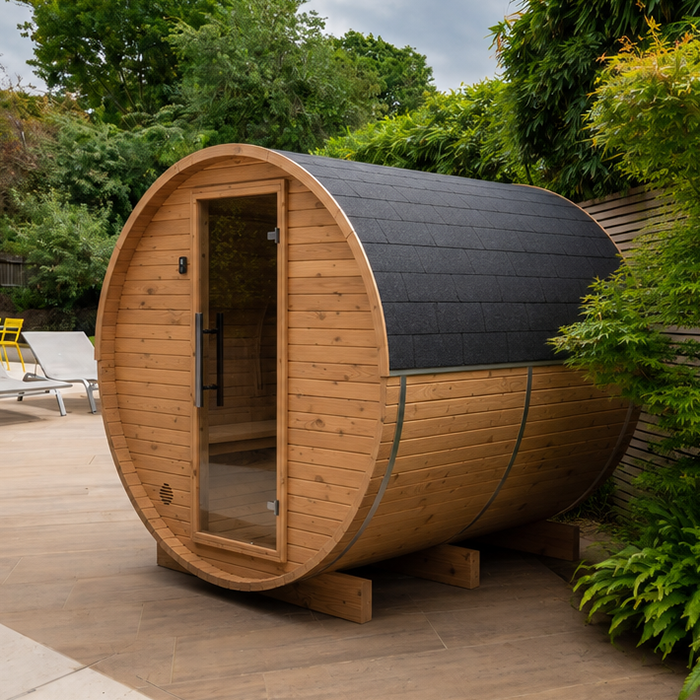
Plan for a cold start and an empty house
Weekend-only occupancy changes what ready to use means. A sauna that is cold when you arrive is different from one already heated, and the second outcome depends on the heater, controller, installation and operating instructions. A product name, timer or app feature cannot establish that the unit may run while the holiday home is empty. Unless the manufacturer confirms that the exact configuration is suitable for unattended preheating, plan an on-site start with a person present and following the manual. Remote control is not a substitute for approved operating guidance or someone able to respond.
Describe a normal visit before comparing models: how often you expect to come, what time you usually arrive, how many people may use the sauna at once, and whether you have one evening or several days. A short stay can make preparation a large part of the outing; a longer one may allow a more relaxed start, but still needs a defined shutdown before departure. Decide who will operate the sauna if the usual host is delayed or another adult is asked to help. If the workable plan depends on an empty building warming itself, the operating arrangement is not yet settled.
Match the sauna to the people and available space
Count simultaneous users, not the maximum number of people who might sleep at the holiday home. Compare the seating arrangement shown on the maker’s drawing with how your household expects to use it. Will everyone want to use the sauna together, or would separate sessions suit your weekends? The Thermowood Barrel Sauna S-140 is listed at 1.93 m². Check what that figure measures and whether other models use the same basis before comparing them. Ask for usable internal dimensions and the manufacturer’s stated capacity rather than translating square metres into a people count. If separate sessions are part of your plan, include them in the time available during a short stay. A model that accommodates your intended group and routine is a more useful choice than one selected simply because its listed area seems sufficient.
Measure the intended site and the space needed to reach and use the sauna, not just the area it appears to occupy in a photograph. Account for access around the unit, the opening direction of doors, the route in and out, and room for any changing or towel-storage area you want nearby. Confirm whether those extra functions are part of the chosen configuration or need a separate space. A drawing can help you compare the building, the approach and the usable area; a product’s listed area by itself cannot show whether the whole arrangement will fit comfortably.
Check the delivery route and installation site
Trace the route from the delivery vehicle to the final position. Measure gates, narrow paths and turning points, and look for steps, overhead branches or other obstacles that could affect access. Ask how the sauna is delivered and whether it is assembled on site; do not assume that the finished product photograph shows the size or shape of the delivered components. The route also needs enough working space for the planned assembly. Finding an access problem after delivery can complicate a weekend project and leave you without a clear way to proceed.
Obtain the model-specific drawing and installation manual before deciding where it will go. Confirm the required prepared base, clearances, drainage and exposure conditions with the manufacturer or supplier, then involve a qualified installer where the site or services require professional assessment. For the Thermowood Barrel Sauna HC-150, listed at 2.97 m², request the external dimensions and delivery details separately from the catalogue area figure. Mark the proposed position and delivery route on the same site sketch so you can discuss both with the supplier. Include any narrow point already identified rather than asking only whether delivery is possible. Establish which preparations must be finished before delivery and who will arrange them. This makes it easier to plan work around visits to the holiday home without treating the first available weekend as a guaranteed installation date.
Allow time for preparation on arrival
A weekend plan should allow for the sauna to be unheated when you arrive. Ask the supplier for the manufacturer’s guidance on preparation and heating time for the exact configuration, and find out what conditions that guidance assumes. Do not rely on a general estimate for a different heater or setup. If your arrival is late, decide whether you are willing to wait, use the sauna on a later day, or choose a routine that does not make the first evening depend on a rapid start. There is no need to promise yourself an arrival-day session the equipment may not be ready to provide.
Make an arrival routine that starts with the relevant instructions and a check of the area and controls before operation. When considering the Thermowood Barrel Sauna HC-225, listed at 4.4 m², ask about preparation for its exact heater configuration; the area figure is not a guide to heating time. Separate the time needed to open and check the property from the preparation and heating time described by the maker. That gives you a clearer picture of when a session could fit, without assuming all arrival tasks can happen at once. The person responsible must remain available as required by the operating instructions. Keep those instructions at the property, and make sure anyone helping knows where to find them. If arrival is delayed, have an agreed alternative, such as using the sauna the following day, rather than rushing the checks.
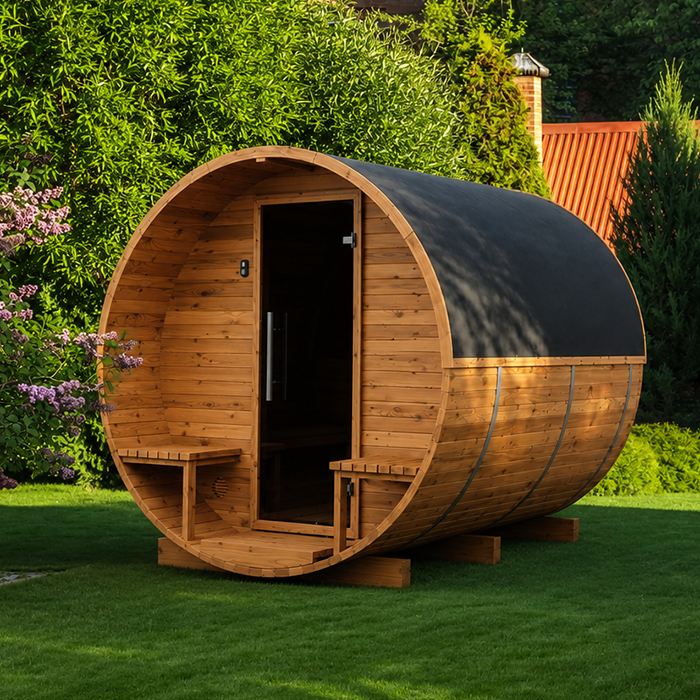
Confirm what the controls can and cannot do
Treat remote monitoring, remote adjustment and remote starting as different functions. A display or app that reports a status does not necessarily mean the heater can be started from elsewhere, and remote starting does not by itself establish that unattended operation is approved. Ask the manufacturer to confirm the exact heater and control combination, what functions it supports, and whether someone must be present while it operates. Get the answer for the proposed configuration rather than assuming that a feature shown for another model applies to the one you are considering.
Find out what happens if the property loses power or its internet connection, and what the normal manual fallback is. For the Thermowood Barrel Sauna N-210, listed at 4.43 m², ask the supplier to identify the supplied controls and their functions as part of the quotation. Keep that information separate from the model’s dimensions and area so that a comparison of size does not become an assumption about controls. Ask how you would recognise a lost connection, what information would remain available, and what action the instructions require before operation resumes. Have a qualified installer explain any required setup and anything the owner needs to understand about normal operation. Do not add an unapproved timer or change controls yourself to create a remote-start function. If the system’s permitted use is unclear, plan for an on-site start.
Build a shutdown routine around the manual
Before buying, establish how the sauna is meant to be left after each use. The shutdown routine should come from the instructions for the specific heater and controls, not from a generic checklist or the assumption that a timer will stop everything. Write down the steps, including what to do if a session is interrupted or a control shows an unexpected status. The person using the sauna should remain present as required by the instructions and complete the prescribed shutdown before leaving the property. Avoid inventing a cooling, ventilation or switch-off sequence when the model’s manual has not been checked.
When comparing the Thermowood Barrel Sauna N-250, listed at 5.27 m², include its shutdown requirements in your purchase questions alongside size and layout. Confirm the instructions for the exact heater and configuration, then keep them where the person responsible can find them. Work backwards from your usual departure time: will the final session leave enough time to complete the prescribed routine without rushing? Agree who is accountable for checking the final state, especially if several adults use the property or leave at different times. Do not let responsibility depend on an assumption that the last person out has dealt with everything. A brief written record can show who completed the routine and flag an unresolved fault for the next visit. Keep that record specific to the actual instructions rather than creating a second, potentially conflicting shutdown procedure.
Plan for the days the property is empty
The sauna may be unused for several days after each visit, so think about the property’s condition as well as the last session. Before departure, follow the sauna instructions and look over the surrounding area for visible damage, unusual moisture or anything that needs attention before the next use. Make a note of a concern rather than assuming it will resolve while the house is closed. Keep the planned access route clear, and decide who will be told if the property or sauna needs attention during the week. These are vacancy checks, not a substitute for the model’s maintenance instructions.
Assess the proposed location for the Thermowood Barrel Sauna LC-260, listed at 5.12 m², against the manufacturer’s siting instructions rather than its area alone. Check any requirements related to drainage, ventilation, weather exposure or a cover. Consider how the location can be checked during the days you are away: who can reach it, what surrounding areas need a look, and how a concern will be reported. Give that person a clear description of the chosen position and any issue already awaiting attention. Do not improvise a cover or enclosure unless the maker’s directions allow it. If conditions at the site raise questions about the prepared base or installation, resolve them with a qualified professional before use. Keep site observations separate from operating faults so the person dealing with a concern knows what needs attention.
Separate property monitoring from sauna control
A vacant-property check and a sauna control system have different jobs. Before relying on any monitoring, find out what the actual equipment can report and what it cannot: a status display, connection alert or camera is not the same as a physical inspection. Ask what will still be visible if the property’s power or internet connection is interrupted, and who will receive an alert. Do not assume that an alert will arrive, or that it will explain what has happened. Monitoring may help you notice an issue, but it cannot replace an agreed response from someone able to attend.
For the Thermowood Barrel Sauna HCF-300, listed at 6.89 m², confirm any supplied monitoring equipment separately from the sauna’s size and layout. Name a trusted person who can check the property if needed, and agree what should happen when you cannot answer an alert yourself. That arrangement needs to cover access to the property, access to the relevant instructions and a way to report what the person finds. Be clear about the limits of the task: someone checking the property should not be expected to diagnose or repair unfamiliar equipment. Decide how an unresolved concern will be passed to the appropriate supplier or professional. After a long gap or an alert, arrange a physical check before use rather than treating a reassuring app status as proof that the sauna and surrounding area have been inspected.
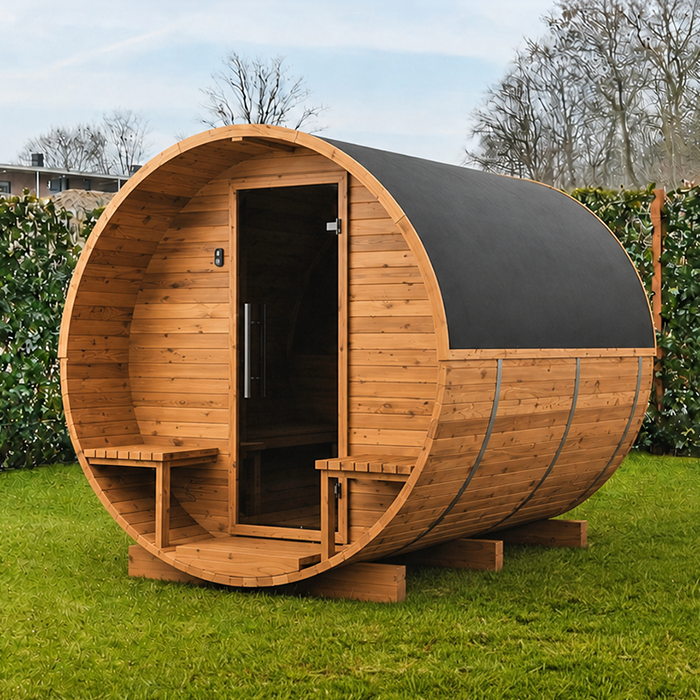
Estimate running costs from the actual setup
Estimate running costs from the actual heater and configuration, how often and how long it is used, the starting conditions and the energy tariff at the property. The Thermowood Barrel Sauna LCF-300 is listed at 6.89 m², but its area alone cannot establish energy consumption or cost. Ask the supplier for information relevant to the exact setup and use your own tariff when preparing an estimate. Describe a normal weekend rather than asking only for the cost of an unspecified session: include how many sessions you expect and whether they fall on one day or across the stay. Keep the assumptions beside the estimate so you can see what would change if your routine changes. Where heater or configuration details remain unconfirmed, leave the estimate provisional instead of filling the gap with a figure from a similarly sized model.
Separate costs that arise once from those associated with each visit. Installation, site preparation and delivery arrangements may need to be considered alongside heating, cleaning and the owner’s time; the applicable details depend on the property and the selected configuration. For intermittent use, a low number of sessions does not remove the time needed to prepare the sauna, operate it and complete the departure routine. A simple record of actual use and energy consumption after installation can make future estimates more realistic than relying on a broad catalogue comparison.
Confirm the supplied configuration before you buy
Ask for the current drawing and manual for the precise model and configuration you intend to order. Confirm the external dimensions, what the catalogue’s area figure measures, how the sauna is delivered, and which heater, controls and other components are included or optional. Check the stated operating and installation requirements with the supplier, and refer any site or electrical questions to a qualified professional. Product names identify a model; they do not, on their own, tell you what is included or what your property needs. Verify local availability and configuration before basing plans on a particular listing.
Test the purchase against an ordinary weekend: someone can arrive, prepare the sauna with enough time, operate it as instructed, complete the shutdown and arrange a check while the property is empty. Consider what happens if the usual operator is delayed or the connection fails, and decide on a practical fallback that does not depend on unconfirmed remote heating. If a key detail about the site, the controls or the shutdown remains unresolved, pause the choice until the supplier or a qualified professional clarifies it. A workable routine is as important as a model that appears to fit.
Frequently asked questions
Can I preheat the sauna remotely before I arrive?
Only if the manufacturer approves the exact heater, controls and installation for unattended preheating, and a qualified installer confirms that setup. An app or timer alone is not enough to establish this. If you cannot confirm it, plan to start the sauna in person.
Should I leave the sauna on between weekend visits?
Do not assume it can be left heating or held warm while the property is empty. Follow the instructions for the specific heater and controls, and complete the prescribed shutdown before leaving unless the manufacturer expressly approves another arrangement.
How do I choose the right size?
Base the choice on the number of people using it at one time, the seating layout and the space available at the property. Check what each catalogue area figure measures and compare it with a dimensioned drawing; a square-metre figure does not establish capacity.
What should I ask the supplier before ordering?
Request the model-specific drawing and manual, the exact heater and control configuration, what is included, and the installation requirements. Ask how much preparation time to allow and whether any proposed remote operation is approved for an empty property.
Who should check the sauna between visits?
Agree on a responsible person who can physically check the property and follow the relevant instructions. Do not rely on an app or alert as proof that the sauna or the surrounding area has been inspected.
A weekend sauna should fit the time you actually spend at the holiday home, including arrival preparation and departure checks. Choose using measured space, a suitable seating layout and confirmed model details, then make sure the operating routine works for the people who will carry it out. A practical choice leaves room for a delayed arrival, a change of operator or a postponed session without depending on unconfirmed remote heating. The aim is a sauna you can enjoy during your stay and leave in the prescribed condition when the weekend ends.
