
Estimating Wood-Fired Sauna Fuel Use and Costs
SAUNA RUNNING COSTS
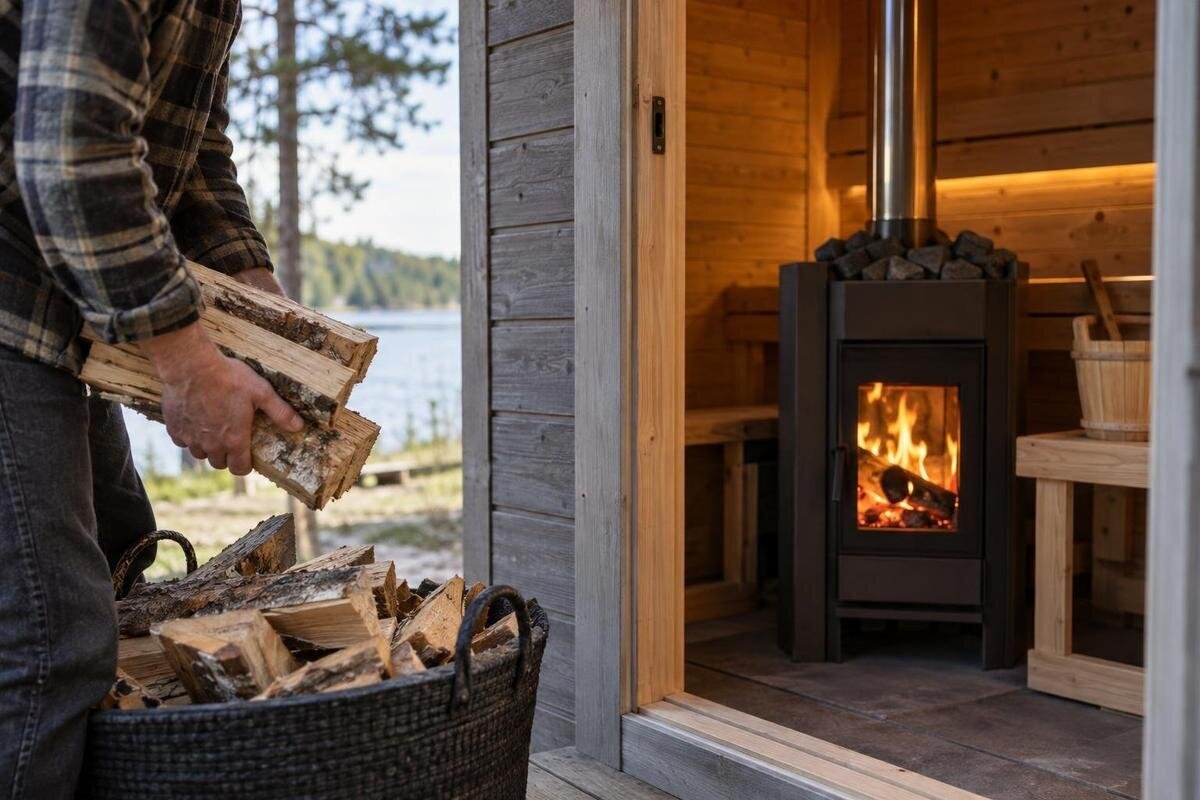
Wood-fired sauna fuel costs are easiest to estimate from the firewood you actually use, not a generic per-session figure. Weigh the wood used during a complete heat-up and sauna cycle, calculate the price per kilogram from your purchase or a current local quote, then multiply. Keep kindling, delivery and other extras visible rather than folding them in without explanation. A consistent record separates changes in firewood price from changes in consumption and gives you a more useful monthly budget.
Before you estimate 1
Choose what the cost includes
Decide whether you want the cost of firewood used per complete sauna session, the fuel portion of a monthly budget, or the cash required to buy a batch. These are related but not identical. A delivered load can cover several sessions, so charging its entire invoice to the first use confuses stock purchased with stock consumed. For a running-cost estimate, allocate the price to the quantity used; for cash-flow planning, record the full payment when it is made. Keep both numbers if you need to budget purchases as well as usage. A consistent boundary also makes later comparisons meaningful.
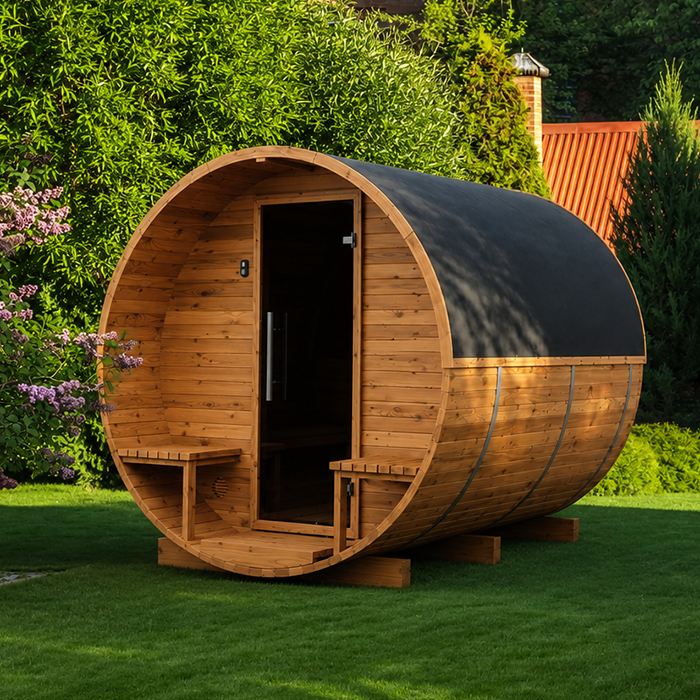
Set out what sits inside the fuel figure. You might show firewood alone, then list kindling and firelighters separately; alternatively, combine recurring fuel items and label the result clearly. Include delivery only when it applies to the purchase, and state whether it is included. The cabin, heater, installation and site work belong in the initial project budget, not the per-session firewood calculation. If the Thermowood Barrel Sauna HCF-300 is in your plans, use the product name to label the cabin line; it is not a measured wood-use figure, and you still need to confirm the selected heater configuration.
Record the exact sauna and heater
Write down the exact cabin and heater combination: the sauna model, heater model, fuel type specified by the manufacturer, and whether the chosen configuration is actually wood-fired. Record any changes to the heater or operating arrangement instead of treating them as the same setup. Floor area can identify which cabin you mean, but it does not tell you the mass of firewood for a session. In each test, note whether the sauna starts cold or remains warm, how long heating and use last, and any major operating difference. Record the supplier’s description of the wood or its condition where available, so you know what fuel the result describes.
The catalogue lists the Thermowood Barrel Sauna LCF-300 at 6.89 m², the same listed area as the HCF-300. That similarity does not establish that the two have identical heaters, inclusions or fuel use. Before attaching a cost estimate to either cabin, confirm the selected configuration using its current product details and manufacturer documentation. Record the source and date for any stated consumption figure, including the conditions it assumes. If you cannot verify that a proposed setup is wood-fired, do not attach a wood-fuel budget to the cabin name alone.
Before you estimate 2
Measure a complete heating and use cycle
Choose a clear start and end for one session before collecting figures. Include the wood used from lighting and heat-up through the sauna use, along with any reloads during that same cycle. Do not stop at the point the space is ready if wood is still being used to maintain it. This gives you a cost per complete use, rather than a partial warm-up number. If you want to compare a cold start with a warm restart, keep them as separate categories; they have different starting conditions even when the bathing period looks similar. Make that distinction before calculating an average.
If the fire or warm cabin carries over between uses, define whether the test covers one continuous cycle or two separate cycles. Allocate the wood used accordingly so that it is not counted twice. A log can include the date, model and heater, starting condition, time spent heating and using the sauna, weight of wood used, and notes about unusual conditions. If the Thermowood Barrel Sauna S-140 is the cabin in the configuration you are evaluating, record its exact heater pairing with the first full test. Build a baseline for that setup rather than borrowing a rate from another model. Keep the session record separate from the cost of a stock purchase that will cover later uses.
Weigh the firewood consistently
Measure mass rather than counting logs. Pieces differ in size, so the same number of logs can represent different weights. A platform scale can weigh the container or basket before and after adding fuel; subtract the empty-container reading to find the net kilograms. If you record each load separately, add the weights of every load used during the defined cycle. Use the same scale and method each time, and write down the unit beside each reading. A weight recorded in kilograms can then be matched directly to a price per kilogram, without confusing log counts or bag counts with measured mass.
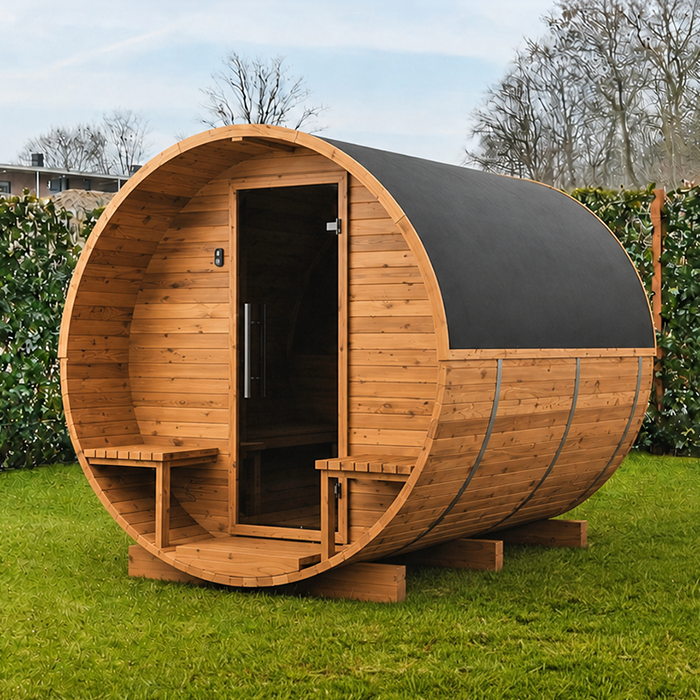
If weighing each load is impractical, measure the change in the stored supply over a set of complete cycles and divide the net withdrawal by the number of cycles. Keep untouched wood returned to the supply in your inventory, and do not charge a reused piece to two sessions. If other people use the same wood store for a fireplace or another heater, keep that fuel separate or measure the sauna’s allocation directly. The catalogue lists the Thermowood Barrel Sauna HC-150 at 2.97 m²; that area can help identify the cabin in your notes, but it is not a substitute for weighing fuel.
Before you estimate 3
Convert the local price to a usable unit
Match the seller’s price to the unit you measured. If firewood is sold by the bag and a net weight is given, divide the rand price by that weight to find the price per kilogram. If the net weight is not stated, weigh the usable delivery or ask the supplier for the quantity rather than assuming every bag contains the same amount. For a bulk load, divide the relevant amount paid by its measured usable weight. Add delivery to the calculation only if your chosen cost boundary includes it. Keep the purchase date, supplier, wood description, measured amount and fees together so that unlike loads are not confused later.
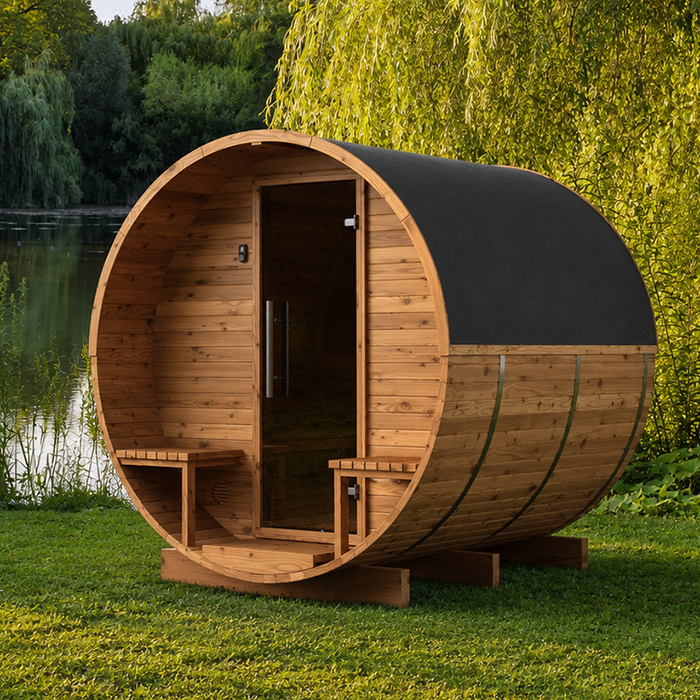
A quote by volume can be recorded as supplied, but do not turn loose or stacked volume into kilograms using a generic conversion. Packing method and wood condition can affect whether a conversion applies. Ask the seller for a measured weight or a conversion suited to that load, then use one unit throughout your calculation. If you use a complete bundle each time, its price can be a useful per-use measure; if you use only part of it, weigh that portion. If the Thermowood Barrel Sauna HC-225 is part of your plan, keep its cabin and heater costs separate from the firewood quote; the listed 4.4 m² area is not a fuel quantity or a delivered wood price.
Calculate the cost per session
Once the weight and price use the same unit, the calculation is straightforward. If a complete cycle uses m kilograms and your effective price is p rand per kilogram, the firewood cost for that cycle is m × p. The value of m should come from your own record, and p from the price you actually paid or a current local quote. Leave the variables as placeholders until you have those inputs. This avoids presenting a guessed quantity or price as a typical sauna figure. If kindling or delivery is outside your chosen scope, show it on a separate line rather than adding it without explanation.
For wood from several batches, use the rate attached to the batch consumed or calculate a weighted rate: total relevant rand paid divided by total usable kilograms received. This accounts for differences in delivery size rather than giving each batch’s unit price equal weight. For the Thermowood Barrel Sauna N-210, or any other cabin, model identity does not supply either m or p; use the measured fuel for its actual heater setup. When prices have changed, show the date range or separate older and current costs rather than blending them into one undated rate.
Before you estimate 4
Compare equivalent sessions
Compare sessions with similar boundaries and the same cabin and heater configuration. Starting condition, wood batch, time spent heating and using the sauna, and conditions around the cabin can all help explain differences in the amount issued. You do not need an elaborate scientific record: a date, weighed load, starting condition and short note about important changes make the calculation easier to interpret. Group unlike sessions instead of blending them. A longer cycle or one that starts cold can still be useful for planning, but it is not the same scenario as a shorter warm restart.
Calculate a cost for each comparable cycle, then report the observed average and range rather than implying one result is universal. If the log includes sessions using firewood bought at different prices, calculate each at the rate for its batch or show the price effect separately. If the Thermowood Barrel Sauna N-250 is a different candidate from the one you tested, its model name can help distinguish the setup, but it does not make another cabin’s measurements comparable. Do not assume wood heating is always cheaper; a comparison with another heater needs that system’s own measured energy use and local price on a consistent basis.
Project monthly and annual spend
To turn your records into a monthly or annual budget, use the number of sessions you genuinely expect rather than a generic household pattern. For a month, multiply the average cost per comparable session by your planned sessions; for a year, use the annual number you expect to have. If costs vary by season, starting condition or wood batch, show a range based on your own recorded use or prices. The result is a planning scenario, not a guaranteed bill, so update it when your routine or local quote changes. For cash-flow planning, also note when a load must be paid for, even if the wood will last beyond that month.
Keep the quantity and price assumptions visible beside the total: average kilograms per session, effective R/kg, expected session count and the dates covered by the price. That makes it clear which input needs updating when the supplier’s quote or your routine changes. Label the budget with the cabin and heater configuration, including the Thermowood Barrel Sauna LC-260 if that is your chosen model, so you can distinguish provisional estimates from later measured results. Retain the original assumptions when updating the budget; comparing them with actual use will show whether the difference came from fuel quantity, price or session count. Keep wood-only totals separate from kindling and delivery.
Before you estimate 5
Show variation and uncertainty
Explain what your observed range covers and what remains uncertain. A small set of sessions may describe one firewood batch and one routine well, without capturing cold starts, longer sessions or other variations in use. Label the period and conditions represented by the figures rather than presenting them as a guaranteed future requirement. If you have no measurements for a planned pattern of use, keep that assumption separate from the recorded results. This lets you distinguish an observed low or high cost from a provisional budget allowance, without making either appear more certain than the information supports.
Check the inputs before relying on a result: scale units and tare, net quantity delivered, usable fuel quantity, the applicable invoice or quote, and whether delivery is included. A missing weight, price date or session boundary can matter more than extra decimal places. Round the displayed answer to reflect the precision of your scale and quote, while keeping the underlying values so you can recalculate when the price of the next load changes. This is more useful than a precise-looking total based on an unverified conversion or a session you cannot describe.
Verify the configuration before relying on an estimate
Before buying, ask for the exact wood-fired heater model and how it is paired with the cabin, whether the heater and any firewood are included, and which manufacturer’s operating document applies to the chosen configuration. Ask for a fuel-use estimate only if the supplier or manufacturer states the heater and conditions behind it. Use that information as a cross-check, not as a replacement for your own measurements. A quote that names only a sauna model does not, by itself, tell you how much firewood a session will use. Keep the cabin, heater and fuel assumptions together in your budget notes.
Where heater compatibility, flue or installation requirements are unclear, rely on manufacturer documentation and a suitably qualified installer, not on a running-cost calculation or a photograph. You do not need installation instructions to price fuel, but an estimate is useful only for a configuration that has been properly specified. Obtain current local firewood prices in the unit you plan to track, and separate one-off setup costs from recurring fuel. Once the setup is settled, record its first complete cycles and use those measured results as your planning baseline.
Frequently asked questions
How do I calculate wood-fired sauna fuel cost per session?
Measure the firewood assigned to a complete heat-up-and-use cycle, then multiply its weight in kilograms by the price you pay per kilogram. Calculate that rate from the amount paid and the usable fuel received. Keep kindling and delivery separate unless you have chosen to include them in the total.
What if firewood is sold by the bag or load?
Use the net weight supplied or measure the usable wood yourself. Divide the relevant amount paid by that weight to get a comparable price per kilogram. If the quote gives a volume but no weight, ask the supplier for a suitable conversion rather than applying a generic volume-to-weight figure.
Can the sauna’s floor area tell me how much wood it will use?
No. Floor area helps identify a cabin, but it is not a firewood allowance. Fuel use depends on the confirmed heater configuration and the actual heating and use cycle. Base your estimate on measured fuel or a clearly qualified figure for the exact setup.
Should delivery, kindling and firelighters be included?
That depends on the question you are answering. For a firewood-only figure, show those items separately. For a broader recurring fuel cost, add the applicable amounts and label the total clearly. Use the same cost boundary whenever you compare sessions or suppliers.
How many sessions should I measure before projecting costs?
There is no universal number that suits every setup. Record enough complete, comparable cycles to see how your own use varies, and note different starting conditions or fuel batches. If the sessions differ substantially, group them separately or show a range instead of relying on one average.
Estimate from what leaves the wood store, not from a generic claim about sauna size: record complete cycles, use the price you actually pay per measured unit, and keep extras visible. The resulting R/session is useful only when its heater, cycle definition and price date are clear. Multiply a representative recorded cost by the sessions you expect, then revisit the figure when the fuel batch, setup or routine changes. That gives you a transparent working budget without assuming a fixed burn rate or that wood is automatically the cheaper option.
