
Greenhouse Temperature & Humidity Guide | Australia
Australia • Greenhouse climate guide • Bloomcabin Journal
Balancing greenhouse heat and moisture
Crop, season and day-cycle guidance for Australian growers, covering VPD, dew point, condensation, airflow, shade and well-positioned sensors.
Climate under cover
Rather than simply warming outdoor air, a greenhouse forms a compact climate that shifts continuously through the day.
Under sunlight, enclosed air may outpace outdoor temperatures rapidly, while transpiring plants release vapour. As evening arrives, leaves, glazing and aluminium framing lose heat; RH climbs and colder surfaces can meet the dew point. Australia spans tropical, temperate, coastal, inland and highland growing environments. Spring night chill deserves attention in cooler and elevated districts, whereas timely removal of solar gain is often the summer priority elsewhere.
Think in terms of interacting processes, not one thermostat reading. Heat governs photosynthesis, respiration, bloom development and fruit set; moisture affects water loss, nutrient movement, pollination, disease risk and droplets. Ventilation alters each leaf’s boundary layer, irrigation adds humidity, and shade changes air and foliage temperatures.
A home grower needs a resilient microclimate matched to what is planted. Seedlings and lettuce do not share the requirements of cucumbers, tomatoes or capsicums. Conditions also diverge between city blocks, warm plains, exposed gardens and higher ground.
Climate control should influence the greenhouse design from the outset. While browsing the Bloomcabin greenhouse range for Australia weigh practical vent area, internal height, air capacity and glazing as carefully as looks.
01 • Temperature
Which temperature works best under cover?
No single setting suits every crop. For a mixed domestic greenhouse, first separate cool-season plants from those that favour warmth. Spinach, lettuce and numerous seedlings thrive cooler than basil, eggplants, cucumbers, tomatoes, chillies and capsicums. Light levels and developmental stage also move the useful range.
Many warmth-loving vegetables are comfortable at roughly 20–27 °C by day and tolerate a modest drop after dark, but this is only a guide. Prolonged hot conditions can disrupt tomato fruit set, unsuitable daytime or overnight temperatures may make capsicums shed flowers, and excess warmth encourages lettuce to bolt.
Base the settings on the plants actually sharing the space. Leafy crops permit a cooler house, whereas basil, capsicums and tomatoes call for greater warmth. In mixed planting, create zones, leave enough room between plants and provide strong ventilation.
The better question
“What range lets this particular crop develop well without thermal or humidity stress?”
02 • Day and night
Why day and night temperatures need separate attention
Daylight powers photosynthesis, and direct sun may warm foliage beyond the ambient air. Darkness halts photosynthesis, although respiration carries on. Some difference between daytime and overnight temperatures is natural. Problems arise if cold nights suppress plant metabolism, or warm ones deny plants a recovery period.
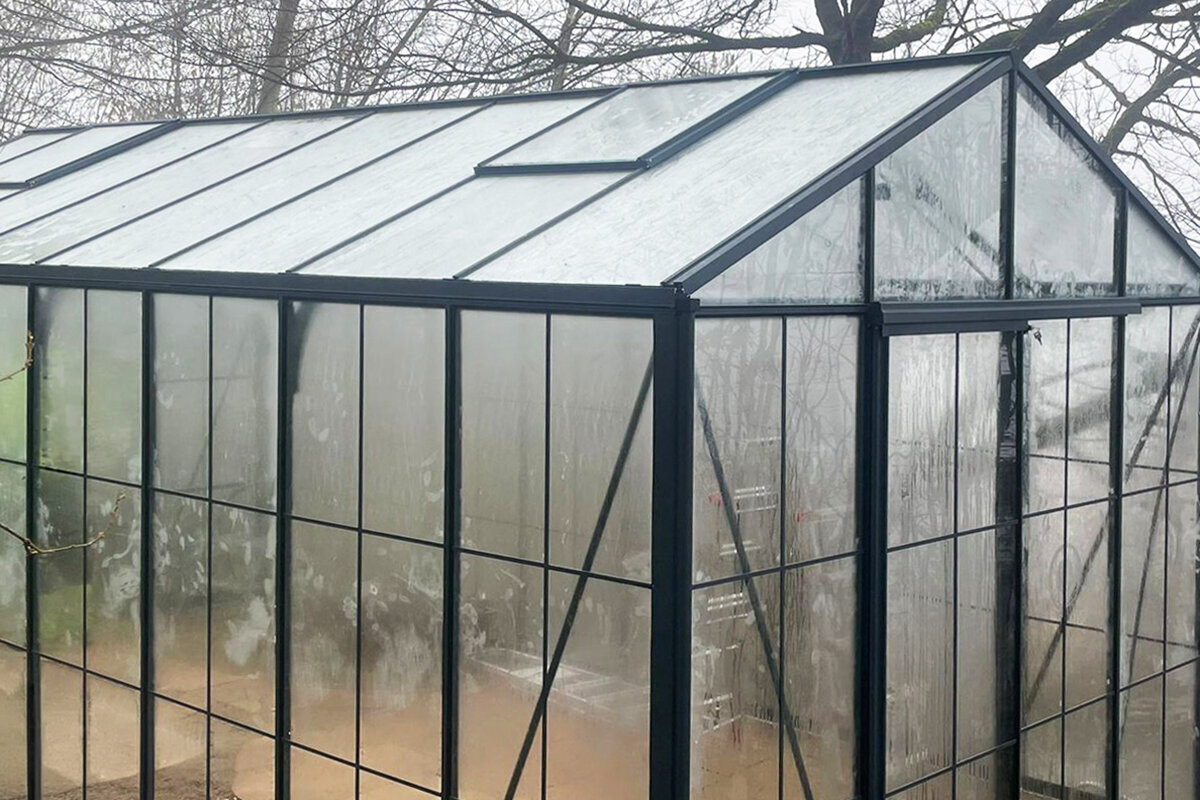
Radiant heat loss on a clear night can leave glazing and foliage colder than the sensor’s air reading. Condensation responds to those surfaces, so a leaf may hit dew point even when the measured air remains several degrees warmer.
Greenhouses soften overnight cold in cooler Australian districts, yet hot regions need structures that can shed summer warmth after sunset. Extra air volume slows change; a model such as the Bloomcabin Classic will behave differently from a tiny sealed structure.
Few instruments are as useful as a min–max thermometer or logger. One reading at noon can conceal the two records that often explain plant behaviour: the prior day’s peak and the lowest overnight value.
03 • Humidity
How should greenhouse humidity be managed?
Blanket humidity targets can mislead because RH moves with temperature. Heated air has room for more vapour than cooler air; if its actual water content remains steady while it cools, the relative figure climbs. Conditions that appear ordinary late in the day may approach saturation within hours.
Look within the foliage for the dampest air, rather than assuming it is near the doorway. Transpiration continually supplies vapour inside the canopy, where crowded leaves also impede circulation. A door-mounted hygrometer may seem reassuring while the air around tomato leaves is considerably wetter.
A useful operating band serves a mixed home greenhouse better than one supposedly perfect percentage. Dry air places stronger evaporative demand on plants and can wilt them. Too much moisture delays drying, interferes with pollination for some species, and favours both fungal infection and condensation.
Above all, prevent hours of near-saturated air, particularly through the night. Keeping foliage dry and air circulating generally protects plants from disease more effectively than holding RH to a precise hourly target.
04 • VPD
Using VPD to understand plant conditions
VPD, or vapour pressure deficit, measures the gap between moisture currently in the air and the maximum it could carry at that temperature. Unlike RH viewed by itself, this measure more directly reflects the atmospheric pull that drives evaporation from leaves.
When VPD is very low, moisture occupies much of the air’s capacity; transpiration eases and foliage stays damp longer. At the opposite extreme, a high VPD draws water away rapidly, demanding equally rapid replacement by roots. The appropriate middle ground changes with the species and its development.
This does not require professional greenhouse expertise. Temperature and RH readings from a sensor that also derives VPD or dew point will show the pattern. The essential distinction is that 70 % RH at 12 °C does not affect a plant as it does at 30 °C.
Put simply
RH tells you about air saturation; VPD indicates its potential to remove plant water.
Effective control therefore cannot rest on one measurement.
05 • Dew point
How dew point turns a seemingly dry afternoon into overnight condensation
At the dew point, air has cooled enough that some vapour must become liquid. Any leaf, metal member, pipe or pane falling below that temperature collects condensation, beginning on the chilliest surfaces. If cooling continues, droplets may also form throughout the crop canopy.
The consequence is not merely untidy glazing. Falling droplets splash growing medium and decaying material, while persistently damp foliage benefits Botrytis and other disease organisms. Sealing every opening at dusk in an effort to retain warmth may therefore worsen the moisture load.
Leaving the house fully open until morning is not the remedy. Instead, coordinate appropriate heating, short purges of humid air, circulation, early watering, floor hygiene and generous spacing.
A common misconception
“Ventilation is useless for drying when rain is falling outside.”
In fact, it may still dry the space. Saturated cool air can carry less actual water than warmer indoor air; after entry and reheating, its RH drops, allowing it to accept more moisture.
06 • Climate by crop
Practical starting points for greenhouse crops
Treat the table as an initial home-growing reference, not a professional prescription. Cultivar, plant age, available light, root-zone warmth and regional weather all shift the optimum, so the humidity entries offer management approaches rather than deceptive precision.
| Crop | Useful daytime range | Night approach | Humidity approach |
|---|---|---|---|
| Tomatoes | About 18–27 °C for strong growth; sustained heat above about 32 °C can reduce pollination and fruit set. | Allow a modest overnight drop, but avoid consistently cold or excessively warm nights during flowering. | Aim for moderate moisture, with neither night-time saturation nor persistent wet leaves. |
| Cucumbers | Warm; about 21–29 °C is useful for many home crops. | Provide enough warmth after dark to maintain growth. | Greater humidity is tolerated than by many species, provided air continues to circulate. |
| Capsicums and chillies | About 21–27 °C is a very workable range; extremes reduce fruit set. | Keep nights warm without maintaining excessive heat throughout flowering. | Use moderate moisture; curb very humid flowering conditions and condensation after dark. |
| Basil | Around 21–29 °C and warm conditions promote active growth. | Shield it from chilly nights because basil is sensitive to cold. | Moderate with good air movement; wet foliage encourages disease. |
| Lettuce | Many lettuces favour roughly 15–20 °C, well below typical summer heat. | Lower overnight temperatures usually help, unless they cause cold damage. | Prevent still, damp air and wet foliage. |
| Strawberries | Moderate temperatures; a broad range depends on variety and stage. | Cooler nights suit them well; avoid frost during flowering. | Keep flowers and fruit as dry as possible; air movement matters. |
| Seedlings | Crop-dependent; after germination, moderate rather than constant high heat. | Keep roots from chilling, and avoid warm nights when light is weak. | Extra moisture may aid germination; lower it once seedlings emerge. |
Match any crop temperature chart against trusted local horticultural guidance, then judge it by how your own plants respond.
07 • Seasons
Greenhouse temperature and humidity through Australian seasons
Spring
A few warm afternoon hours do not mean spring has settled. Monitor root-zone warmth and the overnight minimum, and begin venting early whenever the sun appears; a cool day can still produce a rapid temperature surge under glass. Australia’s regions behave differently. Frost-prone and elevated gardens may remain focused on cold nights, while growers in warmer zones may already need aggressive release of solar gain.
Summer
Overheating usually takes centre stage. Open vents widely before temperatures climb, maintain circulation and add shade through extended hot spells. Dry areas demand close attention to excessive VPD; humid areas instead face the difficult pairing of heat with high moisture.
Autumn
Moisture deserves greater attention as autumn progresses. Daytime warmth adds vapour, but sharp cooling after sunset lifts RH towards the dew point. As declining light slows water use, irrigate less, yet continue exchanging air during mild weather.
Winter
Low light makes winter management about more than warmth: growth and transpiration slow, while closed glazing keeps vapour indoors. Choose among frost exclusion, cool-season production and truly heated growing. Each objective calls for a distinct balance of ventilation and energy.
08 • Air exchange
Make ventilation your everyday climate-control system
By exchanging air, vents remove vapour and excess heat, replenish CO₂ and even out temperatures. Natural flow sends buoyant warm air through roof openings and draws cooler replacement air through doors or low vents. Fans may assist either exchange or mixing.
In domestic structures, roof openings, a door or low-level inlet, plus internal mixing generally outperform a lone small pane. A temperature-driven opener becomes particularly useful if sunshine reaches the greenhouse while everyone is away.
Prioritising climate control means assessing working vents and internal air capacity in designs such as the Prestige range and the lean-to greenhouse available from Bloomcabin.
Choosing among roof, side and door ventilation
Roof vents: allow buoyant heated air to escape efficiently.
Doors and low vents: admit replacement air and strengthen flow across the house.
Air-mixing fans: cannot provide outdoor exchange, but they smooth out damp, cold or overheated pockets.
Polytunnels: depend substantially on passive airflow, so generous openings matter greatly. A different cultivation option is the Bloomcabin polytunnel greenhouse.
09 • Heat control
Bringing greenhouse heat back under control
Vent first. Shade limits new solar gain but cannot expel warmth already stored, so use both methods together. During prolonged hot weather, shadecloth or solar-control glazing may protect seedlings, lettuce and fruit vulnerable to sunscald.
Root conditions also matter. Dark paving can drive black pots well beyond air temperature. Ease that load with larger containers, mulch, pale surfaces and consistent irrigation, and avoid stripping substantial foliage just before a heatwave.
Because compact structures respond rapidly, their air capacity is just as influential as model choice. Growers wanting steadier temperatures and extra room might examine the Bloomcabin Orangerie .
Cooling order
1. Vent through the roof and doorway before heat builds.
2. Increase air movement through the crop.
3. Add shading if solar input remains excessive.
4. Stabilise moisture and temperature around roots.
5. Move plants if the same zone repeatedly overheats.
10 • Humidity control
Reducing excess moisture without stressing the crop
Water early. Early irrigation leaves foliage, paths and other surfaces longer to dry.
Avoid standing water. Every puddle becomes another moisture source.
Maintain spacing. Dense crops create humid microclimates where disease begins.
Move the air. Steady circulation evens out temperatures and helps moisture evaporate.
Remove moisture in cool weather too. A brief exchange can replace humid warm air with outdoor air carrying less absolute moisture.
Keep vulnerable surfaces warmer than dew point where practical. Insulation, root-zone heat and circulating air limit cold spots.
Reduce late watering. Do not let wet foliage persist into the coldest hours.
Remove unnecessary plant material. Old leaves, weeds and overcrowding increase transpiration and block air.
11 • Measurement
Where should temperature and humidity sensors sit in a greenhouse?
Set the main instrument at crop-top level, where the relevant leaves sit. Keep it out of direct sun unless shielded from radiation, and away from heaters, doorways, fan outlets and roof openings.
One sensor often suits a very small greenhouse. Larger houses commonly have several climate zones: sunny and shaded sides, centre and edges, and dense foliage can differ. If one crop struggles in a corner, add a second data logger there.
With the space available in a Bloomcabin Orangerie multiple sensors help distinguish a sunny end, shaded section, central aisle and canopy-level conditions.
A useful kit records present temperature and RH, the day’s high and low, and preferably VPD or dew point. Logging reveals the speed and direction of shifts following sunrise, irrigation or a change in vent position.
12 • Common mistakes
Seven overlooked climate errors that can seriously affect a crop
1. Measuring only at middayHumidity often peaks before sunrise, temperatures bottom out overnight, and leaf stress may occur before the sensor response is noticed.
2. Sealing all openings at duskThis traps moisture gathered through the day. In a heated house, a brief managed purge may work better than locking saturated air indoors.
3. Using RH as an unchanging set pointBecause RH responds to temperature, interpret it alongside VPD or dew point.
4. Assuming wilt always means thirstExtreme heat can wilt a well-watered plant, so inspect root-zone moisture before irrigating again.
5. Overfilling the growing spaceA crowded canopy can be humid even when conditions feel comfortable in the walkway.
6. Leaving a sensor exposed to sunshineSunlight heats the instrument itself, producing a reading unlike the actual air temperature.
7. Planning only around typical conditionsPlan for an icy night, an abrupt bright morning and a heatwave afternoon—not merely the monthly mean.
13 • FAQ
Questions about greenhouse heat and moisture
At what point does greenhouse heat become excessive?
Crop tolerance sets the answer. For mixed vegetables, sustained conditions approaching 30–35 °C or more bring a marked increase in heat stress. Flowering and setting fruit commonly show damage before established foliage.
Is ventilation worthwhile during rain?
Frequently, especially where heating has left humid air enclosed. Saturated cool air outdoors may contain less water in absolute terms than the warmer interior; once that incoming air heats up, its RH declines and it gains drying capacity.
When does humidity become excessive?
Do not judge from RH alone. Risk escalates as air temperature nears dew point and foliage stays damp for hours. A brief maximum is generally less troublesome than conditions hovering close to saturation all night.
Is mechanical air movement necessary?
Powered circulation is optional in some small houses, but grows more useful as foliage thickens. Fans disturb still pockets; they cannot replace doors, roof openings or real ventilation outdoors.
Does extra greenhouse size simplify control?
A larger body of air usually warms and cools less abruptly than a miniature enclosure. Control still depends on opening area, glazing, orientation, wind and foliage density; inadequate vents can overheat even a substantial building.
A practical weekly routine
A five-minute climate check may avert problems lasting weeks
1. Write down the overnight minimum and yesterday’s maximum.
2. With two instruments, contrast RH in the aisle and among leaves.
3. Check glazing and leaves for condensation each morning.
4. Check whether each automatic opener moved at the intended times.
5. Test moisture around the roots before altering irrigation.
6. Read the crop itself: note dropped flowers, soft extension, curled leaves, wilt, spotting or delayed ripening.
For product-based planning, also visit these Australian Bloomcabin pages: Greenhouse category and Classic greenhouse.
A closing thought
Good greenhouse climate comes from a managed pattern, not one reading
Compared with an outdoor bed, a greenhouse gives far more influence over warmth, light, moisture and air movement. Yet the structure cannot manage these alone. Coordinate vents, doors, shade, irrigation, plant spacing, circulation and recorded observations.
Looking at peaks, lows, humidity direction, dew point and crop behaviour together encourages earlier decisions. Instead of responding after foliage wilts or glazing drips, remove the circumstances that would produce those symptoms.
Explore Bloomcabin greenhousesSources and further information
- LWG Bavaria — Guidance on compact greenhouses
- LWG Bavaria — Ventilating a mini-greenhouse
- LWG Bavaria — Diagnosing damage to greenhouse vegetables
- LWG Bavaria — Managing high humidity in compact greenhouses
- Wageningen UR — Greenhouse horticulture climate
Prepared for Australian home greenhouses, this article offers indicative crop ranges rather than fixed production settings. Adjust them for cultivar, development, site, structure, root conditions and the responses you observe.
