
Growing blueberries in a greenhouse
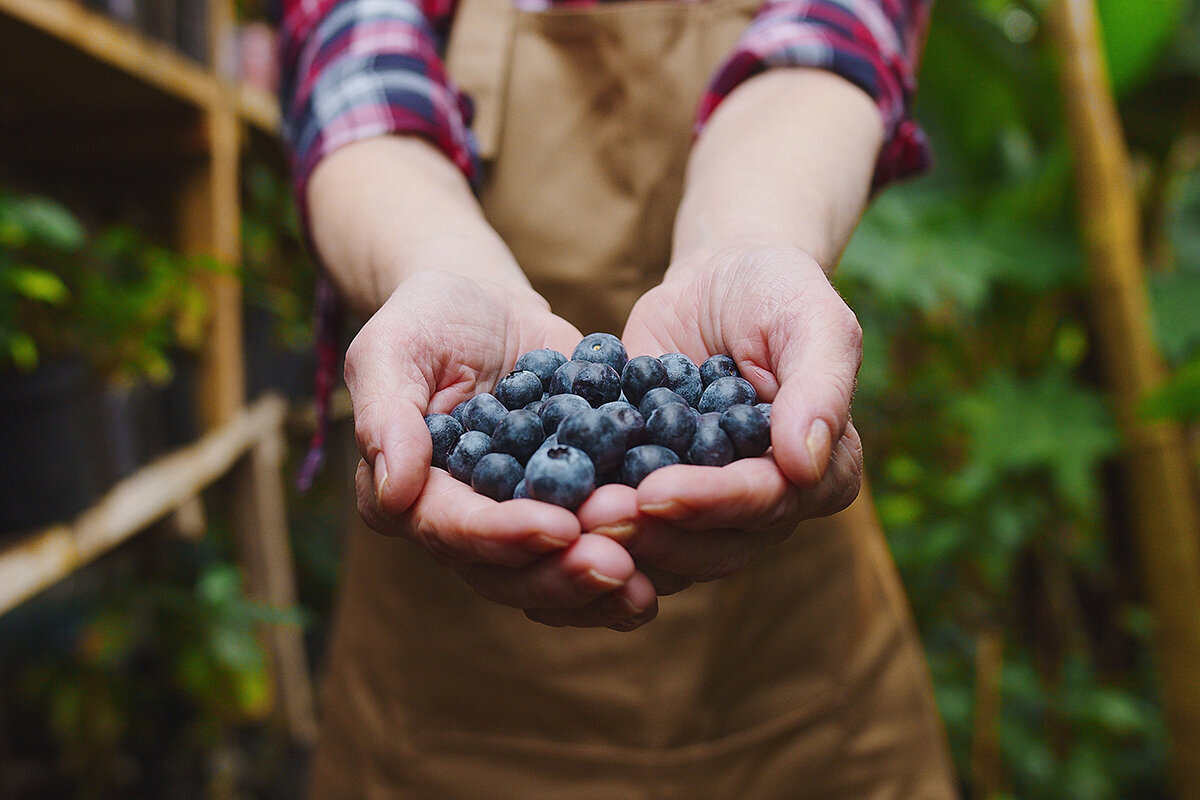
A monograph on berry bloom · Australia
Raising blueberries under greenhouse cover
A greenhouse offers blueberries shelter, an organised setting and closer control of the season. Their needs remain exacting: begin with a locally suitable hardy variety, deliberately establish an acidic root zone, and plan ventilation around successful pollination.
01 · The principle
Protected growing reveals every detail.
A blueberry bush may look self-sufficient, from its bell-like spring flowers to the silver bloom on each berry and delicate roots just below the medium. Greenhouse cultivation makes these features easy to monitor, but mistakes also become pronounced when the structure is managed merely as a warm enclosure.
Control is the real advantage. A pot can hold a carefully selected mix for acid-loving plants, avoiding the struggle of remaking ordinary garden soil that is often lime-rich. Overhead cover softens driving rain and wind while reducing some pressure from birds. Mulch, drip lines and a clear aisle simplify regular checks. Problems are also easier to spot: an excessively dry root ball, post-watering condensation, vents opened late, or flowers that insects have ignored.
Cover does not remove the need for winter dormancy. Each cultivated blueberry variety needs a certain amount of cold before dependable spring growth and flowering. Keeping a cool-climate Northern Highbush plant actively warm throughout winter may disrupt that cycle. Australian conditions vary widely, so match chilling needs to the district and seek low-chill cultivars in warmer regions. Where the chosen variety is sufficiently hardy, an unheated glasshouse, perhaps protected only from frost, generally suits it better than constant heating. It can limit cold wind, extreme wet and severe freezing of pots where these occur, then assist with frost management and routine care in spring. Before purchase, have a nursery familiar with the local climate confirm both hardiness and chilling needs.
For a lasting, orderly growing space, the Classic Aluminium Greenhouse creates a composed setting for cultivation centred on the roots, with space for broad containers, effective airflow, orderly irrigation and ready access to each plant. Include a level, stable base and drainage in the first plans. Roofing shelters the crop; the decisive work takes place below, in the medium.
02 · Let chemistry lead
Create acidity, then verify it.
The right blueberry medium combines low pH with lasting structure and ample pore space. In many home-growing situations, pH 4.0–5.0 works as a useful guide, while commercial substrate programs commonly allow the wider interval of pH 4.5–5.5. Precision does not mean chasing a favoured decimal. The practical goal is to stop the root zone becoming alkaline, because roots may then struggle to obtain iron and other nutrients even though those elements remain in the mix.
3.54.04.55.05.56.06.57.0
Blueberry working range: This marked acidic band illustrates why a deliberately prepared pot usually performs more predictably than an improvised hole in regular garden earth.
Use four checks for context
Analyse the irrigation supply. High-alkalinity water can slowly lift pH in a pot. When repeated tests show an upward trend, request hardness and alkalinity information from the water supplier or a capable laboratory instead of responding solely to a portable meter.
Assess the potting medium. Arrange a suitable substrate analysis or dependable test before planting and again at sensible intervals. Samples taken beside fertiliser granules can mislead, as can assuming that a dry outer edge represents conditions throughout the pot.
Interpret foliage conservatively. If young leaves turn yellow while their veins stay green, restricted iron uptake is one possibility. Similar signs arise from cold or injured roots, dry conditions, saturation and excess salts, so no single reading supplies a complete diagnosis.
Make measured adjustments. Avoid improvised remedies based on guesswork. Once a container mix has compacted or moved far from its intended chemistry, controlled replacement may be easier to manage than repeated attempts to acidify it. Examine water, drainage and medium first, then use test findings and the directions for an appropriate product to guide major changes.
Select a structurally stable, freely draining mix for rhododendrons or other acid-loving plants, with little or no lime. Coarse acidic bark can add pore space if the blend still holds moisture without remaining airless after irrigation. Leave out lime-rich soil, wood ash, mushroom compost and untested high-pH composts. When mapping the bench space, container row and water line, the Classic Aluminium Greenhouse can help clarify the available arrangement.
03 · Match partners, not labels
Start with climate, then compare bloom.
Do not purchase a cultivar until its suitability for the district is clear. In cooler parts of Australia, hardy Northern Highbush selections may provide a sound basis. Duke is early ripening, Bluecrop has a reputation as a reliable main-season cultivar, and Elizabeth can continue the crop towards late summer. Treat those descriptions as starting points rather than local recommendations: chilling need, cold tolerance, flowering dates and disease pressure all change with cultivar and site. Ask a specialist nursery experienced in your region to approve the final combination.
Indicative bloom timing
Early
Mid
Late
Overlap
Two distinct cultivars with genuinely compatible bloom periods often improve berry size, fruit set and the length of the picking season. The presence of two plants alone does not establish a productive pairing. Cultivated blueberries are largely self-fertile, but varieties differ in how much they gain from pollen exchange. Compare flowering windows themselves, not the different harvest dates shown on nursery tags.
The flowers depend on visiting insects rather than a sealed structure with air drifting through it. When conditions are suitable during bloom, open vents and doors and look for activity from bees, including bumblebees where present, and other pollinators. Keep flowers visible and reachable, and avoid treatments that put pollinating insects at risk. Protect bloom from cold, forceful wind, but remember that sealing a sunny greenhouse will not improve pollination.
In a small structure, two or three pots of similar scale can sit along the side receiving the best light. Preserve a clear route to the doorway and delay bird barriers until bloom is complete. As bushes expand, do not sacrifice access to watering, ventilation or fruit. The enclosure should provide protection without severing the biological connections the crop relies on. A Classic Aluminium Greenhouse makes the container area straightforward to organise.
04 · Working with shallow roots
Maintain moisture and air near the surface.
Choosing a pot. A strong young nursery plant can begin in a broad container of roughly 40–60 L capacity, which is a practical initial volume. Move to a larger vessel as growth demands it. Because blueberries root shallowly, useful width matters more than disproportionate depth; added volume also moderates changes in temperature and moisture beneath cover.
Provide several ample outlet holes, then support the pot just above the floor on suitable feet or pavers so drainage remains unobstructed. Do not let it sit for extended periods in a saucer containing runoff.
A root-zone section
Moist
Pores still hold air.
Pores still hold air.
Wet
Oxygen supply declines.
Oxygen supply declines.
Dry
Root-ball volume contracts.
Root-ball volume contracts.
Irrigation timing. Before adding water, look below the mulch and feel several centimetres into the mix. Hot, bright spells may demand attention each day, whereas cool overcast weather substantially reduces use. Let current moisture determine timing rather than following an inflexible schedule.
Consistent results can come from a drip system or patient hand watering. Direct moisture into the roots, not over foliage and berries, and confirm that a little runoff emerges below. When an extremely dry root ball sheds water around its edges, restore moisture in gradual, thorough passes rather than with one deluge.
The goal is a balanced root environment, not simply something wet. Blueberry roots need an acidic, porous mix that stays evenly moist while continuing to admit air. Spread about a 5 cm thick cover of acidic bark, conifer material or another lime-free organic mulch to limit evaporation and insulate surface roots. Leave breathing room around the base of the stems. Apply water slowly enough to enter the root ball without creating a stagnant, oxygen-depleted layer.
Set the bush at approximately its former nursery-pot depth. Ease apart a matted root ball carefully, avoiding needless damage to fine roots, then water thoroughly and add mulch. Flowers on a weak first-year plant may be removed so resources support roots and structural shoots. During year two, crop load should reflect the bush’s actual vigour rather than the gardener’s eagerness.
A well-proportioned Classic Aluminium Greenhouse can hold this root-led plan neatly: broad pots where light is strongest, accessible drip tubing at the front, and dry storage for meters, labels and mulch. Retain enough open space for routine work and circulation of air.
05 · Feed lightly, prune deliberately
Good growth does not require excess feed.
Blueberries are easily harmed by unsuitable fertiliser salts or formulas intended for neutral soil. Choose only a low-lime product labelled for blueberries or comparable acid-loving plants, setting the rate from its directions, test information and the plant’s condition. Begin cautiously in spring and do not feed a dry pot. For these surface roots, several modest applications matched to demand are generally easier to control than one concentrated dose.
When a bush is visibly stressed by drought, saturation or incorrect pH, more nutrients will not repair the underlying problem. Re-establish healthy root conditions before feeding. Possible salt accumulation is also a reason to avoid mixing products and to evaluate the substrate periodically instead of continually adding fertiliser.
Apply the same restraint to pruning. During late winter, take out damaged wood, frail shoots, low branches and awkward growth directed into the bush. On established plants, remove a small number of ageing, unproductive stems from near ground level so vigorous basal shoots can succeed them. Seek a light, open framework containing strong wood of several ages, rather than hard renovation or a tightly clipped sphere.
06 · Cover creates its own climate
Give fruit light and foliage circulation.
Blueberries value abundant light, yet a greenhouse can shift rapidly from a cool spring morning to damaging afternoon temperatures. Heat build-up is not evidence of effective shelter: it raises water demand, strains foliage, reduces insect activity and can diminish fruit quality. Once a sunny structure approaches about 22 °C, ventilate consistently. In intense summer light, mild diffused shade can prevent dark pots and leaves from absorbing needless heat.
Begin exchanging air before warmth builds. Where the design permits, use the doorway and vents on different sides to move humid, stagnant air away from plants. Keep leaves dry following irrigation, particularly by avoiding overhead watering late in the day. Maintain clearance between foliage and wet glazing as well. During cold winds, reduce the opening rather than exposing flowers to an abrupt chill.
A well-considered structure supports this daily pattern without compromising access. Details of an appropriate framework appear with the Classic Aluminium Greenhouse. Devices can aid close observation, but cannot perform it for the grower.
Daily checks under cover
Morning: Inspect ventilation, insect entry, leaf dryness and moisture below the mulch.
Midday: Act on rising temperature before foliage wilts, adding airflow or shade while the interior is still manageable.
Evening: Confirm irrigation has drained, collect fallen berries, and avoid closing a wet structure while condensation is forming.
In winter: Where conditions demand it, insulate potted roots against intense freezing, while still giving chill-dependent varieties the cool dormancy they require.
07 · Reading the blue stage
Blue skin signals progress, not completion.
A berry may look blue for days before sweetness and aroma are fully developed. Judge several features together: colour extending to the stem, easy release under a light twist, rounded flavour and an undamaged silvery bloom. When practical, pick during the morning into small shallow containers and minimise handling. Cool unwashed fruit for storage, rinsing it only when it is about to be eaten.
1 · Green Firm. Wait.
2 · Colour change Colour develops.
3 · Blue Taste first.
4 · Ripe Releases easily.
5 · Wax bloom Handle gently.
These steps describe more than changing skin colour. Green fruit is immature, and berries in transition may retain red or green patches beside the stem. Depending on weather and cultivar, even entirely blue fruit can require further days to reach peak flavour. Readiness is indicated when a light twist frees the berry. Place fruit in a shallow container rather than forming a deep pile. Holding each berry at its sides, without rolling it across the palm, helps retain the pale bloom.
Roofing can reduce bird pressure, but openings and loose junctions prevent a greenhouse from being a complete barrier. After flowering, fit clean netting or another suitable exclusion method while preserving airflow and picking access. Check it frequently for trapped wildlife. Remove dropped or damaged fruit so the area stays hygienic and easy to monitor. During peak ripening, harvest at intervals of a few days; allowing berries to become overripe offers no benefit.
08 · Troubleshooting index
Relate visible signs to root conditions.
Green veins remain while young leaves yellowA possible cause: reduced access to iron, commonly associated with alkaline irrigation or a growing-medium pH that has risen too far.Investigate by: analysing both water and medium, then examining moisture, root condition and temperature. Briefly restored green colour in leaves does not demonstrate that the underlying problem has gone.
The pot stays wet and new shoots remain weakPossible factors: blocked drainage, too little oxygen, compacted substrate or the early stages of root injury.Investigate by: examining outlet holes, the pot supports, weight, smell and texture of the mix. Correct persistent wetness before considering fertiliser.
Sunny conditions scorch or roll the leavesPossible factors: excess temperature, rapid moisture loss or a high concentration of salts within the pot.Investigate by: increasing airflow and diffused shade, measuring moisture farther inside the root ball, and obtaining an appropriate analysis if accumulated salts are suspected.
Abundant flowers produce small or scarce fruitPossible factors: incompatible bloom timing, limited insect activity, frost injury to flowers, low plant vigour or moisture stress during bloom.Investigate by: checking cultivar flowering periods, improving insect entry, and reviewing irrigation, pruning and temperature records from the flowering stage.
Fruit shrivels or foliage develops spotsPossible factors: disease, prolonged moisture on leaves, restricted circulation or lapses in crop hygiene.Investigate by: disposing of affected material, improving air exchange and obtaining advice from a nursery or regional horticultural service before applying any treatment.
09 · Four seasonal resets
Build a routine instead of responding to crises.
Late winter Review dormancy and frost measures, renew established bushes, then test drainage, watering, measuring equipment and vent hardware before buds open.
Spring flowering Measure the medium where necessary, feed lightly, admit pollinators, monitor late frosts and vent captured sunshine before overheating begins.
Summer fruit Monitor moisture beneath mulch, provide circulation and diffused shade ahead of heat stress, pick regularly and exclude birds from ripening crops.
Autumn rest Clear diseased leaves and leftover fruit, examine water and pH records, finish nitrogen feeding, verify drainage and ready the pots for local winter weather.
Plan the minor practicalities as carefully as the crop: keep hoses out of the picking aisle, reserve a dry surface for meters and labels, and leave room to reach every side of each pot. The interior gains a composed appearance when its repeated care tasks have already shaped the layout.
10 · Common questions
Clear answers about greenhouse blueberries.
May blueberries remain under cover year-round?+
Yes, provided the cultivar still receives its required dormancy and winter chill. A cool greenhouse, with frost protection only where necessary, usually suits chill-dependent cultivated blueberries better than permanent winter heating. Prevent severe freezing of potted roots in districts where it occurs, while maintaining a lightly moist—not saturated—medium. Gardeners in warm-winter regions should obtain specialist guidance and choose an appropriately low-chill cultivar.
How large should a blueberry container be?+
For a strong young plant supplied in a nursery pot, begin with a stable, broad container of about 40 to 60 litres and regard that as a reasonable first volume. Pot on as the plant develops. Large outlet holes are essential, and the extra root space moderates abrupt shifts in both moisture and temperature.
Are two greenhouse blueberry plants necessary?+
A self-fertile cultivar can crop on its own. Even so, pairing two different cultivars whose flowering periods truly coincide will commonly give a larger and more consistent harvest. Consult the details for each selection because flowering schedule, self-fertility and response to cross-pollination are not uniform.
Will regular potting mix work?+
Only when testing or reliable specifications show that the blend has suitable structure, low salt and lime levels, and the acidity blueberries require. General-purpose products may drain poorly or have excessive alkalinity. Use a labelled rhododendron or acid-loving-plant medium, verify its condition, and exclude ash, lime-bearing ingredients and unsuitable compost.
Why can blue fruit remain tart?+
Blue colour does not guarantee complete ripeness. Weather and cultivar can leave the fruit needing several more days after its colour changes before peak flavour develops. Try one berry, look for even colour beside the stem and wait for fruit that comes away under a gentle twist.
11 · Sources and further reading
Specialist knowledge for more dependable berry harvests.
This guide is intended for Australian home gardeners. Confirm varieties and water chemistry through local specialists, nursery advice and water analysis. Before using plant-protection products, check the current label, APVMA registration or permit, and any applicable state or territory use requirements.
More from Bloomcabin: Planning your greenhouse interior · Greenhouse calendar from Bloomcabin · water-efficient greenhouse gardening
- Bavarian Garden Academy – Home cultivation of blueberries
- Saxony State Office – Garden blueberry cultivation
- LAVES Lower Saxony – Cultivated-blueberry pollination guide
- North Rhine-Westphalia Chamber of Agriculture – Protected cultivation of berry crops
- University of Florida IFAS – Container blueberry production
- Oregon State University Extension – Home-garden blueberry guidance
- LWG Bavaria – Technical guidance for cultivated blueberries
Shelter for a demanding berry crop
Design a compact landscape for acidic growing.
Base the space on blueberry essentials: broad pots, porous acidic medium, pollinator entry during spring, reliable summer airflow and an aisle that lets fruit retain its delicate bloom. Under cover, these choices become an observable routine that can be refined from one season to the next.
Explore the Classic Aluminium Greenhouse and design the blueberry area as thoughtfully as a compact orchard—measured, open to air, easy to reach and capable of developing attractively over many years.
Classic Aluminium Greenhouse