
Greenhouse Care for Alpine Plants
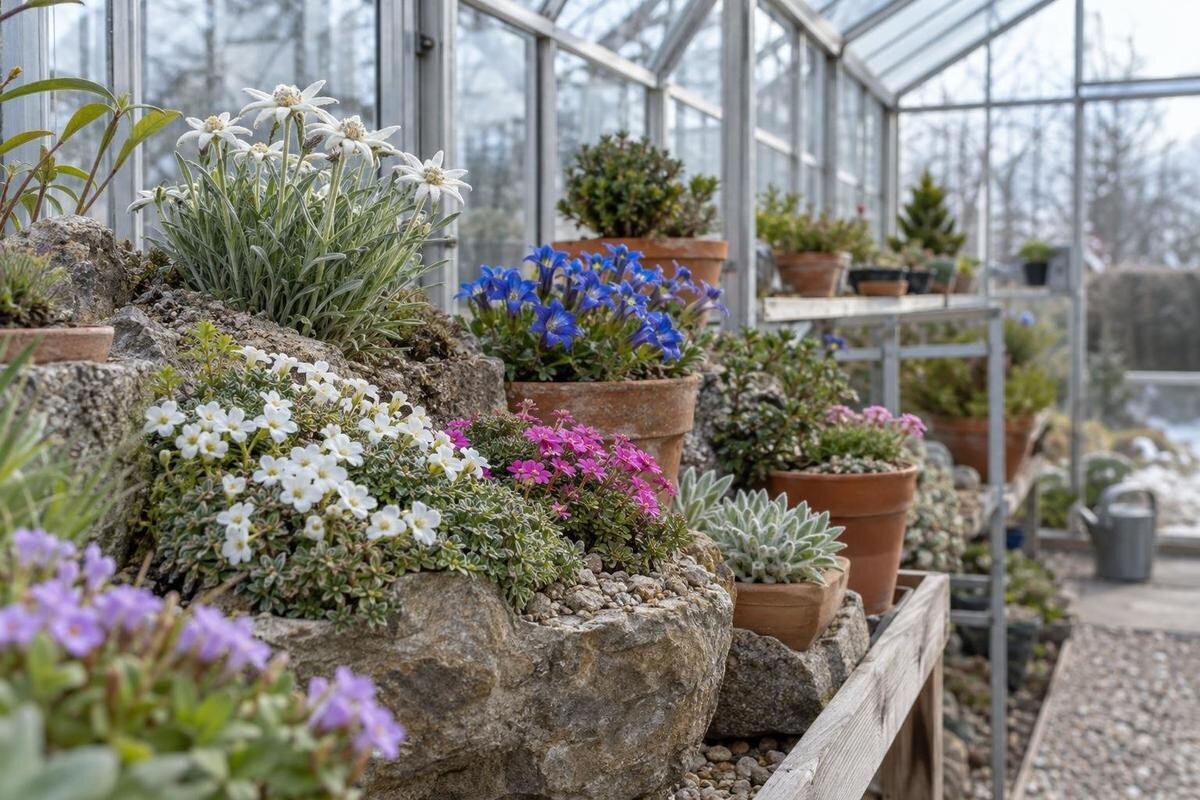
Alpine plant growing guide
Alpine plants are not a single greenhouse crop. Many benefit more from protection against prolonged rain and a well-ventilated, cool setting than from extra warmth, while species differ in light, moisture and winter needs. Plan the greenhouse around named plants, monitor temperatures at plant level, and keep drainage and ventilation working together. That gives a collection room to thrive without imposing one hot, dry routine on every pot.

Choosing a greenhouse 1
What an alpine greenhouse is for
For many alpine collections, a greenhouse is primarily a rain shelter and a space for managing exposure rather than a warm growing room. A roof can keep much rainfall off the collection, but the structure also changes how quickly the air warms and how moisture lingers. On a sunny day, the interior can heat quickly even when outdoor air feels cool; in still, damp weather, condensation may remain around plants. For many rock-garden species, reducing prolonged wetness at crowns and in pots is the main benefit. The trade-off is hot, stagnant air if the structure stays closed. Monitor both temperature and moisture to make the most of that shelter.
Decide which plants need cover and why before laying out the collection. A dry, sun-loving cushion and a moisture-loving snowbed plant do not need the same bench or watering rhythm. Keep botanical names and care notes with each pot, then group by light, growing season and winter moisture rather than by the broad word ‘alpine’. Even an unheated structure is not automatically cool or frost-free: record day and night readings before assuming it provides a particular climate. The Lean-To Greenhouses range lists options from 3.69 to 14.34 m²; for a lean-to site, account for the wall’s shade and the route air can take around the chosen layout. A simple map helps you return moved pots to the right zone.
Match conditions to the species
‘Alpine’ describes origin, not one set of greenhouse conditions. Elevation, slope, rock, snow cover and water availability create very different habitats: exposed scree, rocky ledges, damp snowbeds, open meadows and woodland margins can all support plants sold as alpines. Start with the botanical name and a reliable species profile; common names and mixed tray labels can conceal different requirements. Record the cultivar and any useful information from the grower, too. Note whether the plant grows actively in spring, rests in summer or needs a cool dormant period. These details help determine where it belongs and when it needs water.
Published plant profiles help prevent blanket care. The Royal Horticultural Society lists Sempervivum tectorum for full sun and well-drained soil and rates it H7, below −20 °C on the RHS hardiness scale. That is an outdoor hardiness reference, not a greenhouse set point or a guarantee for every cultivar and exposed pot. Primula farinosa, by contrast, is associated with moist, open meadows and fens; do not give it the dry watering routine used for a houseleek. For each species, check light, summer heat tolerance, winter minimum and winter wetness separately, and note the context in which the profile’s recommendations apply.
Choosing a greenhouse 2
Assess light across the growing area
Assess light where the pots will sit, not just in the middle of the greenhouse. A location may receive bright morning sun and be shaded after noon, or catch intense afternoon sun through glass. Nearby fences, trees, buildings, the greenhouse frame and benches above other plants all change exposure. Walk the site at different times of day and through the growing season if possible; note moving shadows and surfaces that heat up. Place full-sun species in the brightest suitable positions, and reserve gentler light for woodland-edge or snowbed plants identified as shade-tolerant. Recheck once surrounding plants leaf out, since their growth can change the pattern.
Do not solve every warm spell with permanent heavy shade: it can leave sun-demanding alpines short of light, particularly in darker seasons. Monitor plant-level temperatures and plant response first, then use temporary shade only where it helps; adjust it as conditions change. If comparing a pyramid format, the Pyramid Greenhouse range lists sizes from 5.53 to 18.9 m². Treat the outline as a layout choice, not proof of a particular light pattern: check the selected model’s measurements, then map how the actual site casts shade at different times. A catalogue image cannot show the shadows around your own greenhouse.
Ventilation prevents excess heat and stale air
Ventilation matters because sunlight can raise indoor temperatures unexpectedly, and moisture can linger around plants when there is little air movement. Alpines from cool, exposed places may be less troubled by a cool breeze than by repeated hot, stagnant conditions, but tolerance varies by species and season. Air exchange can help surfaces dry after watering or condensation; it cannot correct waterlogged media or blocked drainage. Think about moving warm air out and making openings accessible, rather than sealing the greenhouse to preserve warmth as you might for crops that need higher temperatures. Check the path between openings as well as their number: their positions affect how air moves through the growing area.
Use a minimum–maximum thermometer at bench height and check it on clear days, overcast days and after changing an opening. Open vents early enough to prevent sharp rises, and do not rely on a door that is routinely shut or blocked; the airflow path has to work with your normal routine. The Aluminum Greenhouses range is listed from 3.77 to 28.08 m², but floor area does not tell you how many vents a particular version has or where they open. Verify opening locations and operating details for the exact configuration, including how you can reach and adjust them. Recheck airflow after adding benches or tall displays.

Choosing a greenhouse 3
Rain protection does not replace watering
Rain exclusion and watering are separate controls. A roof can reduce repeated saturation of a crown or container, but a plant actively making roots, leaves or flowers may still need regular moisture. Some alpine species tolerate drying spells; others are adapted to damp ground or a short growing season after snowmelt. Check the medium below the surface and the plant’s stage instead of watering every pot on one calendar. The aim is to keep the root zone within that species’ needs while letting surplus water drain. Under cover, rain no longer rinses the medium, so watch for mineral deposits if your irrigation water leaves them.
Apply water to the container or medium rather than wetting foliage unnecessarily, especially for plants whose crowns are prone to staying wet. Water thoroughly when the species profile calls for it, then empty standing water from trays and confirm outlets are clear; do not keep a pot saturated just because its surface looks dry. If rain protection is a main buying reason, the Limited Edition Aluminum Greenhouse range lists options from 3.77 to 28.08 m². Compare available footprints, then verify the chosen configuration’s openings and rain-shelter details instead of inferring them from its name. For a species sensitive to water in its crown, keep the growing medium moist without leaving water trapped at the centre.
Drainage, containers and growing media
Drainage is built into the container and growing medium, not supplied by a gravel layer at the surface. Choose pots or troughs with open drainage holes, keep outlets clear and raise containers if their bases sit in water after irrigation. A free-draining mix often includes mineral grit, but there is no reliable universal recipe: particle size, organic content, acidity and moisture retention depend on the species and the water available. Some alpine cushions suit lean, mineral conditions; meadow species may need a more moisture-retentive root zone. Adjust the medium to the plant profile, then observe how quickly it dries in your greenhouse. If it remains wet for days, reconsider the container, mix and watering together.
Leave space between pots so you can inspect crowns, lift containers and spot blocked drains; tightly packed leaves trap dampness and make routine checks harder. Plan where spare pots, labels and potting materials will go before benches fill up, and keep supplies from blocking access to plants. The Limited-Edition Aluminum Greenhouses with Storage range lists configurations from 5.52 to 28.08 m². Check the measurements and any layout drawings provided for your chosen version; a storage label alone does not tell you how much bench area remains or what is convenient to reach.
Choosing a greenhouse 4
Plan winter care around dormancy
Winter care depends on dormancy, cold tolerance and moisture, not the word greenhouse. An unheated structure may shelter plants from direct precipitation yet still experience freezing air; it does not hold a fixed minimum temperature. Roots in a small pot are more exposed to temperature swings than roots in the ground, and a damp pot behaves differently from a dry one. Keep cold-hardy species in the cool conditions their profile calls for, and avoid warming the whole collection by default. A warm, dim winter position can disrupt plants that need a cool rest. Recently potted plants may also respond differently from established specimens, so track them separately.
Before selecting a structure for winter use, compare measured plant temperatures with each species’ limits and ask what the exact greenhouse configuration is rated to handle at your site. The Bloomcabin Prestige Greenhouse listing covers 3.77 to 28.08 m²; neither floor area nor the words ‘with metal base’ establish insulation, anchoring, or snow and wind capacity. Review the manufacturer’s stated requirements, and consult a qualified local professional where the foundation or site loading needs assessment. This building-suitability check is separate from plant hardiness and should not be inferred from a product photograph.
Make room for access and separate conditions
Arrange the growing area so daily tasks do not disturb fragile plants. Leave a clear route to the door and to any openings you need to operate; keep labels visible and put frequently inspected pots within easy reach. Use separate benches, trays or movable pots to create zones for bright, drier species and those needing cooler, moister conditions. A clear layout makes it easier to water one group without soaking another and to move pots when the sun or season changes. Allow space to lift and turn containers, check drains and clear fallen leaves, not just to line pots up on paper.
Compare the greenhouse plan with the largest trays and pots you use, including the space needed to carry them through the entrance. A T-shaped footprint may change how you divide benches and circulation, so review the exact drawing and access points rather than treating total area as usable growing surface. Bloomcabin lists the T-Shaped Orangery Greenhouse in sizes from 16.52 to 30 m²; use those figures as a footprint range, then confirm the selected variant’s internal measurements and clearances. Mark benches and paths on a scaled plan before buying, and leave room for plants that need to move seasonally.

Choosing a greenhouse 5
How much growing space do you need?
Estimate capacity from the number and diameter of pots, not from a headline floor area alone. Sketch the benches, walkway, work area and any place for seasonal holding; leave gaps for air movement and for reaching the back row. If the collection includes taller alpines, dwarf shrubs or plants in deep troughs, verify usable height above each bench as well as the door opening and roof clearance. Ask for dimensions for the specific size and configuration: a category name, photograph or overall footprint cannot establish shelf heights or headroom. Include room to turn with a watering can or carry a loaded tray without brushing plants.
If the collection is growing, plan for maintenance as well as pot count: leave room to group plants by conditions, refresh media and inspect each pot without shifting a whole bench. Bloomcabin’s Spacious Greenhouse range lists areas from 47 to 70 m². Assess that substantial footprint against your collection and site; listed area does not establish bench capacity, climate uniformity or operating effort. Compare the actual plan, height and ventilation information before deciding whether that scale is useful, and be realistic about how much time you want to spend checking and airing the space.
Keep a seasonal care record
Keep a short observation log through the seasons: date, plant and position, maximum and minimum temperature, ventilation or shade used, watering and any changes in growth. In spring, watch for sunny days that raise the temperature unexpectedly and increase air exchange when conditions allow. During summer, compare the hottest readings with species profiles before adding permanent shade or changing the collection. After flowering, do not assume every plant is entering the same rest; check the label and adjust water as growth slows. Repeated notes from the same position are more useful than reacting to one unusually warm afternoon.
Before winter, remove fallen leaves from crowns and clear visible obstructions from pot outlets and water trays; replace labels that have become unreadable. Keep the greenhouse ventilated whenever conditions permit, while protecting each species according to its documented cold and moisture needs. Review the log at season’s end: which positions overheated, dried too quickly or stayed wet? Move the affected group, then check whether conditions improve. This observation-led approach lets you adapt the environment without imposing one temperature or watering schedule on the whole collection.
Frequently asked questions
Do alpine plants need a heated greenhouse?
Often they do not, but there is no single rule for every species. Many established alpine garden plants tolerate cold and need a cool dormant season; others have different limits. Check the species profile and measure actual minimum temperatures before using heat. An unheated greenhouse does not guarantee frost protection.
Does rain protection mean I should water less?
Not automatically. A roof reduces rainfall, but plants in active growth may still need regular moisture, and some alpine species grow in damp meadows or snowbeds. Check moisture within the growing medium, water according to the plant and its growth stage, and allow surplus water to drain.
Can different alpine species share one bench?
Yes, if their light, temperature and moisture needs overlap. Keep dry, full-sun plants separate from species that need cooler shade or consistently moist media. Pots, trays or separate benches make it easier to water groups differently and move them when seasonal conditions change.
Are pots safe in an unheated greenhouse over winter?
Not automatically. An unheated greenhouse can still freeze, and roots in pots experience different temperature swings from roots in the ground. Compare each species’ hardiness and winter moisture needs with recorded minimum temperatures. Do not infer a safe winter temperature from a greenhouse’s name or daytime warmth.
How can I tell whether the greenhouse is too hot?
Use a minimum–maximum thermometer near the plants and compare its readings with reliable profiles for the species you grow, especially during clear weather. Persistent high readings are a reason to reassess ventilation, shade and placement. Plant symptoms alone do not identify the cause, so check conditions before making a permanent change.
A successful alpine greenhouse brings together appropriate light, a well-drained root zone, moving air and temperatures matched to named plants. Rain shelter is useful when it solves a real moisture problem, but it should not erase the differences between a dry rock ledge and a damp snowbed. Observe each group across the seasons and adjust only the positions or routines that need it; that keeps a cool-growing collection manageable without forcing every pot into the same conditions.
