
Aluminum or Cedar Greenhouse: Compare Care Needs
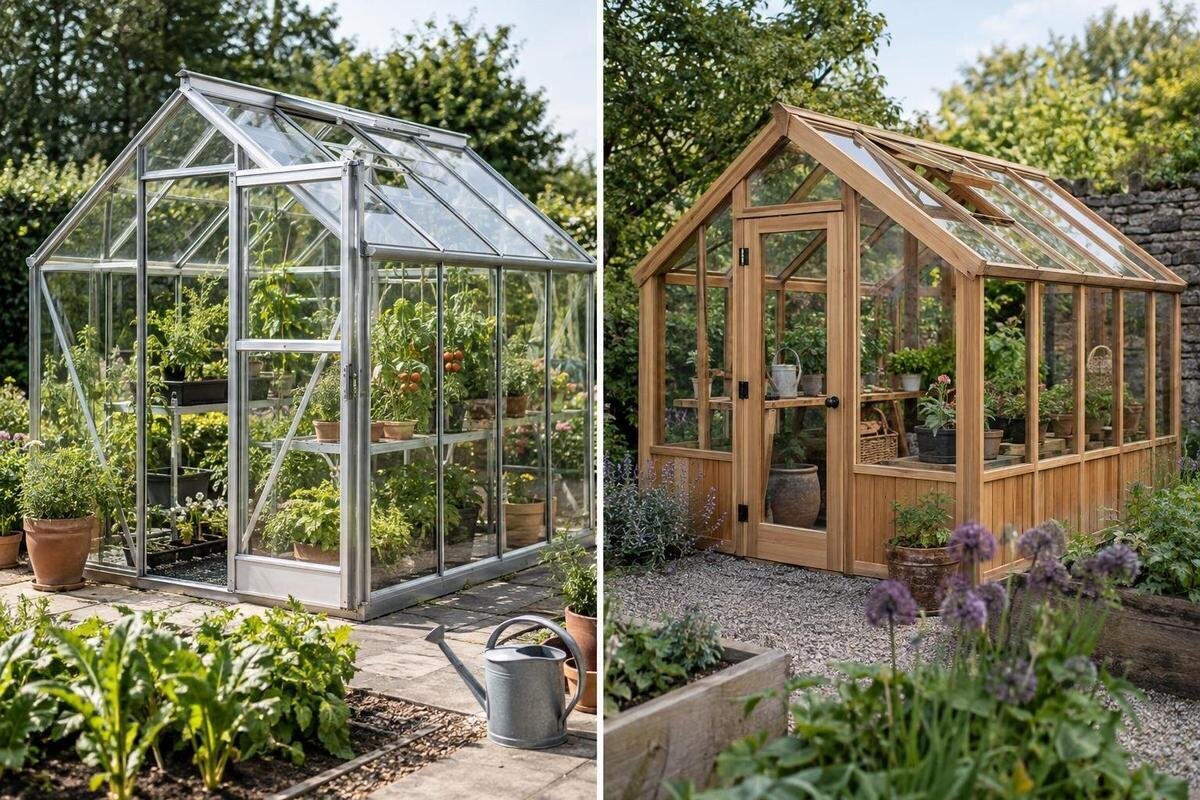
Greenhouse material comparison
An aluminum frame avoids timber-specific treatment, but it does not make a greenhouse maintenance-free; other components may have their own care needs. Cedar is not automatically difficult to maintain: its workload depends on the timber specification, finish and exposure. Compare exact models using written care schedules and equivalent construction quality, then account for the cleaning, access and finish renewal involved.

01
What the frame material tells you about care
“Aluminum” and “cedar” identify frame materials, not complete maintenance plans. An aluminum greenhouse still needs cleaning and inspection, and its surface finish, joints, glazing and moving parts may each have care instructions. Cedar adds timber-specific questions: which species and grade are used, how the wood is protected, whether all faces are treated, and how the supplier expects that protection to be maintained. The word cedar does not tell you whether the timber arrives bare, prefinished or intended to weather without a coating. Nor does an aluminum label identify every finish or accessory. Estimate work from the care documents for each exact model, not from a blanket statement that one material is maintenance-free. Two products made from the same material can also call for different care.
Make the comparison fair before counting chores. Match footprint and usable growing area, configuration, openings, finish, glazing and construction quality as closely as possible. A small, simple structure and a large one cannot be compared by counting frame treatments alone; more surface area and components can mean more places to inspect or clean. Keep current specifications and care instructions beside each product description, and note differences that may change access or the number of routine checks. If the Classic Aluminum Greenhouse is on your shortlist, record its selected configuration alongside the cedar option. This gives you a defined pair of products to compare rather than applying one general rule to every aluminum or cedar frame.
Cleaning aluminum and cedar surfaces
Routine cleaning is a practical common task, but the method should suit each surface. Dust, plant debris and soil can collect on glazing, frame junctions and around openings; removing buildup makes it easier to notice damage or change. Aluminum does not need a timber-preservative cycle simply because it is a frame, yet any coated surface still needs the maker’s approved cleaning method. For cedar, cleaning does not replace the finish plan: a method that is too aggressive or a chemical not approved for the surface can mark wood or interfere with a protective finish. Treat glazing, seals and frame finishes as separate materials rather than assuming one cleaner suits all. Keep the supplier’s instructions with the greenhouse records, and ask how to clear debris from any tracks or channels without forcing it farther inside.
Ask whether instructions specify water-only cleaning, a particular detergent, tools to avoid, and how to rinse or dry the surface. Do not assume a household glass cleaner is suitable for every frame, panel, seal or coating. Keeping the care sheet handy helps anyone doing the work use the same method. Access matters too: when comparing Lean-To Greenhouses, consider how the exact layout and adjoining wall affect which surfaces are easy to reach. Use the selected model drawing and site plan to assess cleaning access. Include the inside and outside faces in your task estimate, along with any benches or stored items that must be moved. Distinguish time spent clearing the work area from time spent cleaning.
02
Compare written care schedules
Request a written, current care sheet before comparing claims. It should separate routine cleaning from inspection, finish renewal, timber treatment and repairs, and state the recommended interval for each task on the selected materials and finish. It should also explain preparation, approved products, suitable conditions for application, and whether guidance changes with sun, shade or other exposure. Ask what visible deterioration looks like and what the owner should do when it appears. For the Limited Edition Aluminum Greenhouses, request instructions for the exact version and configuration under consideration. Keep the schedule with that proposal so it is clear which finish and components the guidance covers.
Put both schedules into the same format: task, interval, time estimate if supplied, materials, preparation, and whether the work can be done by an owner or calls for a specialist. Mark which tasks apply to the frame only and which apply to the whole greenhouse. A supplier’s recommendation may not account for every site condition, so note any assumptions about exposure, finish or use. Do not turn a vague phrase such as “low maintenance” into an assumed number of hours or years. If one proposal gives a coating interval and the other gives only general care wording, ask for the missing detail before treating the two as comparable. Mark when each task falls due so the schedules can be compared across the same period.
Finish choice changes future tasks
Material and finish are two different decisions. An aluminum frame may have a surface finish with its own approved cleaner and repair process; find out what finish is supplied, how to recognize damage, and whether touch-up or refinishing is possible for that model. A cedar frame may be left uncoated or protected with a specified product, and those choices can change its appearance and future work. Do not compare a coated aluminum offer with “cedar” in the abstract if the cedar option has a different finish. When reviewing the Bloomcabin Prestige Greenhouse, include the selected finish in your comparison. Record the finish supplied on the cedar proposal as well, so both care plans describe the surfaces you would actually own.
Look at the full finish cycle, not just the product applied. For a timber coating, ask how the surface must be prepared, whether old material needs removal, which areas need treatment, how often renewal is recommended, and how much drying time the directions allow. Ask how exposed cuts, joints or repaired areas are handled, because the main flat surface may not be the only part covered by the instructions. For a finished aluminum frame, ask whether cleaning and spot repair must use a specific system. Confirm whether a supplied finish changes the first renewal date or preparation steps. If the supplier cannot give a schedule, record that uncertainty rather than assuming a coating will last a fixed number of seasons.

03
How site exposure affects care
Site exposure can change the maintenance plan, particularly when timber is part of the frame. Long periods of damp shade, water splashing from the ground, leaves held against a joint or direct sun may affect how surfaces weather and what schedule the supplier recommends. Inspect the intended site before choosing a finish: note nearby irrigation, roof runoff, dense planting and spots that stay wet after rain. Soil contact and drainage at the base also deserve a specific question, not a guess. This is not a reason to rule out cedar; it is information for the maker’s care recommendation. Ask which treatment and detailing suit the exposure, and whether the stated schedule assumes a sheltered or open position.
Aluminum still needs site-specific attention: dirt or moisture may collect at ground-level interfaces and frame joints, and a shaded or splash-prone location can make cleaning different from an open, dry site. The useful comparison is which recurring tasks apply at the intended location, rather than whether one material can be left unattended in all weather. If considering a Limited-Edition Aluminum Greenhouse with Storage, describe the intended position when requesting care information for the complete configuration. Include the selected finish, nearby planting and any splash-prone areas in the enquiry. Keep the response with your site notes so exposure-related guidance remains distinct from the model’s routine care schedule.
Check the whole greenhouse
Frame material is only one line in the maintenance plan. Doors, vents, handles, hinges, fasteners, seals, glazing and drainage details may call for separate checks or cleaning instructions. Timber and aluminum models can use different component systems, so their hardware or panel-care guidance may not be interchangeable. Ask for a list of serviceable parts, compatible cleaning methods and replacement-part names for the selected greenhouse. For a T-Shaped Orangery Greenhouse, establish which fittings and openings the selected configuration includes, then assign the relevant care instructions to each component. This can reveal work omitted from a frame-only care sheet and help you keep cleaning, inspection and replacement requirements separate.
Make an inspection route that follows the maker’s directions: look over accessible frame connections, glazing retention, door movement and vent operation, then note anything obstructed, loose or visibly damaged. This is a visual check, not a repair procedure; when a component needs adjustment or replacement, use the manufacturer’s instructions or a qualified installer where appropriate. Keep a brief dated record so recurring changes are easier to distinguish from dirt or normal seasonal appearance. Include the same shared greenhouse tasks for both materials, so a cedar option is not charged for checking a door that an aluminum owner would also need to check. Follow any separate glazing directions for that model.
04
Access affects maintenance time
Maintenance estimates often miss the time it takes to reach a surface. A task may be easy at ground level but awkward above shelving, pots or established plants; outside access can also be restricted by fences or planting. Before choosing a greenhouse, compare access to its roof, corners, vents and glazing for routine cleaning and prescribed finish work. For the Pyramid Greenhouse, use the exact drawings and maintenance instructions to assess access rather than judging reach from a photograph. Identify which surfaces are accessible from the ground and which require assistance or an access method specified by the maker. If access is difficult, include that in the labour estimate.
Record whether benches or stored supplies must be moved, whether maintenance is intended from inside or outside, and which tasks need clear ground beside the structure. If finish renewal requires preparation over a broad area, the surrounding layout can add time even when the material itself is straightforward to care for. Do not rely on a generic estimate without stating greenhouse size, configuration and access conditions. When two options differ in shape or scale, separate extra work caused by reach and area from work caused by the frame material. This prevents a larger or more intricate structure from being labelled “higher maintenance” when the comparison has changed more than one variable. Note any areas you cannot reach without assistance.
Compare equivalent construction quality
Care schedules are only comparable when construction quality and scope are comparable. Check the same kinds of evidence for each proposal: drawings, frame and joint specifications, hardware details, glazing or panel type, finish description, base interface, included openings and maintenance documents. Two structures made from different materials may have different components; if one has extra vents or a larger glazed area, its task list may be longer for reasons unrelated to cedar or aluminum. The Spacious Greenhouse listing covers options from 47 to 70 m², illustrating why model size should be held steady before comparing care burden. Use current specifications for the exact variant, not a single figure for the whole family.
Do not compare a higher-specification aluminum greenhouse with a basic cedar structure, or the reverse, and credit every difference to material. Match the expected build standard, finishing scope and included components as closely as possible. Separate the greenhouse as supplied from work required after delivery: what arrives prefinished, what requires assembly, and whether later coating is included in the stated scope. Record those differences alongside the specifications instead of treating them as recurring maintenance. Check whether replacement components are identified for each proposal. Where the information is incomplete, leave that part of the comparison open rather than declaring either material the clear winner.

05
Plan labour, supplies and repairs
Build a maintenance record from the documented tasks. Separate routine cleaning, inspections, timber treatment or finish renewal, consumables and repairs; record the recommended interval, expected duration if provided, and who can do the work. List one-time preparation separately from recurring tasks so it remains visible in the ownership estimate. If your labour estimate differs from the supplier’s, write down why—height, restricted access, plant removal or the size of the treated area. Add a reminder for each interval stated in the care sheet rather than using one annual reminder for every task. Leave an interval blank when no frequency has been supplied, rather than substituting a guess.
Include the supplies each schedule names, but do not assume a cleaner, preservative or coating is compatible simply because it is sold for outdoor use. Ask how to source an approved replacement if a finish, seal or component needs repair, and note the time needed to prepare the area or protect nearby plants. Compare recurring care over the ownership period you expect, without assigning a made-up lifespan or exact dollar figure. A material may look inexpensive to maintain while a hard-to-reach surface adds labour, so test the same task list against your access and willingness to do the work. Keep model-specific instructions and treatment records together for future reference.
Choose a care routine you can sustain
Choose aluminum if avoiding timber-specific coating or preservative tasks for the frame is important, while accepting that the frame, finish, panels and moving parts still need care as set out for that model. Choose cedar when the timber look matters and you are prepared to follow its actual treatment and renewal instructions. Neither preference settles the decision on its own: one cedar product can follow a different schedule from another, just as aluminum finishes and configurations can vary. Think about the kind of work you are willing to repeat, not only the first season after installation. Compare the whole care plan, not one material word in a catalogue heading.
Before choosing, answer three practical questions: what tasks recur, which instructions govern each surface, and can you reach and complete the work with the time and tools you are willing to provide? Consider the busiest maintenance period, not just the total number of tasks: several jobs due together may be harder to accommodate than the same work spread out. Use the intervals already recorded in the two care plans to see how each routine would fit around growing and other garden work. The better choice is the greenhouse whose upkeep you can sustain while retaining the appearance you want.
Frequently asked questions
Is an aluminum greenhouse maintenance-free?
No. An aluminum frame avoids timber-specific treatment, but its finish still needs appropriate care. Glazing, seals, fasteners, doors and vents may also need cleaning or inspection. Follow the schedule for the exact model rather than interpreting “low maintenance” as no work.
How often does a cedar greenhouse need its finish renewed?
There is no universal interval for every cedar greenhouse. Species, finish, site exposure and the supplier’s instructions all matter. Ask for the recommended preparation, treatment product, renewal interval and guidance for exposed cuts or repairs rather than assuming a generic recoat cycle.
Can I compare maintenance frequency across two products?
Yes, if the products have similar size, finish, glazing, openings and construction quality. Put their actual cleaning and treatment schedules side by side. If one schedule is missing or refers to a different configuration, record that gap before deciding which material asks for less work.
What should a cedar care sheet include?
Look for the timber species and grade, the protection or finish supplied, compatible products, preparation steps, areas to treat and recommended renewal frequency. It should also explain how exposure affects the guidance and distinguish routine cleaning from finish renewal and repair.
Do the frame and glazing need separate care instructions?
They may. The frame is only one component; panels, seals, fasteners, doors, vents and drainage details can have separate care needs. A cleaner or treatment suitable for one surface may not suit another, so keep the instructions for the complete model together.
An aluminum frame removes timber-specific treatment from the task list, not the need to care for the whole greenhouse. Cedar can suit someone who values timber and accepts its documented finish routine. Choose between comparable models with a clear understanding of the surfaces, components and access involved. The right material is the one whose appearance and recurring care fit the way you want to use your greenhouse.
