
Should You Refurbish an Old Aluminum Greenhouse?
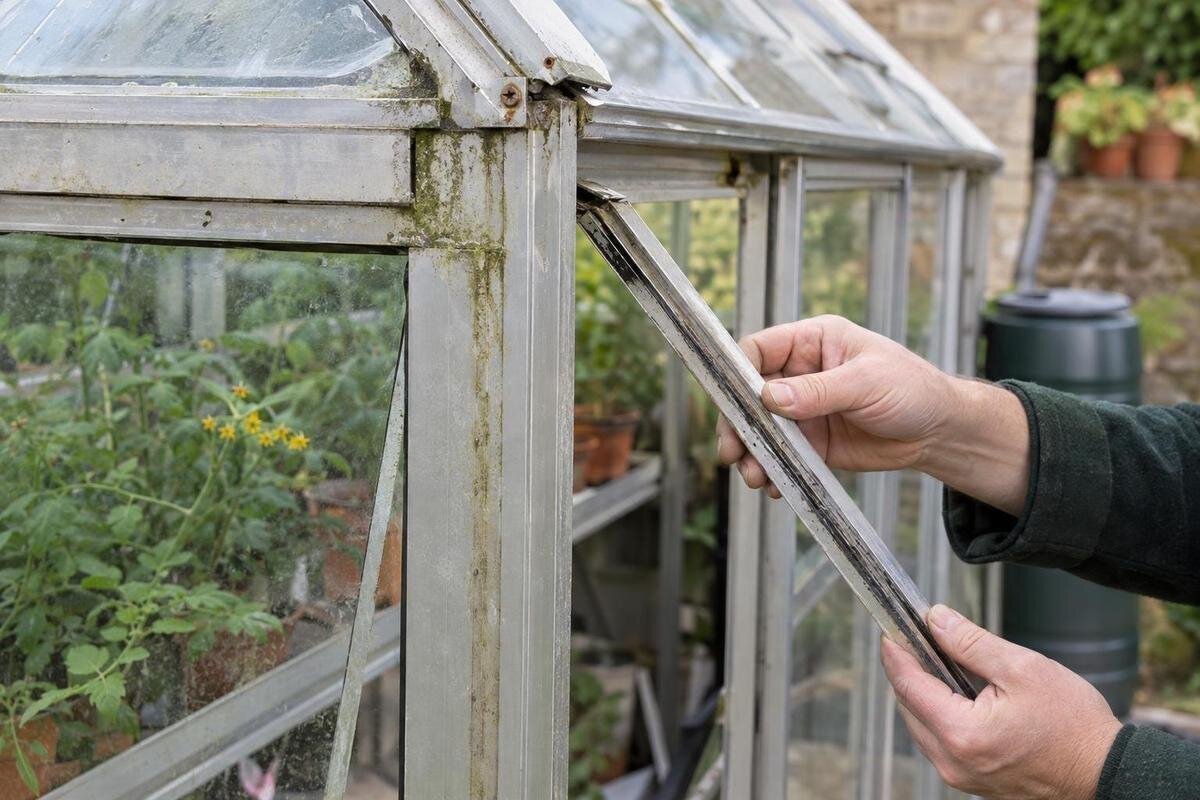
Greenhouse repair and refurbishment
Refurbishing an old aluminum greenhouse can be worthwhile, but the frame’s apparent condition is only one part of the decision. A broken panel, misaligned door or hard-to-identify fitting can turn a small repair into a search for compatible components and skilled labour. Audit the frame, glazing, hardware, records, site and future use together before ordering parts. The aim is to distinguish components that can be retained from problems that need professional review, then compare the full restoration scope with replacement. Do not dismantle uncertain or damaged glazing just to investigate; record what is visible and involve a qualified installer where stability or safe handling is in question.

Set a clear goal for the refurbishment
Before pricing parts, define what “refurbished” means for this greenhouse. You may need a safe, stable structure for seasonal growing, properly working doors and vents, or a repair that lets you keep the present footprint. Those goals call for different work. List the problems that must be solved, improvements that would be useful, and features worth retaining. Note how you use the space now and what you expect to grow or store there. Separate essential repairs from optional changes so that each can be priced clearly. For example, restoring a working door and changing the interior arrangement are different tasks, even if you hope to do both during the same project. This prevents a cosmetic improvement from being mistaken for a full restoration, and gives an installer or parts supplier a clear brief.
Set boundaries too: do not adapt a frame, drill new fixing points or change panel types because a replacement looks close. Those decisions need support from manufacturer documentation or a qualified installer. Include storage and circulation in your future brief, but do not assume the old structure can take an addition. If built-in storage is part of a replacement comparison, the Limited-Edition Aluminum Greenhouses with Storage range is one category to review; the listing does not show that storage can be added to your existing greenhouse. Confirm the details for any model you consider.
Identify the greenhouse before ordering parts
Start with documentation you already have: an order confirmation, assembly manual, parts list, technical drawing, warranty paperwork or installer record may identify the model or revision. Look for legible labels or stamped identifiers only where they are visible and safely accessible; do not remove glazing or dismantle a profile to find one. Record the installation year only if you can support it, and distinguish what you know from what you are estimating. Earlier repairs or changes may also mean the structure no longer matches its original configuration.
Photograph the whole greenhouse from several sides, then take close-ups of frame joints, panel edges, hinges, handles and any visible markings. Label each image with the component’s location rather than sending a set of uncaptioned photos. Use the same location names in your notes and photographs so the supplier can connect a close-up with the overall structure. Keep a separate record of earlier repairs, including which components were changed and which details remain unknown. The Limited Edition Aluminum Greenhouses product page can help distinguish a current product range from your older greenhouse, but identifying the original model and revision remains essential to a parts enquiry. Keep that identification together with the photographs, rather than relying on a resemblance to a current catalogue image.
Inspect the frame and its supports
Inspect accessible frame members for obvious bends, twisting, cracks, separation at joints, missing fasteners or sections that no longer sit in line. Compare corresponding corners and rails visually, and record the locations of concerns instead of trying to pull anything back into position. Note whether doors and panels also appear to have shifted: several misalignments may indicate a broader problem rather than one faulty hinge. A superficial mark alone cannot establish whether a frame is sound; its shape and connections need to be assessed in context.
Consider the visible base and its connection to the greenhouse at the same time. Note gaps, movement, water collecting near the support or signs that the structure has shifted. Describe where each concern appears: at one corner, along a side or around a particular connection. This gives the installer a clearer starting point than a general report that the base looks uneven. Do not add braces, new anchors or other structural alterations based on a guess. If there is movement, a loose connection, distortion or uncertainty about the support, pause repairs and ask a qualified greenhouse installer to assess it. When comparing the Prestige Greenhouse with Metal Base, keep assessment of the existing support separate from the requirements of the new greenhouse.
Assess the glazing without disturbing it
Make a glazing inventory without loosening panels. Identify the material and panel type from the manual, purchase records, labels or a qualified installer; do not assume two panels are interchangeable because they look similar or have the same outside measurements. Record each visibly missing, cracked, broken, clouded, warped or poorly seated panel, and note its location—roof, side, door or another position. Give each affected panel a reference on your location map and use that reference in photographs and enquiries. Distinguish a panel you can identify from one whose specification is still unknown, even if both appear to need replacement. This lets a supplier see which items can be quoted and which need further identification. A simple location map and panel count are more useful in a parts enquiry than a general note that the greenhouse needs new glazing.
Ask the manufacturer or supplier to confirm the replacement type and specification against the greenhouse model before ordering. If glass is cracked, broken or unstable, do not handle or remove it as part of a DIY inspection; keep clear and arrange assessment by a qualified glazing professional or installer. If matching panels cannot be identified or the glazing work is extensive, compare the complete-structure alternative too: the Classic Aluminum Greenhouse listing is a product reference, not proof that its glazing or frame parts fit an older model.

Check doors, vents and moving hardware
Check doors, roof vents, sliding parts and other moving hardware only if the structure is stable and the parts are safely accessible. Operate them gently and note whether a door binds, a vent does not open, a hinge is loose or a latch is missing. Also record whether the frame around the fitting looks misaligned. Do not force a stuck catch or lever: resistance may come from dirt, a damaged fitting, panel pressure or frame movement, and the cause matters.
Identify each component by its location and visible form, such as a door hinge, vent stay, handle or catch, then check the manual or parts diagram for the manufacturer’s name and part reference. Similar-looking hardware can differ in dimensions, orientation or fixing pattern. Describe the problem as well as the component: a missing handle is a different enquiry from a handle that is present but difficult to operate. Where the manual identifies several pieces in an assembly, list the affected pieces separately rather than treating the whole assembly as one unnamed fitting. A small replacement is worth considering only when the surrounding profile and fixings are sound and a matching item is confirmed. If a fitting is loose because the frame or glazing has moved, replacing the fitting alone may leave the underlying issue unresolved.
Confirm parts availability before dismantling
Treat part availability as an early decision, not a task to leave until after dismantling. Send the supplier the greenhouse model and revision if known, the original part number, the part’s location, the quantity required and clear photographs from more than one angle. For glazing, include manufacturer-approved identifiers and a location map. Measurements may help a professional, but they do not by themselves establish that a pane is the correct type or thickness. Ask the supplier to confirm compatibility before committing to a broad repair.
Check the original manual or parts schedule for exact designations, then ask whether a part is available, has been superseded or needs a related component to fit. Do not assume that a generic fastener, seal, pane or hinge is equivalent because its name or appearance is similar. Tell the supplier about alterations if you know they were made. If a part cannot be identified or the original maker cannot confirm a match, factor that uncertainty into the decision and get an installer’s view before dismantling anything that may affect the assembly.
Compare the full project cost
Build the repair estimate around the complete scope, not the price of one visible item. Include an assessment where needed, confirmed components, labour, professional glazing work, access equipment if a contractor specifies it, removal and disposal, and any work to the supporting base that an assessment identifies. Ask for the estimate to separate confirmed work from allowances or unknowns. Record which tasks are included, who will carry them out and which items still need a price. Keep optional improvements separate from repairs needed to return the greenhouse to service, so you can compare the essential project without losing sight of your preferred additions. If one proposal covers glazing only and another includes hardware and base work, identify those differences before comparing totals. That way, an unidentified part or uncertain repair is not hidden inside a single total, and you can compare proposals on the same basis.
Request a replacement comparison if major work, uncertain part matching or several system problems are involved. Include the scope of removal and site preparation where relevant; do not assume a new greenhouse will cost less, or that refurbishment will be cheaper because the frame is already there. If your plans now call for a substantially larger growing area, the Spacious Greenhouse range is listed from 47 to 70 m² and can serve as a scale reference. That range is not a recommendation that its area or footprint suits your site.
Check that the footprint and site still work
Measure the existing footprint and note the space needed to reach and work around the greenhouse. Consider the door’s opening path, nearby walls or trees, access routes, and whether the present arrangement leaves practical room for your growing plans. Record shade at different times and note any changes to the surrounding garden since the greenhouse was installed. An existing pad or prepared area is useful information, but it does not prove that the surface is level, sound or suitable for a new structure.
If you are considering a lean-to format, the Lean-To Greenhouses range is a category to compare against your site measurements; the listed options range from 3.69 to 14.34 m². Check the exact footprint and installation details for any model rather than assuming it will fit an existing wall or base. On your site sketch, distinguish the greenhouse footprint from the surrounding space needed for access and door operation. Keep the dimensions of the current greenhouse and the proposed replacement clearly labelled. This makes it easier to see whether the replacement preserves a layout you value or requires a different arrangement.

Compare replacement layouts
List the changes a replacement would need to deliver: a different overall shape, more growing area, a revised door position or storage. Be specific about how you use the space and what clearances you need around it. Describe each change in terms of the problem it would solve, such as an awkward access route or a storage arrangement that takes up growing space. Then distinguish essential layout requirements from preferences that you could compromise on. This gives you a consistent basis for comparing different designs. Product-page area figures can help narrow a comparison, but area alone does not give you the plan dimensions, door location, headroom, openings or installation requirements needed to assess whether it fits your site. Check the complete model specification and drawings before relying on a catalogue image or name.
The T-Shaped Orangery Greenhouse listing covers products from 16.52 to 30 m²; compare its actual layout with your measured garden and intended access rather than treating the shape or area as a promise of a better fit. A different layout is worth considering when it addresses a specific problem with the existing one. If the current arrangement works and only a repairable component needs attention, a new design may add cost and planning work without solving the issue.
Decide what to retain, repair or replace
Sort the inspection findings into three groups: retain as-is, repair or replace with a confirmed part, and refer to a professional. Mark anything you cannot confirm—such as frame condition, glazing type, fit or parts compatibility—as unknown. Beside each unknown, record the question that needs answering and whether it belongs with the supplier or installer. Keep their responses with the relevant item so that a confirmed finding is not confused with an earlier assumption. An unknown is not a reason to order a near-match; it is something to resolve before committing. If structural questions remain, do not treat a quote for isolated components as a complete refurbishment plan.
Refurbishment has a clearer basis when a qualified professional has assessed the frame and supports as serviceable, the main components are identifiable, and the work can be scoped and sourced. Replacement deserves serious comparison if damage is widespread, safe assessment is not possible, essential parts cannot be confirmed or the current layout no longer meets your needs. If a different form is on your shortlist, the Pyramid Greenhouse range is listed from 5.53 to 18.9 m²; check its full drawings and site requirements. Base the decision on the complete assessment, not on one panel or a product photograph.
Frequently asked questions
How can I tell whether an aluminum greenhouse frame is worth refurbishing?
Look for visible movement, distortion, damaged connections and parts that no longer align, but do not treat a visual check as proof that the frame is sound. If it has shifted, feels unstable or shows significant damage, have a qualified greenhouse installer assess it before you plan repairs.
Can I use glass or panels from another greenhouse?
Not without confirmation that the panel type and specifications match your greenhouse. Similar appearance or measurements alone do not establish compatibility. Check the original manual or ask the manufacturer or supplier to verify the correct panel, and use a qualified professional for damaged or unstable glazing.
What information should I include in a replacement-parts enquiry?
Provide the manufacturer, model and revision if known, the original part number, where the part belongs and how many you need. Add clear photographs and any relevant manual or drawing. For glazing, include the panel location and manufacturer-approved identifiers; measurements alone cannot confirm a match.
Does refurbishing always cost less than replacing the greenhouse?
No. Compare estimates for the full scope, including assessment, confirmed parts, labour, glazing work, removal and any work to the supporting base. An incomplete repair estimate may look smaller simply because unresolved parts or labour have not been included.
Can I inspect or replace greenhouse glazing myself?
You can record what is visible from a safe position, but do not remove damaged or unstable panels to investigate. Glass can break during handling. Ask a qualified glazing professional or greenhouse installer to assess and carry out work that involves handling or removing glass.
An old aluminum greenhouse is worth preserving when its core structure is assessed as serviceable, matching parts are available and the finished layout still serves your plans. A repair list built from model records, photographs and a complete estimate gives you a firmer basis for deciding than appearance or age alone. Resolve structural concerns before committing to repairs. If essential components cannot be matched or the work no longer meets your needs, compare replacement with the full refurbishment project rather than buying parts piecemeal.
