
Why an Automatic Greenhouse Vent Opener Stays Closed
Greenhouse troubleshooting
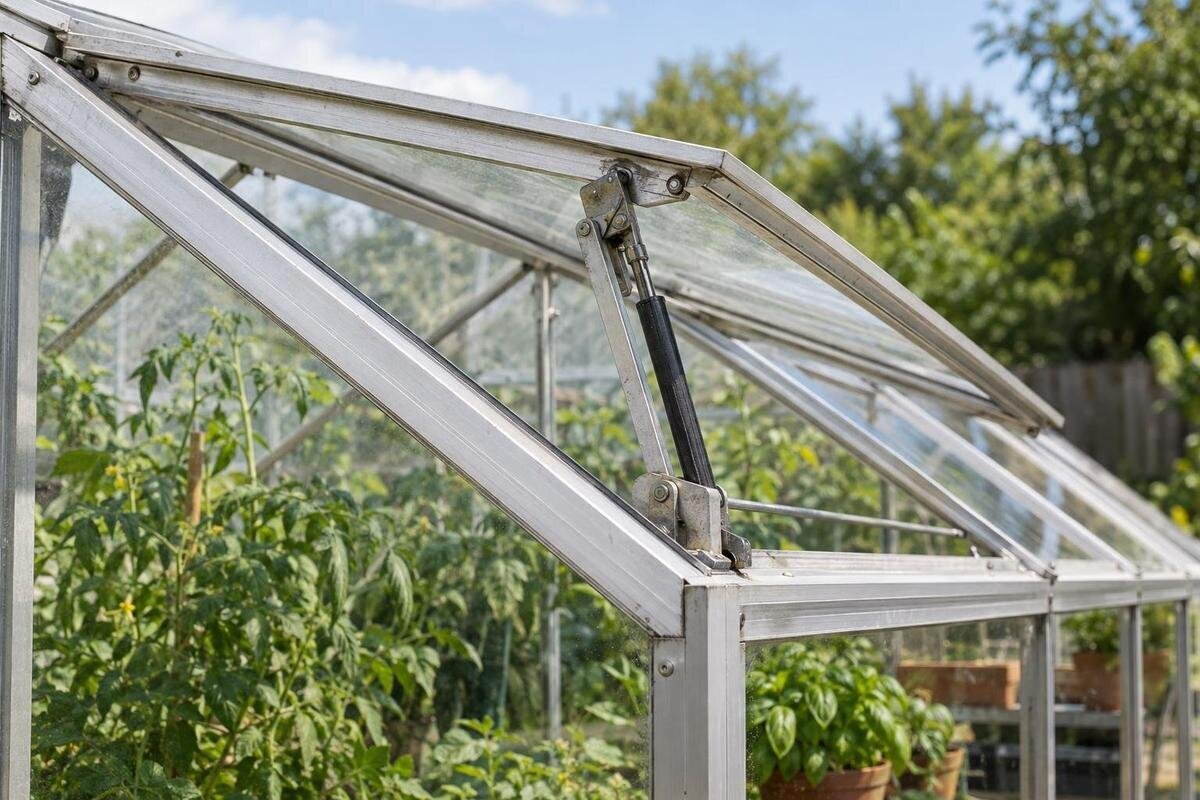
An automatic greenhouse vent opener that stays closed isn’t automatically defective. It may not have reached its own opening temperature, may need a model-specific adjustment, or may be unable to move the vent because of excess resistance or an obstruction. Work through those possibilities using the exact opener manual, and stop if a check would involve force, dismantling or unsafe access.

Describe exactly when the vent stays closed
First describe the behaviour without labelling the opener as broken. Is the vent shut all day, closed only during a cool morning, or opening a little and then stopping? Does the actuator remain still, or does it move while the vent stays put? Observe from a safe position; don’t push the rod or lift the pane to find out. A fully closed vent in cooler conditions points first to the manual’s temperature threshold. Partial movement or a stop partway through its travel raises a separate question about resistance, adjustment or an obstruction. These are clues, not a diagnosis. Separate what you see from what you suspect in your notes: “the vent remained closed at noon” is an observation, while “the actuator has failed” is a conclusion. Also note whether the problem is new or whether the opener has behaved this way since installation.
Keep the greenhouse model, opener model and vent type as separate details. The Classic aluminum greenhouse listing shows a product family offered from 3.77 to 28.08 m², so a family name alone may not identify the size you have. Record the installed size and the vent the opener operates, rather than relying on a catalogue label. If there is more than one vent, describe the affected one by its position so your notes and photographs refer to the same opening. Add the date and time, the vent’s position, the weather, any visible shade or latch, and a temperature reading near the opener. A dated photo taken from a safe position can help when you describe the fault. Keep the original observation separate from later adjustments: otherwise, it can be difficult to explain which conditions were present before you changed anything.
Compare the temperature with the opener’s instructions
Read the manual for the opener actually fitted, including its model label and any stated opening temperature or operating range. A temperature-operated unit can remain closed until its actuator reaches its model-specific trigger; there is no universal temperature that applies to every brand or design. If conditions at the opener are below the stated threshold, the closed position may be normal. If the manual gives a response delay or a test procedure, follow that guidance rather than relying on a rule of thumb from another product.
If the manual’s stated conditions have been met but the opener does not respond, move on to the adjustment and movement checks rather than raising the temperature artificially. Don’t heat the actuator with a flame, hot air or hot water. When comparing options on the lean-to greenhouse product page, keep the greenhouse purchase and the opener specification separate. The category name does not tell you the opener’s temperature setting or confirm that a particular opener is included. Ask which vent and opener are supplied together, if any, and which instructions apply to that combination. This also helps distinguish a question about what you are buying from a fault in equipment already installed. For an existing greenhouse, use the fitted opener’s details rather than assuming that the current listing describes the equipment supplied with your earlier purchase.
Measure conditions beside the actuator
A thermometer in the middle of the greenhouse or on a remote display may not show the air temperature where the actuator is installed. Take a reading close to the opener, at roughly the same height, without touching the frame or getting in the vent’s way. Follow the thermometer’s own instructions, and avoid placing it in direct sun if you are trying to measure air temperature rather than the temperature of a sunlit surface. Keep the sensor somewhere it cannot be struck by the moving vent.
Compare readings taken at the same time near the opener and elsewhere in the greenhouse, then note whether the vent moves as the local reading changes. Sun, shade and other open vents can make readings differ across the space, so one midday reading may not explain what happened earlier. Use a simple record with the time, reading location, temperature and vent position. Keep the location consistent between observations, and note if you move the thermometer or open another vent during the check. That gives you a clearer comparison than a series of temperatures taken in different places without explanation. Humidity can be useful in a general greenhouse record, but it is not the trigger for a temperature-operated opener unless that model’s manual says otherwise. Use the local temperature record to assess the documented trigger, rather than guessing from the weather outside.
Check adjustment only by the model-specific method
Some openers have an adjustable opening point; others do not offer a user adjustment. Find the instructions for the exact model before touching a setting. A setting changes the conditions at which the opener responds; it does not free a jammed vent or correct an incompatible load. Don’t copy adjustment advice, turn counts or temperature figures from an opener that merely looks similar. If you cannot identify the setting or the manual’s instructions are unclear, leave it as it is and ask the manufacturer or supplier.
If the manual permits an adjustment, follow only its stated method and limits, and change one thing at a time. Record the original setting if it is safe to do so, then note what changed during the manual’s prescribed test. Distinguish the setting you changed from the result you observed: an adjustment is not confirmation that the opener now works correctly. When considering the Limited Edition aluminum greenhouse, ask about the fitted opener’s adjustment method as well as its identity. The greenhouse product name does not supply those instructions. Useful buying questions include whether the opener offers a user adjustment and how the supplier identifies its starting setting. For an installed unit, confirm the exact model first; if the setting cannot be identified from its instructions, don’t describe it as “too tight” or “too loose” based on appearance alone.

Check vent load and resistance
An opener may be working against more resistance than it is designed to handle. The vent could be heavy for that opener, a hinge may be binding, or a latch, seal or added fitting may resist movement. Look for visible signs without disconnecting the actuator or lifting the vent. Don’t try to estimate a vent’s weight by feel, use leverage to force it, or add a spring or counterweight. Those changes can create a different load and may damage the vent or its frame.
Check the opener manual for the vent types and load limits it supports, if those details are provided. If your installed vent does not match the stated application, or you cannot verify the match, ask the greenhouse maker or a qualified technician to assess it. The T-shaped orangery greenhouse listing shows a size range of 16.52 to 30 m², but greenhouse floor area does not establish the weight or movement resistance of an individual vent. Use the specifications for the actual vent and opener instead. In your enquiry, distinguish an original vent from one with added fittings, and mention any visible latch or seal that appears to resist movement. Describe the resistance you observed without trying to measure it by hand. This keeps the compatibility question focused on the opening being operated, rather than on the overall size of the structure.
Look for a blockage along the vent’s path
From a safe, accessible position, check whether a latch or clip is still engaged, or whether a cord, plant stem, debris or other object is in the vent’s path. Look for anything that could catch as the vent begins to move, including a shade material or its ties. Check only what you can see without climbing, reaching over the vent or removing parts. Don’t pry against glazing or try to overcome resistance by pushing the vent open.
If you use shading, check whether its fabric or cords are in the particular vent’s movement path. Identify where an object appears to catch: at the closed edge, near a hinge or farther along the opening path. A photograph of that location is more useful than a general statement that the vent is blocked. When considering a shade arrangement for the Pyramid greenhouse, ask about clearance around the vent rather than assuming the greenhouse product name establishes compatibility. On your own structure, distinguish an object visibly crossing the path from a suspected obstruction you cannot see. Follow the structure’s instructions before moving any fitting. If the visible path is clear but the vent still binds or stops, treat that as a mechanical issue rather than repeatedly cycling or forcing the opener.
Account for cold weather and seasonal conditions
A cool morning or sudden temperature change can leave a temperature-operated opener below its opening threshold, even if the greenhouse feels warmer later in the day. Compare the reading at the actuator with the manual’s guidance and note the time when the vent begins to move, if it does. Don’t assume a particular season or outdoor temperature proves that the opener should be open; the conditions at the device and its documented operating range matter.
Cold-weather instructions vary by opener, so check the manual for any seasonal setting, storage or removal guidance. Ice or snow can also physically restrict a vent. Don’t chip ice against glazing, force a frozen vent or work on an unsafe roof. Record visible ice or snow separately from the temperature reading, because these describe different possible reasons for a closed vent. If you are considering the Limited-Edition aluminum greenhouse with built-in storage, include seasonal opener care in your questions about the equipment supplied. Ask whether the opener has any specified seasonal procedure and who should carry it out. The greenhouse listing itself does not establish the actuator’s cold-weather limits. For equipment already installed, keep a note of any seasonal adjustment or removal so it is not overlooked when investigating a later fault.
Match the opener manual to the installed model
The greenhouse model and opener model are not interchangeable identifiers. An opener may have been added later or replaced, so a greenhouse manual alone may not explain how the fitted actuator should behave. Check an accessible label, purchase record or installation paperwork for the opener’s name and model number. Don’t remove the actuator or take apart a sealed component to find identifying information; use the manufacturer’s support if the label is unreadable.
Make sure the manual matches the actual opener, not just a product with a similar appearance or name. Its diagrams, adjustment instructions and stated application may differ between models. Use accessible identifying details to resolve a mismatch before attempting the procedure; a familiar-looking mechanism is not enough. The Prestige greenhouse product page identifies the greenhouse line, while the opener fitted to it may have been added or replaced separately. If you are buying a replacement, give the supplier both model references and say which component you want to replace. Keep a clear photograph of the installed vent and any visible labels with your notes. If you find more than one set of instructions in your records, identify which belongs to the current opener rather than combining steps from different manuals.

Stop if a check requires force or unsafe access
Stop if the instructions call for tools or removal that you are not equipped to do, or if the vent is high, difficult to reach or unsafe to handle. Do the same if you see damaged glazing, a bent actuator rod, a visibly loose fitting, a seized hinge or a leak from the mechanism. Don’t dismantle a sealed actuator, put extra weight on the vent or work from an unstable ladder. A suspected component failure needs a model-specific assessment, not a force test.
When you contact the opener manufacturer, greenhouse supplier or a qualified greenhouse technician, share the model numbers, your temperature and timing notes, and photos taken from a safe position. State which checks you completed and where you stopped, especially if further inspection would require lifting the vent or reaching an inaccessible fitting. Ask a focused question: whether the observed behaviour matches the stated temperature conditions, whether the setting needs attention, or whether the vent and opener need a compatibility assessment. The Spacious greenhouse listing gives a range of 47 to 70 m², but that area does not establish the load or opener requirement for an individual vent. Identify the affected opening rather than using the structure’s size as a substitute. This gives the person assisting you a clearer account without requiring you to carry out a risky test.
Retest one change at a time and record the result
Once you have completed the checks permitted by the manual, observe the opener again under the conditions it specifies. Change only one permitted setting or remove only a visible obstruction you can safely reach, then record what happened. Note the local temperature, time, vent position and any adjustment made. Compare the result with your earlier observation: did the vent begin to open, move farther, or remain unchanged? Keep those outcomes separate rather than recording only that the check “worked.” This makes it easier to distinguish a temperature below the opening threshold from a setting or movement problem. If several things changed at once, acknowledge that the result does not show which change mattered. Don’t treat one successful opening as proof that the opener will respond correctly under every condition; retain the record so any recurring fault can be compared with the original behaviour.
If the vent remains closed, or the same fault returns, send your notes to the manufacturer or a qualified technician rather than repeating forceful tests. While the opener is being assessed, use another suitable greenhouse opening only if it is safe and the conditions allow; don’t prop a vent with an improvised object or leave it unsecured. Keeping a short record after the issue is resolved can help you notice a change in behaviour before it becomes a recurring problem.
Frequently asked questions
What temperature should an automatic greenhouse vent opener open at?
There is no single temperature for every opener. Check the opening temperature or operating range in the manual for the exact model, then compare it with a reading taken beside the actuator. A reading from across the greenhouse may not represent the conditions at the opener.
Can I adjust an opener that stays closed?
Only if the manual for your exact model describes an adjustment for the user. Follow its method and limits, and record the original setting if you can do so safely. Changing the setting will not clear a latch, obstruction or binding vent.
Is it safe to push the vent open by hand?
Don’t force it or pull on the actuator to test it. That can damage the opener, vent, hinges or glazing. Use a manual-approved test only; if the greenhouse needs ventilation while you investigate, use another suitable opening when conditions allow.
Could humidity be keeping the opener closed?
Humidity is not a trigger for a temperature-operated opener unless its manual says the model also uses a humidity sensor. You can record humidity for your greenhouse notes, but use the opener’s documented trigger and a temperature reading at the actuator to investigate this fault.
When should I replace the opener?
Consider replacement only after checking the manual’s temperature conditions and adjustment, looking for visible obstructions, and confirming that the vent and opener are a compatible match. If the cause remains unclear, ask the opener manufacturer or a qualified greenhouse technician to identify the correct part.
Begin with the temperature at the actuator, then check the opener’s own instructions, adjustment and the vent’s movement path. If those checks don’t explain why it stays closed, don’t force it or assume a replacement part will fit. The model numbers, readings and photographs you collected give the manufacturer or a qualified technician a clear starting point for identifying the fault.
