
Frost Protection or a Warm Greenhouse: Choose a Winter Target
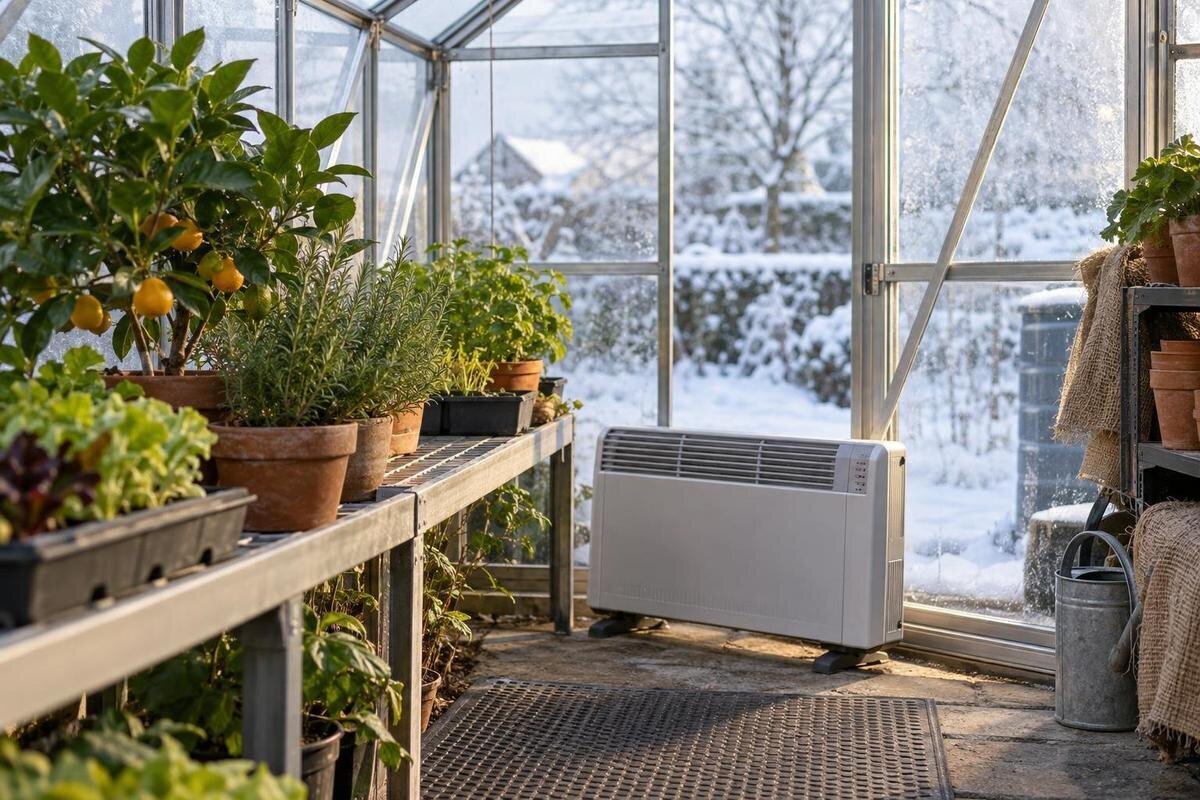
Greenhouse heating and winter energy
Frost protection means preserving selected plants through cold weather; active growing means maintaining conditions that support new growth. They are not interchangeable targets, and a generic thermostat number cannot account for different plant tolerances or cold spots in a greenhouse. Decide which job matters first, then check what the chosen structure, heating controls and monitoring plan can realistically maintain. The right target depends on plant-specific guidance, local winter conditions and the exact greenhouse, not its product name or floor area.

01
Frost protection and active growth are different goals
Frost protection is a survival objective, not a promise of springlike conditions. It means keeping vulnerable plants within conditions that avoid cold injury during the periods that matter to them. That threshold may sit above freezing for some plants, and the term frost-free does not provide a usable number on its own. A plant may survive cold while dormant but stop growing; a greenhouse can protect it without keeping it in active growth. Write down whether you are preserving plants, extending a growing season or producing new growth through winter. Each goal calls for a different temperature target and amount of heating.
Active winter growth means maintaining conditions that support the chosen crop or collection, not merely preventing visible frost. It generally calls for a warmer and more consistent target than a bare survival minimum, though exact needs differ. Heating the air cannot replace suitable light; when winter light is limiting, a warmer setting may raise energy use without producing the expected growth. The distinction matters before you compare thermostats: a frost-protection controller can intentionally allow a cool greenhouse, while a growth plan needs a crop-specific range and attention to light. Decide what you expect plants to do, not just whether the greenhouse should feel warm.
Use plant-specific limits to set the minimum
Build the target from the most cold-sensitive plants you intend to leave in the greenhouse. Check reliable, plant-specific guidance for the species and, where relevant, the cultivar. Note whether the recommendation concerns a brief cold dip, an overnight minimum or sustained conditions; these are not interchangeable. Dormancy, acclimation and the temperature around the roots can also affect how a plant responds. A pot exposed to greenhouse air may not have the same root protection as a plant in the ground. An outdoor hardiness-zone label can help with outdoor planning, but it is not a direct greenhouse thermostat setting. If guidance is unclear, ask a knowledgeable nursery or horticultural service before relying on a lower target.
Once the vulnerable plant’s limit is clear, allow for what a thermometer can miss: control accuracy, temperature variation across the space and brief dips before heating responds. Product floor area does not settle those plant questions. The Lean-To Greenhouses listing, for example, covers sizes from 3.69 m² to 14.34 m²; that range identifies available footprints, not a plant’s temperature tolerance or a particular model’s heat retention. Compare the documented structure with your plant list rather than treating a listed area as a winter performance rating.
02
Set a minimum temperature at plant level
Define the minimum temperature the vulnerable plants need, then choose a thermostat setting that can realistically maintain it with a margin. These temperatures are related but not always identical: a heater cycles, a thermostat senses only where it is placed, and cold spots can occur elsewhere. A reading in a sunny or otherwise warmer area can look reassuring while containers near a cold boundary fall lower. Follow the controller maker’s sensor guidance and check conditions at plant level. The aim is to identify the location most likely to fall below the plants’ minimum, rather than assuming that the thermostat represents every part of the greenhouse.
Keep the plants’ minimum, the thermostat set point and the actual recorded temperature separate in your plan. The minimum describes what you need to protect; the set point tells the controller when to call for heat; the recorded temperature shows what happened. Choose a margin that reflects plant tolerance and equipment uncertainty rather than adding an arbitrary universal number. The Limited Edition Aluminum Greenhouses catalogue lists area options from 3.77 m² to 28.08 m², but those figures do not establish the relationship between a thermostat setting and temperatures at the plants. That relationship needs to be checked in the exact setup, especially during cold weather.
Active growth needs a crop-specific range and enough light
For active growth, use guidance for the crop and stage you actually plan to maintain. Some plants tolerate a cool rest but need different conditions when producing leaves, flowers or fruit; others are intended to grow at more moderate temperatures. Consider both the night-time minimum and daytime range, because a thermostat that prevents a cold night does not guarantee suitable conditions across the day. Avoid applying an ideal temperature from a different plant or growth stage. If available daylight is inadequate, increasing heat alone may not improve growth and may leave the greenhouse using more energy for limited results.
An active-growing plan should account for light and the space the plants occupy, not just the thermostat setting. The T-Shaped Orangery Greenhouse listing spans 16.52 m² to 30 m², which describes area options but does not document heater output, glazing performance or growing conditions. For any footprint, confirm what the intended crop needs and what the selected enclosure specifications support. If you plan to maintain a growth range throughout the greenhouse, ask for a heat-loss assessment based on the exact model, configuration and local winter conditions. That assessment comes after you decide which plants and temperature the system must serve.

03
Mixed plant collections may need separate zones
One thermostat can serve a mixed collection only if the resulting conditions suit all the plants, not just those near its sensor. If one group needs a warmer winter and another benefits from a cooler rest, a single compromise may fail both aims: one group could be exposed to cold injury while the other receives heat it does not need. Group plants with similar requirements where practical, or consider separate, purpose-designed zones with appropriate controls and monitoring. A partition or smaller enclosure can change air circulation and temperature patterns; do not assume it creates a stable climate without checking it. Keep access and observation simple enough to notice problems.
Map the plant groups before deciding that the whole greenhouse needs the warmest group’s target. The Pyramid Greenhouse listing spans 5.53 m² to 18.9 m², but area alone does not reveal where warm or cool spots will form, or whether a particular layout supports separate zones. For each intended zone, consider which plants will be there, where the sensor reads and whether the equipment is documented for that arrangement. If you cannot monitor distinct targets reliably, favour a compatible collection or move the most sensitive plants to a controlled space rather than relying on an unverified setting.
Greenhouse area is only one part of heat demand
After choosing the plant target, assess how much heat the enclosure may lose. Demand depends on the temperature difference between inside and outside as well as the exposed envelope, glazing, air leakage, wind exposure, base and use of doors or vents. Under otherwise similar conditions, holding a warmer interior generally increases heat loss compared with a lower target. Frost protection may therefore reduce heating demand relative to active growth, but it does not make demand negligible during a severe cold spell. Greenhouses with the same thermostat setting can also differ in exposed surface, volume and air leakage.
Treat listed floor area as one input, not a heater specification. The Limited-Edition Aluminum Greenhouses with Storage range is 5.52 m² to 28.08 m², but that fact alone cannot tell you the heat loss of a selected size or its ability to hold your target. Check the exact configuration’s documented glazing, seals, base details and any insulation options; do not assume they are the same across sizes. A useful heat-loss assessment should identify the enclosure specifications, indoor target and local cold-weather assumptions it uses. This lets you see what the proposed heater capacity is intended to maintain, rather than comparing capacity figures without their underlying assumptions.
04
Verify insulation and ventilation for the exact model
Insulation and ventilation need to be evaluated together. Reducing heat transfer can lower the amount of replacement heat needed, but a retrofit or covering may also reduce light, affect condensation or change how air moves. Winter growing still needs appropriate air management; simply sealing openings without considering moisture and crop conditions is not a complete plan. Check exactly what material is proposed, which surfaces it covers, whether the greenhouse maker permits that approach and what maintenance it requires. Treat a broad description such as insulated as a question to investigate, not a quantified heat-saving claim. Documented specifications are needed for a useful comparison.
The Bloomcabin Prestige Greenhouse listing includes sizes from 3.77 m² to 28.08 m². That range does not confirm which glazing, ventilation or insulation details apply to the specific version you are considering. Ask for those details in writing and verify whether an option is included, optional or unavailable for that model. Also ask whether added insulation could affect access to vents or the light reaching plants. Choosing a greenhouse structure and choosing a heating system are separate decisions; do not infer winter performance from a product name or area range.
Monitor the coldest plant locations, not just the thermostat
Monitoring should show whether the greenhouse maintained the target, not simply what the temperature is when you visit. Use an independent minimum-and-maximum thermometer or logger to compare actual conditions with the thermostat, and check that the controller’s stated range and accuracy suit your plan. Review minimum records during cold spells, noting the duration of low temperatures where your logger provides it. Keep these records alongside the plant group’s temperature requirements so you can distinguish a brief dip from sustained cold. If readings seem inconsistent, compare instruments and investigate the difference before concluding that the plants’ minimum or the thermostat setting needs to change.
For plants in separate areas, make clear which readings belong to which group. A measurement near a less sensitive collection does not establish that the most vulnerable plants stayed within their limit. The Spacious Greenhouse listing covers footprints from 47 m² to 70 m², but the area figure does not confirm uniform temperatures, control coverage or an alarm system. Review monitoring coverage against the actual plant layout, and revisit it if you move a group or change the arrangement. Verify equipment specifications and arrange installation or changes through qualified professionals where needed. These checks help you interpret the results of the heating plan rather than relying on a single reassuring display.

05
Compare energy use at the chosen target
Compare energy use at the target you have chosen rather than shopping by heater output alone. A heater’s rated capacity does not predict its seasonal run time: that depends on outside weather, the greenhouse’s heat loss, controls and the indoor target. A higher target can increase running time, but no universal cost follows from a set point or floor area. Use an estimate only when its assumptions are clear, including local winter conditions, the exact enclosure, intended temperatures and the energy tariff that applies to you. Treat a best-case estimate as one scenario, not a guarantee.
Keep the comparison consistent when reviewing greenhouse models or heater estimates. The Aluminum Greenhouses listing includes sizes from 3.77 m² to 28.08 m²; those floor-area choices cannot predict a winter energy bill. Compare the same plant target, weather assumptions, documented enclosure details and operating period across options. Check the heater’s energy-input information rather than confusing heat output with energy consumed. If your purpose is frost protection, ask whether the system can maintain that minimum under the cold conditions used in the estimate. For active growth, assess the higher target separately.
Plan for cold snaps and equipment interruptions
Plan for the coldest conditions you expect to face, not only an average winter day. Decide how you will notice a low-temperature event, which plants take priority and whether you could move or protect them if the primary heating or control fails. Consider a low-temperature alert and a response plan that does not rely on you happening to check at the right hour. Have a qualified professional confirm that any backup equipment is appropriate and safe for the greenhouse. No structure or heater should be treated as a guarantee against outages, sensor faults or weather beyond the assumptions used for planning.
After a cold spell, compare the recorded minimum and duration with the plants’ response and the target you set. If conditions fell short, investigate the reading, control performance, enclosure and documented heater capability before simply raising the thermostat. If the aim was dormancy and the plants remain healthy, do not switch to an active-growth target without a reason; if growth is intended, reassess light as well as warmth. A useful winter target is specific enough to monitor, appropriate to the plant group and realistic for the greenhouse to maintain. Review it when the crop, structure or winter plan changes.
Frequently asked questions
Does frost protection mean setting the greenhouse just above freezing?
No. Frost protection is an aim, not a universal thermostat setting. Some plants can be damaged at temperatures above freezing, and the temperature at the plants may differ from the thermostat reading. Check the needs of the plants you are protecting and monitor the coldest relevant area.
Can I use one winter temperature for every plant?
Only if the plants have compatible winter requirements and the temperature suits their intended stage of growth. A mixed collection may need grouping or separate, reliably monitored zones. If you cannot maintain distinct conditions, prioritize the requirements of the plants you most need to protect.
Does greenhouse floor area tell me what heater I need?
No. Area is only one factor. The chosen temperature, glazing, air leakage, exposure and local cold conditions also affect heat demand. Use the exact greenhouse specifications and a transparent assessment from a qualified professional rather than treating a product’s area range as a heater rating.
Can I overwinter plants and grow others in the same greenhouse?
Possibly, if their temperature needs are compatible or you can maintain separate conditions. Check the requirements of each group and consider whether you can monitor its actual plant-level temperature. Active growth also depends on suitable light; warmer air alone does not provide it.
How can I tell whether the target is being maintained?
Use a minimum-and-maximum thermometer or logger near the plants most at risk, and compare its readings with the thermostat during cold weather. Records show overnight dips that a current display can miss. If you rely on an alert, test it and decide how you would respond.
A useful winter target distinguishes keeping plants alive from keeping them growing. For frost protection, define the minimum your plant collection needs and allow for the difference between the thermostat setting and conditions at the plants. For active growth, choose a crop-specific range and include light in the plan. Match heating capacity to that goal, then use temperature records to see whether it is being met through cold spells. A warmer setting is worthwhile only when it serves the plants and the winter growing goal you have chosen.
