
Community Greenhouse: Shared Space and Care
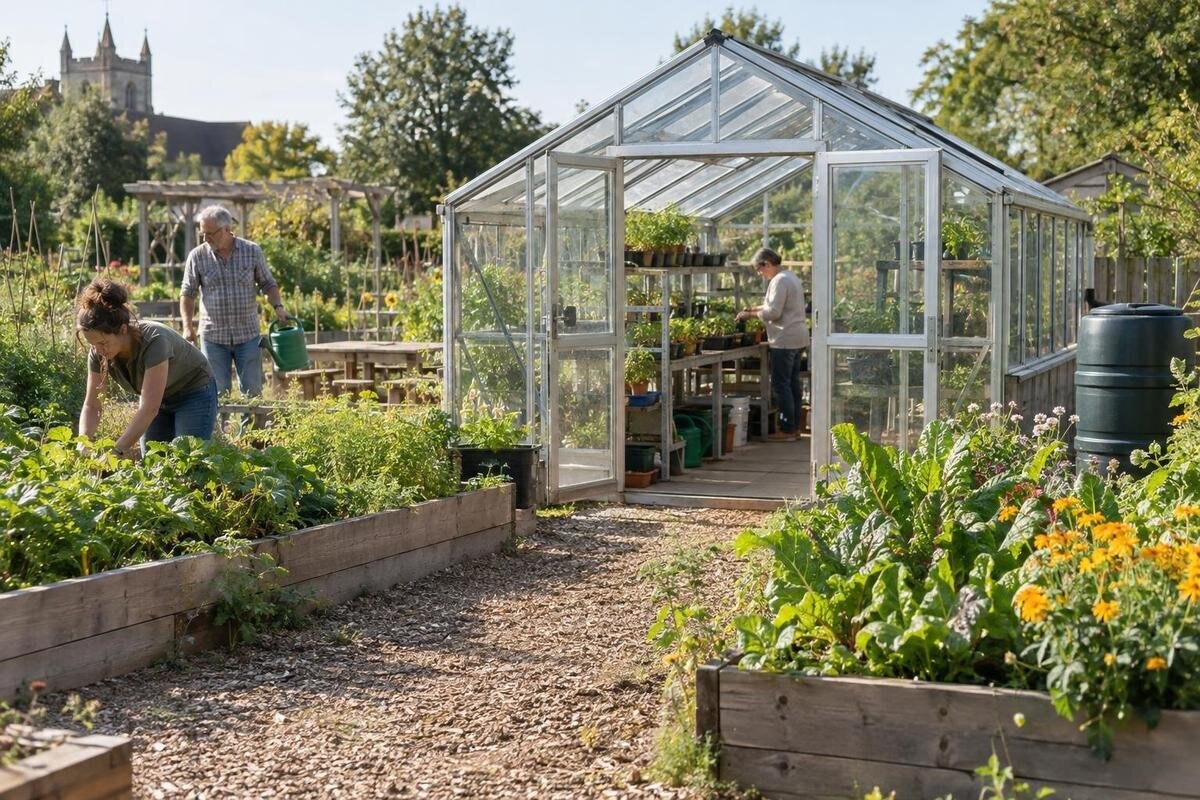
Community greenhouse planning
A community greenhouse is more than a set of individual beds under one roof. Water, walkways, tools, access and decisions are shared, so a task that seems obvious to one member can be missed by everyone else. A practical operating plan makes common and personal areas visible, assigns recurring jobs to named people, and identifies who steps in when someone is away. Build the plan around the group’s actual membership, growing season, crops and site conditions, rather than assuming volunteers will sort things out as they go. A map, task schedule and short set of shared rules give members a consistent reference.

01
Agree on the purpose and who makes decisions
Start by agreeing on the greenhouse’s purpose and the people it is intended to serve. A neighbourhood group might focus on member plots, shared produce, starting seedlings or demonstrations; these uses compete for growing area, bench space, water and volunteer hours. Record the main purpose, growing season, who can join, which activities are included and how much member time is realistically available. Treat secondary uses as planned exceptions, not assumptions. If you are comparing a larger footprint, the Spacious Greenhouse listing gives a catalogue range of 47 to 70 m². That range is a model-size reference, not a count of members or usable growing area after shared routes and equipment are accounted for.
Name decision-makers as carefully as you assign growing tasks. A coordinator can keep the schedule and direct routine questions to the appropriate person, while a committee or agreed group process handles membership, plot allocation, spending and rule changes. Do not leave decisions with whoever happens to be on site most often. Decide how members can raise an issue, how the group will record a decision and which matters need wider agreement. Keep the process proportionate to the group, but write down who can make time-sensitive operational decisions. When roles rotate, record the handover date and successor so responsibilities, keys and supplier contacts do not disappear with one volunteer.
Map shared routes and working areas
Draw the greenhouse and its immediate working area before assigning plots. Use the selected model’s actual drawing and dimensions, then mark the entrance, door opening, aisles, growing beds, shared work surface, tool storage, water access and a place for temporary trays or harvested crops. The T-Shaped Orangery Greenhouse listing gives a range of 16.52 to 30 m², but the model name and area range do not establish aisle widths or usable bed area. Compare the exact selected plan with the work zones you need, and show any outdoor staging space separately. Do not rely on someone moving their plot or equipment to keep a route open.
Mark which surfaces are shared and which belong to a member, and label both on a copy everyone can see. A central work surface, temporary staging area and shared bed should not gradually become somebody’s private storage. Check the planned paths while carrying a watering can or tray and while opening doors; revise the map if people have to squeeze past stored items. Note pinch points where two people may need to pass or wait, then decide where work can pause without blocking others. If members need a particular accessible route or turning space, confirm the required dimensions with the project’s qualified accessibility or building professional. A sketch helps discussion but does not establish formal compliance.
02
Set fair plot and harvest rules
Use clear plot numbers or names and document each seasonal assignment. A short agreement can identify the member or pair responsible, the exact area, whether a nearby edge or bench is shared, what happens to unclaimed crops and when an unused plot may be reassigned. The Pyramid Greenhouse listing shows model sizes from 5.53 to 18.9 m²; use the selected model’s exact plan to test how many individual plots, shared beds and working routes can fit, rather than dividing the headline area evenly. Explain how people apply for plots and how a waitlist or reserve space is managed, so allocation is visible before planting begins.
Decide how common harvests work before the first crop is ready. The group might label shared rows, set a harvest log or choose a collection point and agreed method for distributing produce; select the method that suits the group’s purpose. Set an explicit rule for unlabelled plants and crops so no one assumes they are free to take. Include care during absences: members should know whether a neighbour may water, harvest or remove a plant on their behalf. Review allocations at a consistent seasonal point, with a clear way to raise concerns privately or through the coordinator, rather than requiring a public argument beside the beds.
Make water use visible
Water rules should say who checks each area, how watering needs are communicated and where completion is recorded. Crop needs, weather and planting stage change, so a fixed number of watering cans for every bed is not a reliable shared standard. Use the group’s crop plan and direct observations to guide the routine, and agree how to report a bed that looks unusually dry, wet or damaged. The Classic Aluminum Greenhouses listing spans 3.77 to 28.08 m²; its area range can inform a footprint comparison, but it is not a water-use estimate. Plan water access from the eventual layout and actual growing plan, not only the structure’s advertised floor area.
Put the watering schedule where members can find it, including weekends, holidays and a backup for missed shifts. Keep the record simple: date, area covered, unusual conditions and any follow-up needed. If the greenhouse uses more than one source or tap, label the group’s agreed process and confirm intended use with the site operator; never leave users guessing which supply to use. Set a group rule for reporting leaks or interruptions promptly, and for notifying others if a shift cannot be covered. Agree whether a member should arrange a substitute or hand the job to the coordinator; a visible handover is more useful than a long log volunteers stop maintaining.

03
Organize shared tools and supplies
Make a shared inventory before buying duplicates. Record which tools, watering equipment, trays and consumables belong to the group, where they are kept and who may borrow them. A sign-out sheet or simple shared record can show who has a tool, when it is due back and whether it needs attention. The Limited-Edition Aluminum Greenhouses with Storage listing identifies a model with built-in storage and lists area options from 5.52 to 28.08 m²; confirm the selected version’s exact storage arrangement and dimensions before counting on it for the group’s inventory. Product naming alone does not show how much room will remain for shared supplies.
Separate communal equipment from personal items with clear labels, and agree what must remain on site for the next shift. Choose one person to check stock of frequently used consumables, record damaged or missing items and request replacements through the group’s normal budget process. Members should know what to do with a tool that is dirty, incomplete or damaged rather than putting it back without comment. Do not buy specialist tools simply because they might be useful; list the task they support and who is competent to use and maintain them. An annual inventory can identify duplicates, gaps and equipment the group no longer needs. An inventory remains useful only when someone keeps it up to date.
Give recurring care tasks named owners
A task schedule works when each job has one named owner, a time frame for completion and a backup. Shared responsibility can mean several people help, but assigning a task to everyone often means no one confirms it is done. The Limited Edition Aluminum Greenhouse listing covers model areas from 3.77 to 28.08 m²; use the chosen configuration and crop plan when estimating work, because the catalogue range alone cannot determine care time. Write the actual action, frequency and completion method in plain language, then give each owner a realistic way to report completion or ask for cover. Put the backup’s name beside the owner’s, not in a separate message thread.
Group routine work into predictable rounds that fit the operation: for example, looking over plants, removing spent material, weeding, clearing shared surfaces, checking supply levels and leaving aisles tidy. The list should reflect what is actually grown and how the greenhouse is used; a high-traffic site may need a different rhythm from a member-run space visited on a few set days. Keep the task record brief enough to use at the entrance or in the shared group channel, and include a way to note work that was only partly completed. Arrange holiday cover before the usual owner is away, and make it acceptable to flag a missed job early rather than quietly letting it accumulate.
04
Track maintenance and coordinate repairs
Separate routine care from repair work. Members can note concerns, but an issue involving glazing, structural parts, electrical equipment or other specialist work should go to the person authorized to assess it, not to an improvised volunteer repair. The Bloomcabin Prestige Greenhouse listing gives model areas from 3.77 to 28.08 m²; once a structure is selected, record its exact model and configuration so the group can use the correct product information when logging maintenance questions. Record the date, location, observed issue, person notified and status, without presenting a guess as a diagnosis. If the problem affects access, make the closure or restriction decision through the agreed site process.
Set planned maintenance dates around the start and end of the group’s growing season, then write down what was reviewed, who did the work and any follow-up. The schedule might include cleaning assigned shared areas, reviewing tool condition and confirming that access and reporting arrangements are still current; exact tasks depend on the selected structure and equipment. Keep supplier instructions and service contacts accessible to the designated coordinator. Where an inspection, repair or public-use requirement may apply, confirm it with the supplier, qualified professional, insurer or relevant authority for the site instead of treating a volunteer checklist as proof of compliance. Add a due date to each open issue so it is not forgotten.
Set clear access and member expectations
Set access rules that match the site and the group’s actual operating hours. Identify who holds keys or manages entry, how members arrange a visit outside the regular schedule, whether guests need an escort and whom to contact if the greenhouse is closed or unavailable. Agree who can make a temporary closure decision and how the message reaches everyone, including members who do not use the main group chat. If the greenhouse sits on land managed by another organization, confirm the group’s access arrangement with that site manager before publishing hours. Avoid assuming that an invitation to members also means the space is set up for unrestricted public access.
Give each new member a short orientation to the map, plot boundaries, watering record, equipment system, waste arrangements and task schedule. Show them how to report a missed task or damaged item, and share the same written agreement with returning members whenever a rule changes. Make the process for raising a concern clear: whom to approach first, when a coordinator should involve the wider group, and how a decision will be recorded. For access needs, ask users what works for them and check any formal requirements with a qualified professional or relevant authority. Clear instructions reduce avoidable friction without promising that one layout or policy suits every participant.

05
Match the greenhouse to the site and workload
Choose the structure after the operating plan reveals how much growing and shared working area the group needs. Compare footprint, site boundaries, access route, intended crop areas and space for people to work at the same time. The Lean-To Greenhouses listing includes models from 3.69 to 14.34 m²; that catalogue range alone does not confirm a fit beside any particular building or provide required clearances. For every option, check the exact model drawing and dimensions against the site plan, including access for installation and future maintenance. If members are unsure how the site or configuration should be assessed, ask the supplier or an appropriate qualified professional.
Make a short pre-purchase record of assumptions and open questions: number of active members, plot plan, shared-work area, routes, storage, water arrangements and expected upkeep. Ask the supplier for the details needed to assess the exact model and selected configuration; ask a qualified installer or other relevant professional about site-specific installation questions. Check permission with the site owner and any applicable local requirements with the responsible authority. A greenhouse intended for shared use should not be treated as automatically suitable for public or institutional use; suitability depends on the actual project and must be confirmed for it. Keep the resulting answers with the project file for future coordinators.
Keep the operating plan current
Keep the operating plan short enough to remain useful, but complete enough that a new volunteer can take a shift. Put the current site map, plot assignments, watering schedule, tool inventory, maintenance contacts, access rules and process for escalating concerns together in one shared place. Give the document an owner and review date, and store contact information where members can find it without searching old messages. A separate log can capture completed tasks and unresolved issues, while the main plan explains how work is meant to happen. Make changes visible instead of relying on word of mouth, and remove old versions from the active noticeboard.
Review the arrangement after the first few weeks of use and again when membership, crops or the season changes. Ask what was missed, where members had to wait, which tools were hard to locate and whether any task had no clear backup. Adjust assignments and the map based on observed use, then tell everyone what changed and when it takes effect. A seasonal handover should leave the next coordinator with a current task schedule, supplier details, outstanding repair notes and budget requests. Reviewing the plan is not a sign that it failed; it is how a shared system stays accurate as the group and its workload change.
Frequently asked questions
How many people can use a community greenhouse at once?
Floor area alone cannot answer that. Check the selected model drawing against the bed layout, aisles, door openings, shared work zones and tasks people will do. Consider whether several members are likely to arrive together, then test a realistic schedule with intended users. If a clear or accessible route is required, confirm dimensions with an appropriate qualified professional rather than estimating from a product image.
Should members have individual plots or share all the beds?
Either can work if the purpose and responsibilities are clear. Individual plots make care ownership visible, while shared beds suit crops or activities managed by the group. Many groups use both. Set boundaries, harvest rules, watering responsibility and a process for unused areas before planting, then revisit allocations at a consistent point in the season.
How can members keep watering fair when schedules differ?
Publish a watering schedule with a named owner and backup, keep a simple log by area and make it easy to report a missed shift or unusual condition. Base the routine on the crops and current conditions instead of applying the same amount to every bed. Make handovers explicit when someone swaps a shift, so no one assumes a task is complete.
What belongs in a shared tool inventory?
List group-owned tools, watering equipment, trays and regularly used consumables, along with their storage place, borrowing and return process, and the person responsible for stock updates. Add a way to report damage or missing items. Keep personal equipment clearly separate and agree how replacements are requested before the next purchase is needed.
Who should handle repairs?
Members can report and document issues, but the group should name a coordinator to refer them to the supplier or an appropriate qualified professional. Assignment to a routine volunteer task does not authorize someone to carry out repairs. Record who is handling the issue, any temporary access decision and the next follow-up date. Check site-specific inspection or public-use requirements with the relevant authority.
When roles and routines are visible, members can spend less time working out who was supposed to do what and more time caring for the plants. Keep the agreement practical: update the map when beds change, record shift swaps in the schedule, return shared tools to their assigned place and pass unresolved work to a named owner. A community greenhouse is not maintained by a document alone; the plan is useful because it lets each person see how their shift connects with the next. Review it openly as membership and growing plans change.
