
Electric or Fuel-Burning Greenhouse Heat: What to Compare
Greenhouse heating
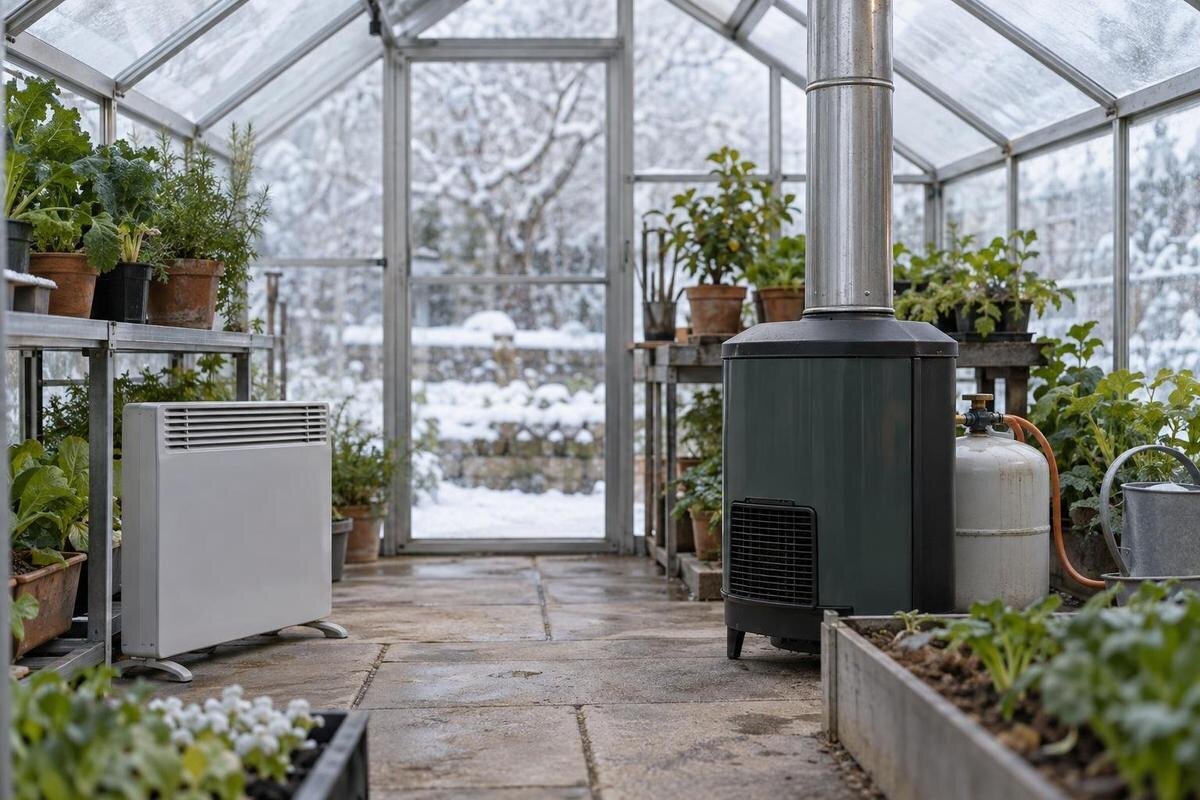
An electric heater and a fuel-burning heater can both warm a greenhouse, but they affect indoor air and installation differently. Electric models have no combustion exhaust at the point of use. A fuel-burning model may release water vapour and combustion gases into the growing space unless it is designed to vent them outdoors. Both still depend on the greenhouse shell, air exchange, controls and a reliable energy supply. Compare the complete systems—not just the heater’s advertised output or the unit price of electricity or fuel. This guide focuses on moisture, emissions, ventilation and installation constraints; it does not calculate heater size or promise a temperature or winter bill. Those depend on the selected structure, local conditions and documented equipment performance.

Questions to ask before buying 1
Define the heating task before comparing energy sources
Before comparing energy sources, define the job the heater must do. Note which part of the greenhouse needs heat, when the system is expected to operate, which controls you need and whether people routinely enter while it is running. Heating a defined zone, heating the whole space and heating an intermittently used structure put different demands on controls and heat distribution. Keep the operating target and schedule consistent when reviewing both options. Describe a typical period of use, including when heat is needed and which areas are occupied by plants. If one proposal covers the entire greenhouse and another covers only a smaller growing area, they are not yet comparable. Identify that difference before weighing their energy use or purchase price. This guide is not a sizing calculation; it provides a basis for asking whether each candidate has suitable output, coverage and controls.
Record the selected greenhouse’s footprint, height, glazing, openings, exposure to wind and how often doors are opened. Floor area is useful, but it does not describe every source of heat loss or how air may move through the space. For example, the Classic aluminum greenhouse range is listed in sizes from 3.77 m² to 28.08 m²; the exact configuration matters more than the family name when assessing heat demand. Include partitions, adjacent unheated spaces and regularly opened doors in your description. Do not infer insulation, ventilation performance or heater compatibility from a product category.
Separate on-site emissions from upstream impact
An electric heater does not burn fuel in the greenhouse, so it produces no combustion exhaust at the point of use. That can simplify the indoor-emissions comparison, but it is not the same as saying electricity has no environmental impact. Generation emissions depend on the electricity supplied to your site and can vary by location. Depending on the design, an appliance may also draw power for a fan, pump or electronic controls. Check the manufacturer’s information for rated input, heat output and accessory requirements instead of treating the word electric as a complete performance specification. Electric heat also does not remove the need to manage greenhouse air and moisture.
Fuel-burning heaters create combustion exhaust, but its composition and route depend on the appliance and fuel. With common hydrocarbon fuels such as propane or natural gas, carbon dioxide and water vapour are expected combustion products; incomplete combustion can produce carbon monoxide, and nitrogen oxides may also be relevant. An unvented or direct-fired design releases combustion products into the greenhouse, whereas a purpose-designed vented appliance is intended to discharge them outdoors. These are not interchangeable setups. Confirm the approved vent configuration in the heater documentation and with a qualified installer; do not assume every heater can accept a flue.
Questions to ask before buying 2
Combustion affects greenhouse moisture
Burning hydrocarbon fuel inside an enclosure produces water vapour, so an unvented heater can add moisture as it heats. That moisture may condense on cool glazing or framing and compound an existing humidity problem. Electric heating adds no water from fuel combustion, but heating alone does not remove moisture from the greenhouse. Wet growing media, puddles, damp surfaces and plant transpiration remain relevant. A warmer temperature can change relative humidity without reducing the amount of water in the air, so a lower humidity reading does not by itself show that moisture has been removed. When comparing heaters, distinguish three questions: whether the appliance adds water vapour, how moisture already in the greenhouse is managed, and where condensation is occurring. This keeps a claim about combustion moisture separate from a claim about overall humidity control. Neither energy source guarantees a dry greenhouse.
When considering a fuel-burning model, identify whether it is vented, which fuel it uses and what the manual says about indoor use and air supply. The Limited Edition aluminum greenhouse range is listed across multiple floor areas, but a product family or area figure does not specify condensation behaviour, glazing, air leakage or ventilation capacity. Those details matter alongside heater emissions. A larger structure is not a substitute for documented air-supply and emissions requirements. In your comparison, distinguish moisture from growing activities from moisture added by combustion, rather than attributing every condensation problem to the heater.
Greenhouse ventilation is not a substitute for a flue
Combustion appliances and greenhouses can have separate ventilation needs. A heater may require a specified supply of air and a defined route for exhaust; the greenhouse may also need air exchange to manage moisture and other growing conditions. These needs are not interchangeable. A roof vent, open door or ordinary greenhouse fan should not be treated as a flue, and a flue does not automatically provide the greenhouse’s required air exchange. Follow the heater maker’s specified arrangement and have a proposed route assessed by a qualified installer. Do not block prescribed openings to reduce heat loss or improvise an exhaust connection.
Air movement and heat distribution also depend on layout and obstacles. A T-shaped orangery greenhouse is listed in sizes from 16.52 m² to 30 m², a reminder to consider each branch of a layout rather than relying on a reading from one convenient corner. For the selected structure, ask how the heater’s ventilation and exhaust requirements fit with its doors, openings and circulation equipment. The listing does not establish a ventilation rate or show where an appliance may be installed; use the exact greenhouse plan and heater documentation.

Questions to ask before buying 3
Check electrical and fuel installation constraints
An electric heater must suit both greenhouse conditions and the electrical supply available at the site. Ask for its rated input, control requirements and permitted installation environment. A qualified electrician can assess the supply, protective devices, location and controls against the equipment instructions and applicable local requirements. A heater marketed for indoor rooms is not automatically appropriate for a humid greenhouse, and a plug that fits does not prove the appliance is suitable. Confirm the proposed arrangement professionally rather than treating a change of connection or control as a simple workaround.
A fuel-burning option brings a different checklist: compatible fuel, supplier access, permitted storage location, combustion-air supply, exhaust route and the manufacturer’s clearances. A lean-to greenhouse range has an attached form, so the exact site plan and adjacent wall matter when an installer assesses clearances and a proposed exhaust route. Do not assume the neighbouring building is a suitable place to discharge exhaust. Ask a qualified fuel-appliance installer to review the proposed layout, and check applicable requirements with the relevant local authority rather than relying on a general online rule.
Compare heat distribution and controls
Electricity is an energy source, not a single heating method: some electric units use a fan to move warmed air, while others rely more on radiant transfer. Fuel-burning heaters also differ in how their output is controlled and whether ignition, a fan or a pump needs electricity. Review the documented output range, thermostat arrangement, control compatibility and restart behaviour after an interruption. Ask whether a thermostat is included and which area its sensor is intended to monitor. For a fair comparison, distinguish the heater’s controls from any separate controls included in the proposed system. Note whether the quotation covers the thermostat, sensor and other required components, or leaves them to be selected separately. Also distinguish the temperature shown at the sensor from conditions in the growing area. A convenient display is useful, but it should not be treated as evidence that temperatures are even throughout the greenhouse.
Match the proposed distribution method to the actual layout. The Pyramid greenhouse range is listed from 5.53 m² to 18.9 m², but area alone cannot show whether one heater or sensor will serve every part of the space evenly. Shelving and stored items can affect air paths, while height and shape can contribute to temperature differences. Ask how the heater’s stated output and control method are intended to work in the selected structure. For multiple zones, compare the controls and operating requirements for each zone instead of assuming either energy source will create even conditions.
Questions to ask before buying 4
Compare operating costs with local inputs
Electricity and fuel are billed in different units and may include different delivery or service charges. Use your actual tariff and supplier price rather than a national average. Record the electric appliance’s documented draw and the fuel appliance’s stated consumption or efficiency, along with any fan, pump or standby requirements. Include service or fuel-delivery costs where they would apply, and distinguish charges that change with use from fixed charges you would pay anyway. The Prestige greenhouse range is listed from 3.77 m² to 28.08 m²; use the exact configuration and heated area in any estimate, not just the product-family name.
Keep the greenhouse, heating target and operating schedule the same when comparing two sources. A lower fuel price per unit does not prove a lower bill if the appliance consumes more fuel, runs differently or requires paid service; an electric option should not be judged by its category name either. Put both estimates on the same time basis, such as the same planned heating period, and keep purchase and installation costs separate from ongoing costs. Show which figures come from your tariff or supplier quote and which depend on estimated use. If one estimate includes maintenance, delivery and auxiliary electricity while the other includes only energy, the totals do not describe equivalent costs. Where consumption remains uncertain, identify that uncertainty rather than presenting a precise saving. This article does not calculate a winter bill, but these distinctions make a supplier’s estimate easier to interpret and help you see what a quoted total actually includes.
Include maintenance and outage planning
Electric heaters avoid burner and flue servicing, but their controls, wiring, fans and protective features still need attention in accordance with the maker’s instructions. Fuel-burning units add upkeep for components such as the burner, ignition and exhaust system; neglected or faulty equipment can affect emissions and reliability. Ask what routine service the model requires, who can provide it locally and which faults mean you should contact a technician. If you are considering a greenhouse with built-in storage, do not assume that its storage area is suitable for fuel. The product description does not establish that use, and fuel-storage suitability is a separate question from the convenience of having space for greenhouse supplies.
Consider what happens if electricity or the fuel supply is interrupted. An electric heater cannot provide heat without electricity; a fuel-burning heater may also stop if its ignition, thermostat, fan or circulation system needs power, even when fuel remains available. Check the manual for every electrical dependency and ask the supplier about fuel availability. If backup heat is part of the plan, choose equipment documented for the intended setting and have its installation reviewed professionally. Discuss appropriate alarm or detection provisions with the installer where combustion equipment is involved; detection does not replace correct venting, operation or maintenance.

Questions to ask before buying 5
Verify the heater against the greenhouse specifications
A heater’s rating cannot stand in for the greenhouse’s construction details. Confirm the selected model’s dimensions and materials, glazing type, opening locations, ventilation options and any documented insulation claims from product records. The Spacious greenhouse range is listed from 47 m² to 70 m²; that describes floor-area options, not heat retention, air leakage or a guaranteed temperature. For any structure, identify the exact configuration and ask whether its manufacturer publishes the information needed by the heater installer. Do not infer performance from a model name, photograph or area figure.
For the heater, record the intended environment, approved fuel, exhaust type, required air supply, rated input and controls. Compare each requirement with the greenhouse records and proposed installation plan. Keep the two sets of specifications distinct: a greenhouse listing describes the structure, while heater documentation describes the appliance and its installation requirements. Neither establishes compatibility on its own. Identify exactly what remains unresolved, such as a missing appliance specification or an exhaust route that has not been assessed. That gives the manufacturer or qualified installer a concrete question to address, rather than a broad request to confirm that the whole setup will work.
Compare the complete installed system
Put both candidates side by side under the same greenhouse conditions. For each, record where combustion products go, whether fuel combustion adds water indoors, which air-exchange requirements apply, the electrical and fuel connections, controls, expected service and outage dependencies. Mark each item as documented, not applicable or still unverified. Include the equipment model and exact greenhouse configuration in any installer quote. Keep a requirement separate from the proposed way of meeting it: an appliance may need an exhaust route, for example, while the suitability of the proposed route remains unresolved. Likewise, distinguish equipment included in the price from work or components quoted separately. A complete comparison should make those differences visible before you rank the options. This makes broad claims such as cleaner, cheaper or easier less likely to replace the details that determine whether an appliance fits the space.
Electric heat may be a straightforward option when the electrical supply is suitable and avoiding on-site combustion is a priority. A fuel-burning option may suit a setup where its fuel supply, combustion-air needs and manufacturer-approved exhaust arrangement can be supported and maintained. Neither description promises lower costs, safer operation or more reliable heat; the individual appliance and its installation matter. If moisture management, venting or access to local service is uncertain, get a qualified review before purchasing rather than choosing by fuel type alone.
Frequently asked questions
Does an electric greenhouse heater add moisture?
It does not release water vapour from fuel combustion, but heating alone does not remove humidity. Irrigation, damp growing media, plant transpiration and wet surfaces still affect moisture. Consider ventilation and humidity management separately from the choice of heater.
Can I use an unvented propane heater in a greenhouse?
Only if the documentation for that exact appliance permits the setting and its stated air-exchange requirements can be met. Combustion products and water vapour enter the space, and incomplete combustion can create hazardous gases. Confirm suitability with the manufacturer or a qualified installer; propane as a fuel does not make a heater greenhouse-safe.
Is electric greenhouse heating emissions-free?
It produces no combustion exhaust at the point of use, but electricity generation can produce emissions. The impact depends on the electricity supply, while fuel-burning options have direct emissions and may also have upstream impacts. Use location-specific information rather than assuming one source is always cleaner.
Which option costs less to operate?
There is no universal answer. Compare your actual electricity tariff or fuel price with the appliance’s documented consumption or efficiency, then account for any relevant service and delivery costs. Use the same greenhouse, operating schedule and heating target for both options.
Will a fuel-burning heater work during a power outage?
Not necessarily. Ignition, thermostats, fans or circulation equipment may need electricity even when fuel is available. Check the heater’s manual for every electrical dependency and consider backup equipment only if it is documented for the intended setting and professionally reviewed.
The meaningful comparison is not simply electricity against fuel. It is the electrical supply and indoor-air implications on one side, and fuel logistics, combustion moisture and exhaust on the other, with controls and maintenance to consider for both. Make the choice only after the greenhouse configuration and the heater’s documented requirements have been assessed together.
