
Growing Pak Choi in a Greenhouse
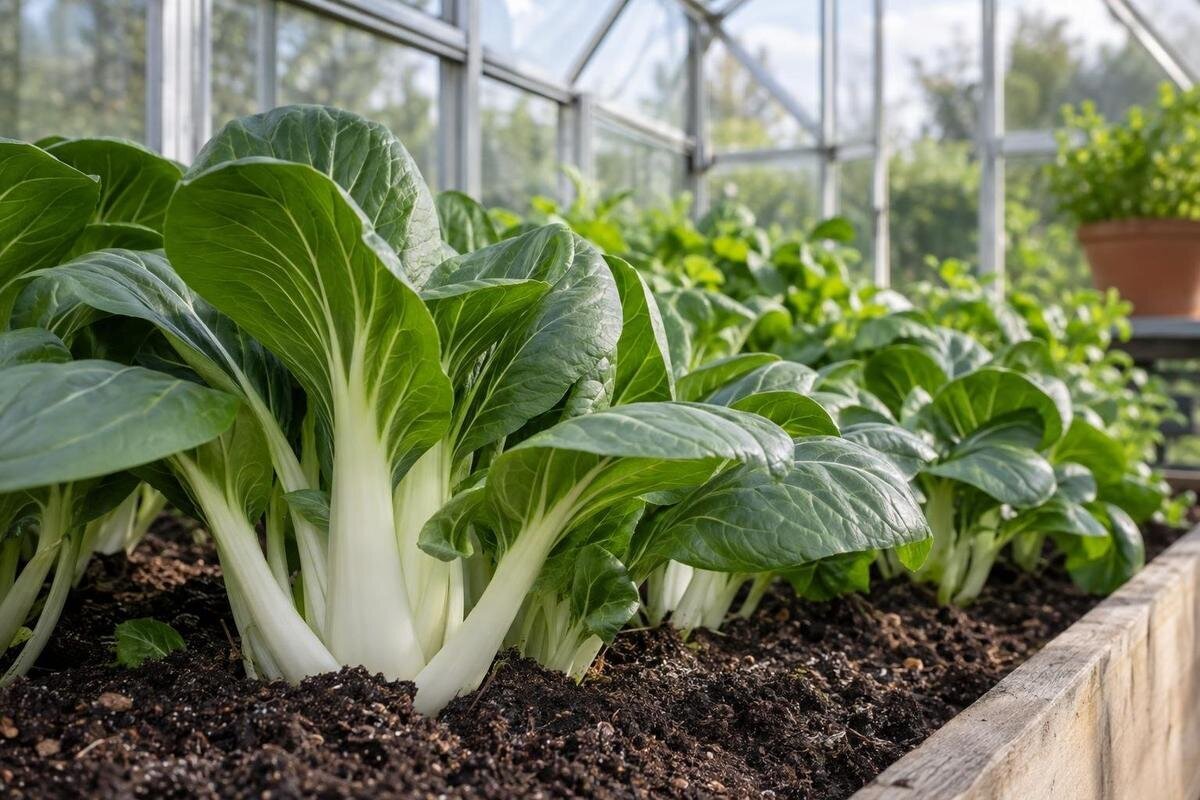
GREENHOUSE GROWING GUIDE
Pak choi can make good use of greenhouse space, but it is not a heat-loving crop. Its best window is usually spring or fall, when temperatures support steady leaf growth and the structure can shelter plants from wind and rain. Under glass, the main scheduling risk is not just a short season: sunny days can heat the greenhouse quickly, and cold exposure followed by lengthening days can encourage bolting. Small sowings, temperature checks and prompt harvesting help you manage that window.

Why pak choi suits the cool part of the season
Pak choi (Brassica rapa subsp. chinensis) is grown for its tender leaves and crisp stems, and it performs best in conditions that support steady growth without excessive heat. A greenhouse can shelter a crop from wind and rain and may extend growing opportunities into early spring and late fall, but an unheated structure is not a climate-controlled room. Sun can raise daytime temperatures quickly, while nights may still be cold. Check conditions near the plants rather than assuming the greenhouse provides uniformly mild temperatures.
Bolting is the switch from a compact leafy rosette to a flowering stem. The risk varies with cultivar, plant age and growing conditions: a period of cold can prime established plants, while lengthening days and warm spells encourage flowering. Excessive heat can also shorten the leafy phase. Once the central stem starts to rise, leaves may become tougher and the harvest window narrows. Plan to pick before that change. Since frost dates and spring temperatures vary across Canada, use your local forecast and record greenhouse highs and lows instead of following a single national sowing date.
Time spring and fall sowings to reduce bolting risk
Treat spring and fall as separate short runs, not one continuous sowing season. For spring, choose a variety whose stated time to maturity fits the cool period before your greenhouse tends to overheat. Sow a small first batch when the bed is workable and seedlings can grow without prolonged cold. A second sowing roughly 10 to 14 days later can spread the harvest, but that interval is a guide, not a fixed rule. Adjust it to your conditions and the seed packet’s maturity estimate. Avoid sowing the whole bed at once if you cannot harvest every plant promptly. Before each additional sowing, look at the progress of the previous batch and the weather ahead. If plants are already approaching harvest size and a warm spell is forecast, another full-size crop may not fit the remaining cool period. Decide whether you want baby leaves or mature heads when planning the batch, rather than waiting until the plants are crowded or the greenhouse is too warm.
For fall, sow as summer heat eases while there is still enough light and time for the selected variety to reach your intended harvest size. Shorter days and cooler air generally favour a leafy crop, but growth slows as the season advances; a late sowing may not reach full size before a hard freeze. Keep each batch small enough to use at its expected stage. The Limited Edition Aluminum Greenhouses listing covers options from 3.77 to 28.08 m². Compare the selected footprint with the area you can sow and reach, rather than treating total floor area as plantable space.
Choose seed and establish an even crop
Look for a variety described as slow to bolt or suited to spring or fall, then check its expected size and maturity on the packet. That wording can help you choose, but it does not eliminate the risk of bolting in a hot greenhouse or after a prolonged cold spell. Different pak choi varieties also form different-sized rosettes, so spacing and harvest stage should follow the named variety rather than a generic picture. Label each batch with its sowing date; if one run bolts early, those notes can help you distinguish a timing issue from a variety difference. Keep the variety name with the record too, especially if you sow more than one kind. Compare plants at the same intended harvest stage, rather than judging a baby-leaf variety against a crop grown for full-size heads. Useful notes include when the plants were ready to pick and whether flowering began before you had used the batch.
Direct sowing avoids the growth setback that can follow transplanting and makes it easier to keep plants in place. Sow shallowly, about 6 mm deep or as directed on the packet, and keep the surface evenly moist while seeds germinate. Thin seedlings to suit their eventual size instead of letting crowded clumps compete. If you use transplants, move them while young and avoid holding them in small cells until their roots are cramped. When comparing growing areas, the T-Shaped Orangery Greenhouse listing spans 16.52 to 30 m²; check the plan for the selected size to see whether it leaves room for both seedlings and mature rows.
Manage daytime heat and overnight chill
Use a minimum-and-maximum thermometer or a logging sensor near the crop canopy, positioned out of direct sun and away from the glazing. Readings at roof level may not reflect conditions where the leaves are growing. On bright, cool days, check the greenhouse before the plants wilt: indoor heat can build quickly even when outdoor air still feels mild. Ventilate as conditions allow, using openings you can reach and manage, and pay attention to sudden changes when a cold night follows a sunny day. Record whether vents were open or closed alongside the readings so you can interpret them later. A high recorded with the structure closed tells you something different from a high recorded while it was ventilated. The aim is to understand the conditions your crop actually experiences and whether your usual ventilation routine is keeping daytime heat manageable.
Ventilation helps limit overheating and allows damp air to escape, but opening a structure during a cold spell can expose plants to chilling conditions. Adjust openings to the weather rather than relying on one routine, and do not assume a closed greenhouse will stay warm overnight. If you want to grow through colder periods, assess the temperature and light requirements for the crop and the greenhouse before planning for heat. The Pyramid Greenhouse listing covers 5.53 to 18.9 m²; area alone does not indicate ventilation. Review the specific model’s opening details and consider whether you can use them effectively.

Keep soil evenly moist without waterlogging
Pak choi needs consistent moisture for steady leaf growth. Use fertile, well-drained soil and check the root zone regularly; the surface can look damp while the soil below has dried out, or stay wet after the surface appears dry. Water at soil level where practical, and avoid letting plants dry out and then flooding the bed. Containers can dry faster than in-ground beds, particularly on sunny days, so check them more often. Good drainage matters too: consistently soggy soil is not a substitute for even moisture. If you grow in both beds and containers, assess them separately rather than watering everything on the same schedule. Check more than one spot in a bed, particularly where watering is uneven or access is awkward. This gives you a better basis for deciding where water is needed than the appearance of a single patch of soil.
Add mature compost or other amendments according to the condition of your soil, and avoid applying more fertilizer than the crop needs. A soil test can help guide amendments when you are unsure. If you are considering storage as part of a greenhouse plan, the Limited-Edition Aluminum Greenhouses with Storage listing includes options from 5.52 to 28.08 m². Check the plan for your chosen size to see how the storage area relates to the space left for beds, watering equipment and soil supplies; the listed total area is not necessarily all growing area.
Set spacing and beds for easy access
For full-size heads, a useful starting layout is about 15 to 30 cm between plants and 30 to 45 cm between rows. Follow the seed packet if it gives different spacing for your variety. Baby-leaf crops can be planted closer and harvested earlier, while mature plants need enough room to develop without crowding. Leave an aisle or reachable edge so you can water, inspect leaves and cut plants without stepping into the bed. Tight spacing can make it harder to spot pests and keep air moving around the crop. Mark out the proposed rows before sowing and check that you can comfortably reach the centre of the bed. Allow access to the last plants in a batch, not just those closest to the path. If you plan separate sowings, identify each row clearly so that thinning and harvesting do not blur the boundaries between batches.
Choose a bright part of the greenhouse, but remember that strong sun can also drive up daytime heat. Temporary shade during an unusually hot spell may reduce the peak, but it does not replace cool-season scheduling. Sketch beds, paths and any work area before choosing a footprint. The Bloomcabin Prestige Greenhouse listing covers options from 3.77 to 28.08 m². Use the dimensions for the specific option to work out usable bed space; the overall floor area includes room that may be needed for access.
Check for pests and crop problems regularly
A greenhouse does not keep every pest out. Inspect young plants and the undersides of leaves often, especially after bringing in seedlings or opening doors and vents. Flea beetles can leave small holes, caterpillars may chew larger ragged openings, and aphids can cluster on tender growth. Slugs may also damage plants near damp edges. Look for the insects as well as the damage so you can identify the problem before deciding how to manage it.
Remove damaged leaves and spent brassica material, and keep weeds from harbouring pests near the beds. Fine insect netting can help exclude some pests if it is suited to the target insect, but make sure it does not prevent doors or vents from working properly. Avoid crowding plants, since restricted airflow and persistently damp foliage can encourage crop problems. If you cannot identify a pest or disease, ask a local garden centre or extension service for identification before using a control product; follow the product label for edible crops.
Harvest in stages before flowering begins
Use the seed packet’s maturity estimate as a guide, not a guaranteed harvest date. Conditions and variety affect how quickly plants reach the size you want. For baby leaves, pick them while they are tender; for full heads, cut the plant at the base once it has formed a well-developed rosette. You can take outer leaves from some plants, but repeated picking does not guarantee that a full head will regrow. Harvesting in smaller amounts also helps prevent mature plants from sitting in the bed while you catch up. Within a batch, plants may reach the desired size at different times, so assess them individually rather than waiting for the whole row. Choose the plants that are ready for the meal you are preparing and leave smaller ones only while conditions remain suitable. If more plants mature together than you can use, reduce the number sown in the next comparable batch.
Check the centre of each plant as the days lengthen and temperatures rise. If the stem begins to elongate, harvest promptly if the leaves are still usable; removing the stalk will not reliably return the plant to compact leaf growth. Clear spent plants and note which batch reached harvest first, then use that information to adjust your next sowing. The Aluminum Greenhouses listing covers 3.77 to 28.08 m². Whatever the growing area, plan each batch around how much pak choi you can pick and use before the plants pass their preferred stage.

What an unheated greenhouse can realistically do
An unheated greenhouse can extend the season by sheltering plants and making it possible to start or finish a crop outside the main outdoor window. It does not guarantee frost-free nights, however, and a prolonged cold spell can slow or stop growth. Winter light also declines, so extra shelter alone may not produce a harvest. Keep records of overnight lows as well as sunny-day highs; the combination shows whether your structure is giving pak choi a useful growing window.
The site affects that window too. Nearby trees and buildings can shade beds, particularly when the sun is low, and a greenhouse that is difficult to ventilate can be hard to manage in warm weather. The Lean-To Greenhouses listing includes options from 3.69 to 14.34 m², but the area range does not show the light or airflow at a particular site. Check the chosen plan, the space available for access and the amount of sun the location receives. If you plan to add fixed heating or electrical equipment, have the setup assessed by a qualified professional.
Size the greenhouse around the whole crop plan
Estimate the space you need from the whole growing plan, not just the number of pak choi plants at their peak. Allow for access paths, a place to handle seedlings and room for other crops if you intend to use the greenhouse year-round. Check the usable interior dimensions and the specific option’s plans; a listed floor area does not explain bed layout or how much room remains once paths and storage are included. Map out which beds you expect to use in spring, summer and fall. This helps reveal whether pak choi will share space with another crop or occupy a bed between plantings. Include any overlap between seedlings awaiting planting and crops still being harvested, since both need room during that changeover. Also verify the manufacturer’s information on ventilation and suitability for your local weather instead of inferring performance from a model name or material.
For a broader growing plan, the Spacious Greenhouse listing covers 47 to 70 m². That area range may be relevant to several crops, but it does not indicate temperature control, and pak choi alone is a short-season crop. Match the size to the crops you expect to grow, the time you can spend ventilating and maintaining the space, and the site’s practical limits. Where local weather or installation requirements are unclear, ask the supplier or a qualified professional rather than assuming a greenhouse is suitable from its footprint.
Frequently asked questions
When should I sow pak choi in a greenhouse?
Plan spring or fall sowings around your local weather and the variety’s stated time to maturity. Sow in small batches while conditions are cool enough for steady growth, and pause when the greenhouse is regularly getting too warm.
Why does pak choi bolt under glass?
Bolting can be encouraged by a combination of plant age, cold exposure, lengthening days and warm conditions. A greenhouse can heat up quickly in sunshine, so measure temperatures near the plants instead of assuming the crop is protected from heat.
Can I grow pak choi through winter in an unheated greenhouse?
An unheated greenhouse can extend the growing season, but it does not guarantee frost-free conditions or steady winter growth. Check overnight temperatures and local forecasts; late sowings may also grow too slowly to reach harvest size.
How far apart should I plant pak choi?
For full-size plants, a starting point is about 15 to 30 cm between plants and 30 to 45 cm between rows. Follow the seed packet for your variety, since mature size and baby-leaf spacing can differ.
Should I harvest pak choi as leaves or whole heads?
You can pick young leaves or cut a whole plant at the base, depending on the variety and the harvest size you want. Repeatedly taking outer leaves does not guarantee the plant will keep producing; harvest promptly if a flower stem begins to rise.
Grow pak choi as a brief cool-season crop, not as a summer default or a winter guarantee. Let local forecasts and readings near the plants guide each sowing, and keep batches small enough to harvest on time. That approach makes the most of a greenhouse’s shoulder-season shelter while recognizing that it cannot remove the crop’s limits around heat, cold and flowering.
