
Should You Direct Sow or Raise Transplants for Greenhouse Crops?
Greenhouse growing guide
Greenhouse crops do not all benefit from the same start. Direct sowing puts seed in its final bed or container, while raising transplants means growing a seedling elsewhere and moving it later. Root habits, growing time, conditions at sowing and the space available for both seedlings and established plants all matter. Many growers use both methods, choosing separately for each crop and sometimes for different sowings of the same crop.

What direct sowing and transplanting mean
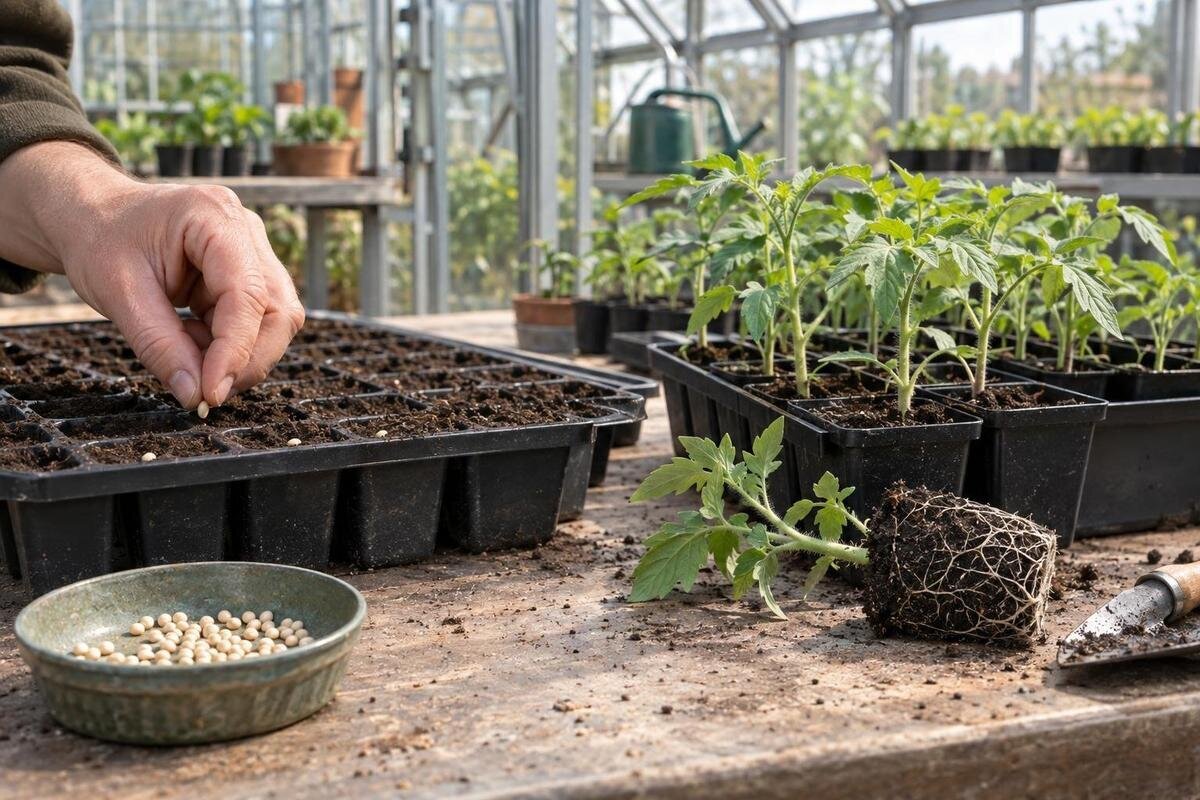
Direct sowing means placing seed in the bed or final container where the crop is meant to grow through to harvest. Raising a transplant means germinating seed in a cell, tray or pot, caring for the seedling separately, then moving it to its final bed or container. Seed started in a tray inside the greenhouse is still transplant production; it has not been direct-sown into the crop bed. The distinction is about the seed's first growing position, not whether the work takes place indoors or under greenhouse glazing. If you sow into a large pot where the plant will remain, you have essentially sown into its final container.
Each method shifts work to a different point. Direct sowing removes a move and leaves roots undisturbed in the final growing medium, but the bed must be ready and suitable when germination begins. Transplanting separates early seedling care from production beds and lets you place established plants deliberately; it also adds containers, watering, monitoring and handling. Neither method automatically shortens total development time: the seed still has to germinate and grow, and a moved seedling may pause while it settles. If a seedling is potted on before planting, count that extra move in the plan too. Choose for the crop, not as a greenhouse-wide rule.
Crops that are usually sown in place
Carrots and parsnips are common direct-sowing choices because their main roots develop where the seed lands; moving a young plant can disturb that root and affect establishment or shape. Radishes are generally straightforward to sow in the bed as well, and their quick growth may not justify a separate seedling stage. Peas and beans are often sown in their final soil: a tray stage can add handling without offering a useful head start when conditions already suit them. These are practical defaults, not absolute rules. Follow the directions for the crop and variety you are growing, and remember that direct-sown seeds may emerge unevenly and need a later resowing.
Direct sowing also suits leafy crops such as lettuce when you want plants to grow in place, although lettuce can be transplanted successfully too. In a greenhouse, reserve the bed before sowing: seedlings in the soil cannot be shifted aside as easily as a tray. When comparing Limited Edition Aluminum Greenhouses, consider how much of the footprint you would devote to permanent beds after allowing for paths and access. That matters especially for direct sowing, because the bed is occupied throughout germination and early growth as well as the later crop. Consider when each bed will become available and whether you can reach the full sown area to monitor emergence, water seedlings and thin crowded patches.
When raising transplants gives a useful head start
Raising transplants is useful when a crop takes a long time to reach harvest, needs warmth through much of its development or would otherwise occupy a valuable bed while still very small. Tomatoes, peppers and eggplants are often started in cells or pots so early growth happens under conditions you can manage, before the final bed is ready. This can help when the available growing window is short for the chosen variety. Starting separately only frees production space if seedlings have a suitable place to grow and are not competing with other batches for that same surface.
Brassicas such as cabbage and broccoli are also commonly raised in trays or a nursery bed, then moved when established. That approach can make it easier to manage a planned number of plants, label varieties and transplant a uniform batch. If you sow in a nursery bed rather than individual cells, plan to lift the roots without letting them dry out and have the final position ready. Young plants still need suitable light, temperature and water, and seedlings held too long can become difficult to manage. Work back from the intended planting period using crop-specific guidance. If you are comparing the T-shaped orangery greenhouse, include both the nursery area and the beds that will receive those plants in your proposed layout.
Root disturbance can change the choice
Root sensitivity is a reason to decide on a method before opening a seed packet. Root vegetables such as carrots and parsnips are usually easiest to establish in their final position, because lifting or bending a developing taproot can interrupt growth and affect root form. A tray is therefore not automatically a gentler or more controlled start. By contrast, many leafy and fruiting plants can be moved successfully if their roots stay intact and the seedling is at a suitable stage. The key question is not whether transplanting is possible, but whether the crop gains enough from it to justify the disturbance.
Some cucurbits, including cucumbers and squash, can be started in containers or sown directly. If you raise them, choose a container that lets the root ball move with minimal disturbance and avoid holding plants until roots are crowded; if you direct-sow, wait for conditions suited to germination and early growth. An individual cell may let a plant move once without separating tangled roots, while seedlings started together may need pricking out first. Check crop and variety guidance, since related plants do not all respond exactly alike. When transplanting, lift the root ball gently rather than pulling on the stem. When thinning a direct-sown row, take care not to disturb neighbouring roots.

Match sowing dates to conditions and the final planting date
Timing can decide the method before the seed is even sown. A direct-sown seed relies on the final bed being suitable for germination and early growth; sunlight may warm a greenhouse by day while conditions still shift overnight. Do not assume the soil is ready because the air feels comfortable. Use the crop's sowing instructions and consider conditions where the seed and roots will be, particularly for warmth-loving crops. Sowing early into unsuitable conditions can leave seeds slow to emerge or expose them to stress instead of creating a useful head start. The relevant sowing date is therefore the one that suits the crop's actual growing position, not simply the earliest date you can enter the greenhouse.
With transplants, count back from when the crop can go into its final position: allow for germination, seedling growth, any needed acclimation and establishment after the move. Successful emergence alone does not mean a seedling is ready to transplant. A longer head start is not automatically better; a seedling that outgrows its cell or receives inadequate light can lose quality before planting. When considering a Pyramid Greenhouse, map where seedlings would remain if planting were delayed and the next batch were already underway. This connects the sowing calendar to the space you intend to use. Keep dates flexible, and use crop-specific guidance rather than borrowing the sowing schedule of a similar-looking plant.
Separate propagation space from production beds
Propagation and production use space in different ways. A directly sown crop occupies its final bed from germination onward, so another crop cannot use that bed during the same period. A transplant uses a tray or pot first and moves to the bed later; this can let an established crop finish while the next batch starts elsewhere. The trade-off is that trays and seedlings need a real, accessible place of their own, especially when batches overlap. Paths, door clearance, water access and storage also reduce the surface that is practical for growing.
Sketch where each crop will germinate, where it will be held and where it will finish. Count only work surfaces you actually have; a greenhouse's listed floor area does not promise that a particular bench will fit or leave a usable path. If you are considering a structure with storage, such as Limited-Edition Aluminum Greenhouses with Built-In Storage, use its plan to distinguish storage from growing space. Think about reaching trays to water them as well as placing them; inaccessible capacity is not useful propagation space. If seedlings start outside the greenhouse before transfer, include that temporary space in your plan too.
Move seedlings at a suitable stage
Moving seedlings successfully depends on their condition and destination, not just a date on the calendar. A plant is generally easier to move when it is established enough for its root ball to hold together but not so crowded that roots are tightly bound; the right stage varies by crop. Prepare the bed or final pot first so roots are not exposed while you make room. Keep growing medium around them, handle seedlings gently and water them in as appropriate for the crop. Height alone is a poor guide if the root system or growing conditions are not ready. Bring only as many transplants to the bed as you can set out promptly.
Plants raised in a protected indoor setting and then moved outdoors need gradual acclimation to brighter light, wind and changing temperatures. Follow crop-specific guidance and local conditions rather than assuming one fixed schedule fits every plant. A move from a tray to a greenhouse bed is less exposed than a move outdoors, but light, temperature and airflow can still differ. If you are considering the Prestige Greenhouse, plan where trays would stand before planting and what would occupy that space afterwards. Keeping those two uses in the same layout helps you distinguish temporary seedling space from permanent crop space. The transition should leave both the remaining trays and the newly planted crop accessible for watering and observation.
Plan for spacing and repeat sowings
Direct-sown rows often need thinning because not every seed emerges and seedlings can be too close together. That work is part of the method, not proof that sowing failed: thin at the crop's recommended stage and spacing, taking care not to disturb neighbours. Follow packet directions for depth and spacing, particularly with small seed where sowing too thickly is easy. If a row emerges unevenly, note whether the bed, moisture or timing may have contributed before repeating the same pattern. A thin patch may need a later resowing, which can create a second maturity date to manage.
Transplants let you set a chosen number of plants at planned intervals, making gaps visible and replacement easier when a spare is available. They do not guarantee uniform growth or remove the need to respect variety-specific spacing. Both methods can support succession planting: sow successive small batches in place, or raise separate batches and transplant them as the bed opens. Choose a sequence that keeps suitable space free rather than filling every area at once. When reviewing the Spacious Greenhouse area options, sketch the intended rows and access routes, then note which rows would hold each batch. This makes the proposed crop sequence easier to assess than floor area alone. For crops harvested repeatedly, either method can help stagger planting dates.

Compare workload, materials and results
Compare labour across the full crop, not just the first sowing. Direct sowing may use more seeds than the number of plants you keep, followed by thinning and careful early watering; it skips trays and potting-on. Raising transplants calls for containers, growing medium, labels, a place to grow seedlings, regular checks and sometimes potting up, but can make the final plant count easier to control. Neither method automatically costs less: seed size, germination, losses and supplies you already own change the balance. Include cleaning and storing reusable trays when thinking about the work.
Keep a short record for each crop: variety, sowing date, method, emergence, transplant date and how the plants established. Note if direct-sown seeds emerged slowly in a cool bed or if a tray batch was ready well before the final space opened. Record failed germination separately from losses after moving; the two problems call for different changes next time. Compare your observations rather than relying on a general claim that one method always performs better. These records can also clarify what you need when comparing Aluminum Greenhouses: more space for seedlings, more room for final beds, or a different crop sequence within the space available. Identify the bottleneck before treating a larger footprint as the answer.
Make a crop-by-crop plan
Use four questions for each crop: How well does it tolerate root disturbance? Does it need an early start to mature within the available growing period? Will the final bed be ready at sowing time, with suitable conditions? Do you have space and time to maintain seedlings if you choose trays? If the answers point in different directions, check species-specific advice and choose the route that fits your conditions without compromising the plant. Write down the intended method alongside the sowing and planting periods so the choice becomes part of the crop plan. Decide crop by crop rather than choosing an all-direct-sown or all-transplant system for the greenhouse.
That can mean sowing carrots, parsnips, peas or beans in place while raising tomatoes or peppers as transplants; lettuce and cucumbers may suit either route depending on variety, timing and the bed. These examples are starting points, not a fixed calendar. If you are considering Lean-To Greenhouses, bring this mixed crop plan to your layout comparison: identify the beds needed at sowing time and the separate surfaces needed for transplants. The useful question is whether your proposed arrangement accommodates both methods during their overlapping stages. If the crop sequence changes, update the method too: trays can help when timing and bed turnover require separation, while direct sowing works when the final space is ready.
Frequently asked questions
Is direct sowing better than transplanting in a greenhouse?
Neither method is better for every crop. Direct sowing suits plants that establish well in their final position, including many root crops, peas and beans. Transplants can be useful when a crop needs a longer start or when you want to manage young plants separately. Choose by crop, timing and the space you have.
Which greenhouse crops are usually best direct-sown?
Carrots and parsnips are commonly sown where they will grow because moving their developing roots can disrupt them. Radishes, peas and beans are also often direct-sown when conditions suit them. Check the crop and variety instructions; some plants can be started either way.
Which crops benefit from being raised in trays?
Tomatoes, peppers and eggplants are often started as transplants when an early start helps them mature within the available growing period. Cabbage and broccoli can also be raised in trays to manage batches and planting positions. Young plants still need suitable light, temperature and care before they go into their final bed.
Can I sow cucumber seeds directly in a greenhouse bed?
Yes, if the bed conditions suit germination and the crop has enough time to grow. Cucumbers can also be started in containers and moved while young, with care to keep the root ball intact. Check the variety instructions and the conditions in your greenhouse before choosing.
Do greenhouse seedlings need hardening off?
Seedlings raised in a protected indoor setting generally need gradual acclimation before moving outdoors. A move from a tray to a greenhouse bed may involve a smaller change, but differences in light, temperature and airflow can still affect the plant. Follow crop-specific guidance and consider the conditions at the destination.
A greenhouse crop plan can use both methods. Direct sowing is straightforward where roots and timing suit the final bed; transplants earn their place when a controlled start or planned placement helps. Choose the route that gets each crop into its final position at a suitable stage, with enough room to tend it along the way. Review how the crop established and adjust the method for the next sowing.
