
Greenhouse Disinfection After a Serious Plant Disease Outbreak
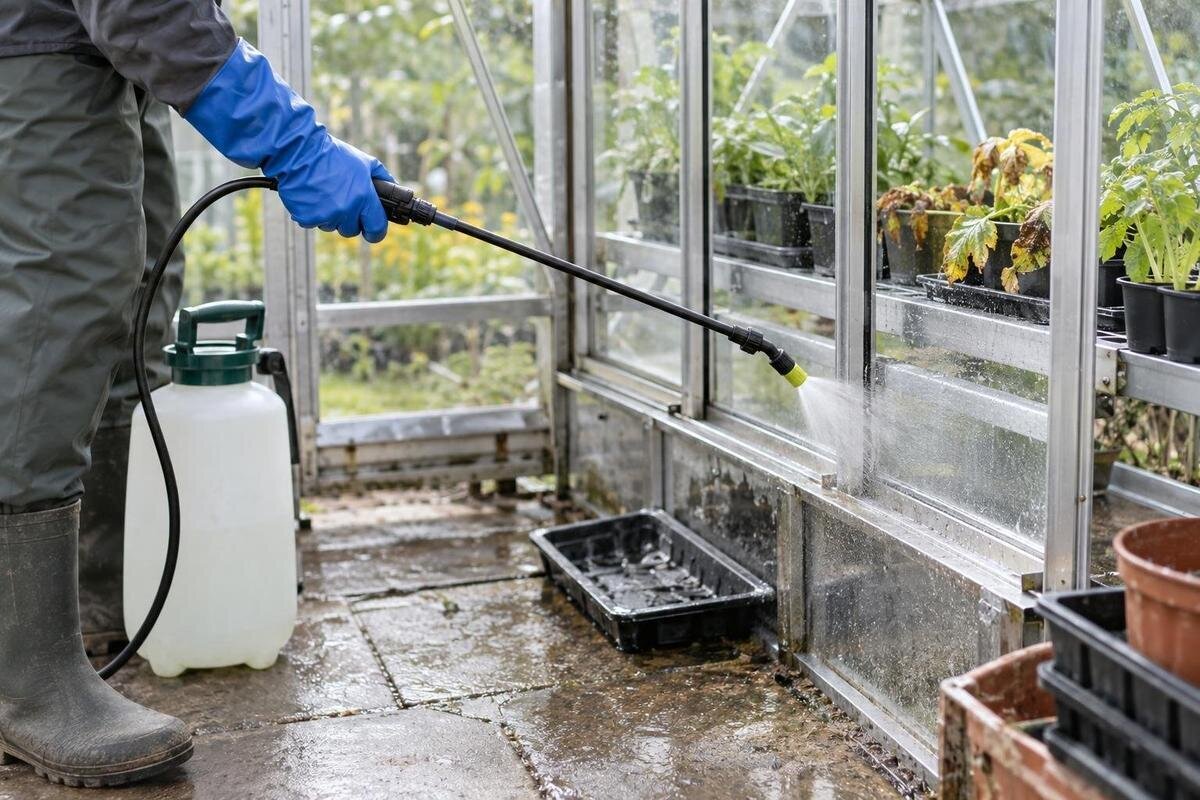
Greenhouse care
A serious plant disease outbreak calls for a containment and recovery plan, not just a seasonal wash. The right response depends on which pathogen is involved, where it can persist and which greenhouse surfaces or tools were exposed. This guide explains how to limit movement, obtain pathogen-specific advice, remove residue before disinfection and choose a treatment that is compatible with the materials. It also covers what to document before reopening and when to ask for a professional assessment of greenhouse parts or glazing.

01
Contain the affected area
Stop routine work in the affected bay or greenhouse as soon as a serious disease is suspected. Pause pruning, harvesting, transplanting and moving carts or trays through it until a responsible person has set interim containment steps. Keep visitors out, and avoid carrying plants, water, loose growing medium or plant debris into an unaffected area. If the structure has separate rooms or work zones, mark what is affected and what is not; a partition alone may not prevent transfer through doors, footwear, hands, hoses or shared equipment. Until the pathogen is identified, treat that boundary as provisional and ask for advice on any essential work that cannot wait.
Keep a brief exposure record while details are fresh: when symptoms first appeared, which crop and variety were affected, where the plants were located, and any recent deliveries, irrigation changes or shared tasks. Note which people, tools, trays and carts entered the zone, without treating the log as proof that spread did or did not occur. If some work must continue, agree on clean and affected routes with a plant-health adviser, do unaffected tasks first and leave the suspect area until last. Do not carry a symptomatic plant elsewhere for a closer look; take photographs and arrange a sample using the diagnostic service’s instructions.
Confirm what caused the disease
Leaf spots, wilting, yellowing, mould-like growth and root damage can have more than one cause. Symptoms alone may not distinguish an infectious disease from growing conditions, pests or a different pathogen, and the right cleanout can change with the diagnosis. Contact a provincial plant-diagnostic service, university extension program or qualified crop adviser about testing. Ask how to collect and submit a sample: the wrong plant part, poor handling or a sample that has deteriorated can make identification harder. Share clear photographs as supporting information, not as a substitute for a diagnosis when the consequences are serious.
Give the adviser the crop and variety, when symptoms began, where they appeared, recent plant sources, irrigation details and any treatments already used. Ask what organism is suspected or confirmed, how certain the result is, and where it may persist. If the disease is unfamiliar or could involve a regulated organism, ask a provincial plant-health authority or the Canadian Food Inspection Agency whether any movement or notification steps apply before transporting plant material. While results are pending, get interim containment advice and keep the diagnosis open rather than trying an all-purpose disinfectant to see whether symptoms improve.
02
Plan the cleanout around the pathogen
A disease name alone is not a complete sanitation plan. Fungi, oomycetes, bacteria and viruses do not share one treatment method, and even organisms in the same broad group can persist differently. Depending on the pathogen, relevant reservoirs may include living host plants or weeds, plant debris, growing medium, water, seed, tools or residue on a surface. Some viruses can move mechanically on hands or equipment; some root diseases are associated with growing medium or water. These are possible pathways, not a diagnosis. The confirmed or suspected organism and the affected crop should guide which ones you investigate.
Ask for a written cleanout plan that names the areas to address, the reservoirs to remove or treat, and any host-free or monitoring period that applies. It should distinguish surfaces needing physical cleaning from those requiring a labelled treatment, and identify items that should not be reused. Organize the work by area and item so shared equipment and connected spaces are not overlooked. Avoid blanket treatment of every surface if an adviser has identified a more limited route. Record unresolved decisions separately rather than treating them as completed work. If the advice points to replacing the whole structure, include Limited Edition Aluminum Greenhouses in that separate comparison and request the chosen model’s material and care information. Keep the replacement enquiry distinct from the disease plan: the latter still needs to account for any growing medium, equipment or other potential reservoirs that will remain on the site.
Remove infected plants and growing material
Follow the plant-health adviser’s directions for removing affected plants. Handle them in a way that limits loose leaves, sap, soil and other debris from being shaken or dragged through clean areas. Keep removed material apart from healthy crops, and use the disposal route recommended for the diagnosed disease and your location. Do not assume that a home compost pile, garden bed or ordinary green-waste collection will contain or destroy the pathogen. If the source is uncertain, ask before moving material off-site. Plan the removal route before starting so you know where the material will be contained and which areas or equipment will need attention afterwards.
Treat growing medium, pots, trays and reusable supports as separate decisions. Some diseases make the medium important; for others, removing it may add work without addressing the main route of spread. Ask whether containers can be cleaned and disinfected, need a separate treatment plan or should not be reused. Do not pour suspect medium into an outdoor bed or drain while waiting for an answer. Keep a simple inventory of what will be retained, treated or discarded, including items stored outside the immediate growing area. This gives the adviser a clear picture of what may return when planting resumes. If the assessment also leads to full structure replacement, the T-Shaped Orangery Greenhouse is an option to discuss separately. For that enquiry, distinguish the new structure from the pots, supports and growing materials you intend to keep; their treatment decisions remain part of the outbreak response.

03
Clean residue off surfaces before disinfection
Disinfection works on a surface that has been prepared for the chosen product; soil, sap, leaves and other organic residue can interfere with treatment. First remove loose material using a method that does not spread it to neighbouring benches, paths or crops. Then clean surfaces with a compatible cleaning method, following the greenhouse manufacturer’s care information where available. Work from cleaner areas toward affected ones and keep debris and wash water from reaching clean growing areas or water sources. Avoid high-pressure washing if it could splash residue into joints or move it elsewhere; choose a method recommended for the disease and the structure.
Pay attention to places where residue can collect: bench undersides, tracks, corners, joints, tool handles and around drains or irrigation equipment. Cleaning only the most visible surfaces can leave likely contact points untreated. If rinsing is needed, control where the water goes and do not send contaminated material through the greenhouse or into a growing bed. Record any area that cannot be reached without dismantling parts instead of improvising. Describe the location and what prevents access, so a manufacturer or installer can assess the problem without assuming that the whole structure needs replacement. Keep these access problems on the cleanup record until a treatment or repair decision has been made. If a professional concludes that an inaccessible assembly cannot be treated and replacement is being considered, include the Pyramid Greenhouse in the comparison and ask how the proposed model’s components would be accessed for future care.
Choose a treatment that suits the pathogen and materials
Select a disinfectant only after confirming the target pathogen, intended use and affected surface. Read the current product label in full, including its directions for the site, application method, concentration, contact time, protective equipment, rinsing and disposal. A product described as a disinfectant is not automatically suitable for every greenhouse disease or surface. Do not mix products, improvise a stronger solution or shorten the labelled wet contact time. If the label and plant-health advice do not clearly address the intended use, ask a qualified adviser or the product’s technical contact before proceeding.
Compatibility also matters. A treatment suitable for one surface may damage a coating, metal, wood, plastic, seal or other greenhouse component, depending on the product and material. Check the greenhouse manual or ask the manufacturer and, where relevant, an installer before treating a large area. Only test a small area if the product directions and material guidance allow it; a spot check does not establish that every component is safe to treat. When asking about compatibility, identify the treatment, the component and its finish rather than asking whether a disinfectant is generally safe for greenhouses. Keep the reply with the cleanup plan so it is available to whoever carries out the work. For a replacement enquiry involving Limited-Edition Aluminum Greenhouses with Storage, request care information for both the growing area and storage components. The product name alone does not establish treatment compatibility.
04
Handle tools and removable equipment separately
Pruners, stakes, trays, carts, hoses and other movable items can carry residue between plants and work areas. Remove soil and plant material before applying any treatment, then follow directions appropriate to both the item and the product. Pay attention to handles, hinges and other contact points, but do not immerse powered equipment or take tools apart unless their instructions permit it. Keep used tools contained until they have been cleaned and treated; placing them on a disinfected bench too soon can undo the work. If an item cannot be cleaned safely or thoroughly, ask whether it should be set aside or replaced.
Water systems need their own advice. A disease associated with irrigation water, tanks, filters or lines may require steps different from wiping a bench, and some equipment or materials may not tolerate a proposed treatment. Do not pour a disinfectant into a system or flush it out without directions for the pathogen, equipment and disposal route. List the relevant water-system components separately from hand tools so their treatment is not assumed to be covered by routine surface cleaning. Use dedicated tools for affected and unaffected areas where the adviser recommends it, and keep the clean set physically separate. If recovery planning includes a separate structure, such as the Bloomcabin Prestige Greenhouse, discuss which hoses, carts and tools would serve it and whether any would be shared. A separate enclosure should not be treated as disease isolation without considering those connections.
Check fixed greenhouse parts before repair or replacement
Inspect fixed surfaces for visible residue, damage and places that are difficult to reach, such as frame joints, glazing edges, seals, benches and floor connections. A sound-looking surface is not necessarily compatible with the intended treatment, while a damaged or porous part may need a different decision from an intact one. Check the greenhouse manual for care limits and note the product model, part identifiers and the location of the affected component. Photographs can help a manufacturer or installer identify the item. Do not alter a frame, seal or panel to make cleaning easier without professional guidance.
If a component cannot be cleaned or treated according to the pathogen-specific plan and its manufacturer’s instructions, ask whether an exact replacement part is available or whether an installer should assess the assembly. Do not remove or handle damaged glazing as a sanitation shortcut; have a qualified installer review it. Separate the reason for each proposed replacement: damage, inability to reach an affected surface, or incompatibility with the required treatment. That distinction helps keep a parts enquiry focused rather than turning every cleanup difficulty into a whole-greenhouse purchase. A replacement decision should also account for contamination on retained tools, benches, soil or water routes. If a whole structure is being considered, compare the Spacious Greenhouse as a separate project, with its specifications and site requirements confirmed before deciding which existing equipment or components to retain.

05
Decide when the greenhouse can reopen
Before cleanup begins, agree on what must be true before the greenhouse is used again. Depending on the disease, that may include removal of particular reservoirs, completion of labelled treatment directions, a period without susceptible host plants, or follow-up monitoring. There is no single waiting period that applies to every outbreak. Keep a record of the diagnosed or suspected pathogen, the areas treated, the product and its directions, the date, and any required rinsing or drying. Recording what was done helps an adviser assess gaps; it does not prove that every pathogen has been eliminated.
A final visual inspection can identify missed debris, but appearance alone is not a test of readiness for planting. Confirm that treated surfaces have completed the steps required by the label and that the plant-health adviser’s conditions have been met. Check connected areas and shared equipment as well as the main growing space. Keep incomplete tasks and unresolved questions visible on the record; a cleanup date should not stand in for confirmation that all required work is finished. If recovery includes a new structure from the Aluminum Greenhouses range, review the items that will enter it before bringing plants back. Identify which retained tools, containers and water connections have been addressed under the disease plan. A new enclosure does not verify that the site or equipment is free of contamination, and purchasing it does not replace the agreed reopening criteria.
Prevent disease reintroduction
Use the outbreak review to reduce avoidable routes back into the growing area. Inspect incoming plants and keep them separate while following advice about any observation or testing period. Keep records of plant sources, crop locations and disease findings so a recurring pattern is easier to investigate. Establish practical clean and affected work zones, keep their tools apart and clean reusable containers before they return to production. Remove volunteer plants or weeds only when the disease plan identifies them as relevant hosts; unnecessary clearing is not a substitute for targeted control.
Adjust the routine to the pathogen rather than adopting a generic disinfection schedule. A disease spread on contact may call for closer attention to hands and tools, while an issue associated with water or growing medium needs a different review. Train anyone who works in the greenhouse to follow the same movement and reporting procedure, and ask an adviser what early symptoms should trigger a new assessment. Make the procedure practical: identify where used equipment goes, where cleaned items are kept and who records a suspected recurrence. If a redesign discussion includes Lean-To Greenhouses, explain those work routines alongside the proposed layout. Ask how access and equipment storage would fit the plan, rather than assuming that a model or shape provides pathogen barriers or makes cleaning suitable for every disease.
Frequently asked questions
Can I use the same disinfectant for every plant disease?
No. Different pathogens can persist in different places, and a product’s directions may not cover every organism or greenhouse surface. Confirm the disease and check the current product label and material guidance before choosing a treatment. Do not mix products or increase a concentration to compensate for uncertainty.
Should I always replace contaminated potting mix?
Not automatically. Whether growing medium is a significant reservoir depends on the pathogen. Ask a plant-health adviser whether it needs to be removed and how to handle it. Avoid reusing or spreading suspect material until you have that direction.
Is a visibly clean greenhouse ready for planting?
Not necessarily. Visible cleanliness shows that residue has been removed; it does not prove that the pathogen is gone. Reopen only when the pathogen-specific plan, product directions and any required professional advice say the treated areas are ready.
Can I spray greenhouse disinfectant on the plants?
Do not apply a greenhouse surface disinfectant to live plants unless its current directions explicitly allow that use. Treating the structure and managing a disease in a crop are separate tasks; ask a qualified plant-health adviser about crop treatment.
Does a serious outbreak mean I need to replace the greenhouse?
No. Replacement is not a default response to an outbreak. First establish the pathogen, where it can persist and whether affected components can be treated using compatible methods. If parts or glazing need professional assessment, use the manufacturer’s documentation and an installer’s advice rather than attempting an improvised repair.
A sound recovery follows a documented sequence: limit movement, identify the pathogen, address its reservoirs, clean, disinfect compatible surfaces and reopen once the organism-specific conditions have been met. If a part or the whole structure cannot be treated safely, consider repair or replacement separately from the sanitation work. Changing the greenhouse does not remove contamination from retained tools, water routes, growing medium or incoming plants.
