
Growing Beets in a Greenhouse for Early Harvests
Greenhouse growing guide
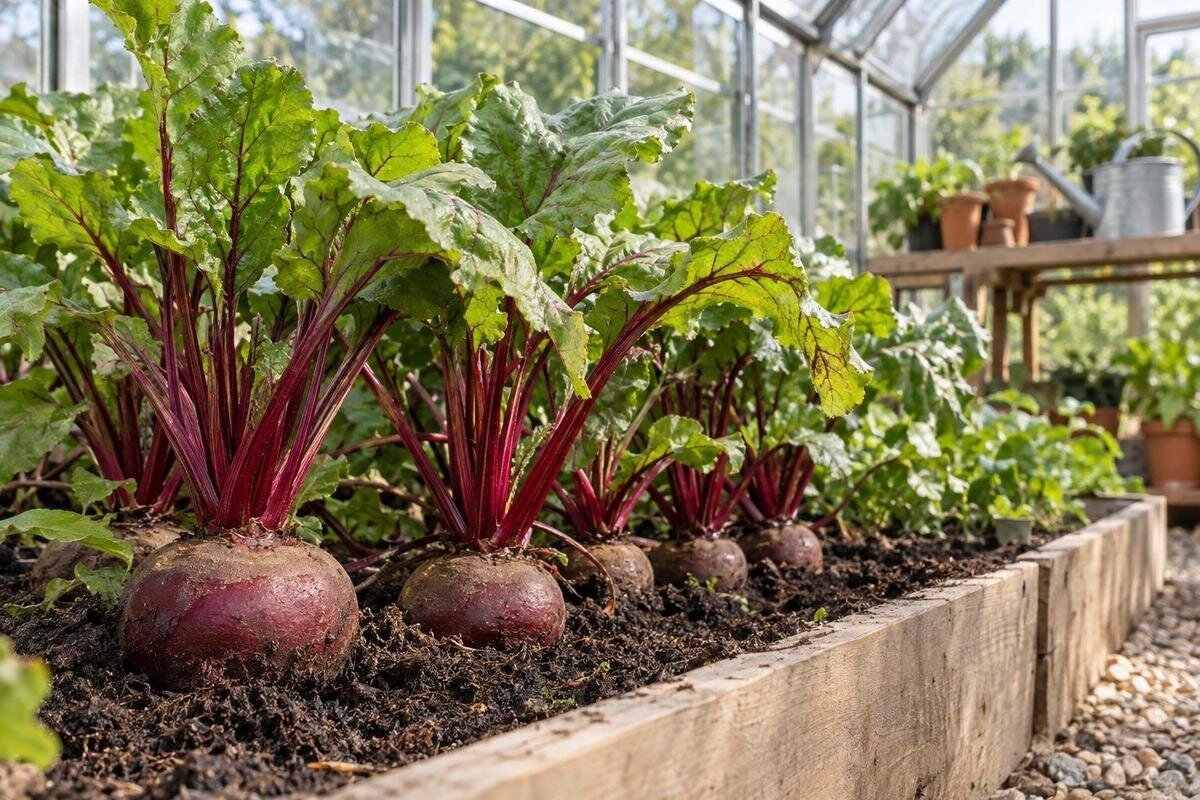
Beets are a cool-season crop, so an unheated greenhouse can be useful for an early baby-root harvest—but only when the soil is ready and the crop receives enough light. Protected space does not automatically make the crop earlier than an outdoor bed, and that space may soon be needed for summer vegetables. This guide compares a small under-cover sowing with outdoor growing, then covers timing, seed clusters, spacing, watering and harvest size so you can decide whether the head start is worth the room.

When a greenhouse offers an earlier beet harvest
Beets are a cool-season crop, so their useful greenhouse window is usually before summer planting fills the house, not during its hottest stretch. A protected bed can be easier to use when the outdoor plot is wet or not yet workable, provided the soil beneath cover has drained and warmed. The benefit is a chance to sow and pick small roots earlier; it is not guaranteed by the structure alone. An unheated greenhouse can cool sharply overnight, while sunshine warms the air faster than the soil. Treat the cover as shelter that may provide a modest lead, not a way to ignore spring conditions.
Compare that lead with the simplest alternative: a short outdoor row as soon as the garden soil is workable. If you can sow outside at nearly the same time, the greenhouse may not bring harvest forward enough to justify using a valuable bed or managing another crop. A small protected sowing can still make sense when you want early baby beets or the bed would otherwise be empty. The Oasis Pyramid Greenhouse range is listed from 5.53 to 18.9 m²; treat that as overall area, then check the selected configuration and actual bed space before choosing a structure for a single early sowing. Oasis Pyramid Greenhouse options
Plan the usable bed area and access
Measure productive ground rather than relying only on a greenhouse’s total floor area. A beet row needs a bed you can reach for thinning, watering and lifting; paths, door clearance, stored pots and permanent staging all reduce sowing space. Mark these on a simple plan and make sure you can tend the far edge without stepping on friable soil. Beets stay low, but that does not make an aisle dispensable: you still need to identify seedlings and lift roots without damaging neighbouring plants. A smaller, accessible bed is more useful than a larger area that is awkward to manage.
Storage also needs a place in the plan. The Limited-Edition Aluminum Greenhouses with Storage product page identifies built-in storage, which may be useful if you want supplies close to the growing area. Count that space separately from the beet bed, and check the layout of the exact option you are considering. A listed size range of 5.52 to 28.08 m² gives a sense of scale, not the amount of ground available for sowing. If your tools and pots are already stored elsewhere, make sure the greenhouse plan still prioritizes the growing space you need. Limited-Edition Aluminum Greenhouses with Storage
Choosing a sowing date based on soil conditions
Spring conditions vary widely across Canada, so a single calendar date is not a reliable guide. Check the soil where the seed will go, a few centimetres below the surface, rather than judging by a warm afternoon in the greenhouse. For reasonably quick, even emergence, a seedbed near 10°C (50°F) is a useful cue. Beets can germinate in cooler soil, but emergence may take longer; persistently cold, wet ground can also lead to a poor stand. Use local forecasts and your seed packet as context, since neither a greenhouse nor a hardiness zone tells you exactly how warm this bed is.
Treat the packet’s days-to-maturity figure as an estimate, not a guaranteed harvest date. Baby roots can be lifted before the variety reaches its full-size maturity, but cool soil and short spring days may slow them down. If the first sowing succeeds and conditions remain cool, a small second sowing two or three weeks later can spread the harvest; avoid sowing more than you can clear before summer crops need the bed. The Prestige Greenhouse range is listed from 3.77 to 28.08 m². Use the measured bed in your chosen configuration to decide whether there is room for one row or another sowing. Prestige Greenhouse range
Prepare loose, stone-free soil for straight roots
Even baby beets need an unobstructed route through the soil. Loosen compact ground before sowing and remove stones, woody roots and large clods that can make roots fork or develop unevenly. Good drainage matters too: a bed that stays waterlogged is a poor place for seed to sit. Mature compost can improve soil structure, but use it in keeping with the condition of the bed. Avoid fresh manure and excessive high-nitrogen fertilizer; they can encourage leafy growth at the expense of the roots you are growing the crop for.
Raised beds can help when the soil below a greenhouse is heavy or poorly drained, but a protected structure does not make a shallow tray suitable for root crops. Allow enough soil depth for roots to develop without meeting a hard base, and make sure excess water can drain away. If you are considering a larger structure, the Spacious Greenhouse (Orangerie) range is listed from 47 to 70 m². That is a substantial floor area to plan around several crops and work zones, rather than a single short beet row. In any model, paths and other uses mean the actual root bed is smaller than the total footprint. Spacious Greenhouse (Orangerie)

Check spring light, cold nights and daytime heat
Give the beet bed the sunniest practical position in the greenhouse. Nearby trees, fences, buildings, benches and taller crops can block light, and short spring days already limit how quickly plants grow. Beets can grow with some shade, but less light usually means slower leaf and root development, which can reduce the advantage of sowing early. Consider how shadows move over the bed during the day, not just whether the site looks bright at noon. A row that receives good light early in the season is easier to harvest before later crops begin shading it.
Greenhouse air can change temperature quickly: a cold night may follow a warm, sunny afternoon. Check conditions at the crop as well as in the soil, and ventilate on warm days using the structure’s intended openings and instructions. Do not assume that heating is needed just because the outside is cold; heating a whole house for beets alone is difficult to justify. The Classic Aluminum Greenhouse is one option to compare, but its name and overall footprint do not establish how sunny or warm a particular beet bed will be. Check the chosen configuration and assess the specific site for shade and access to ventilation. Classic Aluminum Greenhouse options
Sowing and thinning beets for baby roots
Direct sowing in the final bed is usually the easiest approach because it avoids disturbing the developing taproot. Sow at the depth stated on the seed packet; around 1–2 cm is a practical guide for many beets. Cover the seed lightly and water gently to settle the soil. Keep the seed zone evenly moist while you wait for emergence, since a dry surface can make germination patchy. If the bed is saturated or still extremely cold, wait for better conditions rather than trying to make up for them with extra seed.
Many beet varieties produce several seedlings from one seed unit; monogerm varieties produce just one. Thin the seedlings once they are large enough to handle, leaving about 2.5–5 cm between plants for baby roots. Give them more room if you want larger beets, and space rows so you can reach them to weed and water. Snip unwanted seedlings at soil level instead of pulling them, which can disturb nearby roots. The Lean-To Greenhouses listings range from 3.69 to 14.34 m². When planning rows in your selected layout, account for both the spacing between plants and the room you need to tend them. Lean-To Greenhouse listings
Water evenly and avoid excess nitrogen
A greenhouse roof keeps rain off the crop, so outdoor rainfall is not a reliable sign that the seedbed has enough moisture. Check below the surface, especially while seeds are germinating and roots are enlarging. Aim for soil that stays evenly moist without becoming waterlogged; a quick sprinkle may wet only the top layer. Raised beds and containers can dry faster than in-ground beds, and warm greenhouse air can increase the rate of water loss. Check them more often during sunny spells, but let the soil condition, not a fixed schedule, guide when you water.
Avoid repeated high-nitrogen feeds, which can produce plenty of leaves without improving the baby-root harvest. If the bed needs amending, base that choice on its soil condition rather than adding fertilizer by guesswork. Inspect leaves as you tend the row: beet leaf miners can leave pale, winding trails, and a greenhouse is not insect-proof. Remove badly affected leaves without stripping the plant bare. If you are considering the Limited Edition Aluminum Greenhouse, plan where you will stand to inspect the row and water the root zone. You should be able to reach individual plants without stepping into the bed or leaning across other crops.
Fit beets into the greenhouse crop calendar
Beets work well as an early crop when you have a plan for the bed after harvest. Sow a modest area that you can lift before tomatoes, peppers or other warm-season crops need the space and light. Do not rely on a low-growing beet row to thrive beneath a later, dense canopy. If you want a succession, leave enough time and room for the roots to reach your preferred size before the next crop is ready to go in. A small first sowing helps you judge the timing without tying up the whole greenhouse.
Plan the crop around the greenhouse’s beds and walking routes. The T-Shaped Orangery Greenhouse listings span 16.52 to 30 m², but a total-area figure does not show the length of bed available in a particular configuration. On the plan for the option you are considering, mark the early beet row and the space reserved for summer crops. Show which areas will remain occupied by permanent plants and which will be cleared after the beet harvest. This helps you decide whether a second sowing fits the calendar or would delay the next planting, rather than simply filling every available patch of soil. T-Shaped Orangery Greenhouse

Harvest roots while they are still small
Lift beets by size rather than waiting for the full maturity date on the packet. For many home growers, a root about 2.5–5 cm across is a practical baby-beet size, though variety and preference matter. Check one plant to see how the roots are developing; leaf size alone does not show what is ready below ground. If the sample is the size you want, harvest selected roots and leave smaller neighbours to grow. Cool conditions, light and cultivar can all affect timing, so the root itself is a better guide than a promised number of days.
Loosen the soil beside a root before lifting it rather than pulling hard on the foliage, which may break away. Use thinnings as greens if you like, but avoid taking too many leaves from plants you want to keep growing; the remaining foliage supports the root. Harvest only the number you can use and leave smaller plants undisturbed. The aim of the early crop is a useful harvest and a bed that can be cleared for the next planting. Keeping a note of sowing and first-harvest dates will also help you judge whether the protected row was worthwhile next spring.
Troubleshooting early beet crops
Slow or uneven emergence often points to soil that was too cold, too wet or allowed to dry at the surface. If seedlings are crowded, thin them before roots compete for room. Lush leaves with undersized roots can indicate excessive nitrogen, poor light or close spacing; check those conditions before adding more fertilizer. Cracking can follow uneven moisture, so try to keep the root zone more consistent. A flower stalk can appear after prolonged cold in susceptible varieties; if you see one, harvest usable roots promptly rather than expecting them to keep developing normally.
Use what you observed to decide whether the next sowing belongs under cover or outdoors. If a greenhouse bed stayed cold or shaded, or if the first roots did not mature sooner than an outdoor row, repeating the same timing may not help. Once outdoor soil is workable, a sunny garden bed can be the simpler option for beets, leaving protected space for crops that need it more. If the greenhouse did provide an earlier harvest, keep the next sowing small and repeat the conditions that worked. The useful measure is the difference in harvest timing, not simply whether the seeds grew under cover.
Frequently asked questions
Can I grow beets in an unheated greenhouse?
Yes, if the seedbed is workable and warm enough for reasonably reliable germination. An unheated greenhouse can still get cold at night, so check the soil as well as the air and use local spring conditions to guide sowing.
How far apart should I space beets for baby roots?
After thinning, aim for about 2.5–5 cm between seedlings for baby roots. Leave more room if you want larger beets, and give each row enough space for access and watering.
Should I start beet seeds indoors?
Direct sowing in the bed is usually simplest because it avoids disturbing the developing taproot. If you do use seedlings, handle young plants carefully and keep the root intact when planting.
How long do baby beets take to grow?
It depends on the variety, light and soil temperature. Baby roots can be ready before the full-size maturity estimate on the seed packet; check their size rather than relying on a set number of days.
Can beets stay in the greenhouse all summer?
They can, but a hot or shaded greenhouse may slow root development or stress the plants. Early beets are often more useful when you harvest them before warm-season crops fill the space.
Early greenhouse beets make sense when a cool, well-lit bed can be sown ahead of the outdoor plot and cleared before summer crops take over. Keep the first sowing modest, thin seedlings to suit your harvest size and watch moisture as spring temperatures change. If the outdoor bed catches up or the protected crop stalls in cold or shade, save the greenhouse space for another use. What matters is the difference in harvest timing, not simply that the beets grew under cover.
