
Your First Greenhouse: What to Buy First and What Can Wait
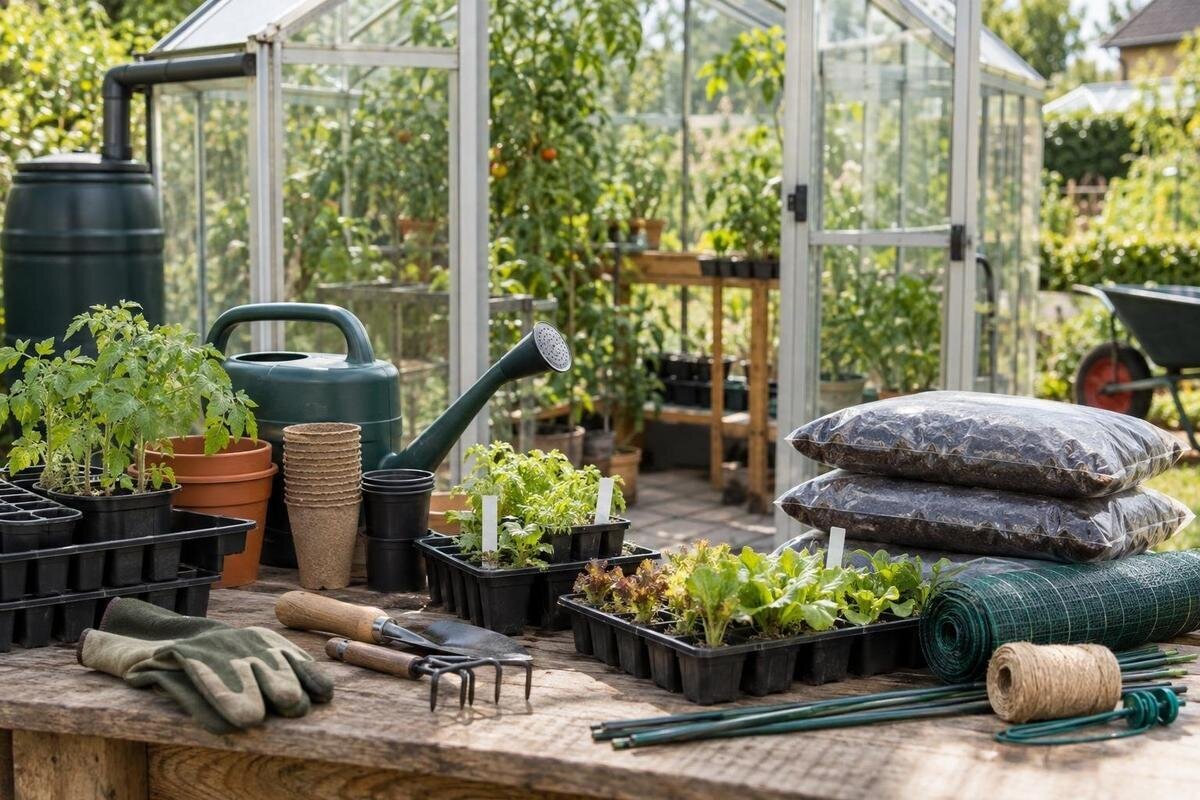
First greenhouse buying guide
Buying your first greenhouse can prompt a long list of tempting extras: benches, heaters, automatic vents, irrigation kits and storage. The better order is simpler. Decide what you plan to grow, confirm the site and greenhouse configuration, then buy what lets those first crops be planted, watered, supported and monitored. Keep convenience upgrades for later, when you know how you use the space. This guide separates essentials for a workable first planting from purchases that can wait until a real crop plan or a season of use gives you a reason for them.

What to confirm before buying 1
A first-season crop plan
Before you buy beginner greenhouse supplies, write down what you want to grow in the first season and roughly how many plants you intend to start. Note whether the aim is to raise seedlings, grow crops through to harvest, or do both. Seed starting calls for trays and labels; plants grown to maturity may need beds or larger containers, growing medium and supports. A mixed plan may need several of these, but it does not mean you need every style of bench or accessory. Keeping the first list to crops you actually want prevents shopping for hypothetical projects and makes the initial purchase easier to cost.
Put the crop list on a simple sketch. Mark each bed or container, a route to reach it, and any support or extra room a plant may need; include a place to set a tray while you work. Leave a little space unassigned so you can shift pots or change the plan instead of packing every corner. If you are undecided, start with fewer crop types and learn how your layout works. Use crop-specific spacing and mature-size guidance to check the plan; tray capacity is not the same as mature growing space. The goal is to estimate supplies for real plants—pots, medium, labels, ties or stakes—before buying duplicates.
The full greenhouse setup budget
Budget for the entire setup, not only the greenhouse structure. Set separate lines for the selected configuration, ground or base work, assembly if required, any water or electrical service you plan to add, first-season growing supplies and later upgrades. Ask for an itemized quote because the work needed depends on the site and the exact order; do not estimate site preparation from a catalogue photograph. Confirm locally whether approvals are required, and have a qualified installer or other appropriate professional assess the foundation, anchoring and exposure requirements for your location. Ask how local conditions, including wind or snow where relevant, affect the site plan. Keep structure costs separate from site work so you do not count the same component twice.
Before adding accessories, read the parts list for the chosen configuration. Record what is expressly included, what is an optional selection and what must be arranged separately; check rather than assume details such as glazing, doors, vents, base, fasteners or shelving. The Prestige Greenhouse with Metal Base listing names a metal base, for example, but the name alone does not tell you what site preparation or other components are needed. Ask the seller to clarify the selected package in writing, including any differences between sizes or options, then remove duplicate parts from your list. Keep unresolved items visible instead of treating them as included.
What to confirm before buying 2
Footprint, access and working space
Measure the place the greenhouse will occupy and draw a scaled plan before settling on a size. Show the entrance, space needed to open it, usable growing area, a walking route, beds or containers, and a small potting or staging surface if you want one. Leave room to carry plants and supplies without blocking the doorway. Check the proposed footprint against paths, fences, walls and other fixed features, as well as room to access the outside of the structure for normal care. The exact clearances and dimensions must come from the selected model and its instructions; square metres alone will not tell you whether a layout is comfortable to use.
Compare the measured plan with the exact dimensioned drawing for a greenhouse you are considering. The Limited Edition Aluminum Greenhouse listing spans 3.77 to 28.08 m², a broad area range that makes it especially important to identify the actual size you are pricing. Do not choose from an image or a range label alone. Place the real dimensions on your site plan, then check the door and vent operating space, your planned route and the area left for plants. Consider whether a bench or storage unit would narrow the path. Add such items to the plan before finalizing the footprint, not after the space is full.
Water access and watering basics
Plan how water will reach the plants before you buy irrigation equipment. Mark the nearest usable water source, the likely entry route and where you expect to keep a hose or watering can. The amount and frequency of watering depend on the crop mix, containers, growing medium and conditions, so a floor-area figure is not enough to size a system. For a small first crop list, manual watering may be a practical arrangement; it still needs a convenient refill point and a clear route into the greenhouse. If access is difficult, reconsider the location or planting plan before ordering equipment. Try the route with your usual watering vessel before you commit to fittings.
If you are comparing the Lean-To Greenhouses category, its listed sizes range from 3.69 to 14.34 m²; whichever configuration you choose, map the actual installation point and entry before deciding how to deliver water. A hose that reaches the building can still interfere with the door or walkway, while a watering can needs a practical place to refill. Check the connection and operating requirements of any proposed hose-end or irrigation equipment against your water source and the supplier’s specifications. You can consider storage tanks, timers or delivery lines later if a clear need emerges. Do not assume a product listing includes a watering system.

What to confirm before buying 3
Ventilation and seasonal climate control
Ventilation is part of the greenhouse plan, not an accessory to consider only after plants are inside. Before ordering, confirm the vents and other openings supplied in the selected configuration, where they are, how they operate, and whether an opener or control is a separate option. Check that the openings remain reachable in your proposed layout, including after you place shelving or storage. If you need a particular type of control, ask whether it is compatible with the exact vent and model rather than buying a generic accessory. This is a package and layout check; the product category or an exterior photo cannot answer it.
Plan shade, fans or heat around the crops and months you intend to grow, not a list of every available add-on. A simple thermometer and a brief record can help you observe conditions before investing in more controls. If your plan depends on supplemental heat or powered equipment, check the manufacturer’s requirements and consult a qualified professional about suitable equipment and installation; do not choose a heater by area alone. While browsing Aluminum Greenhouses, as with any category, ask for details for the exact size and configuration being quoted. A category name does not establish the included vents or climate performance.
Beds, containers and storage
Choose the growing surface before buying a roomful of furnishings. Direct planting, containers and raised beds use space differently and depend on the existing site, your crops and how you want to reach them. Pots and trays can be repositioned as a plan changes, but each still occupies floor or shelf space; fixed beds can make the layout clearer but are harder to rearrange. Decide where plants will go, how you will reach them and what must stay clear for access. Include room for the way you will work, such as setting down a tray while transplanting. Then buy only the first batch of containers, trays, medium or supports that matches the layout.
Storage also needs a place in the drawing. A tool box, hose, empty pots and bags of growing medium can compete with the area you expected to use for plants, so decide what must be kept close and what can stay elsewhere. The Limited-Edition Aluminum Greenhouses with Storage listing identifies built-in storage; check the selected configuration’s dimensions and what that feature includes before treating it as growing or supply space. If storage is not part of your chosen setup, begin with one movable container or shelf if you need it. Add permanent benches after you have worked out where you stand, reach and move trays.
What to confirm before buying 4
Core tools and simple monitoring
Keep the first tool kit short and crop-specific. Match each tool to a task in your planting plan: a hand trowel for filling and planting containers, labels for identifying seedlings, or ties and supports for crops that need them. Gloves and pruners may be useful, but their value depends on what you grow and how you work. Check what you already own before buying a starter set, and note what you borrow or repeatedly need during planting. A large multipiece set can leave you paying for tools with no role in your plan. Keep reusable equipment and planting consumables on separate budget lines so you can see which purchases are for the initial setup and which will recur.
Basic monitoring can be modest: a thermometer, a notebook or phone note, and labels that let you connect observations with specific crops. Give each bed or group of containers a clear name on your plan, then use that name in your notes. Record when you watered, what needed support and whether the planned arrangement left enough room. Before adding a sensor, decide which reading would change a growing decision. The Pyramid Greenhouse listing covers 5.53 to 18.9 m²; whichever size you select, organize observations around the plants you actually grow rather than treating the whole floor area as one planting group.
When to add irrigation automation
Automatic irrigation can reduce hands-on watering, but it is not automatically the right first purchase. First arrange a workable way to water and note the water source, crop locations, containers and access. Once the plants are in place, you can see whether hand watering is inconvenient, uneven or not a problem. Identify the part of the routine you want to improve before choosing equipment: setting up a hose, reaching particular containers or delivering water to several planting areas. Match the system’s parts and layout to that task, and verify water-source compatibility, operating requirements and instructions. Timers and emitters still need setup, observation and upkeep; an automated system does not make a greenhouse independent of checks.
Use the actual growing plan, not total floor area alone, to decide how much equipment to buy. The T-Model Orangery Greenhouse listing ranges from 16.52 to 30 m²; in any selected size, a drawing of the beds, containers and clear routes is more useful for irrigation planning than a headline area. Mark the proposed route for delivery lines and ask the equipment supplier to help identify the required lengths and components. Confirm compatibility with the greenhouse layout and water supply. If the first planting uses only part of the space, avoid buying equipment for hypothetical future beds. If you want to extend the system later, check its specifications before choosing the initial components.

What to confirm before buying 5
Upgrades that can wait
Convenience upgrades become easier to judge after the basics work. Possible later buys include extra shelving, a potting bench, shade material, powered vent controls, a fan, heating equipment or additional monitoring, but these do not all solve the same problem. Before ordering, write down the inconvenience or crop requirement you expect an item to address. Check whether ventilation or another feature is actually necessary for the season you have planned; if so, treat it as part of the required configuration rather than postponing it as an optional extra. Otherwise, wait until a real layout or crop makes the benefit clear.
Be cautious about buying extra floor area for a future version of your garden that is still only an idea. The Spacious Greenhouse listing gives a range of 47 to 70 m²; that is a useful scale to compare on a site plan, not a suggestion that more room is automatically better. More growing area needs a matching plan for planting, access, water and furnishings. Compare the selected footprint with the time and budget you can commit, and ask about site-specific structural needs before ordering. If expansion might happen later, check whether the proposed location and arrangement leave that option open instead of buying unneeded accessories now.
Turning first-season observations into a buying list
Keep a simple record that is useful for buying decisions. Note which supplies you used, what ran out, which tools stayed unused, where access was awkward, and which crop or task repeatedly called for a workaround. You do not need a formal spreadsheet: a few dated notes beside the crop plan can show whether a problem was persistent or a one-off. Record the selected greenhouse size and options as well, so later accessories can be checked against the right configuration. These observations are more useful than a generic beginner checklist because they reflect the actual space, crops and routines you have.
At the end of the season, sort possible purchases into three groups: essential for the next crop, solves a repeated difficulty, or merely appealing. Buy the first group before planting; consider the second only after checking compatibility and cost; leave the third until the need becomes clearer. Keep some budget for consumables and site work rather than spending the full amount on upgrades. If a tool went unused, ask whether the crop plan changed or the tool was unnecessary before replacing it. This turns the first setup into a measured plan for the next one without requiring you to buy everything upfront.
Frequently asked questions
What should I buy before the first planting?
Start with the supplies your crop list calls for: seeds or plants, growing medium, the containers or beds you have planned, labels and any necessary supports. Have a convenient way to water and a few suitable hand tools. Confirm the greenhouse package and ventilation details before adding accessories.
Do I need to buy accessories with the greenhouse kit?
Not necessarily. First confirm what is included in the exact configuration and what must be arranged separately, including any site work. Buy essential, compatible items that your first crop plan needs; many furnishings and convenience upgrades can wait until the layout is in use.
Should I install automatic irrigation right away?
Only if you already know it suits your water source, crop layout and routine. A practical manual method can be enough to begin. Once you see where plants go and how you water, you can choose a system based on actual needs and verify that its parts are compatible.
Do I need a heater for a first greenhouse?
That depends on the crops and growing season you have planned; a heater is not a default purchase for every setup. Check the requirements of your intended crops and the greenhouse configuration. For supplemental heat or powered equipment, consult the manufacturer and a qualified professional about suitable equipment and installation.
How do I decide which greenhouse upgrades are worth buying?
Keep notes on what you used, what ran out and which problems came up repeatedly. Prioritize an upgrade that solves a specific, recurring issue or is necessary for your next crop plan. Leave appealing extras until you know how they would improve your actual layout or routine.
A well-planned first greenhouse does not need to be fully outfitted on day one. Confirm the structure and site work, buy supplies for a defined crop list, and keep notes on what the setup actually lacks. Your next purchase can then answer a specific need in your layout rather than an imagined one.
