
Glass Greenhouse or Polytunnel: Plan Your Canadian Garden
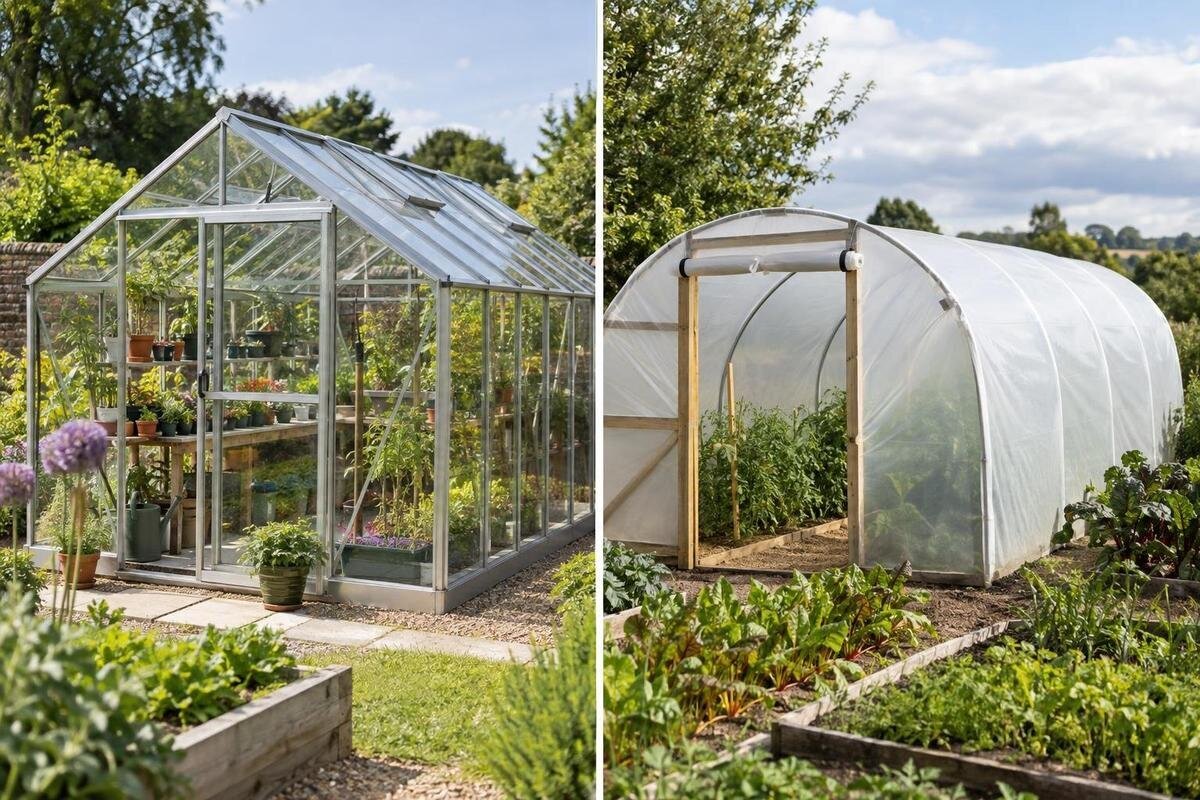
Greenhouse comparison
Choosing between a glass greenhouse and a polytunnel is less about finding a universal winner than deciding how you will use the space, how fixed it should be and how much cover maintenance you are willing to take on. A glass greenhouse has a rigid frame with glass panes; a polytunnel typically uses hoops and flexible plastic film. Neither name guarantees a particular winter temperature, service life or weather rating. For a Canadian garden, compare the exact design with local exposure, intended crops and your growing calendar—not a national average or a product photograph.

Glass panes and polytunnel film define different structures
Here, a glass greenhouse means a structure whose walls or roof are glazed with glass panes supported by a frame. A polytunnel usually has hoops or another curved support system covered with flexible greenhouse film. That changes the kind of covering you inspect: one uses rigid, individual panes, while the other relies on a continuous sheet or sheets held to a frame. Frame materials, glass or film specifications, fastening details, door arrangements and overall geometry still vary. The category tells you how the space is enclosed, but it does not identify every part of the build or establish that two models have similar light, ventilation or weather performance.
Treat the labels as starting points, not performance grades. Glass does not automatically mean a heated or insulated room, and film does not automatically mean a temporary structure that is easy to take down. Ask exactly what the quoted configuration includes, what type of glass or film is specified, how the covering is secured and which replacement components are available. Keep the model name, selected size and options together when asking questions; broad category descriptions can hide differences between variants. A product image can show the general form, but it cannot confirm a glazing specification, a wind rating or the dimensions of a replacement cover.
Plan around the work you want to do
Begin with the jobs the protected space must do. Seed trays, overwintering containers, tall crops, potting work and rows of edible plants all compete for room. Sketch where you will walk, turn, water and harvest before choosing a shape. If you want permanent benches or shelving, include them in the drawing and allow for the door swing, mature plant height and a clear route to the far end. If your plan is mainly long crop rows, check how the entrances and internal path relate to those rows. Either format can support different layouts; the right choice is the one that fits your routine.
Compare a stated area range with a plan of your own garden, rather than relying on the model name. The Bloomcabin Prestige Greenhouse with Metal Base listing gives a range from 3.77 m² to 28.08 m². Treat that as an area reference, then confirm the dimensions of the selected configuration and draw it to scale. Mark beds, benches, storage and the space needed to work outside the door. A larger listed area does not guarantee a usable aisle or a particular glazing specification. If the route to each plant feels awkward on paper, it will be harder to manage once containers and tools move in.
Measure the whole site
Measure more than the structure’s outline. Check the route from the gate or driveway, the path for carrying a replacement pane or roll of film, door clearance, nearby walls and fences, and room to work around the outside. Note where trees and buildings cast shade at different times, where water collects after rain or snowmelt, and where wind is channelled or blocked. Mark seasonal snow piles too. Position affects daily use as well as growing: an entrance that opens onto a convenient path is easier to reach than one that collides with a bed or storage area. Consider runoff and keep access to taps, gates and garden equipment.
Think about how long the structure will occupy the site and which existing garden features you want to retain. The Spacious Greenhouse listing spans 47 to 70 m², a useful scale reference when considering a large structure. Check the selected configuration’s external dimensions, entrance position and installation clearances, then mark them on your site plan. Trace the routes you would use to reach compost, water, gates and beds, including when carrying tools or pushing a wheelbarrow. Compare both candidates in the same position where possible. A polytunnel needs the same placement assessment; flexible film does not remove access, drainage or clearance questions.
Check weather ratings for the exact site
Weather suitability has to be checked for the actual site. Snow, wind and freeze–thaw exposure vary across Canada and from one garden to the next; a sheltered yard and an open plot are not interchangeable. Ask for the manufacturer’s written snow and wind ratings for the exact frame, covering and selected size, as well as its base, anchoring and installation requirements. Check whether any rating depends on a particular configuration or seasonal care. If documentation is incomplete, or the site is unusually exposed, ask the manufacturer or a qualified building professional instead of estimating capacity from the shape. Your municipality can explain what local approvals, if any, apply.
The Classic Aluminum Greenhouse range is listed from 3.77 m² to 28.08 m². Once you have selected a size, use its technical sheet to compare weather requirements with those of your polytunnel candidate. Check that each set of instructions covers the frame, covering, fasteners and anchoring you intend to buy. Record any seasonal tasks required by the manufacturer and consider whether you can carry them out when away from home or during difficult weather. Compare those responsibilities alongside the written ratings, rather than judging suitability by the structure’s appearance. Follow the maker’s operating and seasonal limits.

Temperature control depends on the whole enclosure
Both formats can warm in sunlight, and either can become too hot for plants if the air is not exchanged. Actual conditions depend on the covering’s light and heat properties, enclosed volume, air leakage, shade, ventilation openings and outside weather—not on the words glass or polytunnel alone. Compare the documented cladding specification and vent arrangement for each exact model. Decide what you want to grow and in which months; the crops’ requirements give you a more useful target than the vague promise of a longer season. Compare the conditions you can maintain, not only the highest reading on a warm afternoon. A structure without suitable heating is not guaranteed to be frost-free.
Check where vents are positioned, how far they open and whether you can reach and operate them when the structure is full. If you are also considering a wall-side layout, the Lean-To Greenhouses listing spans 3.69 m² to 14.34 m². For the selected configuration, ask for the number, type and location of ventilation openings, and whether shade or automatic controls are included or optional. Compare how you would manage these features during your usual gardening routine and when away. If you plan to add heating, establish the expected heat demand from the specified enclosure and consult a qualified professional about suitable equipment and safe installation.
Design the interior for everyday access
Day-to-day convenience often decides whether protected growing becomes a routine or a chore. Walk through a typical watering, harvesting and maintenance session on your proposed plan. Where will you put a watering can while tending a plant? Can you carry a tray through the entrance and reach the far end without moving pots? Tall crops may block access to nearby plants, while fixed shelving can narrow a central aisle. Check access at mature plant size, not just at planting time. A row-based polytunnel and a greenhouse equipped with benches need different working arrangements, even when their total areas are similar.
The Limited Edition Aluminum Greenhouses listing shows area options from 3.77 m² to 28.08 m². Request the selected configuration drawing to check internal dimensions and entrances against your working layout. Then make an inventory of the equipment you expect to use: benches, watering equipment, shade, screens and storage. Separate what comes with the structure from optional fittings and items you will supply yourself. Do not assume that vents, shelving, doors, rainwater collection or other accessories are standard because they appear in an image. This inventory makes a basic structure and a fully equipped quotation easier to compare without overlooking items needed for everyday use.
Compare repair and replacement tasks
Maintenance is different in kind, not something one format escapes. Glass panes may need periodic cleaning and checks of joints, retainers and the frame; finding a replacement for a broken pane requires identifying its size, type and fixing method. A film cover calls for its own checks of attachment, tension, wear and damage, with cleaning or patching done according to the maker’s instructions. Sun, wind, branches, dirt and handling can affect either covering over time, but the rate varies with material and exposure. Ask how replacement components are identified and whether they are available for the exact model you are considering.
Compare the work involved in a small repair as well as a full cover replacement. Ask whether panes are individually replaceable in the chosen design, which film specification fits the polytunnel, and which seals, clips or profiles are required. Read safe-handling instructions; work around overhead or broken glass may call for qualified help. The T-Shaped Orangery Greenhouse is listed from 16.52 m² to 30 m². For a selected configuration, use its drawings and parts list to identify replacement components rather than estimating them from floor area. Ask how to order an unlisted item and what information you would need to provide.
Decide how fixed the structure should be
Your plans may change: you might move beds, rework paths or grow a different mix of crops. Ask how strongly each candidate is intended to stay in place, how it is anchored, what base it needs, and whether the frame and covering can be taken apart and reassembled. A hoop shape does not by itself mean easy relocation, and a glazed structure is not automatically immovable. Record how long you expect the layout to suit your garden and consider what happens if a tree grows, a path shifts or the growing space is no longer needed. Even a structure you might move needs manufacturer guidance for disassembly and reassembly.
The Oasis Pyramid Greenhouse listing gives an area range from 5.53 m² to 18.9 m². Use it to consider how much garden space you would commit to this shape, then assess the selected model’s assembly and disassembly guidance. Apply the same questions to a polytunnel: which components can be reused, which may need replacement, and what anchoring is required at a new location? If you might enlarge the growing area later, ask whether an added module or compatible covering is available. Do not assume a similar-looking extension will fit, and confirm how any alteration affects the stated weather rating.

Include storage and garden appearance in the plan
A structure also changes how the garden looks and works outside harvest time. Decide whether you want a visible garden feature, a work area tucked into a less prominent spot or a practical enclosure close to vegetable beds. Check views from the house and paths, and consider whether the frame or covering will shade places where you want other plants. If tools, pots or potting supplies are part of the plan, reserve storage without sacrificing a clear route through the growing area. Glass and film create different visual effects, but there is no universal style winner; assess them against the existing garden and how often you will use the space.
The Limited-Edition Aluminum Greenhouses with Storage listing spans 5.52 m² to 28.08 m². Use the selected product drawing to examine how the storage area relates to the growing space and entrance. Draw pots, tools and other stored items at their actual size, and check whether retrieving them would interrupt access to beds or benches. Compare that arrangement with keeping supplies elsewhere in the garden, particularly if growing space is your priority. If either structure will sit near a property boundary, shared path or buried service, check practical access and ask your municipality or a qualified professional about site-specific requirements.
Compare complete specifications before choosing
Put one glass greenhouse option and one polytunnel option on the same site plan, using the same crop list, growing dates and interior layout. Record external dimensions, usable space, door location, opening and ventilation details, covering specification, written weather limits, base and anchoring requirements, and likely maintenance and replacement tasks. Keep confirmed facts separate from assumptions. If a supplier cannot provide a rating or measurement, mark it as unknown rather than filling the gap with a general rule about glass or film. A comparison table or annotated drawing can make unanswered questions visible before purchase or installation.
Then rank what matters most to you: fixed placement, everyday access, a particular light quality, replacing the covering or a specific seasonal growing goal. Compare quotations only when both describe similar scope, including structure, base, fittings and any requested ventilation or shade components. Ask where replacement parts come from, how the structure must be maintained and who can answer installation questions. If a structural, foundation, heating or electrical issue lies beyond the supplied documentation, get advice from the relevant manufacturer or a qualified professional. The right choice is the one whose verified demands match your site and the time you can give it.
Frequently asked questions
Which option will last longer?
Neither label sets a fixed lifespan. A rigid glazed structure and a film-covered polytunnel have different components and potential repair needs; service life depends on the exact materials, exposure, assembly and upkeep. Compare the replacement parts and maintenance guidance for specific models instead of assuming that glass or film determines how long the structure will last.
Will a glass greenhouse stay warm through a Canadian winter?
A glass enclosure does not guarantee winter warmth or frost protection. Conditions depend on the glazing, air leakage, ventilation, structure size and any heating system. Check the specifications for the exact configuration against the crops and months you have in mind. For heating design or installation, consult a qualified professional.
Which type handles snow and strong wind better?
The category name alone cannot answer that. Ask for written snow and wind ratings for the exact model, size and installation, and check its anchoring and care requirements. Site exposure also matters. If the documentation does not cover your situation, ask the manufacturer or a qualified professional rather than relying on a rating for another configuration.
How often does polytunnel film need replacing?
There is no reliable replacement interval based on the word polytunnel alone. Film type, exposure, attachment, abrasion and handling all affect wear. Ask for the cover specification, care instructions and compatible replacement details. Plan to inspect it, but do not assume a particular number of seasons without guidance for the exact material.
Which option costs less over time?
Compare current quotations for the complete setup, not just the covering. Include the frame, base or anchoring, installation, ventilation and requested accessories, then consider routine care, repairs and eventual replacement. A lower initial quote, if available, does not by itself establish a lower lifetime cost; make sure the quotations cover comparable configurations.
The useful distinction is how each structure fits your garden over time. A glass greenhouse may suit a fixed, glazed growing space with benches and individually replaceable panes; a polytunnel may suit a film-covered crop layout with a cover-renewal routine. Neither category settles the choice on its own. Compare the two actual configurations against your crops, available space and willingness to maintain them. Choose the one whose everyday use and long-term upkeep you can realistically accommodate.
