
How a Greenhouse Can Support More Homegrown Meals
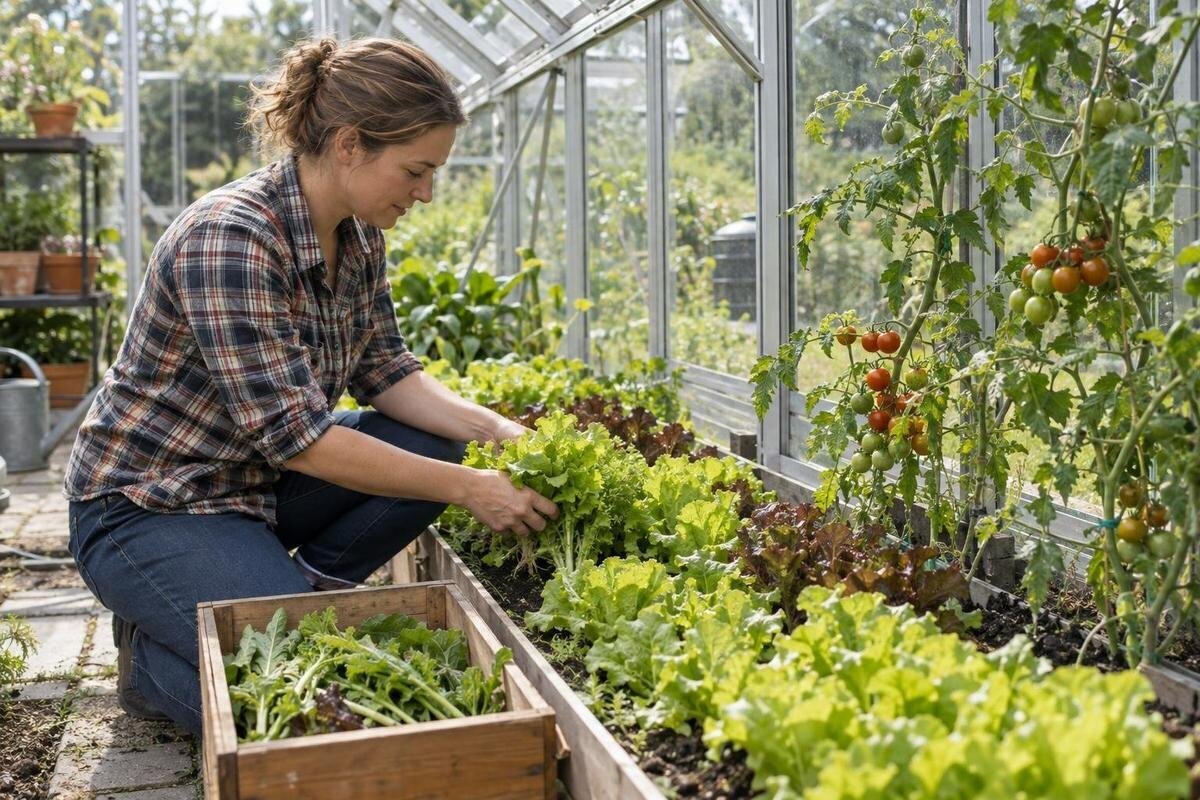
Greenhouse food planning
A greenhouse can make a meaningful difference to the fresh ingredients in household meals, but it is rarely a complete food-supply plan. Its contribution depends on what people actually enjoy eating, when crops are ready, how much usable growing space is available, and whether someone has time for care and harvesting. A practical plan starts with familiar meals and a few crops the household will use often. It does not rely on a promise of year-round self-sufficiency. Record what you harvest and serve, then assess the greenhouse by the ingredients it actually supplies for your meals.

Measure the contribution in meals and portions
Think in terms of the ingredients a greenhouse supplies and the meals in which they are used, rather than asking whether it can feed a household on its own. A steady supply of herbs or greens added to several lunches can be valuable even when the meal also depends on purchased staples, proteins, fruit or other vegetables. Its contribution may be modest on any one plate, but repeated use over a season still matters. The useful question is whether selected homegrown ingredients change what you cook or buy, while the rest of the household food plan remains in place.
Choose one measure before planting. Count meal occasions that include at least one homegrown ingredient, or record servings of a particular crop; either can work if you apply it consistently. If a homegrown tomato goes into a sandwich, it can count as a meal occasion with a homegrown ingredient. It is not automatically a whole meal supplied by the garden. You could also track how often a crop replaces a purchase, but keep that separate from meal counts. If you use different measures for different crops, report them separately rather than adding them together as if they were equivalent.
Start with the meals your household already cooks
Look at several weeks of ordinary menus and grocery lists rather than designing around an idealized diet. Mark produce items that appear repeatedly: perhaps herbs for sauces, salad greens for lunches, or a vegetable used in a family favourite. Ask each person what they will reliably eat, including how they prefer it prepared. Check weekday meals as well as weekend cooking; the same ingredient may have quite different demand in a quick lunch and a shared dinner. A crop that is exciting once but seldom used may occupy space and care time without contributing much to everyday meals. Repeated demand is a better starting point than the longest possible crop list.
Estimate a practical amount by noting how often an ingredient appears, how many people share it and whether you use it fresh or cooked. Keep a short list of priorities, including crops that work in more than one recipe, and leave low-demand choices for another year. Once the list is clear, relate it to growing space. The Bloomcabin Prestige Greenhouse listing states an area range from 3.77 m² to 28.08 m². Use catalogue area information to compare scale, not as a forecast of portions or usable crop surface; the selected configuration and its layout still matter.
Choose crops for how they will be used
Separate crops by meal role. Herbs can add flavour to dishes in small amounts; leafy greens can feature in salads, sandwiches or sides; fruiting vegetables may serve as ingredients in sauces, salads or cooked meals. These are examples, not a ranking: the useful crop is one your household will eat and that suits local growing conditions. Think about the amount used at a time as well as preference. A crop used as a garnish may appear often but add only a small quantity, while a recipe ingredient may be needed in larger batches. Plan around the role you want it to play.
Consider variety in use, too. A crop that works across several recipes is easier to fit into meals than one tied to a single dish, while a favourite seasonal recipe may still justify a small planting. Compare space only after making that short list. The Classic aluminium greenhouse listing states a floor-area range of 3.77 m² to 28.08 m². Use that range to identify sizes worth considering, then sketch how your priority crops would share the growing space. Keep the distinction between a small planting for occasional use and a crop intended for regular meals. This makes the comparison more useful than choosing a size simply to accommodate every crop on your wish list.
Spread planting and harvests across the season
Harvest timing affects whether a crop improves the menu or arrives all at once. Make a simple calendar for each intended crop: when locally appropriate guidance says to sow or set it out, its expected harvest window, and what you plan to plant after it. If you are raising starts separately, mark that time too. Note which weeks might bring overlapping harvests and which have little planned. Add repeat sowings only where they fit your available space and care time. The purpose is not continuous production at any cost; it is noticing gaps and gluts before they become surprises.
Plan the layout and calendar together. If every growing area is occupied for the full season, there may be nowhere to put a later planting; if access is awkward, ripe produce can be missed. A simple sketch can show where a finished crop comes out and where a following planting might go, with some room for delays. The Lean-To Greenhouses listing states an area range of 3.69 m² to 14.34 m². Compare the specific configuration with your planned containers, beds and access routes rather than assuming that all listed floor area is available for crops.

Plan for a seasonal harvest window
A greenhouse can change the conditions around plants, but its presence alone does not create a year-round food supply. Local daylight, temperature, crop choice and the selected structure all affect what can be grown and when; an unheated greenhouse should not be treated as a heated growing room. A season may have periods when greenhouse produce is available and others when purchases remain part of the menu. Build the plan around the harvest window you can support. If winter production is a goal, assess its separate requirements and operating implications before counting it as a dependable contribution.
Put likely harvest start and end dates on the calendar, using locally relevant planting guidance and updating the dates with your own observations. A larger footprint does not establish earlier or later harvest dates. For instance, the Limited Edition Aluminum Greenhouses listing states an area range of 3.77 m² to 28.08 m²; those figures describe area, not seasonal performance. Avoid adding winter meals to your estimate until the chosen crop and growing conditions support them in practice. Until then, include purchases across the seasonal gap as part of the plan rather than treating that gap as a failure.
Turn meal plans into a cautious crop estimate
Estimate contribution from household demand first, and treat yield as unknown until you have records. Choose one crop and list the meals in a typical month that use it. Note the usual number of people eating, the servings required and the quantity in a recipe or portion you actually serve. Make assumptions explicit: a dinner may use one amount for two people and another for a larger group. If a recipe calls for only a small handful, choose an approximate measure you can record consistently. This gives you a target for how much you might like to harvest, not a prediction that the greenhouse will supply it.
For a purely illustrative calculation, suppose a household plans six dinners featuring a tomato-based dish, and its usual recipe makes two servings per dinner. If the usable harvest supplies all the tomatoes needed for four of those dinners, record four dinner occasions or eight servings of the dish made with homegrown tomatoes. Neither measure means that the greenhouse supplied every ingredient in those meals. These assumptions are arithmetic, not a crop-yield promise; a partial harvest may cover fewer servings. The Spacious Greenhouse listing states an area range of 47 to 70 m². Floor area by itself cannot be converted into a meal count, so replace the example with your own recipe quantities and harvest records.
Budget time for recurring care
A food plan also has to fit the time available. Log actual minutes spent on recurring tasks over several weeks, then add less frequent jobs when they occur. Depending on the crops and setup, these can include checking plants, watering, sowing or transplanting, tying or pruning where appropriate, harvesting and cleanup. Note which days the work is due and who can cover it when the main gardener is away. Record busier periods as well as routine weeks; a quiet early season is not a reliable estimate of peak workload. A greenhouse without a workable care plan may not provide the meal contribution you intended.
Separate time spent growing from time spent putting a harvest to use. Sorting, cooking or preserving extra produce also occupies household time, so include it if it is part of your plan. The Limited-Edition Aluminum Greenhouse with Storage listing names built-in storage and states an area range of 5.52 m² to 28.08 m². Check the chosen configuration for the actual storage arrangement and how it affects working and growing space; the product title alone does not show that it will save care time. Do not assign an assumed time saving before you have used it.
Match the growing plan to usable space
A product’s stated footprint is not the same as usable planted area. Leave room for access, harvesting, pots or trays, and any surfaces needed for routine work; allow for plants to grow into the space you have planned. Sketch the layout at the scale of the specific configuration and mark crops, paths and work areas, not just a total square-metre figure. Imagine carrying a harvest basket and reaching each plant without shifting everything else. If a crop is difficult to reach, it may be harder to harvest on time. Keep outdoor beds in the plan too: some crops may be more practical there, leaving the greenhouse for ingredients you most want under cover.
Compare a catalogue area range with a drawing or specification for the exact option before assigning every square metre. The T-Shaped Orangery Greenhouse listing states an area range of 16.52 m² to 30 m². That information can help you narrow down sizes, but you still need to examine the internal arrangement for your chosen layout. Mark where you would stand to tend and harvest each crop, and check how those spaces connect to the entrance and work area. Compare the selected configuration with both the site and your intended paths so that the crop plan leaves room for the work involved.

Plan how to use harvests before they peak
Use a menu plan to absorb harvests at a comfortable pace. Pick flexible meals that can take a small or large amount of an ingredient, and check the crop before shopping so you do not buy what is already ready to use. A weekly meal board can assign the most perishable produce to near-term meals and leave more durable items for later, but storage life and handling depend on the crop. Decide in advance whether a modest surplus will be shared, cooked promptly or preserved. If you plan to preserve it, follow current authoritative food-preservation guidance for that method rather than improvising. Make sure someone in the household has time for the extra work.
More growing room will not prevent waste if the household has no plan for the harvest. The Pyramid Greenhouse listing states an area range of 5.53 m² to 18.9 m². When comparing those sizes with your space plan, consider which plantings would supply everyday meals and which would depend on extra cooking, sharing or preserving. Size crop quantities around demand and realistic time for harvesting and using produce. If a crop repeatedly exceeds demand, reduce its next planting or choose one that appears in more meals. A recorded surplus is useful evidence: it can show whether you need a smaller planting, a different harvest schedule or a clearer plan for sharing.
Use one season of records to refine the plan
At season’s end, compare the plan with what actually happened. A simple log can capture sowing or planting dates, approximate harvest amounts, how much was eaten, what was shared or discarded, and time spent. You do not need a detailed yield study to learn which crops appeared on the table regularly and which caused a glut. Look separately at periods with abundant harvest and weeks with little or none. That points to whether the issue was crop choice, timing, household demand or the length of the local season. Keep notes on unusual conditions so they are not lost when you plan again.
Change the plan in response to that evidence. Give more space to a crop that was enjoyed, harvested at a useful pace and manageable to care for; shrink or remove one that was wasted or rarely eaten. Adjust timing cautiously, since conditions vary from year to year, and test one or two changes rather than rebuilding the whole plan from scratch. Keep the goal tied to household meals rather than an abstract claim of independence. A few repeatable homegrown ingredients can be a worthwhile result, even when most of the grocery list still comes from elsewhere.
Frequently asked questions
Can a greenhouse feed a household all year?
Not automatically. Harvest periods depend on local conditions, the crops and the selected greenhouse. Plan around realistic seasonal dates, and treat winter produce as a separate goal until you know what growing conditions and ongoing effort it would require.
Which crops are most useful for homegrown meals?
Start with produce your household uses often and can fit into regular recipes. Herbs, leafy greens, tomatoes, cucumbers and peppers are common planning examples, not guaranteed fits; local conditions and the care available affect what you can grow.
How can I estimate how much food I will grow?
List the meals that use a particular crop and the servings you usually need. Treat that as household demand, not a yield forecast. Record usable harvests and meal uses, then use your own results to refine the next season’s plan.
How much time does greenhouse growing take?
There is no single time estimate that fits every crop, setup or season. Track the minutes spent on routine care, harvesting and cleanup over several weeks, and note busier periods so you can judge whether the work fits your schedule.
Does one homegrown ingredient make a meal homegrown?
That depends on the measure you choose. You can count occasions when a meal includes a homegrown ingredient, or count servings of a crop. Keep those measures separate from claims that an entire meal came from the greenhouse.
A greenhouse supports more homegrown meals when its crop plan reflects what your household eats. A short list of well-used ingredients, planned around local harvest periods and matched to the time available, gives a more dependable contribution than a crowded planting plan. Count the portions or meal occasions you can actually serve, note the seasonal gaps and waste, and adjust after a season. That keeps the goal both worthwhile and honest: more homegrown ingredients in everyday meals, without expecting a greenhouse to replace the rest of the household food supply.
