
How to Grow Cape Gooseberries in a Greenhouse
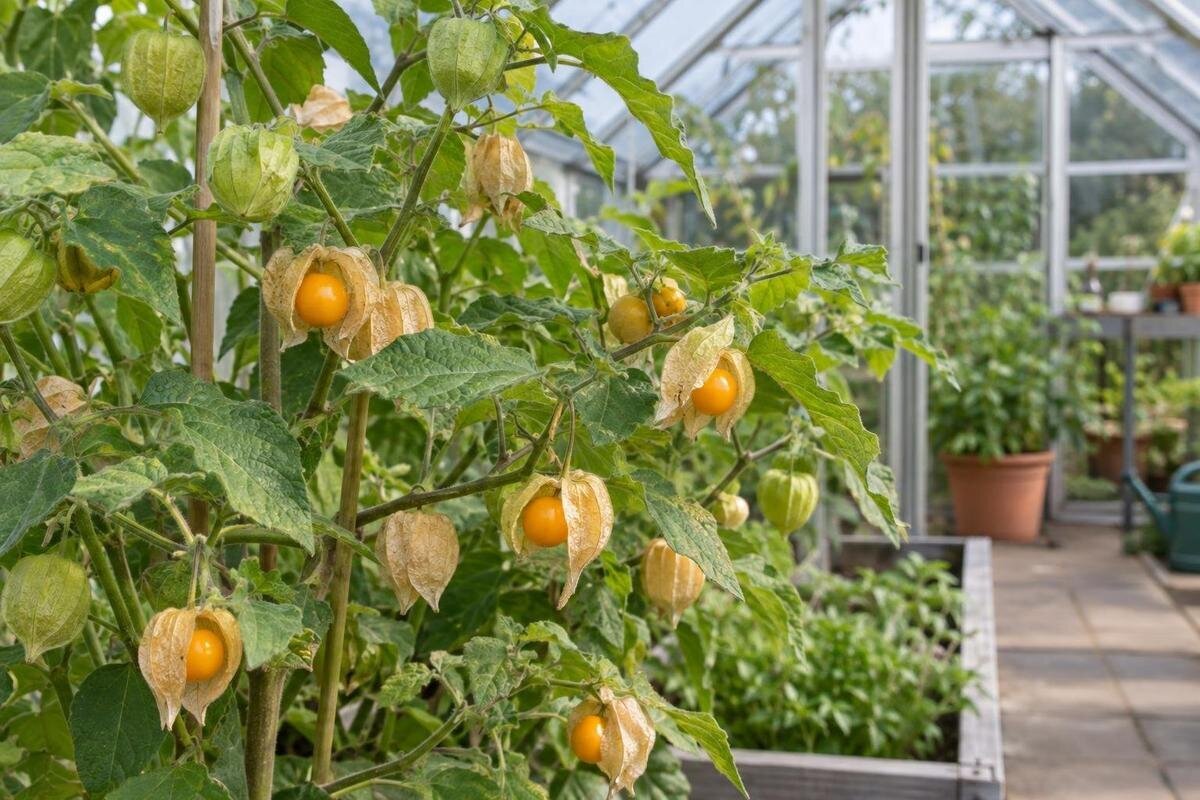
Greenhouse growing guide
Cape gooseberries (Physalis peruviana) can produce fruit under cover, but a greenhouse doesn’t eliminate the challenges of a short, cool growing season. Plants need a frost-free period, steady moisture, room for branching growth and time for the fruit to ripen and the papery husks to dry. An unheated greenhouse can give an earlier start and shelter plants from wind and rain, yet it may still get too cold at night or too hot on a sunny day. Plan around your local season and the conditions inside the structure.

Can an unheated greenhouse provide enough warmth?
Cape gooseberry (Physalis peruviana) is a frost-tender, warm-season crop with a long growing period from sowing to ripe fruit. It is a perennial in climates without damaging frost, but in a frost-prone garden it is usually treated as an annual unless it can be overwintered in genuinely protected conditions. Time to maturity varies with seed lot, cultivar and growing conditions, so use the seed packet’s estimate as a planning aid rather than a guarantee. A late sowing, low-light position or cool spell can delay the first ripe berries; a greenhouse cannot recover all the time lost before the plant was established.
A greenhouse offers shelter, but its overnight conditions still depend on the weather outside. Sun can raise daytime temperatures quickly, while an unheated greenhouse can cool substantially after sunset and during cold spells; it is not a frost-free space by default. Record overnight lows and hot-day highs at plant height, then compare them with local frost dates and the crop’s expected development time. Readings across changing weather are more useful than a single measurement. If you are considering heat to carry the crop through cool nights, weigh the likely harvest against energy use and have any heating system selected and installed by a qualified professional. A warm reading at noon is not enough evidence.
When to sow and transplant
Give seedlings a head start before the outdoor growing season begins. A practical guide is to sow indoors about six to eight weeks before your area’s expected last spring frost; local timing and germination speed vary, so check the seed packet and allow a buffer if seedlings develop slowly. Work backwards from the likely transplant date rather than choosing a sowing date simply because the greenhouse feels warm on a spring afternoon. Your indoor space must accommodate the seedlings until outdoor conditions are suitable. Sow in seed-starting mix, keep it lightly and evenly moist, and provide warmth and strong light. Don’t keep the mix saturated while waiting for emergence. When seedlings form true leaves, pot them on if they are crowded and maintain bright light so stems stay sturdy rather than long and weak.
Before moving plants permanently into the greenhouse, harden them off gradually by exposing them over several days to brighter light and cooler air. Bring them back to a protected spot if conditions turn harsh. In an unheated structure, wait until local frost risk has passed and nights are consistently mild; sunny daytime air can be misleading. A heated greenhouse can shift the schedule only if it reliably maintains suitable conditions overnight. Watch the forecast during the transition, and transplant into the final bed or container once seedlings are acclimatized.
Give the mature plant enough space
Choose the brightest practical position, because a long season only helps if the plant also receives useful light. Watch how shadows from shelving, greenhouse framing, nearby buildings and taller crops move through the day; avoid placing the transplant in a persistently dim corner. Cape gooseberries grow into branching, bushy plants and may reach roughly 1–2 m tall in favourable conditions, although variety and growing conditions affect their final size. Plan for the mature canopy, not just the seedling’s small pot. Leave room to inspect fruit and move through the greenhouse without brushing stems.
Compare the crop’s space with the greenhouse’s usable layout, including walkways and headroom. The Bloomcabin Prestige Greenhouse with Metal Base is listed in sizes from 3.77 m² to 28.08 m², a floor-area range rather than a guarantee that every configuration fits a mature plant, a path and other crops. Check the dimensions of the chosen version, door position and usable growing area before assigning a permanent spot. Square metres alone don’t tell you the clear height or ventilation available; a wide canopy still needs room around it.
Choose a greenhouse bed or container
Either a greenhouse bed or a substantial container can suit Cape gooseberry if the roots have room and water can drain away. In a bed, loosen compacted soil and work in mature compost if the ground needs organic matter, while avoiding a low spot that stays saturated. For a container, use a generous pot with drainage holes and quality potting mix; choose one that can support a large, branching plant and won’t dry out immediately. Decide where the pot will stand before adding the plant and its support. Check that you can reach the soil surface with your watering equipment without having to push through the branches. If using a bed, leave similar access from the path rather than filling every available gap with another crop. Set the transplant at the depth it grew before, and avoid burying the stem unnecessarily.
For a mixed growing area, count more than the bed: aisles, pots, watering access, supports and other crops all use floor space. The Bloomcabin Spacious Greenhouse listing gives a range of 47 to 70 m², an option to compare for a broader growing layout—not a size requirement for a single Cape gooseberry. Check the selected plan for usable growing space rather than assuming every listed square metre is plantable. In a smaller greenhouse, one accessible plant may be simpler to care for than several crowded plants that shade one another.

Support the branches as they grow
Set up support while the plant is young, before its side branches spread across a path. A sturdy stake, cage or trellis can keep the main stems upright; use soft ties and leave room for stems to thicken. Check ties as growth continues, and support a heavy side branch before it bends onto a neighbouring crop or the ground. Look at individual branches as well as the main stem: a plant can remain upright while one side shoot obstructs access or rests on another crop. Guide that shoot towards the support gently, without forcing it into a sharp bend. Cape gooseberry can become rangy, and branches are easier to guide gradually than to untangle once laden with foliage and fruit. Lightly remove damaged or crossing growth if it blocks airflow or access, but keep productive shoots.
Don’t assume a greenhouse frame or glazing bar can carry a plant’s load; use a separate support unless the manufacturer confirms that a part is intended for that purpose. The Classic Aluminum Greenhouses range is listed from 3.77 m² to 28.08 m², but floor area doesn’t establish headroom, fixing points or load capacity. Check the exact model and support details before planning a trellis overhead; a free-standing stake avoids relying on an unverified structural part. Avoid severe pruning late in the season, when removing flower-bearing growth may leave little time for replacement growth and fruit.
Keep moisture and feeding steady
Keep the root zone evenly moist, especially as flowers set and fruit swells. Check the soil or potting mix rather than following a fixed daily schedule: a container can dry faster than a greenhouse bed, and a warm, bright day changes how quickly moisture is used. Water near the base, let excess drain, and avoid repeated cycles of wilting followed by soaking. A thin mulch can slow surface drying in a bed once the soil has warmed, but leave space around the stem and check beneath it before watering. The surface alone can be misleading.
Use fertile soil but avoid heavy feeding, particularly with nitrogen-rich products that encourage leafy growth at the expense of flowers. Follow the fertilizer label and check light, moisture and drainage before adding more; pale leaves can have more than one cause. Container-grown plants may need nutrients replenished more often because regular watering carries some away through drainage. If a lean-to layout is under consideration, the Lean-To Greenhouses range is listed from 3.69 m² to 14.34 m². Compare the selected plan with the space you need to reach the pot, water the base and inspect the plant.
Pollination in a greenhouse
Cape gooseberry is generally self-fertile, so one plant can form fruit without a second variety. Still, self-fertile doesn’t mean every blossom will set. In a greenhouse, insect visits and air movement may be limited, and poor light, unsuitable temperatures or inconsistent moisture can also affect flower and fruit development. After a flower fades, look for the small husk to begin swelling. A flower that drops without this change is a reason to review conditions, not proof that you need another plant.
If flowers are open and the air is still, gently tap or shake a flowering branch on a dry day to help move pollen; don’t strike stems or handle blossoms roughly. Keep the plant reachable so you can inspect flowers and developing husks without snapping side shoots, and leave open space around its canopy. The Limited Edition Aluminum Greenhouses range is listed from 3.77 m² to 28.08 m², but the listed area alone can’t show whether a particular layout gives a plant enough access. Compare the actual growing area, route through the greenhouse and space around supports.
Manage summer heat and the short season
Pay attention to greenhouse heat as well as warmth. Air in a closed structure can climb quickly on bright days; use a thermometer at canopy height and ventilate when readings rise, while avoiding cold draughts around young plants. Keep foliage from becoming crowded, since a dense, still canopy dries slowly and is harder to inspect. Shade cloth isn’t a default fix: it reduces light as well as heat, and Cape gooseberries need light to ripen fruit. Adjust ventilation and plant spacing first, then consider temporary shade only if observations show a persistent problem.
A larger greenhouse isn’t automatically cooler by day or warmer at night. The T-Shaped Orangery Greenhouse is listed in sizes from 16.52 m² to 30 m²; that is an area reference, not evidence of particular ventilation, glazing performance or heating. Verify the chosen configuration and any climate-control plan separately. In an unheated house, use the local first-frost date to judge how much late-season flowering is realistic. Flowers opening very late may not have time to produce mature, sweet fruit.

Recognize ripe fruit and harvest in stages
Cape gooseberry fruit develops inside a papery husk. The husk begins green, then typically becomes straw-coloured and dry as the berry ripens; the berry itself changes to yellow, golden or orange, depending on the plant. Use both signs together, because a large berry can still be immature and husks can change at different rates. A green berry inside a fresh green husk needs more time. When checking the crop, compare individual fruits rather than judging the whole plant by its oldest or largest husk. If the husk looks dry but the berry remains green, don’t treat the husk alone as confirmation of ripeness. Flowers and fruit develop over several weeks, so one plant can carry blossoms, green husks and ripe fruit at the same time.
Pick mature berries with the husk intact, or collect fallen fruit and assess each berry before eating. A dropped berry can be ripe, but it can also fall after a branch is bumped; look for ripe colour and a dry, papery husk rather than assuming. Remove fruit that is split, mouldy or badly damaged, and check beneath branches so berries aren’t missed on the floor. The Pyramid Greenhouse range is listed from 5.53 m² to 18.9 m²; use the selected floor plan to check your route to the plant for regular picking.
Troubleshoot fruit set and plan for next year
If flowers fail to set, review warmth, light, watering swings and whether flowering branches have been gently shaken or visited by insects; don’t diagnose a pollination problem from one dropped flower. A mass of leafy growth with few blossoms can point to excess nitrogen or inadequate light, while green husks late in the season indicate fruit that has not ripened yet. Separate these observations: few flowers, flowers that fail to set and fruit that remains green are different problems. Before changing your routine, identify which stage is delayed and review the conditions during that stage. Note the sowing date, transplant date, first open flower, first swelling husk and first ripe berry. Record minimum overnight temperatures and periods of intense heat too. Those observations can help you decide whether to sow earlier, change the plant’s position or plan for supplementary heat next season.
Treat the plant as frost-tender at the end of the season. Gather fruit that has reached maturity before a frost threat, and don’t count on an unheated greenhouse to carry a live plant through winter. If nearby storage matters to your setup, the Limited-Edition Aluminum Greenhouses with Storage range is listed from 5.52 m² to 28.08 m²; examine the selected plan to understand how growing and storage areas are arranged. In a frost-prone location, planning Cape gooseberry as a warm-season annual can keep next year’s schedule straightforward.
Frequently asked questions
Can Cape gooseberries grow in an unheated greenhouse?
Possibly, if your local frost-free window is long enough and the greenhouse stays warm enough at night for the crop to mature. An unheated structure can warm in the sun but cool substantially after sunset. Start early indoors, track overnight lows and don’t assume cover alone will protect plants from frost.
When should I sow Cape gooseberry seeds?
A useful guide is to sow indoors about six to eight weeks before your area’s expected last spring frost. Germination and growth vary, so follow the seed packet and keep seedlings warm, bright and evenly moist. Harden plants off gradually before moving them to an unheated greenhouse.
Do I need more than one plant for pollination?
Usually not: Cape gooseberry is generally self-fertile. In a still greenhouse, gently tapping an open flowering branch on a dry day may help move pollen. If flowers fall without swelling husks, check temperature, light and moisture as well as pollination.
How do I know when Cape gooseberries are ripe?
Look for a dry, papery husk that has turned straw-coloured and a berry that is yellow, golden or orange, depending on the plant. A green berry in a fresh green husk needs more time. Check the berry and husk together; size alone is unreliable.
Can I grow a Cape gooseberry in a pot?
Yes. Use a generous pot with drainage holes and quality potting mix, then support the plant as its branches spread. Containers can dry faster than greenhouse beds, so check moisture more often. Leave enough room to reach the plant for watering and harvest.
Growing Cape gooseberries under cover depends on timing and observation: sow early, wait out frost risk, give the mature plant light, space and separate support, and judge ripeness by the husk and berry together. The deciding factor is whether your actual greenhouse conditions provide enough growing time, not how warm the structure feels at midday. Record when flowers and ripe fruit appear, then use that season’s results to shape next year’s plan.
