
Carnivorous Plants in a Greenhouse
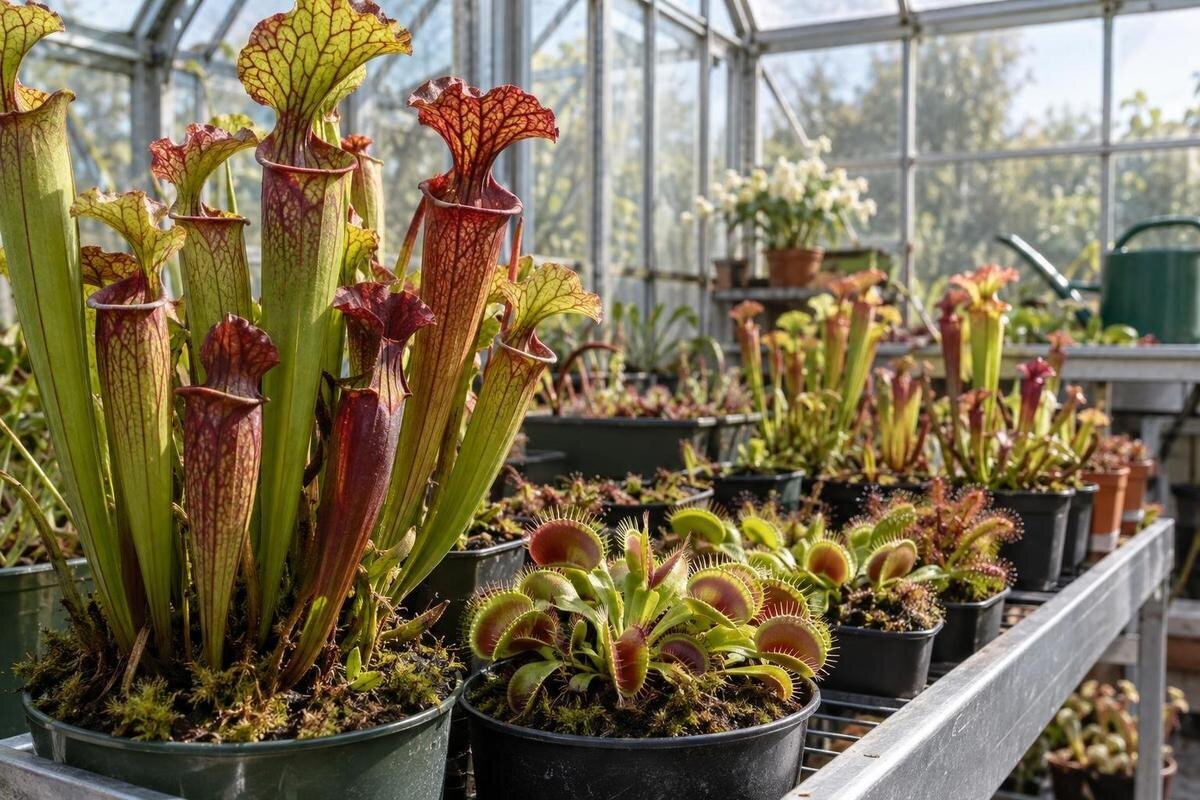
Carnivorous plant care
Carnivorous plants can grow well in a greenhouse, but the label covers species from different climates and growing cycles. Venus flytraps and many North American pitcher plants are temperate, sun-loving bog plants; tropical pitcher plants such as Nepenthes have different root, light and temperature needs. Sundews and butterworts include both temperate and tropical species, some with seasonal shifts in moisture. A greenhouse does not automatically create tropical conditions or a suitable winter rest. Identify each plant first, then arrange light, water, airflow and winter care around its group. Botanical labels are more useful than a shared common name when you plan the collection.

Carnivorous plants do not share one climate
Carnivorous plants share the ability to trap prey, not a single set of growing conditions. Venus flytraps (Dionaea muscipula) and North American pitcher plants (Sarracenia) are temperate bog plants that generally need strong light, low-mineral water and a seasonal winter rest. Tropical pitcher plants (Nepenthes) come from a different climate and usually need airy roots with steady moisture. Sundews (Drosera) and butterworts (Pinguicula) include temperate and tropical species, and some have marked seasonal changes. In every group, insects supplement nutrition; they do not replace the light needed for growth.
Record the botanical name on each pot, along with the cultivar if known and any winter or dry-season requirement. A common name can describe more than one plant, and care can vary even within a genus. Arrange pots by light, watering method and seasonal temperature rather than by appearance. One greenhouse can hold several groups if you can keep their routines distinct. Estimate space for pots, trays and an accessible aisle before comparing enclosures. The Classic aluminum greenhouse listing spans 3.77–28.08 m²; check the dimensions of the specific model against your layout, since floor area is not the same as bench capacity.
Light needs of flytraps and Sarracenia
Venus flytraps and many Sarracenia need very bright light and substantial direct sun; a dim corner rarely compensates for their wet growing medium. Put them in the brightest suitable part of the greenhouse, where shelves or taller plants will not shade them for much of the day. Glazing frames, nearby trees and seasonal sun angles can cast changing shadows, so check the bench at more than one time. Colour varies by species and cultivar, meaning a green trap alone does not prove that the light is wrong. Look at new growth and the plant’s exposure over time.
Plants moved from a shop, windowsill or shaded bench may need gradual adjustment to stronger sun; a sudden change to intense exposure can damage leaves. Check the greenhouse on clear days as well as overcast ones: an enclosed space can warm quickly, and a hot position may need ventilation or carefully managed shade. Avoid adding shade just because the greenhouse looks bright to you; these bog species are adapted to open conditions. Keep labels visible, so changes in growth can be compared with the requirements of the actual species. If natural light is limited, research species-specific options rather than assume every carnivore will grow well under the same lamp.
Low-mineral water and suitable growing media
Choose water by its mineral content, not by whether it looks clear. Many carnivorous plants are adapted to habitats with very low dissolved minerals, and repeated watering with mineral-rich water can leave residues in the growing medium. Clean rainwater, distilled water and reverse-osmosis water are common choices. Tap water varies from one supply to another, so municipal water is not automatically suitable. A basic jug filter or boiling does not guarantee that dissolved minerals have been removed. Water passed through a conventional sodium-exchange softener is also a poor substitute.
A total-dissolved-solids meter can help compare water sources, but it does not identify every substance in a sample or establish one safe threshold for every species. Keep collected rainwater in a clean, covered container and check that it stays free of fertilizer runoff and debris. Use a low-nutrient growing mix intended for the plant group; ordinary fertilized potting soil is unsuitable for bog species. Plan where containers and refills will go before setting out many pots. The aluminum lean-to greenhouse range is listed from 3.69 to 14.34 m²; compare the chosen footprint with room for trays, a refill area and access.
Watering bog plants and tropical pitcher plants
Watering style differs even when plants occupy the same greenhouse. During active growth, flytraps, Sarracenia and many bog sundews are commonly kept in pots standing in shallow trays of low-mineral water, with the growing mix kept moist. Their tray routine may change during dormancy. Nepenthes generally need a free-draining, airy medium that remains moist, rather than roots sitting in a deep, permanent reservoir. Some butterworts also change their moisture needs with the season. Follow the identified plant’s requirements instead of putting every pot on one shared tray.
Give each group a separate tray or clearly marked watering area so one routine cannot flood another. Leave room to lift and inspect pots, clean trays and spot algae or pests before the bench becomes crowded. High humidity is not a universal target, and packing plants tightly can reduce air movement. Keep water containers close enough to refill without blocking the aisle or disturbing nearby pots. When you plan distinct shelves or tray zones, compare the layout with your pot count: Limited Edition aluminum greenhouses are listed from 3.77 to 28.08 m², but that range does not tell you how many benches or trays will fit.

Winter dormancy for temperate species
Winter rest is essential for Venus flytraps, Sarracenia and some temperate sundews and butterworts. Growth may slow and older leaves may die back; that seasonal change is not automatically a problem. These plants should not be kept in continuous summer warmth simply because the greenhouse is enclosed. The length and suitable conditions for dormancy depend on species, cultivar and growing method, so confirm the requirements for each plant rather than apply one thermostat setting to the whole collection. Keep dormant pots labelled, since their appearance can be less recognisable.
Plan where the temperate pots will spend winter before cold weather arrives. An unheated greenhouse can still become very cold, and container-grown roots are more exposed than plants in the ground. Monitor overnight lows at pot level and use species-specific guidance for how cool the rest should be and what protection is needed; do not assume glazing prevents a freeze. If tropical plants need warmth at the same time, they may need a separate suitable location or controlled zone. A T-shaped orangery greenhouse is listed in sizes from 16.52 to 30 m²; a larger footprint may help with access and grouping, but it does not create a cool dormancy area by itself.
Temperature and headroom for tropical species
Tropical pitcher plants need a different temperature plan from temperate bog species. Within Nepenthes, highland species are generally adapted to cooler nights than lowland species, which need warmer conditions; hybrids can combine traits, so the plant’s identification matters. Bright filtered light is a more useful starting point than assuming every Nepenthes should sit in harsh midday sun. Tropical sundews and Mexican butterworts also vary, including plants with seasonal changes in growth or moisture needs. Tropical does not mean that every plant wants the same heat, humidity or watering, and an uncontrolled greenhouse may not hold a stable pattern.
Check the mature growth habit before arranging shelves. Some Nepenthes form climbing stems and need vertical clearance or support, while compact plants take less space; do not infer eventual size from a young pot. Compare the greenhouse’s listed height and ventilation details with the plant’s expected growth and your working access. The pyramid greenhouse range is listed from 5.53 to 18.9 m², but floor area alone does not show internal headroom or suitable temperatures. Verify the chosen configuration rather than assuming its shape provides a particular climate. Track night temperatures as well as daytime peaks, especially for highland species.
Ventilation without drying the plants
Air exchange helps manage warm, damp pockets, but more airflow is not always better. In a closed greenhouse, heat can build on sunny days and condensation can linger; opening suitable vents when outdoor conditions allow can help keep conditions more even. Cold air or a strong fan directed at warmth-demanding plants can dry or chill them. Place a thermometer near the plants rather than relying on how the doorway feels, and note whether small pots dry unusually fast when vents are open. Humidity readings make sense only alongside airflow and temperature.
Review ventilation features for the exact greenhouse configuration you are considering, and make sure vents can be reached and operated as intended; a product name does not specify their number or placement. Account for equipment and supplies without letting them take over the plant bench. The limited-edition greenhouse with built-in storage listing describes built-in storage and options from 5.52 to 28.08 m². Check the actual storage layout and capacity before allocating space for trays, water containers or tools, and keep enough room to move, water and inspect each group.
Greenhouse size, height and layout
Choose a greenhouse by translating plant requirements into a working layout. Count pots and trays, allow an aisle for watering, and consider tall Sarracenia pitchers or climbing Nepenthes separately from low shelves. Decide whether bog plants and tropical species can be managed on separate benches or need different controlled areas. A shelf can divide light or watering routines, but it cannot by itself create different night temperatures. Consider where a water container, labels and care tools will go so daily tasks do not disturb plants with different needs.
Compare exact configurations for usable width, height, access and ventilation rather than selecting by floor area or greenhouse name alone. The Bloomcabin Prestige greenhouse listing identifies a metal base and sizes from 3.77 to 28.08 m². That identity is not a substitute for checking the chosen model’s published height, vents and base details against your site and proposed layout. If site or base compatibility is uncertain, ask the supplier or a qualified installer before choosing. No single greenhouse configuration guarantees a particular temperature or humidity.

Seasonal monitoring in the greenhouse
Keep a simple record for each group: water source, watering method, light position, daytime peaks, overnight lows and changes in new growth. This makes it easier to distinguish a seasonal slowdown from a problem and to notice whether one bench is hotter than the rest of the greenhouse. Note when plants move between locations or when shade and ventilation change. A thermometer that records minimum and maximum readings is more useful than a single midday check when comparing summer heat with winter conditions. Keep separate notes for dormant bog plants and highland Nepenthes.
Review the records as the seasons change. In spring, check whether dormant plants are resuming growth before changing their routine; in autumn, prepare temperate species for rest and avoid unnecessary disturbance. If the collection expands, map its groups again rather than adding new plants wherever there is an open spot. The large orangery greenhouse range is listed from 47 to 70 m², a substantial footprint to compare for a larger collection. More area can make separation easier, but it does not provide separate climates without suitable ventilation and temperature management.
Troubleshooting common growing problems
Use plant response as evidence, but avoid diagnosing from one symptom. An older trap on a Venus flytrap or a pitcher on a pitcher plant may blacken as it ages; weak or stretched new growth can have several causes, including light, season and recent relocation. A Nepenthes that stops making pitchers after a move may be responding to a change in light, moisture or temperature, not humidity alone. Compare the symptom with the species’ normal seasonal pattern and inspect new growth before changing care. Check leaves and growing points for pests as part of routine observation.
Where practical, change one condition at a time and write down what changed. Recheck the water source and growing mix if mineral residue or gradual decline appears; review temperature records if a plant loses growth outside its normal season. Avoid trying to correct poor growth by adding fertilizer, meat or more water to every pot. If the species is uncertain or decline continues, confirm its identification and consult a carnivorous-plant specialist or trusted horticultural reference. A measured adjustment is easier to evaluate than moving the whole collection or changing several variables at once.
Frequently asked questions
Can different carnivorous plants share one greenhouse?
Yes, if you can keep their needs distinct. Temperate bog plants such as Venus flytraps and many Sarracenia need strong light and a winter rest, while tropical pitcher plants have different root and temperature requirements. Separate benches or trays can help, but they do not create different temperatures by themselves.
Can I water carnivorous plants with tap water?
It depends on the mineral content of your water supply. Many carnivorous plants need low-mineral water, so clean rainwater, distilled water or reverse-osmosis water are common choices. A total-dissolved-solids meter can help compare sources, but it is not a complete water analysis.
Do Venus flytraps need a winter rest?
Yes. Venus flytraps are temperate plants with a seasonal dormancy. They should not be kept in continuous summer warmth year-round. The suitable conditions depend on the plant and how it is grown, so check species-specific guidance and monitor the temperature where the pots sit.
Can Nepenthes sit in a tray of water like a flytrap?
Generally, no. Nepenthes usually need an airy, free-draining growing medium that stays moist, rather than roots sitting in a deep, permanent reservoir. Keep their watering routine separate from bog plants, and confirm the needs of the particular species or hybrid.
Does a greenhouse provide enough light and warmth year-round?
Not automatically. Light changes with the season, and enclosed spaces can heat up on sunny days or become very cold overnight. Check conditions at plant level, including overnight lows, and match them to each species instead of assuming the greenhouse creates one stable climate.
A successful greenhouse collection depends on keeping unlike plants from being forced into one routine. Label each species, use low-mineral water, separate bog trays from plants that need airy roots, and monitor both daytime heat and overnight conditions. Once those needs are clear, greenhouse size, height and ventilation details become meaningful parts of the plan. The aim is not to make one climate suit every carnivore, but to give each group the conditions its natural cycle calls for.
