
Growing Celery in a Greenhouse
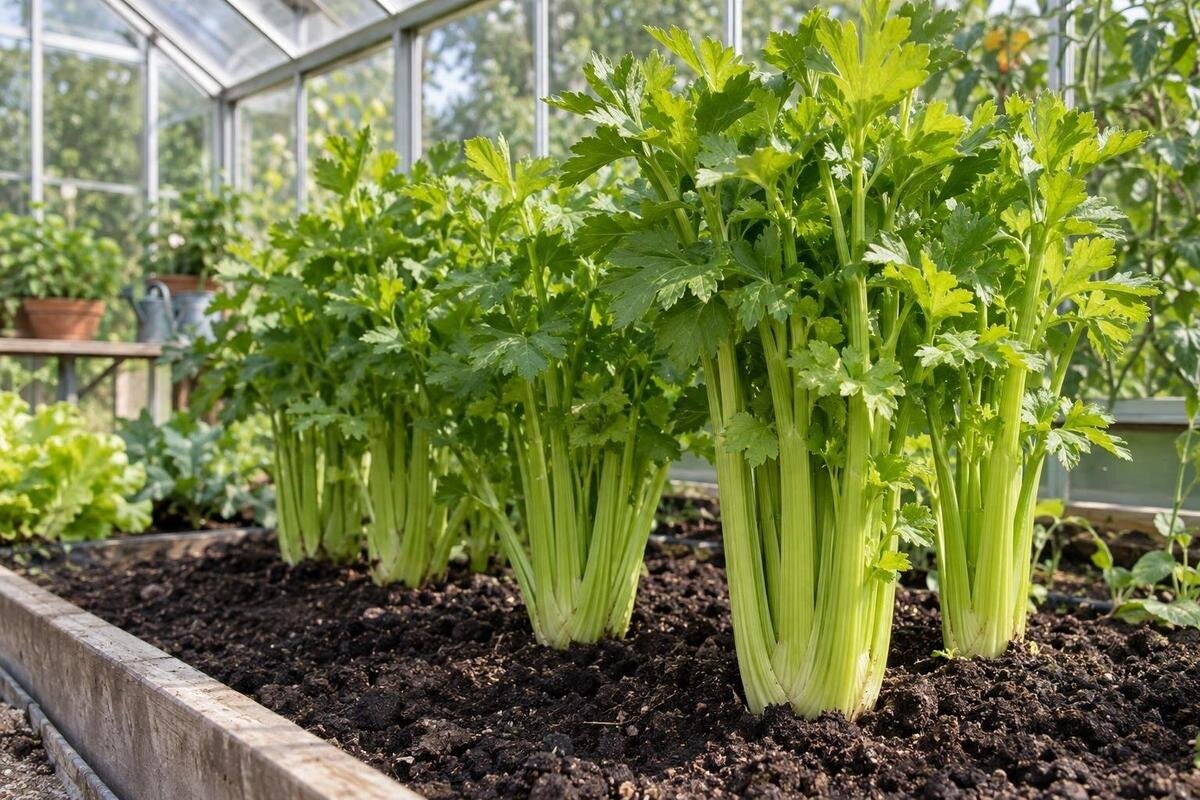
Greenhouse growing guide
Celery is a long-season greenhouse crop that needs steady moisture and cool-to-mild growing conditions, not simply extra heat. Plan its bed, transplant timing and harvest access together so plants have enough room and remain easy to tend throughout the season.

Before choosing a greenhouse 1
Plan for celery’s long growing season
Stalk celery needs bed space for an extended period; it is not a quick crop to fill a gap between plantings. Seeds germinate slowly and seedlings take time to establish; after transplanting, plants continue to occupy their space until the stalks reach a useful size. In a greenhouse, celery also needs light, dependable watering access and room to harvest while neighbouring crops are growing. Mark its likely planting and harvest window on a crop calendar, then identify what else will share the beds. Even a partial harvest does not free the bed if plants remain in place. If your plan depends on clearing celery early, fewer plants or a shorter-term crop may fit better.
Celery generally favours cool-to-mild conditions and a steady growth rhythm. Under glass, it may be possible to begin or finish a crop beyond the outdoor window, but the covering does not supply winter heat or stop summer temperatures from climbing. An unheated greenhouse still follows local weather; sunny days can make it warmer than outside, while nights can remain cold. The catalogue lists Limited-Edition Aluminum Greenhouses with Storage in footprints from 5.52 to 28.08 m². Use the selected model’s actual plan: this area is not all plantable bed once paths, doors and other crops are included. If the crop depends on continuous heat, account for that separately before committing to a long season.
Match transplant timing to local temperatures
Choose a target harvest window before buying seed, then work back from the packet’s maturity information. The count may begin at sowing or transplanting, and the two figures are not interchangeable; compare like with like and allow extra time for slow germination and seedling establishment. Local climate, cultivar and growing conditions all affect the calendar, so a date that works in one part of Canada may not work elsewhere. Record greenhouse temperatures as well as outdoor frost dates. Readings near the plants, especially at night and on sunny afternoons, give a more useful picture than a regional date alone.
Young celery exposed to prolonged chilling can bolt, sending up a flower stalk before it has produced worthwhile stalks. That risk is one reason to avoid setting out tender plants simply because a greenhouse looks sunny. At the other extreme, heat can stress celery and affect stalk quality, so ventilation and seasonal timing matter as much as protection from cold. University of Minnesota Extension and the Royal Horticultural Society publish general celery-growing guidance; combine a crop-specific reference with local frost information and your seed supplier’s notes. The Bloomcabin Prestige Greenhouse is listed in sizes from 3.77 to 28.08 m². When comparing options, consider how you will manage cold nights and sunny afternoons during the intended crop window, rather than choosing by size alone.
Before choosing a greenhouse 2
Choose stalk celery and a variety that fits your calendar
Buy seed for stalk celery (Apium graveolens var. dulce), not celeriac, which is grown for its swollen root. Check the packet for days to maturity, mature size, colour and advice on blanching, then compare those details with your available greenhouse season. A variety described as early may be a better fit for a short window, but the word is relative; its stated maturity period and local growing notes are more useful than a broad catalogue label. If disease resistance or bolting tolerance is listed, treat it as one selection factor, not a substitute for moisture and temperature management. Ask a local seed supplier whether its timing reflects conditions like yours.
Your choice of variety also determines whether blanching will be part of the work before harvest. Self-blanching cultivars can be grown without earthing up the stems, while traditional green types may be blanched to produce paler, milder stalks. Green stalks are also perfectly usable if you prefer to skip that task. Compare varieties with the harvest you want in mind: stalk colour, flavour and the amount of handling you are prepared to do all matter alongside maturity dates. In a small greenhouse, a self-blanching variety may be more practical than one that needs extra work shortly before harvest. Read the variety-specific directions before choosing, rather than assuming every celery crop needs the same treatment.
Sow early and raise sturdy seedlings
Celery seed is tiny and slow to emerge, so it is usually started indoors well before the intended transplant date. Press seed onto the surface of fine, moist seed-starting mix rather than burying it deeply; light helps it germinate. Keep the tray consistently moist, not saturated, and expect emergence to be slower than with larger vegetable seed. After seedlings appear, provide strong light and enough space for upright growth. Crowded, dim seedlings stretch and are awkward to handle, while disturbance at transplanting can set them back. Label each sowing with the cultivar and date so you can keep the crop calendar straight.
Maintain an even routine through the seedling stage instead of letting trays dry and then flooding them. Saturated, stagnant mix can cause losses, but a small cell can also dry quickly in a warm greenhouse. Harden seedlings gradually before planting them in their final bed, avoiding prolonged chilling while they are young. Include seed trays, potting-on space and a clear route for carrying plants in your growing plan. The Spacious Greenhouse is listed from 47 to 70 m². When planning a multi-crop growing area, distinguish the temporary space needed for celery seedlings from the bed they will occupy later. Celery does not require a large structure simply because its seedlings need space before transplanting.

Before choosing a greenhouse 3
Allow room for mature plants and working access
Set seedlings out at the spacing on the packet when they are ready and the bed is suitable. As a planning estimate, many stalk-celery layouts allow about 20–30 cm between plants and roughly 45–60 cm between rows; cultivar size and local recommendations can change those figures. Celery leaves spread beyond a narrow stem, so tightly packed rows make it harder to inspect the base, reach each plant and keep foliage from crowding. The roots also need continuous soil beneath the row, not just a small pocket at each transplant. Draw beds to scale rather than estimating from the greenhouse’s outside measurements.
Leave a route wide enough to water and harvest without stepping into the bed, and keep row ends accessible for carrying mature plants out. An aisle that works in an empty greenhouse may feel tight once leaves spread and trays or tools are in use. If a bed sits along a wall, check that you can still reach its plants for inspection and harvest. The Aluminum Greenhouses are listed from 3.77 to 28.08 m², but the stated floor area is not a bed measurement. Check the exact model’s plan, door location and internal usable space, then count plants from your actual row layout.
Keep the root zone evenly moist
Consistent moisture is one of celery’s main requirements. It has a relatively shallow root system and does not respond well to repeated dry spells; growth can slow, and stalks may become tough or stringy. Aim for soil that stays evenly moist through the active root zone, not a cycle of drying out and then being soaked. Check below the surface in more than one part of the bed, since a dry top layer may not show how much moisture remains where roots are working. Sun, ventilation, plant size and soil all affect water use, so a calendar alone is a poor guide.
Water thoroughly enough to moisten the root zone, then make sure excess water drains away; celery needs reliable moisture, not waterlogged roots. Supplying water to the soil rather than repeatedly wetting the leaves helps you see where it goes and keeps foliage drier. A hose or irrigation line can make watering more manageable if each row receives even coverage, so plan its route before planting. The Lean-To Greenhouses are listed in footprints from 3.69 to 14.34 m². On the specific floor plan, trace how you would bring water to each row without blocking the aisle. Access matters throughout the season, especially once spreading leaves make the bed harder to reach.
Before choosing a greenhouse 4
Prepare fertile, well-drained soil
Prepare fertile soil that holds moisture yet drains freely. Work mature compost into the bed if organic matter is low, and break up compacted areas before planting so the root zone is consistent along the row. Avoid filling a greenhouse bed with a mix that dries rapidly or stays waterlogged; both make even moisture harder to maintain. A soil test gives a more reliable basis for pH and nutrient adjustments than a general recipe, particularly before a long crop that will remain in place for months. Make any needed amendments before transplanting so you do not disturb the roots later.
Celery is a relatively heavy feeder, but feeding by guesswork can create excess foliage without solving poor drainage or irregular watering. Use soil-test results and the fertilizer label to guide the amount and timing; do not assume more fertilizer will produce better stalks. For a permanent greenhouse bed, consider the whole area you will need to prepare and maintain, not just the planting holes. Listed sizes for the Limited Edition Aluminum Greenhouses range from 3.77 to 28.08 m². Once you have drawn the beds within your chosen model, use their actual dimensions to plan soil preparation. That gives you a practical basis for assessing the work involved before committing the bed to celery for several months.
Control greenhouse heat and keep air moving
Temperature and airflow need attention under glass. On a bright day, a closed greenhouse can warm much faster than the outdoor forecast suggests, and hot spells can stress celery or affect stalk quality. Use a thermometer near the plants and ventilate when conditions rise; do not rely on the outside temperature alone. A little shade can help where the greenhouse receives intense sun, but its value depends on the site, season and available ventilation. Take readings at different times over several days; one midday check will not show how the crop experiences the full day and night.
Air movement helps leaves dry and reduces stagnant, humid pockets where leaf diseases can spread. Maintain spacing, remove damaged or diseased foliage, clear crop residue after harvest and avoid routinely splashing leaves when watering. If comparing greenhouses, verify the actual vent openings and how they operate rather than inferring ventilation from the footprint or shape. The T-Shaped Orangery Greenhouse is listed from 16.52 to 30 m²; those figures help with scale only and say nothing about airflow. Consider whether the specific structure can provide the ventilation your site and growing calendar require.

Before choosing a greenhouse 5
Harvest at the right stage and decide on blanching
Harvest according to the variety’s guidance and the plant’s development, not a universal date. Outer stalks may be cut as they become usable, or the whole plant can be taken once it has developed adequately. If removing individual stalks, keep the leafy crown intact and cut cleanly near the base so the plant is not needlessly torn. A flower stalk indicates bolting; quality often declines after flowering begins, so harvest promptly rather than waiting for extra size. Record when the first usable stalks are ready; that information helps you judge the next sowing date under your own greenhouse conditions.
If blanching is part of your plan, gradually exclude light from the stalks before harvest while leaving the centre leaves uncovered. Follow the variety’s instructions about when to begin and how long to keep stalks covered; do not bury or seal the crown. Blanching is a choice about colour and flavour, not a requirement for edible celery. Self-blanching varieties avoid most of that extra work, while green stalk types can be harvested as they are. Inspect covered plants regularly so excess moisture, rot or damaged leaves do not go unnoticed in a humid greenhouse.
Assess a trial crop before expanding
A small trial planting can help you assess whether celery fits your greenhouse before you devote a larger bed to it. Follow the crop from seedling establishment through harvest, noting when plants move into the bed and when that space becomes available again. Include the practical work in your assessment: carrying trays through the door, reaching plants with water and removing harvested stalks while other crops remain in place. More floor area cannot compensate for unsuitable seasonal temperatures, while a smaller greenhouse may work if the bed and access fit. If you plan to add heating, cooling or powered equipment, check compatibility and have installation questions assessed by a qualified professional.
The Pyramid Greenhouse is listed from 5.53 to 18.9 m². Compare the specific model’s dimensions with the space your trial crop needed, and consult product details for ventilation or other features rather than assuming them from its shape. Keep a simple record of sowing and transplant dates, greenhouse temperatures, watering adjustments and the first usable harvest. Read those results alongside the seed packet and local growing guidance when planning another crop. The useful measure is not how many plants fit into an empty greenhouse, but how many you can bring to harvest while maintaining moisture, suitable temperatures and access throughout the season.
Frequently asked questions
Can celery grow in an unheated greenhouse?
Yes, if the greenhouse season is long enough and temperatures suit the crop. An unheated structure can shelter plants and extend the season, but it cannot guarantee winter growth. Watch for cold conditions while seedlings are young and excessive heat on sunny days.
How much space should I leave between celery plants?
As a planning estimate, allow about 20–30 cm between plants and roughly 45–60 cm between rows. Check the seed packet and local growing guidance, since spacing varies with the variety. Include an aisle so you can water, inspect and harvest without stepping into the bed.
Does celery need watering every day?
There is no reliable daily schedule for every greenhouse. Keep the root zone evenly moist, then adjust according to the soil, weather, ventilation and plant size. Check below the surface rather than watering automatically; the goal is steady moisture, not waterlogged soil.
Do I have to blanch greenhouse celery?
No. Green stalk celery can be harvested without blanching. Some varieties are self-blanching, while others can be blanched by gradually excluding light from the stalks before harvest. Follow the variety’s directions and keep the leafy crown uncovered.
How long does greenhouse celery take to mature?
It depends on the variety, growing conditions and when the seed supplier starts counting days to maturity. Check whether the figure is measured from sowing or transplanting, then allow extra time for germination and seedling growth. Use the packet as a guide, not a guaranteed harvest date.
The deciding question is whether you can keep celery in a suitable temperature range, maintain even soil moisture and leave its bed available for the full growing period. Use a variety’s seed information and local guidance to plan dates, then draw the mature rows and paths against the greenhouse’s actual dimensions. A modest planting that you can water, ventilate and harvest consistently is a better fit than filling every spare space with a crop that needs attention for months.
