
How to Keep a Greenhouse Diary That Improves Next Season’s Plan
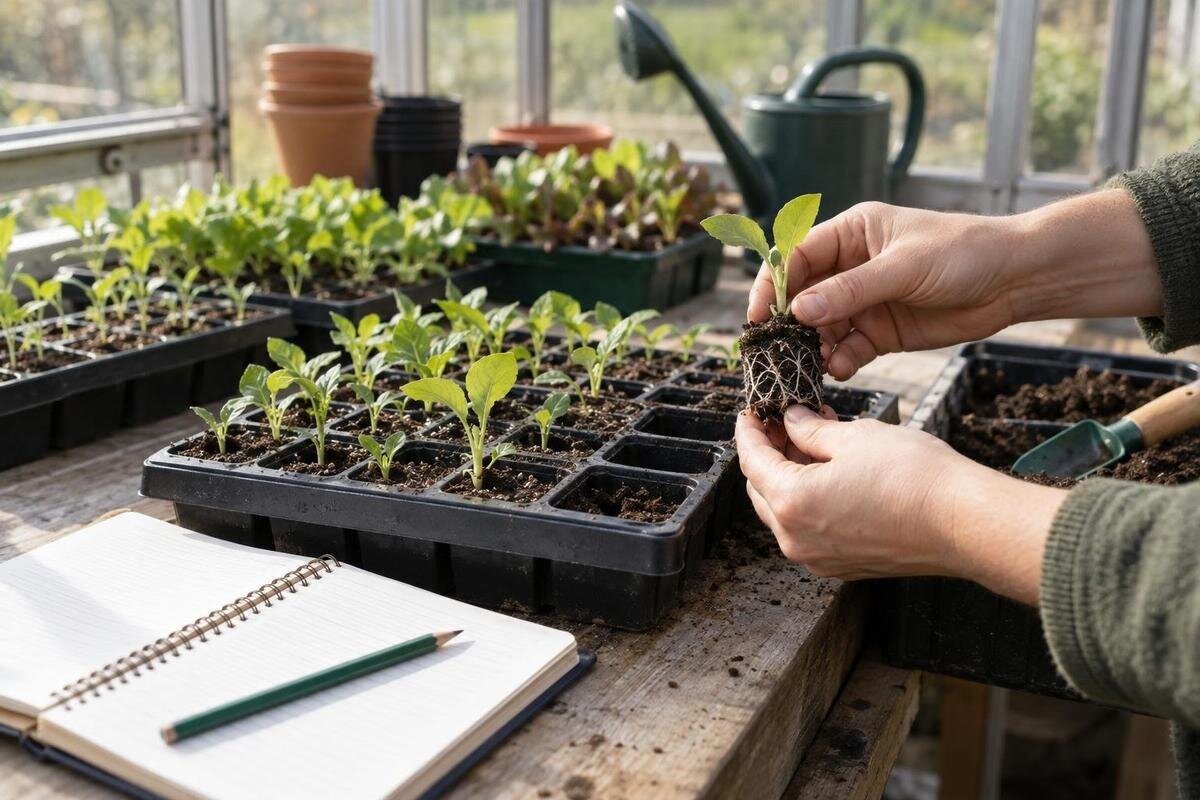
Greenhouse growing diary
An unstructured notebook can tell you that a season felt busy; a useful greenhouse diary can show which sowings overlapped, what conditions coincided with a problem, how much you harvested, and where the work accumulated. The aim is not to document every moment. It is to collect a few comparable facts so you can decide what to repeat, change, or test next year. A record that connects sowing dates with bench use, conditions, yield and labour is easier to turn into a practical crop plan than a page of undated impressions.

Questions and fields for your greenhouse diary
Before choosing paper or a digital format, list the questions you want next year’s plan to answer. You might want to know whether separate sowings produced a steadier supply, which batches occupied the most bench space, when harvests peaked, or which routine took the most time. Choose a few questions that matter to your own greenhouse rather than trying to record everything. A short set of fields used consistently is more useful than detailed notes that stop partway through the season.
Use a repeatable entry for each event: date; batch ID; crop and variety; event; location; conditions or action; quantity and unit; labour; result or next check. On paper, these can be column headings; in a spreadsheet, use one row per event so a batch can have several entries without overwriting its history. Leave a field blank or mark it not applicable when necessary, rather than forcing every event into every category. An observation and an interpretation are different things: record a measured reading or visible change as an observation, then label your possible explanation as a note. This separation helps prevent a hunch from becoming next year’s plan before you have enough records to support it.
A batch ID for each sowing
Treat each separate sowing as a batch, even when it is the same crop and variety. Record the crop, variety as shown on the seed packet, seed source or lot if known, sowing date, number of seeds or cells, and intended use. Put the same batch ID on the plant label and in the diary so you can connect observations with the right plants. If a batch is divided between locations, add a simple suffix or record each portion under the original ID with its own location and count. Keep seeds sown, seedlings emerged, plants moved and plants lost as separate counts; they describe different stages. If several sowings are merged into one total, you may not be able to tell which date or batch contributed to the final result.
Illustrative record only—not a crop recommendation: batch T-01, tomato, variety as printed on the packet; sown March 10, 12 seeds; first emergence noted March 18; nine seedlings counted March 25; moved to bench B on April 2. These dates and counts are invented to demonstrate record keeping, not suitable timing or expected results. Note how long the batch occupied its location as well. Keep a separate location key for benches, beds and storage so these references remain understandable next year. When comparing the Limited-Edition Aluminum Greenhouses with Storage, listed from 5.52 to 28.08 m², distinguish storage requirements from growing-space requirements in that key; the listed area is not usable bench space.
Separate sowing, emergence and transplant dates
Record the date seeds were sown separately from the first emergence you observed and any later move or transplant. If emergence was uneven, note the period or the date you counted rather than implying that every seedling appeared at once. If you checked on Monday and first saw seedlings on Thursday, record Thursday as the first observed emergence, not as a confirmed emergence date. That distinction matters when you compare batches checked at different intervals. For each move, note where the batch went and whether it stayed in the greenhouse or left for another growing area. These dates let you see how long space was occupied and where delays occurred without relying on memory.
Keep planned dates separate from actual dates. A calendar may say when you intended to sow, while the diary records what happened and why a change was made. When batches overlap, mark the start and end of each one’s time on a bench; this reveals peak demand more clearly than the number of sowings alone. For a possible purchase, turn that overlap into a list of trays and pots that need room at the same time. The Bloomcabin Prestige Greenhouse page lists options from 3.77 to 28.08 m². Compare those options with your simultaneous tray requirements and a measured layout, rather than using the area range to estimate tray capacity.
Record conditions beside the actions that changed them
Give each condition reading a date, time and location. If you use a thermometer, note where it was placed and whether the figure is a spot reading or a minimum or maximum over a period. Readings from different corners or heights may not describe the same conditions, so identify the position rather than writing only a number. If outside weather helps explain an observation, keep it separate from the greenhouse reading and record how you obtained it.
Log actions that could affect the conditions too: watering, opening or closing vents, adding shade, using supplementary light, or moving a batch. Record what changed and when; do not rely on a general note such as warm week. Keep the action and the later observation in separate entries if they happened at different times. For example, an illustrative entry might record a vent being opened in the morning and a condition reading taken that afternoon, without claiming that the action alone explains the reading. You do not need a running commentary on every moment. Choose a frequency that answers your question, then use a similar method each time so the notes can be compared. If several actions happen together, list them all rather than assigning the result to just one.

Measure peak space use and bench occupancy
Count what is actually occupying space: trays, pots, beds or other growing areas, along with the location and the dates they were in use. If practical, note the dimensions of the trays or the area occupied, and use the same method throughout the season. Separate usable bench or bed area from the greenhouse’s overall area. Door access, paths, tools and storage also take room, so a floor-area figure alone cannot tell you how much growing space your layout provides.
Look for the busiest point in the season as well as the total number of batches. A short period when two sowings overlap may create more pressure than a larger batch grown at another time. Make a weekly space summary with a row for each bench or bed and the batches occupying it. Include empty periods: they help you distinguish an occasional shortage from space that is occupied throughout the season. Record temporary use of paths separately rather than counting it as permanent growing capacity. If a larger footprint merits comparison, the Spacious Greenhouse listing shows options from 47 to 70 m². Use your busiest week to assess a proposed layout within that area, allowing for access and storage as well as plants.
Track harvests with consistent units
For each batch, record harvest dates and amounts using a unit you can repeat, such as count or weight. Decide what you mean by usable harvest and keep that definition consistent; note damaged, discarded or unharvested portions separately when they affect your review. Record how many plants contributed and whether a harvest was one picking or a season total. For repeated pickings, keep each entry and calculate the total separately, rather than replacing earlier amounts with a running figure. A final entry can mark the end of harvesting so an unfinished batch is not compared with a completed one. Those details make it less likely that a large total from a long harvest period will be mistaken for a better-performing batch.
You can compare output per plant or per occupied area only when the numerator and denominator are recorded in the same way each time. Label any calculation with its period and area so it can be checked later. Keep the original harvest entries alongside the summary; this lets you check whether a difference reflects one large picking or a steadier supply. For an area comparison involving the Aluminum Greenhouses, listed from 3.77 to 28.08 m², retain the distinction between the catalogue footprint and your measured growing area. The listing provides an area range, not a yield estimate, so it should not replace the area recorded for the crop.
Record labour, not just crop output
Add the task, date, batch or area, number of people and time spent. Tasks might include sowing, transplanting, watering, moving plants, harvesting, cleaning or dealing with a problem. If you note elapsed minutes, keep that separate from person-minutes. Illustrative example: two people working for 15 minutes contribute 30 person-minutes, while the elapsed time remains 15 minutes. Choose one measure for your summaries and label it clearly. When a task covers several batches, record it as shared work unless you actually tracked the time for each batch; an arbitrary split can make comparisons misleading. Include repeated visits when they are a noticeable part of the routine.
Review labour by task and by busy period, not only as a season total. A short task repeated often can shape the weekly routine, while several jobs at once may make a particular week difficult to manage. Note whether time was spent tending plants, finding supplies or moving items out of the way, so the review identifies a specific difficulty rather than simply a busy day. For comparison with the Lean-To Greenhouses, available in listed areas from 3.69 to 14.34 m², use those notes to identify the working routes you need to assess. The area range does not describe access or bench arrangements; those depend on the layout under consideration.
Log setbacks and losses without guessing at the cause
Write down what you observed, when and where it happened, which batches were affected, and how many plants or harvests were involved. Describe visible symptoms or damage rather than treating a possible cause as confirmed. Then note any action taken and what you observed afterward. If you take a photograph, label it with the date, batch ID and location, and refer to it in the entry. Keep the written description too, since an image may not show the quantity affected or the wider pattern. This record is useful even when the cause remains uncertain: it can show whether an issue appeared in one location, followed a change, or recurred across more than one batch.
Separate planned removals, missed tasks and crop losses so they do not all appear as the same kind of failure. If you made several changes at once, record each one and avoid crediting a single change with the outcome. A space review may be relevant if crowding recurs, but changing a greenhouse is not an explanation for a crop problem by itself. Keep any purchase comparison separate from the loss record: the Limited Edition Aluminum Greenhouses page lists options from 3.77 to 28.08 m², which can inform a question about available area without explaining why plants were lost. State the space problem you want to address before comparing models.

Review patterns before changing the plan
Set aside time during the season and at its end to sort entries by crop, variety and batch. Compare sowing dates with emergence, moves, harvest and peak occupancy. Check that each comparison uses the same units and definitions, and note missing records rather than filling gaps with assumptions. A small or one-off result may point to a question worth testing, but it does not establish that a particular date, condition or action caused the outcome.
For each crop, make a short decision note: keep what worked, change one part that caused difficulty, and test an uncertain idea on a manageable scale. Include the reason for each decision and the evidence behind it. Name the entries or batches you used, then say what result would make the proposed change worth retaining. This gives next season’s review something specific to assess instead of a vague intention to improve. If timing changes will not address repeated crowding, add a space requirement to the decision note. The T-Shaped Orangery Greenhouse listing shows options from 16.52 to 30 m²; assess a measured layout against that requirement rather than treating the listed area as available bench space.
Turn the review into next season’s schedule
Translate decisions into a working calendar that includes more than sowing dates. For each planned batch, note the crop and variety, target date or date range, expected quantity, intended location, space required, and the next event to record. Use reliable crop-specific guidance when deciding actual sowing dates; a diary shows what happened in your greenhouse but does not replace growing instructions. Mark assumptions clearly, particularly where last season’s records were incomplete.
Keep the next plan testable. If you change timing, batch size and layout all at once, it will be harder to understand which change mattered; where practical, retain a comparable batch or change one main factor at a time. Check the plan against the peak-space and labour records before committing to it. Save a dated copy of the original plan, then record revisions separately with their reasons so the planned schedule remains available for comparison with actual events. If those records justify comparing another greenhouse area, include the Pyramid Greenhouse options, listed from 5.53 to 18.9 m², in that comparison. Base the final growing schedule on dimensions and a checked layout, since those figures alone do not confirm usable bench capacity.
Frequently asked questions
How often should I update a greenhouse diary?
Record events when they happen, especially sowing, moving plants, changing conditions, harvesting and losses. Add regular condition readings only when they help answer a question, and take them at comparable times and locations. A brief weekly review can catch missing details without requiring a full entry every day.
Should I give every tray a separate record?
Give each distinct sowing batch an ID. Trays from the same sowing can share a batch record if you can still note their locations and quantities. Use separate IDs when sowing dates, varieties, seed lots or conditions differ enough that you may want to compare the results.
How can I compare harvests fairly?
Use the same units and define what counts as usable harvest. Record the number of plants and the area or bed that produced it, along with the harvest period. Compare similar batches where possible, and treat results from different conditions as clues rather than proof of what caused the difference.
What should I do if I forgot to record a date?
Mark it as unknown or estimated rather than entering a precise date from memory. Add a note about the uncertainty, then keep a consistent record from that point forward. Missing information is useful to recognize: it shows which parts of your routine need a simpler reminder next season.
Is paper or a spreadsheet better for a growing diary?
Either can work. Paper is convenient for quick notes at the greenhouse; a spreadsheet makes it easier to sort batches and compare totals later. Choose the format you will use consistently, keep the same field names and units, and make sure older records are easy to find.
A good greenhouse diary does not need to be elaborate. Record each batch in a consistent way, note the conditions and work that matter to your questions, and preserve enough context to compare results fairly. When next season’s plan is built from those records, it can reflect what your own space and routines actually supported—not just what you intended to do.
