
Overwintering Geraniums: Dormant or Growing
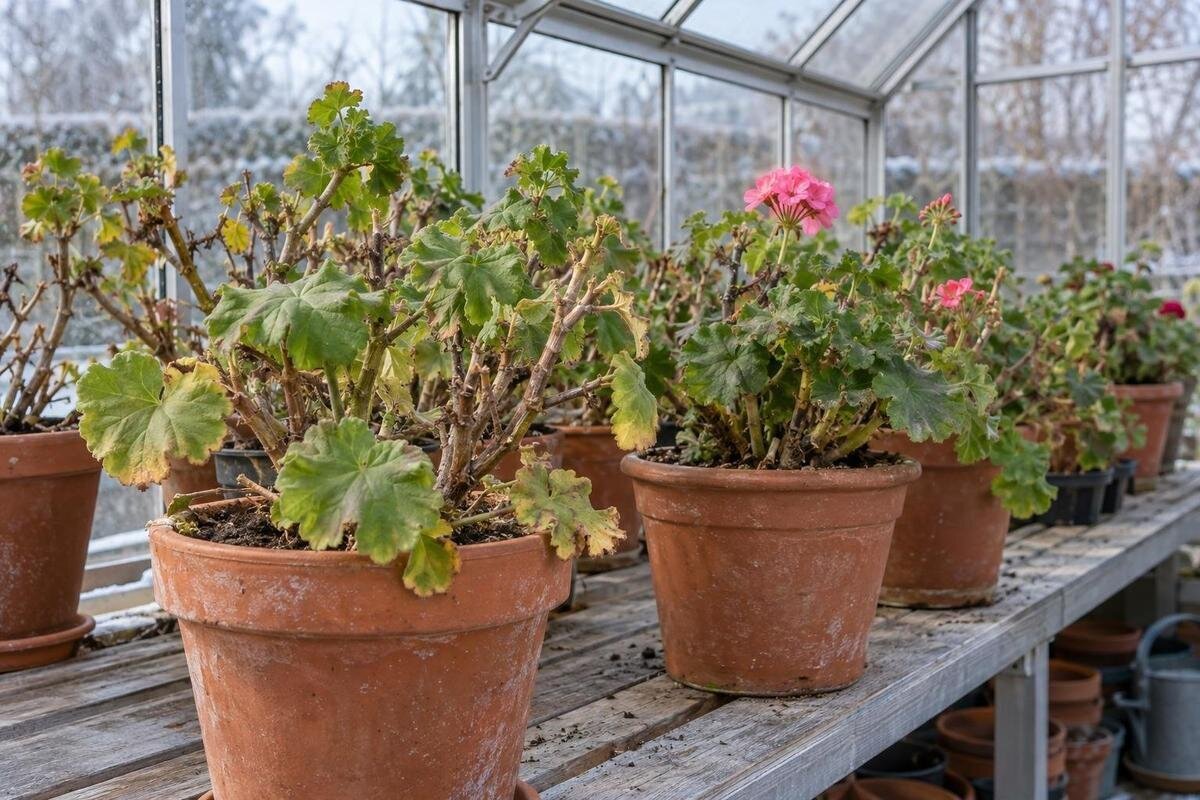
GREENHOUSE WINTER CARE
Most garden-centre plants sold as geraniums in Canada are Pelargonium, frost-tender perennials that need a winter plan. You can let a plant rest, usually with little foliage and very low water use, or keep it growing in a bright, cool place. These approaches are not interchangeable: dormant plants can rot if kept wet, while leafy plants become weak in dim, overly warm conditions. A greenhouse offers a place to manage light and airflow, but its daytime warmth does not prove that the overnight temperature is safe. Start by confirming the plant, then choose the routine whose light and temperature needs you can meet.

Greenhouse planning 1
First, confirm which plant you have
Before choosing a winter routine, check the plant label. Garden-centre “geraniums” are commonly Pelargonium, including zonal bedding types (Pelargonium × hortorum), ivy-leaved types (Pelargonium peltatum), regal pelargoniums and scented-leaf selections. They are not the hardy cranesbills in the genus Geranium. Many true Geranium species are perennials, but their ability to survive outdoors depends on the species and cultivar. The same care instructions do not fit both groups, so do not dig up a hardy Geranium for bare-root storage just because someone overwintered a plant called a geranium.
Pelargoniums also vary in growth habit and winter response. A trailing ivy-leaved plant needs room for its stems, while a compact zonal plant may be easier to keep on a bench. Regal types have their own flowering habits, and scented-leaf selections are not all alike. Keep the tag or take a clear photo before moving plants; a cultivar name is more useful than leaf appearance alone. If the label gives a minimum temperature or a particular winter method, use that information rather than assuming that every plant sold as a geranium can follow the same schedule.
Choose between dormancy and active growth
Dormant storage is an option when you do not have a bright place to maintain steady growth. Depending on the method, a Pelargonium may lose most or all of its leaves and need little water. It will not provide winter flowers, and it still needs protection from freezing and excess moisture. Keeping a plant actively growing preserves its foliage and may extend flowering, but it calls for good light, regular checks and enough warmth to protect it from cold nights. Warmth without sufficient light often produces thin, stretched growth.
Base the choice on conditions you can maintain, not on which method sounds easier. Consider the plant’s label, the brightest available spot, the lowest overnight temperature and how often you can check the pots. Dormant plants can rot if left in wet potting mix; active plants can weaken if left warm and dim. Avoid switching a plant repeatedly between a damp, warm position and a cold, dark one. If you have both types, label their locations so you do not water a resting plant as often as one that is producing leaves.
Greenhouse planning 2
Store bare-root Pelargoniums cool and frost-free
Move tender Pelargoniums before a forecast frost. For a bare-root method, remove faded flowers and damaged leaves, check stems and roots for pests or rot, and gently shake away loose potting mix. Label each plant before its leaves disappear. A cool range around 5–10°C (41–50°F) is a practical starting point for many dormant Pelargoniums, but it is not a guaranteed minimum for every cultivar. Keep the roots frost-free and monitor temperatures where the plants are stored, rather than relying on a reading from another part of the building.
Keep stored roots on the dry side, but check them every few weeks so they do not become badly shrivelled. Avoid wet wrapping or sealed packaging that traps moisture; remove soft, dark or mouldy material if it appears. A fully dormant, leafless plant does not need bright growing light, but a plant with healthy leaves should not be treated as if it were bare-root and dormant. When comparing the lean-to greenhouse range, listed from 3.69 to 14.34 m², distinguish space for leafy plants from space for dormant storage. The footprint helps with layout planning, but measured overnight temperatures determine whether a proposed storage location is suitable.
Overwinter dormant plants in their pots
Keeping a Pelargonium in its pot avoids disturbing the roots and can be convenient when a plant has a large root system. Move it to a cool, frost-free place; around 5–10°C (41–50°F) is a useful general target for dormancy, subject to cultivar guidance. Reduce watering sharply. The potting mix should not stay wet, but a root ball that dries out completely for a long period can also suffer. Check the pot rather than following a summer watering routine, and remember that a plant retaining healthy leaves still needs light.
Pots near an exterior door or cold glazing may experience different conditions from those on a central bench, so check temperatures at pot level. Remove standing water from saucers and keep the label with the plant. For several potted plants, sketch a layout that lets you reach each pot and inspect the mix without moving the whole collection. The Limited Edition aluminium greenhouse range is listed from 3.77 to 28.08 m². Compare the selected configuration’s usable floor and bench space with that layout, allowing access around the pots rather than estimating capacity from how tightly their leaves can fit together.

Greenhouse planning 3
Give actively growing plants enough light
To keep a Pelargonium growing, give it the brightest practical position and avoid warmth without light. Around 10–15°C (50–59°F) is a useful cool starting range for many established plants when light is adequate, but it is not a promise that every cultivar will thrive at those temperatures. Check the plant’s stated cold tolerance and the actual nighttime minimum. Winter days can be dim even in a greenhouse, especially during prolonged cloudy weather. If you consider supplemental lighting, follow the equipment maker’s guidance and judge the plant by its growth, rather than assuming that daytime sunshine alone is enough.
Look for long gaps between leaves, thin stems, small pale growth or a plant leaning strongly towards the light; these can indicate that conditions are too dim. A zonal Pelargonium may stay more compact in a bright, cool position, while an ivy-leaved type needs space for trailing stems and can shade nearby plants. Regal and scented-leaf types also vary, so use their cultivar guidance instead of assigning one rule to the whole group. When considering the Pyramid Greenhouse range, listed from 5.53 to 18.9 m², examine where benches would sit and how plants would be arranged at different heights. Compare the exact dimensions and ventilation details as well as the floor area.
Adjust watering and feeding to growth
Water according to whether the plant is resting or growing. For a dormant potted Pelargonium, check the potting mix every few weeks and water sparingly only if the root ball is becoming completely dry. Cold, wet mix encourages problems, so never leave the pot standing in water. An actively growing plant uses more moisture: let the top few centimetres of mix dry before watering, then water thoroughly and let the excess drain away. Pot size, potting mix and temperature all affect how quickly it dries, so a fixed weekly schedule is unreliable.
Do not feed a leafless dormant plant. If an actively growing plant is producing leaves or flowers, use a fertilizer labelled for that purpose and follow its directions; slow winter growth does not call for extra feeding. Direct water onto the potting mix rather than routinely wetting the foliage, and remove fallen leaves or flowers. For a layout that also needs room for supplies, the Limited-Edition greenhouse with built-in storage is listed in sizes from 5.52 to 28.08 m². Check how the chosen layout divides that space between storage and growing areas. Keep watering supplies accessible without blocking the route to pots that need regular attention.
Greenhouse planning 4
Measure temperature and manage airflow
A greenhouse can warm quickly in sunshine and cool substantially after sunset, particularly when it is unheated. Do not assume that a sheltered daytime reading represents the temperature around the pots overnight. Put a minimum–maximum thermometer near plant level, away from direct contact with glazing or a heat source, and note readings through both clear and cloudy conditions. Check different locations if plants are spread across the space; a shelf near a door can behave differently from a central bench. Use those readings to decide whether the chosen routine is realistic for the cultivar.
Air out the greenhouse when conditions allow without chilling the plants, and avoid leaving foliage crowded and damp for long periods. Close vents before the temperature falls if doing so is part of your setup, while still preventing persistently stagnant air. If supplemental heat is required, ask a qualified professional to assess a safe, suitable heating and electrical arrangement rather than improvising an installation. Ventilation deserves a separate place in a greenhouse comparison: the T-shaped orangery greenhouse range is listed from 16.52 to 30 m², but that area does not specify the available ventilation options. Check those options and the configuration’s height against your planned plant arrangement.
Check for pests, rot and condensation
Inspect plants before bringing them into a greenhouse or other shared winter space. Look at the undersides of leaves, stem joints and growing tips for aphids, whiteflies, spider mites or signs of damage. Check the surface of the potting mix and the pot rim as well. A pest that is easy to overlook outdoors can spread among closely grouped plants, so keep newly moved or questionable specimens apart while you monitor them. Remove dead leaves and spent flowers, and do not store a plant with soft, blackened stems without first checking whether rot is present.
Leave enough room to reach each plant, clear away fallen material and water without brushing against neighbouring foliage. Clean used pots and tools before reusing them, and look for condensation that leaves foliage persistently wet in a cool, poorly ventilated space. Sticky cards can help monitor some flying insects, but they do not replace inspection. If you use a pest-control product, check that its label permits the intended use and follow the directions. For the Bloomcabin Prestige Greenhouse range, listed from 3.77 to 28.08 m², assess the proposed layout by tracing how you would inspect every pot. Include access to plants kept apart for monitoring and compare the available ventilation options.

Greenhouse planning 5
Restart dormant plants gradually
As light increases, check dormant plants for firm stems and signs of new buds. Remove dead or damaged growth. Pot bare-root plants into a suitable container with fresh potting mix, then water enough to settle the mix and let excess drain. Keep the newly potted plant in a bright place and increase watering as leaves develop and the mix dries more quickly. Do not resume regular feeding before there is active growth. Plants that stayed in pots may also need more water as they produce new leaves, but make that change in response to growth rather than the calendar alone.
Move plants outdoors only when local frost risk has passed and nighttime conditions suit the particular Pelargonium. Acclimate them over several days or longer, increasing their exposure gradually and protecting tender leaves from an abrupt change in sun, wind or temperature. Plan the route between the greenhouse and outdoor space so you can move pots without catching stems on nearby plants or fittings. The Classic aluminium greenhouse range is listed from 3.77 to 28.08 m². For this task, compare the actual openings and working clearances of the selected configuration, not just its area. Check the route with your planned bench arrangement in place.
Plan greenhouse space around the winter method
Choose space according to the routine you can maintain. Dormant, leafless plants need cool, frost-free storage and very little water; they do not need a bright growing area. Active Pelargoniums need light, enough room for their growth habits and temperatures suited to the cultivar. Allow for paths, access to pots, a place to read the thermometer and room to ventilate without knocking plants over. A greenhouse’s name or floor area cannot tell you whether its overnight climate, height or ventilation configuration suits your collection, so check the details for the exact model and arrangement.
For a collection large enough to consider a dedicated structure, the Spacious Greenhouse range is listed from 47 to 70 m². Compare its available configurations with the space needed for your plants, benches and access routes. That area range is not a recommendation for every gardener or a measure of winter performance. Decide which plants would remain leafy and which would be stored dormant, then identify where each group would go and how you would monitor overnight temperatures there. A smaller indoor storage area may be a better fit for dormant plants. Active plants need a reliably bright position, whether you keep the whole collection together or use separate winter locations.
Frequently asked questions
What temperature should I keep overwintering geraniums at?
For dormant Pelargoniums, about 5–10°C (41–50°F) is a useful cool, frost-free starting range. For plants kept in active growth, around 10–15°C (50–59°F) can work when light is adequate. These are general guides, not guaranteed limits for every species or cultivar; check the plant label and monitor temperatures where the pots sit.
Can I overwinter geraniums in an unheated greenhouse?
Only if measured temperatures stay above the minimum required by your particular plant. An unheated greenhouse can warm during the day and cool substantially overnight, so daytime readings are not enough. If you cannot maintain suitable conditions, choose a reliably frost-free indoor space instead.
How often should I water a dormant geranium?
There is no dependable calendar schedule. Check dormant potted plants every few weeks and add only a small amount of water if the root ball is becoming completely dry. Keep it from sitting in wet potting mix. Bare-root plants need different handling; their roots should not be stored in wet wrapping or allowed to become badly shrivelled.
Should I remove all the leaves before storing a geranium?
Not necessarily. Some bare-root dormancy methods remove leaves, but a potted plant with healthy foliage needs light. Remove dead, yellow or damaged leaves, and follow guidance for the specific Pelargonium and storage method rather than stripping every plant.
Can a dormant geranium be kept in a dark place?
A genuinely dormant, leafless Pelargonium can be stored without bright growing light if it remains cool and frost-free. A plant that still has healthy leaves is not in the same situation: keep it in bright light or follow a suitable method for bringing it fully into dormancy.
The strongest winter plan is the one that matches the plant’s identity and the conditions you can actually maintain. A dormant Pelargonium is not a plant to store wet and forget, and an actively growing one is not protected by greenhouse walls alone. Check roots or new growth, watch nighttime temperatures and adjust water and light to what the plant is doing. With the cultivar label and a simple temperature log, choosing dormancy or winter growth becomes a practical decision rather than a guess.
