
Greenhouse Glass Keeps Cracking: What an Installer Should Review
Greenhouse repair
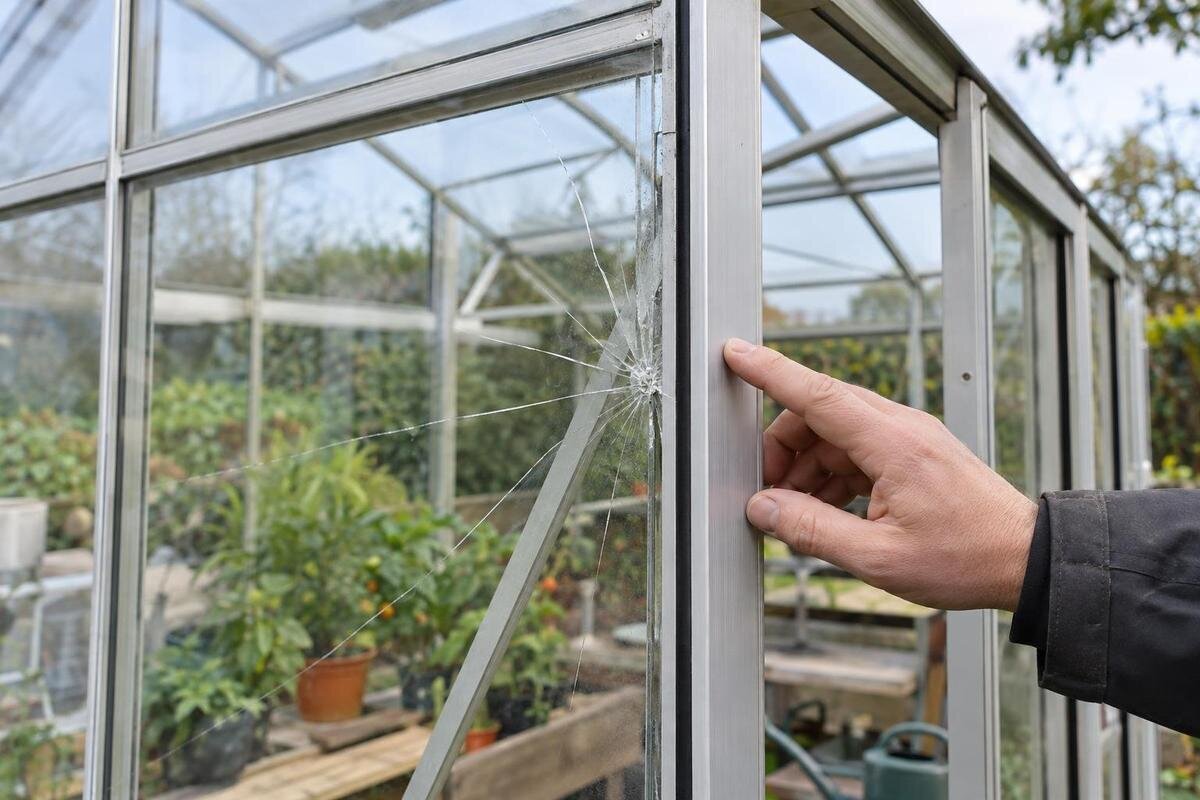
If the same greenhouse pane has cracked more than once, ordering another piece of glass may not address the cause. A qualified installer should review the frame, how the pane is held, the installation history and the conditions around the structure before recommending another repair. The break pattern and timing can help guide that review, but neither proves a cause on its own. This guide explains what to document and what to ask, while leaving glass handling and structural changes to a qualified professional.

Why repeated glass breakage needs investigation
When greenhouse glass cracks repeatedly, the useful question is not only which pane to replace, but what may be acting on it. A break in the same opening after a previous replacement, damage to nearby panes, or recurring cracks after similar conditions should prompt a review of the frame and glazing system. None of these patterns proves an installation fault: a new impact or another local cause may be involved. The installer should consider whether the damage is isolated or appearing in several parts of the structure, then compare that pattern with the repair history.
Put safety first while arranging an assessment. Keep people and pets away from broken glass and from any pane or frame that appears loose or unstable. Don’t handle shards, climb onto the structure, press on a suspect pane or try to remove neighbouring glass to make the area easier to inspect. If damage is overhead or the frame appears to be moving, stay clear of the affected area until a qualified professional can assess it. A photograph taken from a safe position is more useful than a closer view that requires reaching or climbing.
Document the pane, timing and repair history
Take photographs from a safe position before temporary work or clean-up changes what the installer can see. Include one wider view showing the pane in the greenhouse and closer views of the crack and nearby frame, without touching the glass or standing beneath an unstable area. Mark the pane on a simple sketch and describe its position as a roof or side pane, with a reference point such as the door or a corner. Descriptions such as left side can be ambiguous when the structure is viewed from opposite ends, so a marked sketch can prevent mix-ups. Use the same location labels for earlier and later photographs. If several panes have broken, mark each separately so the installer can distinguish repeated damage in one opening from damage elsewhere.
Record when each break happened, whether it followed a recent repair, and any relevant weather, impact or work nearby. Note whether a branch touched the structure, a pane was cleaned, fittings were changed, or a heater or vent had recently been used; these are details to investigate, not proof of a cause. Separate what you directly observed from what you suspect. If you discovered the crack later, record when you noticed it rather than assigning an uncertain time to the break. Keep earlier invoices, the installation manual, model information and any replacement-part labels together. If you do not know the model, say so rather than identifying it by appearance alone.
Check frame alignment and the greenhouse base
An installer should check whether the frame and the pane opening remain in their intended alignment. The review may include the base, perimeter rails, uprights, glazing bars, joints and anchoring, using the manufacturer’s instructions or drawings for the specific structure. They can compare the opening and frame with the reference points in those documents and look for visible movement or changes in fit. A door or vent that has started sticking, a gap that has changed, or uneven contact nearby may be worth noting, but none of these observations alone establishes why glass broke.
Ask whether there is evidence of movement at the base, support or connection beneath the frame, such as a shifted component or a changed joint. An uneven-looking site does not by itself establish a fault or determine what foundation work is needed. Don’t push the frame back into shape, shim it, loosen connections or change anchors while glass is in place. Have the installer distinguish observations about the existing base from any proposed work on it, and explain how that work relates to the affected opening. If the discussion turns to a new structure, the Prestige Greenhouse with Metal Base page identifies a configuration to compare. Ask separately whether the existing base would be retained, changed or replaced; the model name alone does not answer that question.
Review how the pane is supported
The retaining system can matter as much as the pane itself. Depending on the greenhouse design, glass may sit in channels and be held by bars, clips, caps, gaskets or other specified parts. An installer should look for missing or damaged components, uneven seating, possible edge contact, debris in a channel, or retainers that do not appear to be positioned as the manufacturer intended. The question is whether the support and clearance match that model’s instructions, not simply whether the glass appears to fit. Don’t press, slide or remove a suspect pane to test it.
Review what changed when the last pane was installed: its position, glass specification, dimensions and the parts used to retain it. Confirm these details against manufacturer records rather than assuming a neighbouring pane is identical; panes in different locations may have different requirements. Ask whether the previous repair replaced only the glass or also addressed its supports and retainers. If the records do not say, leave that point open for inspection rather than treating the repair as a complete review of the glazing system. If assessment leads to a full replacement enquiry, the Classic aluminium greenhouse range can help identify the product family under discussion. Keep its proposed glazing details separate from the parts required to repair the current greenhouse.

Consider thermal movement and local temperature changes
A pane and its frame can change dimension as temperatures shift, and the glazing system needs to accommodate that movement. The installer should check whether the pane is seated and retained as specified, with the intended clearances, rather than assuming that a crack noticed after a sunny day or a cold night was caused by temperature alone. The timing can help guide an inspection, but it cannot distinguish thermal stress from an impact, a fitting issue or another source of damage.
Mention any repeated pattern in exposure: direct sun on one area, partial shade, nearby heating or lighting, or a recent change to ventilation. Record what was happening before the break rather than moving equipment or altering fittings to test a theory. Compare the circumstances of separate breaks where you have records: did each affect the same opening, and were the surrounding conditions similar? Note differences as well as similarities so the assessment does not focus only on a suspected explanation. If replacing an attached structure is under consideration, lean-to greenhouse options provide a relevant product category to discuss. Ask how the proposed structure would relate to the existing wall and site, while keeping the assessment of the current pane’s fit and exposure separate.
Check for impact and external loads
An impact can come from a branch, hail, a thrown object, a tool or other contact, and it may leave little evidence by the time the pane is examined. Ask the installer to look for possible contact points and compare the break location with nearby trees, stored items, recent work or other changes around the greenhouse. A crack following a storm also does not prove that wind or another load caused it. Preserve photographs and notes rather than trying to recreate the event or test the glass.
Where the structure or several panes appear affected, the installer should review the frame and connections against the manufacturer’s documentation and the conditions at the site. Ask which observations concern a single pane and which suggest that a wider assessment is needed. This distinction should be clear in the proposed scope of work rather than left implicit in a quote for replacement glass. Don’t infer a load rating from the amount of glass, the model name or a product photograph, and don’t add braces or alter the structure without qualified advice. For a replacement comparison, the Spacious Greenhouse listing gives an area range of 47 to 70 m². That helps describe the size of the option being considered; it does not establish its load rating or suitability for the site.
Confirm the greenhouse model and repair records
The installer needs to distinguish the greenhouse’s original specification from any changes made during earlier repairs. Gather the model name, serial number if available, purchase or installation records, manual and labels from previous replacement parts. Arrange repair records in date order and connect each one to the affected opening on your sketch. Where an invoice identifies a pane or fitting, retain that wording rather than replacing it with a description from memory. If a record is missing, note the gap; don’t dismantle fittings or search near broken glass to fill it. The aim is to make clear which components are documented and which still need to be identified during the assessment.
Ask the installer to confirm the greenhouse identity and the document or part identifier they are using. A visual resemblance to another model is not enough to establish that its pane or supports match. If records refer to different models or versions, ask which information applies to the installed structure before authorizing parts or work. If a complete replacement becomes part of the discussion, the Pyramid Greenhouse page identifies a named model family for that separate enquiry. Label information about a proposed new greenhouse clearly so that it is not confused with the records used to diagnose the existing one.
Ask for a diagnosis before approving another pane
A useful assessment should explain what the installer observed and how certain they are about the cause. Ask whether the concern is the frame, base, pane support, fit, impact or temperature-related movement, and what evidence supports that view. The proposed work should say whether it addresses only the glass or also a support or alignment issue. Distinguish a confirmed finding from a possible explanation: both may inform the discussion, but they should not be presented as equally certain. If the cause remains uncertain, ask what has been ruled out and what further inspection would clarify the repair plan. You should be able to understand why the proposed work differs from the previous repair, or why the installer considers the same approach appropriate this time.
Compare repair proposals by scope, not just by the number of panes mentioned. A quote for glass alone may not answer a concern about the opening or retaining system, while a broader repair may need a separate professional assessment. Ask what is included, what remains outside the quote and whether any part of the proposal depends on findings from further inspection. This makes it easier to compare proposals that otherwise appear to describe the same repair. If replacement of the whole structure is being considered, the T-Shaped Orangery Greenhouse page provides a distinct model to discuss. Its installation requirements and suitability for the site should be assessed separately from the repair proposal for the current greenhouse.

Confirm the glazing system before ordering
A pane that measures similarly to the broken one is not automatically the right replacement. The installer or manufacturer should confirm the applicable glass specification, pane position and retaining system against the correct manual or exact part identifier. The location matters because a greenhouse may use different pane shapes or sizes in different openings. Relying on a rough measurement or a visual match can leave the original support or fit question unresolved.
If the original part cannot be identified, ask the manufacturer or seller to verify the replacement before it is ordered or fitted, and provide the model and pane location where possible. Make clear whether you are requesting glass alone or a repair that also involves supports or retaining parts. The response should resolve the compatibility question raised by the assessment, rather than merely confirm that a pane of similar dimensions is available. For a separate whole-structure comparison, Limited-Edition Aluminum Greenhouses with Storage is a named product option. Keep that enquiry distinct from the spare-part request so that information about a new model is not mistaken for confirmation of what fits the existing greenhouse.
Compare repair and replacement against the findings
A repeated crack does not automatically mean the entire greenhouse needs replacing. If the frame and support are in good condition and the issue is limited to one pane, a targeted repair may be appropriate once the cause and correct replacement are confirmed. If several openings are affected, the frame has moved, or suitable parts cannot be verified, ask for a comparison of the repair scope and a full replacement enquiry. The number of breaks alone should not decide the outcome.
For a replacement comparison, consider the site, existing base or wall connection, available space and intended use, alongside the documented requirements of the proposed structure. The Limited Edition Aluminum Greenhouses listing shows an area range from 3.77 m² to 28.08 m², which provides a starting point for comparing available sizes. Ask what each proposal would retain from the existing installation and what would need to change. Compare a targeted pane repair, broader remedial work and full replacement as separate scopes, with any unresolved questions clearly identified. A new model should not be treated as a remedy for the old installation’s problem without considering that problem in the replacement plan. The installer’s findings should guide the decision, rather than the catalogue size or the number of previous breaks alone.
Frequently asked questions
Can the shape of a crack show what caused it?
It may offer clues, but it cannot confirm the cause on its own. The glass type, where a crack began and whether there was an impact all affect what can be inferred. Photograph the damage from a safe position and let the installer assess it.
Why might a replacement pane crack in the same opening?
The opening, supports or fit may need attention, or a new impact or temperature-related stress may be involved. Repeated damage makes those points worth checking; it does not prove a particular fault. An installer should review the frame and glazing system before another replacement.
What should I send the installer before an assessment?
Share safe-distance photographs, a sketch marking the pane’s location, dates of breakage, relevant weather or impact history, and details of earlier repairs. Include the greenhouse model, manual, invoice or part identifiers if available. Don’t remove glass or fittings to collect information.
Can I order a pane with the same dimensions?
Dimensions alone may not establish that a pane matches the greenhouse system. The glass specification, position, support and retaining parts also need confirmation against manufacturer documentation. Ask the installer or manufacturer to verify the exact replacement before ordering or fitting it.
Does repeated breakage mean the whole greenhouse needs replacing?
Not necessarily. An assessment may find that the problem is confined to a pane or its support. If several openings are affected, the frame has moved, or suitable parts cannot be confirmed, compare the scope of a broader repair with replacement options before deciding.
Repeated cracking is a symptom to investigate, not a diagnosis. The most useful outcome is a clear account of what the installer found, whether the cause is confirmed or still uncertain, and how the proposed work addresses it. Once the frame, supports, pane fit and possible external or temperature-related stresses have been reviewed, you can decide whether a verified pane replacement is enough or whether a broader repair or replacement enquiry is warranted.
