
Growing Passion Fruit in a Greenhouse
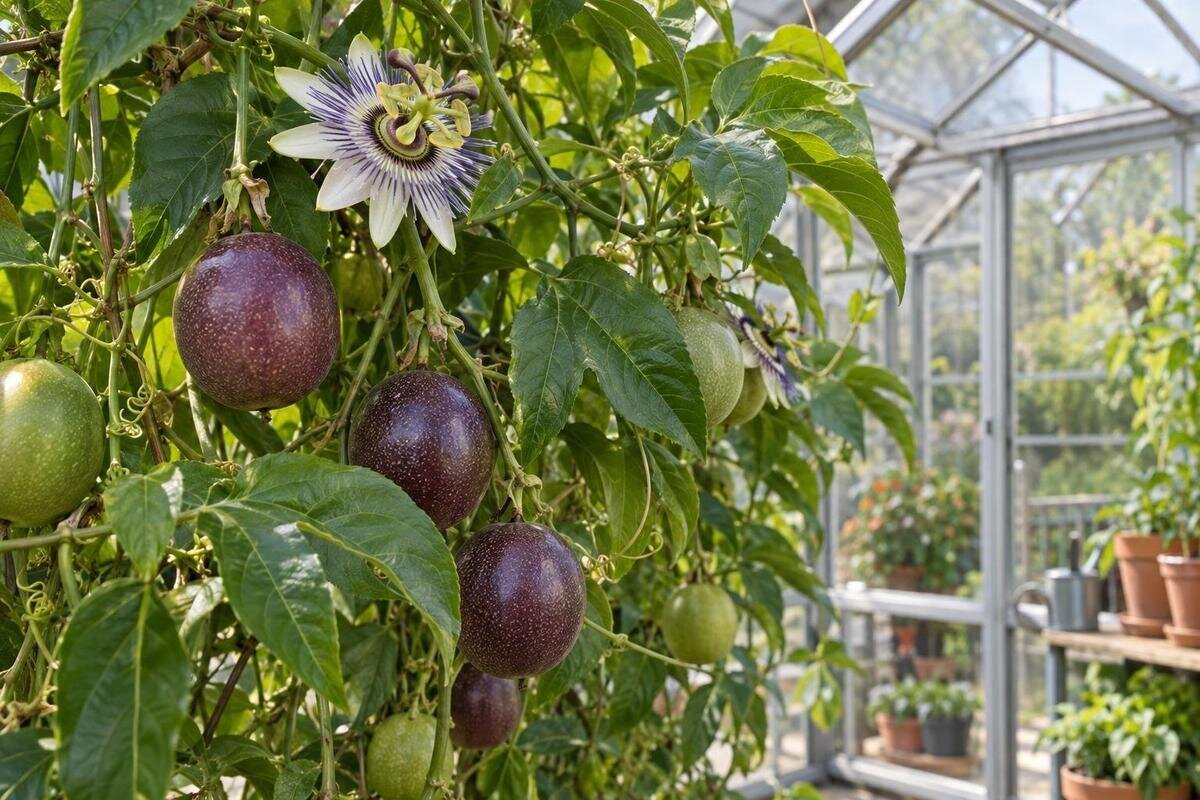
GREENHOUSE GROWING GUIDE
Passion fruit can thrive as a greenhouse climber yet give little or no harvest. Fruiting depends on the right edible cultivar, a long enough warm season, pollination and a winter plan that suits your location—not simply on a lush vine or a sheltered structure. This guide distinguishes ornamental passionflowers from fruiting selections and explains what to plan before dedicating greenhouse space to a vigorous perennial.

A vigorous vine does not guarantee a fruit crop
Passion fruit and passionflower are often used loosely for climbing Passiflora plants, but a greenhouse full of foliage or striking blooms is not the same as a productive fruit vine. Many species are grown mainly for flowers, and even a plant sold for fruit can make abundant growth without setting a crop. Fruiting needs the right plant, a long enough warm season and successful pollination; vigorous leaves do not prove these conditions are in place. Decide whether you want a display climber or an edible harvest before buying. An ornamental plant can still be worthwhile, but its flowers should not be treated as a promise of a useful crop.
Greenhouse protection may extend growth at either end of the season, but it cannot correct a pollination mismatch, replace winter heat or make every species productive. Passion fruit is a longer-term project: a young vine must establish, produce flowering growth and then carry fruit to maturity. The first year may be spent training the vine and learning its growth cycle rather than harvesting fruit. Assess a poor crop by stages: did the vine flower, were blooms pollinated, did young fruit stay on, and was there time for it to ripen? That sequence helps identify what limited the harvest instead of prompting random pruning or feeding.
Choose a cultivar selected for edible fruit
For an eating crop, look for Passiflora edulis and a named cultivar or clearly identified selection sold for its fruit, not a generic tag that says passionflower. Most familiar commercial passion fruit comes from purple- or yellow-fruited P. edulis types. Colour alone does not tell you how well a selection tolerates cool conditions, whether it is self-compatible or how much flavour it develops; those traits vary among cultivars and growing conditions. Ask the nursery for the botanical name, expected mature size, pollination requirements and wintering guidance. Keep the plant label: common names are used for several Passiflora species, so the identity matters later.
Some passionflowers are selected chiefly for their blooms. Blue passion flower (Passiflora caerulea), for instance, is commonly grown as an ornamental; do not assume it will give the same fruit as a cultivated P. edulis selection. Other ornamental species and hybrids can form fruit, but fruit size, eating quality and suitability can differ. Buy from a source that clearly identifies fruit intended for eating, and do not taste fruit from an unidentified vine simply because it resembles a familiar passion fruit. A named cultivar also gives you a meaningful basis for checking compatibility and local growing advice instead of applying one rule to every passionflower.
Warmth during growth, flowering and fruit development
Passiflora edulis is a warm-climate evergreen vine; sustained warmth through active growth, flowering and fruit development matters more than a sunny afternoon. In much of Canada, an unheated greenhouse is best treated as a seasonal growing space: it may warm quickly by day, then lose heat overnight, and a prolonged cold spell can bring damaging conditions inside. Glazing reduces exposure to wind but does not make the vine winter-hardy. Brief survival through cool weather does not mean it will flower or ripen reliably; growth can stall before the plant is visibly killed. Treat overwintering as a separate requirement, not a by-product of owning a greenhouse.
Choose between keeping the vine in a heated greenhouse and growing it in a container you can move to a bright, frost-protected place for winter. An indoor space may keep a plant alive but still be too dim for active growth, so distinguish survival from year-round fruit production. Heating requirements depend on local exposure, the structure and the cultivar; do not size a heater from floor area alone. Have a qualified greenhouse or heating professional assess the installation. The Classic aluminium greenhouse range lists footprints from 3.77 to 28.08 m². Use that as a floor-space comparison, not as evidence of a particular winter temperature or heating requirement.
Balance strong light with ventilation
Give the vine the brightest practical position, with unobstructed light for much of the day. A shaded corner may support leafy growth without providing enough light for dependable flowering and fruit development. Watch for self-shading as well: passion fruit shoots can spread quickly, and a dense canopy can shade flowering growth and nearby plants. Train the canopy as it grows, and reassess shadows as the sun’s angle changes through the season. A wall, fence, mature tree or neighbouring building may cast a longer shadow outside midday. The best site is not simply the warmest one; it needs usable light as well as warmth.
Sun through glazing can also send temperatures soaring in a closed greenhouse. Ventilate when conditions allow and keep air moving around dense growth without blocking access to doors or vents. This helps avoid stagnant, humid pockets and makes leaves and flowers easier to inspect. A lean-to format calls for particular attention to the adjacent wall: check how it shades the plant through the day rather than assuming that closeness to a building means better growing conditions. The aluminium lean-to greenhouse range is listed from 3.69 to 14.34 m²; its footprint cannot tell you whether a specific wall and orientation provide enough sun. Check the proposed spot at different times of day, not only at midday.

Keep roots evenly moist but well drained
Choose between a greenhouse bed and a container partly by deciding how the vine will spend winter. A pot allows relocation, but it must be manageable before it holds mature roots, a trained canopy and wet growing medium. For container growing, use a stable pot with open drainage and a mix intended for container plants; do not let water collect around the roots. A greenhouse bed provides a permanent root zone and avoids repeated moving, yet it fixes the vine in place and makes winter protection more complicated. Leave access for watering and for checking the soil or mix beneath the canopy.
Keep the root zone evenly moist during active growth: water thoroughly, let excess drain, and avoid both a saturated mix and a root ball that dries right through. Sunny greenhouse conditions can make containers dry faster than expected, so check the mix instead of following a rigid calendar. As growth slows in cooler weather, watering needs usually fall; continue checking moisture rather than keeping the plant wet. Feed with a fertilizer labelled for fruiting container plants and follow its directions. Excess nitrogen can encourage leafy growth without solving a shortage of light or pollination. The Limited Edition aluminium greenhouse range lists footprints from 3.77 to 28.08 m²; allow for the pot, access and neighbouring crops within that area.
Train shoots onto a support you can reach
Passion fruit climbs by tendrils and can build a dense canopy, so plan a support before planting. Use a trellis or wires intended for plant training and check that the support is suitable for the mature vine; do not assume glazing bars or a greenhouse frame are designed to carry it. Keep the route clear of opening vents, doors, heaters and walkways. Train a main leader along the chosen line, then guide lateral shoots where you can reach them. This creates room to see flowers and fruit and makes pruning easier. A canopy that disappears overhead may look lush but can be difficult to pollinate, inspect and manage.
Guide young stems while they are flexible, then revisit ties as the vine thickens so they do not constrict growth. Remove dead or damaged shoots and thin congested areas, but avoid severe pruning until you know the cultivar’s flowering habit; cutting indiscriminately can remove useful growth. Reserve standing room to reach both sides of the plant and harvest without brushing against delicate flowers. The Spacious Greenhouse listing gives options from 47 to 70 m², which can help when comparing larger layouts. Check the selected model’s internal height and permitted attachment points before planning an overhead support.
Check whether flowers need hand pollination
Do not assume one vine will set fruit on its own. Self-compatibility differs among P. edulis cultivars: some can pollinate themselves, while others need pollen from a compatible second selection. Ask the nursery about the exact plant and a suitable partner; another passionflower of an unrelated species is not necessarily compatible. Outdoors, insects may move pollen between flowers, but a greenhouse or insect screen can reduce visits. If you see flowers but no swelling fruit, check pollination before blaming fertilizer. Flower drop can also reflect growing conditions or a young vine, so note when blooms open and whether any begin to develop.
Where pollinator access is limited, hand pollination can help. With a clean, soft brush, transfer pollen from the anthers to the receptive stigma of a flower, following advice for your cultivar. If it needs cross-pollination, use fresh pollen from the compatible partner rather than repeatedly moving pollen within one plant. Note the date, then watch for fruit to begin developing at the flower base. A clear path makes this delicate work easier. The T-shaped orangery greenhouse options are listed from 16.52 to 30 m²; examine the actual plan to judge where a vine and any pollen donor could sit within reach.
Time and warmth for fruit ripening
After pollination, fruit still needs time and suitable conditions to develop and ripen. A flower that sets late in the season may leave fruit green or short of flavour when the greenhouse cools. A newly planted vine may also devote energy to roots and framework before carrying a reliable crop, so the first flush of flowers is not a deadline for judging success. Record the cultivar, flowering dates, apparent fruit set and ripe harvest. That simple record helps distinguish a pollen problem from a season that ended too early or a plant that is still establishing.
Harvest cues differ by cultivar. Depending on the selection, useful signs may include a change in skin colour, aroma, a slight softening or ripe fruit loosening from the vine; use the nursery’s guidance rather than one universal rule. Fruit size alone is not proof of ripeness. If late fruit repeatedly fails to mature, consider whether flowering began too late for the local season before adding heat or pruning harder. The Prestige Greenhouse range lists footprints from 3.77 to 28.08 m²; area is one planning factor, while cultivar timing and a sufficiently warm fruit-development period remain separate needs.

Inspect leaves and stems before pests spread
Warm greenhouse conditions can also favour common pests. Check soft new shoots, leaf undersides and stem joints for aphids, spider mites, whiteflies and scale, as well as sticky residue, stippling or fine webbing. Inspect regularly, especially after bringing in a new plant, and keep new purchases apart while you check for hitchhikers. A dense canopy can hide an infestation; keep growth reachable and remove dead leaves. If fruit is forming, identify the pest before treating and use only a control suitable for an edible crop, following its instructions and any harvest interval.
Yellowing leaves or flowers dropping do not automatically point to pests. Check whether roots are too wet or dry, the greenhouse has overheated, light has been poor or pollination has failed; treat only after you have a plausible diagnosis. Regular inspection is more useful than waiting for symptoms to spread across the vine. The Pyramid Greenhouse options are listed from 5.53 to 18.9 m²; whatever model you compare, leave access to reach the canopy and inspect both sides of the leaves.
Choose a winter plan that fits your location
In most Canadian locations, leaving a P. edulis vine in an unheated greenhouse through winter carries a high risk of cold damage. Cold can damage shoots and roots, and a pot may cool from all sides; the greenhouse interior can still reach damaging conditions. Decide before planting whether you can provide a heated growing space planned by a qualified professional or move a container to a bright, frost-protected indoor location before cold weather arrives. A sunny afternoon inside the greenhouse does not confirm safe conditions overnight. Even where winters are milder, check what the cultivar tolerates and monitor conditions rather than assuming the structure is protective.
Moving a mature vine is easier if its pot and support are planned for relocation from the outset. Inspect for insects before bringing it indoors, shorten or retrain growth only as needed for the available space, and adjust watering as growth slows without letting the root ball dry out. If comparing a Limited-Edition greenhouse with built-in storage, confirm what that area is specified for; storage is not automatically a frost-free plant room. A vine can reward a carefully matched setup, but if heat and winter space are unrealistic, grow passionflowers for display or choose a fruit crop better suited to your greenhouse.
Frequently asked questions
What kind of passion fruit plant should I buy?
Choose a named Passiflora edulis selection sold for edible fruit. Ask for its cultivar, mature size, winter tolerance and pollination requirements. A generic passionflower label may refer to an ornamental species rather than a plant selected to produce familiar passion fruit.
Can an unheated greenhouse protect passion fruit through a Canadian winter?
In most Canadian locations, you should not rely on an unheated greenhouse to protect P. edulis through winter. It may extend the growing season, but plan a frost-protected indoor space or professionally planned heating. Conditions vary by location and structure, so warm daytime readings do not confirm winter safety.
Do I need two passion fruit vines to get fruit?
Not always. Some cultivars are self-compatible, while others need pollen from a compatible second cultivar. Confirm the requirements for your exact plant; a second passionflower of another species may not provide suitable pollen. If pollinators cannot reach the flowers, hand pollination may still be needed.
Why does my vine flower but not produce fruit?
Possible causes include a lack of compatible pollen, limited pollinator access, a young vine, insufficient warmth or light, or fruit dropping before it develops. Check the plant’s identity and growing conditions first. More fertilizer will not solve a pollination problem or a growing season that is too short.
Can I grow passion fruit in a container?
Yes, if the container is stable, drains freely and gives the vine room to grow. A pot can make winter relocation possible, but moving a mature plant becomes harder as the vine grows. Container growing also calls for closer attention to moisture, feeding, support and indoor light.
Passion fruit is a rewarding greenhouse project when the growing conditions and pollination arrangements meet the cultivar’s needs. Identify an edible P. edulis selection, plan a support you can reach and decide where the vine will spend winter before it grows large. If heat and winter space are not realistic, the plant can still be enjoyed for its flowers, while a different fruit crop may be a better fit for an unheated greenhouse. The difference between a flower display and a fruit harvest is shaped by those decisions long before the first bloom.
