
Growing Peaches or Nectarines in a Greenhouse
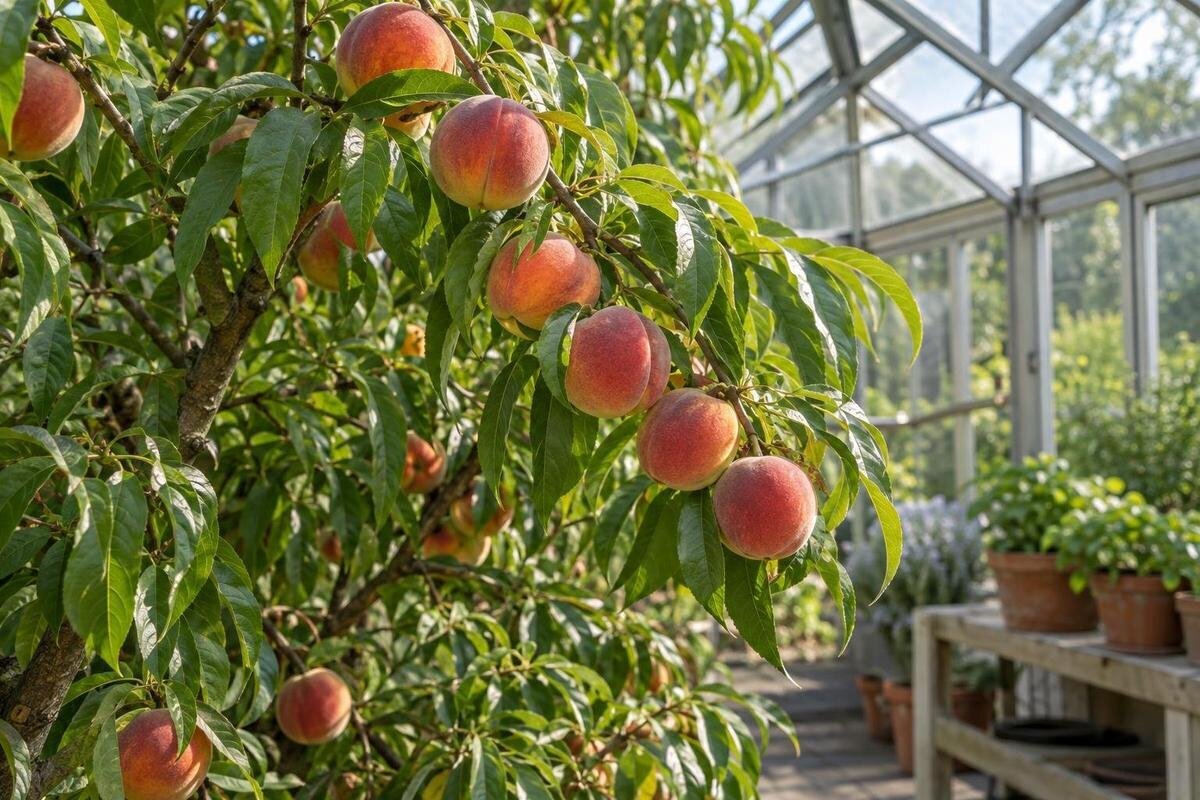
Greenhouse growing guide
Peaches and nectarines can produce fruit under glass, but a greenhouse does not remove their need for suitable winter conditions, reliable blossom pollination or room for a mature tree. A nectarine is a smooth-skinned type of peach, so their main growing requirements are much alike. Both are long-term occupants, not seasonal greenhouse crops. Before planting, match a named cultivar and rootstock to local winter chill and summer warmth, choose a training form, and reserve space for pruning, picking and airflow.

01
Is a greenhouse the right place for a peach or nectarine?
First decide what the structure needs to change. A greenhouse can provide a warmer, more sheltered growing environment and may help a cultivar that struggles to ripen outdoors, but shelter alone does not make every peach or nectarine suitable. Where an outdoor site already has a reliable season for the chosen variety, a tree outside may be simpler and leave valuable covered space for crops that need it more. Under glass, you take on pollination, ventilation and water management as well as the tree’s ordinary pruning and winter care. Define the benefit you want before buying a sapling.
Peaches and nectarines are long-term occupants; a nectarine is a smooth-skinned type of peach, so its basic growing needs are similar. Select a named cultivar and rootstock before choosing a place for it: winter chill, hardiness, ripening period and mature size all affect whether it fits. Ask a local fruit-tree nursery or provincial horticulture service about performance under conditions like yours; the word “peach” on a label is not enough. For a first space comparison, the Bloomcabin Prestige Greenhouse listings cover 3.77 to 28.08 m². Those are catalogue areas, not proof that the tree, working aisle and other crops will fit or that the model meets a particular climate need.
Match winter chill and ripening time to the cultivar
Peach and nectarine trees are deciduous and need sufficient winter chill to complete dormancy and resume normal bud development. The requirement varies by cultivar: if a site supplies too little, budbreak can be delayed or uneven and flowering or fruit set may suffer. A catalogue may report a chilling requirement in hours, but estimates depend on the calculation method and are not interchangeable with every local weather total. Check what method is being used, then compare the cultivar’s stated need with long-term conditions from a reliable local horticultural source, rather than relying on one unusually cold or mild winter.
An enclosure changes the tree’s winter environment, so “under glass” is not itself a chilling plan. An unheated greenhouse can still experience severe cold, while sunlight and shelter can make temperatures differ from outdoors; a heated space may remain too mild for a cultivar with a higher chill requirement. The same tree also needs enough growing-season warmth and time to ripen fruit. A warmer spring can hasten bloom, leaving flowers exposed if cold returns. Choose a cultivar that fits both winter chill and local ripening conditions; extra heat cannot compensate for every mismatch.
02
Plan for winter dormancy and root protection
Treat winter as a separate design problem from summer protection. An unheated greenhouse is not reliably frost-free: sunny days can warm it, but night temperatures may fall sharply. A tree planted in the ground has a fixed root zone; a potted tree offers some flexibility to move it to appropriate dormant conditions, but its roots are more exposed to temperature changes and drying. Neither planting method removes the cultivar’s need for winter chill. Compare tree hardiness and rootstock with likely conditions at the roots as well as at the canopy, not just with a midday reading inside.
If winter conditions at the proposed site are unclear, ask the greenhouse supplier which specifications describe the structure’s winter performance, and ask a local fruit specialist how to overwinter the cultivar. The Aluminum Greenhouses catalogue lists floor areas from 3.77 to 28.08 m²; those figures do not describe winter minimums, insulation or heating. Assess the conditions the tree needs during dormancy rather than treating a larger enclosure as a warmer one. A container may need a separate location with suitable cool conditions; a heated space can alter dormancy, so get cultivar-specific guidance before planning to keep a tree warm through winter.
Reserve room for the mature canopy
A sapling occupies little room, but its mature canopy will need space for years to come. Check the expected height and spread for the cultivar on its actual rootstock, then allow for the training system you will maintain. The tree needs reachable branches for pruning, pollination checks and harvesting, plus clearance from doors, vents and regular walking routes. Think about shade as well: a growing canopy can reduce light for lower crops and make the space below it difficult to use. Draw the eventual canopy on a measured plan rather than judging from the nursery pot or the tree’s first-year outline.
The Spacious Greenhouse catalogue lists areas from 47 to 70 m². When comparing its layouts, look at interior width, height and clear wall length, then account for paths and benches already included in your plan. Draw the tree’s mature outline and leave room to work around the training form, not just space for the trunk. Use the cultivar’s published mature dimensions and account for the shape you can maintain with annual pruning. A smaller rootstock may help control vigour, but you still need to check whether the intended canopy leaves enough room for other crops and comfortable access.

03
Choose a training form before planting
Fan training spreads the main branches across a vertical plane, often using a suitable wall area. It can keep growth relatively shallow but needs enough uninterrupted width and height, careful annual training and access for pruning. A free-standing open-centred tree spreads in several directions, taking more floor space and requiring room to reach around it. Each form has different light and maintenance needs, and neither is maintenance-free. Choose a form to match the greenhouse layout before planting. If a fan needs an independent support or wall fixings, confirm that the support is appropriate; do not assume a greenhouse panel or frame can carry it.
Peaches and nectarines generally bear on shoots formed the previous growing season, so pruning is not simply a matter of cutting every branch back to a small outline. Removing too much young wood can remove potential fruiting sites, while an unmanaged canopy can block light and access. Ask a fruit-tree specialist for pruning guidance for the selected form and local season. If a fan is your plan, the Lean-To Greenhouses listings cover 3.69 to 14.34 m²; compare the actual drawing for clear wall area and usable height rather than reading the floor-area figure as the fan’s dimensions.
Plan how blossoms will be pollinated
Most peach and nectarine cultivars are self-fertile, so a second tree is not automatically necessary. Verify the named cultivar, because pollination details can vary and nursery labels may be brief. Self-fertile flowers still need pollen to reach the receptive part of the flower. Outdoors, insects visit blossoms; in an enclosed greenhouse, access depends on whether openings are available while flowers are open. If the tree blooms behind closed doors and few pollinators enter, fruit set may be reduced even when the cultivar can use its own pollen.
Plan to reach open blossoms without damaging branches. If insects are part of the plan, consider whether they can enter and leave during flowering; if the greenhouse is generally closed, ask a local fruit-growing resource whether hand pollination is appropriate for that cultivar. Poor set is not proof that a second tree is needed: insufficient winter chill, cold-damaged flowers or limited pollen transfer can all be involved. When comparing the Limited Edition Aluminum Greenhouses listings, which cover 3.77 to 28.08 m², mark a clear route to the flower-bearing branches on the layout. Consider where you will stand to inspect or hand-pollinate blossoms, rather than allowing space only for the tree itself.
04
Manage spring temperatures and summer ventilation
Temperature can change quickly under glass. A bright spring day may warm a tree even when outdoor nights remain cold, potentially advancing bud development and bloom. If another cold spell follows, early flowers can still be injured; a greenhouse should not be treated as frost protection without knowing its actual conditions. Compare readings near the canopy over time with the cultivar’s local guidance instead of judging by midday comfort. Notes on budbreak and bloom across more than one year can show whether the site routinely pushes flowering earlier than an outdoor tree and whether that timing suits the local frost pattern.
Summer can bring the reverse problem: excessive heat and still air can make the growing environment difficult to manage. Plan for ventilation you can operate, enough light, and clear access to inspect the canopy and fruit; avoid foliage that blocks openings. Seasonal shade may help in some conditions, but persistent heavy shade can limit the light needed for fruit growth and ripening, so decide according to actual exposure and local advice. The T-Shaped Orangery Greenhouse listings cover 16.52 to 30 m²; that area does not identify vent positions or ventilation capacity, so compare the published specifications rather than inferring them from the model name.
Water and feed the tree under cover
Glazing changes the water supply as well as temperature. A tree beneath a roof cannot rely on ordinary rainfall reaching its root zone, so check soil or growing-medium moisture directly and plan dependable watering through dry periods. Aim for even moisture rather than repeated swings between very dry and waterlogged; poorly drained roots can suffer even if the surface looks dry. In-ground soil and containers behave differently. A pot holds a limited volume of growing medium and often needs closer monitoring, while an in-ground tree has a permanent site and needs drainage that suits its root system. Do not copy an outdoor watering calendar without checking conditions under glass.
Give roots room appropriate to the tree’s eventual size, using well-drained soil or a suitable fruit-tree growing medium. A container can make relocation possible but restricts root volume and usually calls for closer attention to water and nutrients; a ground-planted tree is harder to move and should not be set where poor drainage or future pruning access is a problem. Avoid using extra fertilizer to compensate for insufficient light or a poorly controlled canopy; seek soil or nursery advice for a sensible feeding plan. The Limited-Edition Aluminum Greenhouses with Storage listings cover 5.52 to 28.08 m²; check the plan to understand what storage occupies before counting the whole area for trees, containers and paths.

05
Compare greenhouse plans beyond floor area
Translate the tree plan into details that can be compared between greenhouse drawings: clear interior width and height, uninterrupted wall space for a fan, door access, ventilation openings and the position of a mature canopy. Listed square metres are a starting point, not a planting diagram. Include paths and room for watering, pruning and picking, as well as any other crops that still need light. Check that you can reach ventilation openings without pushing through foliage or leaning across branches. If the plan places the trunk near a wall or glazing, allow enough clearance to train and maintain the tree in that position.
Include the Pyramid Greenhouse listings, which cover 5.53 to 18.9 m², in that drawing-based comparison. Check usable wall height and canopy clearance at the proposed planting position, as well as the route from the door to the tree. Use published dimensions rather than estimating these clearances from photographs, and request any missing measurements needed to complete the layout. Then review the plan with the branches at their intended trained spread. A layout that accommodates the nursery tree but leaves no room for its mature foliage, working access or neighbouring crops will not meet the needs of a perennial planting.
Tree establishment and long-term pruning
Allow time for the tree to establish its framework before judging the greenhouse by its first crop. A newly planted fruit tree may need several seasons of root and branch growth, and the training work in that period determines where later flower-bearing shoots can sit. Follow nursery guidance on establishment and pruning rather than trying to force early production with hard cuts or heavy feeding. Once fruit sets, ask about an appropriate crop load for the tree’s age and form; a young tree is not a reliable test of the eventual harvest. A few flowers do not prove that the cultivar meets its chill requirement or that the site can ripen fruit consistently.
Keep a simple record of winter conditions, budbreak, flowering, fruit set and ripening dates. Those notes can help distinguish a chill mismatch from a spring cold spell, limited pollen transfer or fruit that ripens too late for the site. They also show whether the canopy is becoming difficult to reach or shading the rest of the greenhouse. If the cultivar repeatedly fails to flower or finish its fruit, reconsider the cultivar, training plan or whether outdoor cultivation is the better fit before expanding the structure or adding another tree.
Frequently asked questions
Can a peach or nectarine grow in an unheated greenhouse?
Possibly, if the cultivar’s winter-chill requirement and hardiness suit your location. An unheated greenhouse can still get very cold, and its temperatures may differ from those outdoors. Check local guidance for the named cultivar and consider where the tree’s roots will spend the winter.
Do I need two trees for fruit?
Most peach and nectarine cultivars are self-fertile, but check the information for the variety you plan to buy. A second tree does not solve problems caused by insufficient winter chill or injured blossoms. In an enclosed greenhouse, also consider whether pollen can be transferred while the flowers are open.
Is a container tree easier to manage?
A container makes it possible to move a tree, but it limits root space and usually needs closer attention to moisture and nutrients. Its roots can also be more exposed to winter temperature changes. Compare those trade-offs with a permanent in-ground position before choosing.
Will glass protect the blossoms from frost?
Not reliably. An unheated greenhouse can become cold, and a warm spell under glass may bring flowering forward before another cold night. Observe temperatures near the canopy and check local advice for the cultivar rather than assuming the enclosure will prevent frost injury.
How much greenhouse space should I allow?
There is no single area that suits every tree. Allow for the cultivar’s mature dimensions on its rootstock and training form, plus access for pruning, pollination and harvest. Include paths, doors and vents in the plan; a catalogue floor-area figure alone does not show usable growing space.
Growing peaches or nectarines under glass is a good fit only when the cultivar’s chill, dormancy and harvest timing match the local climate and the greenhouse can be ventilated, watered and used without crowding the trained canopy. Confirm the cultivar and rootstock, choose the training form, and plan for blossom access and winter conditions before planting. If those requirements cannot be met—or if the tree would take over the only workable route—an outdoor fruit tree or another crop may be a better use of the space.
