
External or Internal Greenhouse Shading: What Fits?
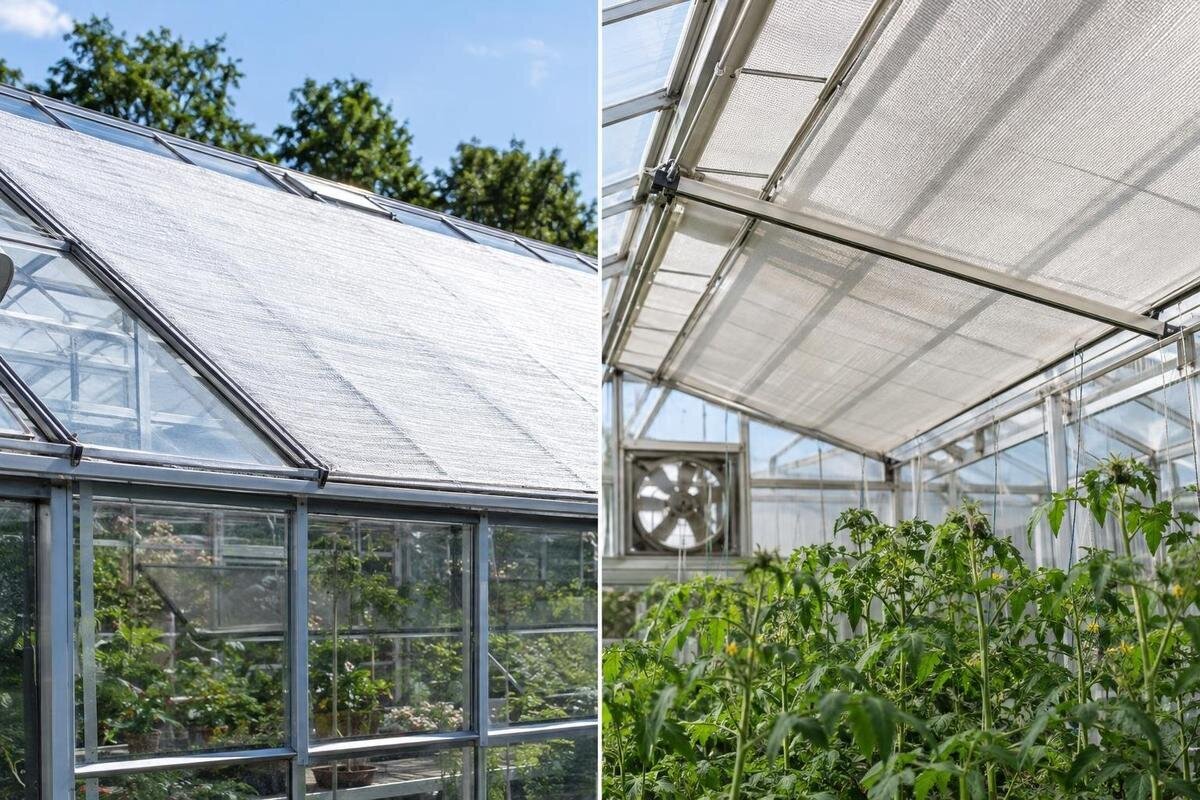
Greenhouse shading
External and internal greenhouse shading can both reduce direct sunlight, but they intercept solar energy at different points. An outside screen acts before the sun reaches the glazing; an inside screen acts after light has passed through it. That difference affects heat gain, crop exposure, access and the fixing points you can use. The right position depends on what you are trying to change and what your exact greenhouse model permits. Compare the two against your layout and observations, rather than assuming every screen fits—or that shade alone will solve a ventilation problem.

Before you choose 1
How shade position changes solar heat gain
Sunlight passes through a greenhouse’s transparent covering and is absorbed by leaves, benches, soil and other surfaces. Those warmed surfaces contribute heat inside. An exterior screen can reflect or absorb some incoming radiation before it reaches the covering. An interior screen intercepts light only after it has crossed the glazing. It can reduce direct exposure below the screen, yet some energy may already have been absorbed indoors or may be released from the screen into the greenhouse. The balance depends on the screen material and coverage, the glazing, outdoor conditions and air exchange, so position alone cannot promise a particular temperature change.
That distinction is a useful starting point: outside placement generally targets solar heat gain, while inside placement manages direct light within a sheltered space. Neither option removes warm air or replaces ventilation. If a vent is shut, obstructed or inadequate for current conditions, a shade screen does not create fresh-air exchange. And if only one bed receives a strong beam, a single air-temperature reading may not show the full problem. Keep heat control and crop shading as related but separate aims. Also decide what you will measure: a change in crop-level light and a change in greenhouse air temperature are not interchangeable outcomes.
External shading intercepts sunlight before the glazing
An exterior screen is worth considering when your main aim is to intercept sun before it warms the greenhouse interior. Its effect depends on where the sun strikes, how much of the relevant area is covered and the screen’s properties. A porous cloth, a reflective material and a solid panel do not behave alike. Nor will a screen over the roof necessarily address low-angle sun entering through side glazing. Think about the hours and surfaces that matter, not only an advertised shade rating. Shading can reduce incoming solar gain, but it cannot exhaust heat that has already accumulated.
External material is exposed to wind, rain, snow and seasonal changes, so access and removal are part of the decision. Confirm whether the greenhouse manufacturer permits a particular attachment and how the screen can be adjusted without leaning on glazing or obstructing vents. The Bloomcabin Prestige Greenhouse is listed in sizes from 3.77 to 28.08 m²; that range makes the exact selected size important when measuring roof coverage. Floor area does not identify roof dimensions or approved fixing points. If the instructions do not name an external mounting method, ask the manufacturer or a qualified greenhouse installer instead of fastening shade to an assumed support.
Before you choose 2
Internal shading acts inside the greenhouse
An interior screen sits between the greenhouse covering and the growing area. It is sheltered from outdoor weather and may be simpler to inspect or adjust from inside, although a high roof can still make access awkward. Its immediate effect is to screen direct light reaching plants, benches or a chosen zone. It does not stop sunlight from crossing the glazing first; depending on the material, some energy may be reflected back out while some is absorbed inside. That can still help reduce harsh direct exposure, but it is not equivalent to keeping incoming solar energy outside. Do not assume that a similar shade rating will produce the same temperature result in both positions.
Check the route of an interior curtain or panel before choosing it. It must be supported at points approved for the exact frame, move or park without catching doors, roof vents, openers or hanging equipment, and remain reachable for cleaning. Allow for crop growth as well as the screen’s parked position if it retracts. With a Lean-To Greenhouse, include the wall-side junction and available working space in your drawing; the category name does not confirm where interior rails can go. Compare the planned route with doors and vents both open and closed. If the screen makes routine access difficult, its sheltered position may not be convenient in practice.
Match the position to the problem you see
Start with the change you need, not with the screen material. If the recurring concern is a greenhouse-wide midday temperature rise under direct sun, external shading is usually the more direct way to reduce solar heat gain, provided the structure has approved supports and ventilation remains functional. If a narrow beam hits a particular bed, an interior screen may be easier to position over that area, but the crop still needs appropriate light and the screen will not remove warm air. These are tendencies, not guarantees: glazing, screen coverage, timing and airflow can all change the outcome.
Separate problems that look alike. Direct sun on one spot calls for a different coverage plan from high air temperatures across the whole greenhouse. Mark the affected area and note when it receives sunlight; the beam can move from roof to side as the day advances. A midday-only check can miss morning or afternoon exposure. Decide whether the priority is reducing heat entering, softening direct light or keeping access simple. If several priorities compete, rank them before comparing options. Otherwise, a screen may solve the most visible symptom while leaving the actual concern, such as blocked air exchange or a poorly placed vent, unchanged.

Before you choose 3
Measure roof surfaces, not only greenhouse floor area
Shade cloth needs the dimensions of the surface it will cover, not a guess based on floor area. Measure each roof plane separately and record its length, width and edges as the supplier’s instructions request. For an interior system, note the intended track length and where it must stop or stack; for an exterior system, measure the roof area and any specified clearance. The Spacious Greenhouse listing spans 47 to 70 m², but a floor-area range cannot tell you the size of a particular roof plane. Confirm the exact model and selected version before ordering material or discussing compatible accessories.
Use the greenhouse’s assembly drawings and accessory instructions wherever possible, and write down the model, size and roof form. Do not climb onto a greenhouse roof to take measurements; if you cannot obtain a dimension safely from the ground or the manual, have a qualified person assess it. Mark vents, doors, gutters, wall junctions and existing equipment so the plan accounts for obstructions. Ask the shade supplier how much edge allowance or clearance its system needs rather than adding your own. Check which units and measurement points the supplier expects. This helps avoid ordering for a rectangular footprint when the actual roof is divided or angled.
Roof shape determines coverage and access
Roof shape affects whether a shade can cover the target area continuously. A gable, lean-to, T-shaped or multi-sided roof has different edges, junctions and vent locations; material sized to the greenhouse footprint may not cover the roof as intended. A T-Shaped Orangery Greenhouse is a reminder to map each roof section rather than treating the whole plan as one rectangle. The product name identifies a shape, not a continuous screen track or an approved attachment point. Ask whether the proposed material and system are intended for each surface, and how separate sections meet without covering moving vents.
Consider where the sun enters, not just the outline. A roof face that gets strong morning sun may be shaded later, while side glazing can receive direct light at another time. Take photographs from the same garden positions at the times that matter and mark the affected roof faces or beds. Nearby buildings, trees and fences may provide shade at some hours and none at others. A full-roof screen could also shade an area that does not need it, so compare the actual coverage with the growing spaces you want to protect. A simple plan view and notes on roof surfaces help you ask focused questions, but do not replace the manufacturer’s fixing instructions.
Before you choose 4
Compare light and temperature under repeatable conditions
Once dimensions and a permissible position are known, make a simple baseline before changing anything. Put an air-temperature logger at crop height, out of direct sun and away from a hot pane, and keep it in the same place for each comparison. Record the time, outdoor conditions, whether the screen is deployed or retracted, and which vents or doors are open. If you can measure light at canopy level, use the same meter and location each time; treat readings as a relative comparison rather than a complete measure of what every plant needs. In a greenhouse such as the Pyramid Greenhouse, take readings in more than one growing area if sunlight falls unevenly.
Compare periods with broadly similar sunshine and keep ventilation settings as consistent as practical. A change in vent position, cloud cover or door use can affect the reading and make the shade look more or less effective than it is. Record temperature and relative humidity together as context, but do not use one humidity reading to judge the shade by itself; relative humidity changes as air temperature changes. Photos from the same viewpoints can show whether coverage matches the bright areas. This does not need to become a long climate study: a short, repeatable log helps separate a useful change from a difference in weather or ventilation.
Verify fixing points for the exact greenhouse model
Compatibility comes from the exact greenhouse model and its instructions, not from the fact that a frame looks sturdy or a product name mentions metal. The Classic Aluminum Greenhouse listing identifies a model range; it does not, by itself, confirm that a rail, bar, gutter or glazing panel is an approved shade anchor. Check the assembly manual and any accessory guide for the exact size and version, and look for explicit permission for the type of internal or external screen you intend to use. Confirm whether the shade system is listed as compatible. If details are missing or unclear, contact the manufacturer before buying hardware.
Do not drill glazing, clamp onto an unapproved member or tension a screen against a part that was not designed for it. Wind can put significant force on an exterior cloth, and a suspended interior screen also needs an approved support. Do not assume a garden greenhouse roof is suitable for shade equipment simply because it is accessible. If the proposed setup relies on structural support not addressed in the manuals, get guidance from the greenhouse maker or a qualified installer. Use only the hardware and attachment method confirmed for the structure; a generic screen description cannot establish that fit.

Before you choose 5
Keep vents, doors and working space clear
Shading and ventilation do different jobs. A screen should not cover intake or exhaust openings, stop a roof vent from opening or interfere with a manual or automatic opener. Check the full movement of vents and doors with the proposed screen at every intended setting, not just with the greenhouse closed. An exterior route may cross a vent or gutter; an interior route may sag into an opening or collide with a handle. A conflict can reduce access or airflow, undermining the reason you added shade. Use the greenhouse instructions to identify moving parts before laying out the screen.
Include working space and storage in the same drawing. A listing such as Limited-Edition Aluminum Greenhouses with Storage names built-in storage, but the actual door and shelf positions still need checking on the selected model. Mark the aisle, storage access, bench edges, hoses and the route to clean or adjust the shade. If using or inspecting the screen requires reaching over plants, shifting equipment each time or blocking a door, that option may be less practical than it appears on paper. Leave clearance for normal work and for the screen to move as intended.
Seasonal use and the choice of shading position
Shading needs can change as the sun angle and crop layout change. An outside screen is exposed to local wind and precipitation; install, remove or leave it in place only as its manufacturer permits. An interior screen is more protected, but can still reduce useful light when the sun is lower or plants have moved. Before a season starts or a screen is repositioned, check its condition, fixings, vent clearance and current sun patches. If you are considering a Limited Edition Aluminum Greenhouse, have the exact model, size and manual at hand when asking about compatible seasonal accessories; a range name alone does not establish compatibility.
Use a final practical test: consider external shading when reducing incoming solar gain is the main goal and approved exterior fixing and weather management are clear. Consider internal shading when managing direct light from inside is more important and its supports, travel path and effect on heat are acceptable. If neither position can be mounted as instructed, do not improvise on the frame; ask the greenhouse maker about a compatible option. When testing a setup, change one factor at a time and keep a brief record. Choose based on the exact roof layout, access and observed effect, not a generic promise that shade will cool every greenhouse.
Frequently asked questions
Is external shading always better for reducing greenhouse heat?
No. It intercepts sunlight before it reaches the glazing, so it is the more direct position to consider for reducing solar heat gain. The result still depends on the screen, coverage, sun exposure, greenhouse layout and ventilation. Check the fixing method and compare readings under similar conditions.
Can internal shading lower the temperature?
It can reduce direct sunlight reaching plants and other surfaces, and its effect on temperature will depend on the screen and greenhouse. But it acts after sunlight has passed through the glazing, so it is not the same as keeping that energy outside. It cannot replace ventilation.
Can I attach a shade screen to a roof panel or frame bar?
Only use fixing points and methods approved for your exact greenhouse model. Do not drill glazing, attach a screen to an unapproved part or tension it against one. External screens are exposed to weather, so ask the manufacturer or a qualified installer if the instructions do not specify suitable attachment points.
How can I tell whether the shading position is working?
Decide what you want to change, then compare light or air temperature at the same location before and after. Note the time, weather, screen position and which vents or doors are open. Repeat under broadly similar conditions so changing sunshine or ventilation does not confuse the result.
Does greenhouse shading replace ventilation?
No. Shading can reduce direct sunlight or incoming solar gain, but it does not move warm air out of the greenhouse. Keep vents and openers clear, and check that the screen does not interfere with their full movement.
External shading is the position to assess first when preventing solar energy from reaching the greenhouse is the priority; internal shading can be more convenient for managing direct light within the enclosure. The result still depends on the screen, sun path and layout, while the practical choice depends on access and verified supports. Measure the actual roof, keep every vent operable and use a short, repeatable log to check the effect. That gives you a decision tied to your greenhouse rather than a universal rule.
